Installing Tactile Maps in Accessible Bathrooms for Blind and Visually Impaired People
Installing Tactile Maps in Accessible Bathrooms for Blind and Visually Impaired People
The Issue
*We are not asking for donations. If you see a donation prompt, just skip that button - all we need is your signature.
The Challenge:
Imagine the panic of reaching for a light switch, only to accidentally pull the emergency cord. For many blind people, non-standardized public “accessible” toilets are a guessing game that leads to anxiety and isolation.
My name is Hayley, I am 15 years old, and I am blind. Like many blind and visually impaired people, I want to navigate public spaces with independence and confidence. However, simple tasks like using a public toilet can become stressful when nothing—the flush, the soap, the exit—is where you expect it.
Not everyone with sight loss reads braille, so braille labels alone cannot meet everyone's needs. An audio guide, accessed through a QR code beside the tactile map, would describe toilet's layout and where to find the lock, flush, soap, paper towel and emergency cord. People could listen, explore the map by touch, or use both together.
This is not just my personal experience. RNIB research has shown that nearly half of visually impaired people feel cut off from their communities due to inaccessible infrastructure.
The Change I Am Asking For:
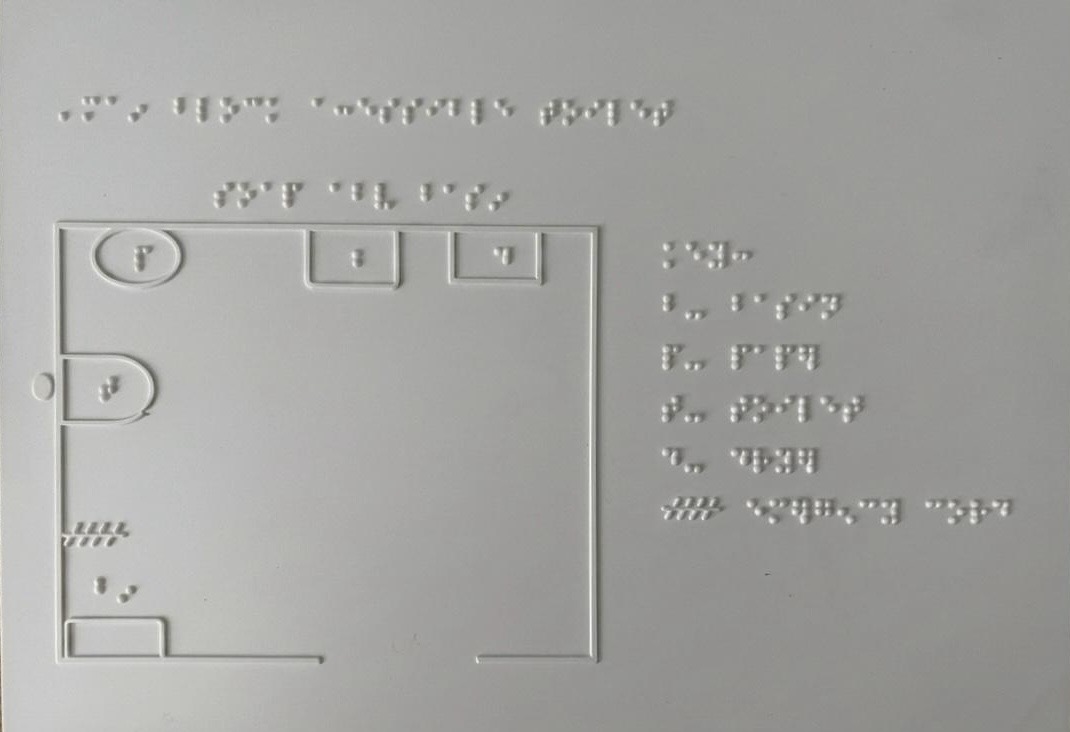
I am asking public venues such as schools, supermarkets, shopping centres, libraries, community centres, museums, transport hubs, and more, to install Tactile Maps on the doors or walls of accessible toilets. Beside each map, I ask for a QR code that plays a shout audio guide describing the room.
Using raised symbols and textures, the maps guide would show:
● Layout: Position of the toilet, sink, and hand dryer.
● Controls: Locations of the flush, soap, and toilet paper.
● Safety: A clear distinction between the light switch and the emergency cord.
The audio guide would say the same things out loud. People who do not read braille can learn the layout by listening. People who read braille can follow along by touch.
Before entering the toilet, a blind or visually impaired person should easily understand the layout of the space.
Hear a sample from my own tactile map:
Why This Matters:
A tactile map is a small, low-cost change, but it can create a huge difference by making “accessible” toilets become truly accessible. With a QR code audio guide beside the map, people can also listen to the layout, so the map works for braille readers and non-braille readers alike.
This project will begin with my own school, partner schools, and public facilities in my local areas. I also hope to work with disability organizations, supermarkets, libraries, shopping centres, and community spaces to create a model that can be used widely across the world. This petition will be shared with the venues in support of the request.
Please Sign:
Please sign this petition to support the installation of tactile maps in accessible toilets, starting with schools and local public venues.
Together, we can change the world, replacing fear into confidence by making public spaces safer and more inclusive for blind and visually impaired people.
1,022
The Issue
*We are not asking for donations. If you see a donation prompt, just skip that button - all we need is your signature.
The Challenge:
Imagine the panic of reaching for a light switch, only to accidentally pull the emergency cord. For many blind people, non-standardized public “accessible” toilets are a guessing game that leads to anxiety and isolation.
My name is Hayley, I am 15 years old, and I am blind. Like many blind and visually impaired people, I want to navigate public spaces with independence and confidence. However, simple tasks like using a public toilet can become stressful when nothing—the flush, the soap, the exit—is where you expect it.
Not everyone with sight loss reads braille, so braille labels alone cannot meet everyone's needs. An audio guide, accessed through a QR code beside the tactile map, would describe toilet's layout and where to find the lock, flush, soap, paper towel and emergency cord. People could listen, explore the map by touch, or use both together.
This is not just my personal experience. RNIB research has shown that nearly half of visually impaired people feel cut off from their communities due to inaccessible infrastructure.
The Change I Am Asking For:
I am asking public venues such as schools, supermarkets, shopping centres, libraries, community centres, museums, transport hubs, and more, to install Tactile Maps on the doors or walls of accessible toilets. Beside each map, I ask for a QR code that plays a shout audio guide describing the room.
Using raised symbols and textures, the maps guide would show:
● Layout: Position of the toilet, sink, and hand dryer.
● Controls: Locations of the flush, soap, and toilet paper.
● Safety: A clear distinction between the light switch and the emergency cord.
The audio guide would say the same things out loud. People who do not read braille can learn the layout by listening. People who read braille can follow along by touch.
Before entering the toilet, a blind or visually impaired person should easily understand the layout of the space.
Hear a sample from my own tactile map:
Why This Matters:
A tactile map is a small, low-cost change, but it can create a huge difference by making “accessible” toilets become truly accessible. With a QR code audio guide beside the map, people can also listen to the layout, so the map works for braille readers and non-braille readers alike.
This project will begin with my own school, partner schools, and public facilities in my local areas. I also hope to work with disability organizations, supermarkets, libraries, shopping centres, and community spaces to create a model that can be used widely across the world. This petition will be shared with the venues in support of the request.
Please Sign:
Please sign this petition to support the installation of tactile maps in accessible toilets, starting with schools and local public venues.
Together, we can change the world, replacing fear into confidence by making public spaces safer and more inclusive for blind and visually impaired people.
Supporter Voices
Petition Updates
Share this petition
Petition created on 18 May 2026