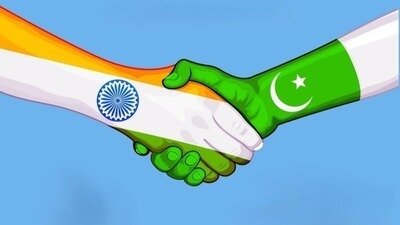

India-Pakistan People's Resolution June 2026
The Issue
The following points are based on the discussion at an online meeting between activists of India and Pakistan on 12 June 2026, organised by Socialist Party (India) and Centre for Peace and Secular Studies, Pakistan. Please endorse this resolution in support of India-Pakistan peace and unity.
1. India and Pakistan must revive the peace process and ensure an uninterrupted and uninterruptible dialogue. There is no reason why Pakistan, which has been mediating peace between US and Iran, and India, whose PM is expected by some world leaders to convince Russia to end the war on Ukraine, should not talk to each other.
2. Reactivate SAARC. It is essential to better cooperation and progress of South Asia as a whole. The SAARC framework will also allow a space to sort out bilateral issues on the sidelines.
2.a. Revive the India-Pakistan Soldiers Initiative for Peace, a very important platform of armed forces veterans, initiated by late Nirmala Deshpande, which advocated for dialogue.
3. Travel restrictions between India and Pakistan should be relaxed. Kartarpur Sahib corridor should be reopened. India should open a corridor for Ajmer Sharif dargah.
3.a. Expedite medical visas: Travel of Pakistani citizens seeking to come to India for medical treatment should be made easier.
3b. Resume Delhi-Lahore and Srinagar-Muzaffarabad bus services, and Delhi-Lahore (Samjhauta Express) and Jodhpur-Karachi train service. Also, start a new bus service between Ahmedabad and Karachi through Kutch. This will immensely help the fisherfolk who get caught on the wrong side and have to travel upcountry and then down again to return to their homes.
4. Stop the jingoistic Wagah-Attari beating retreat ceremony and replace it with an evening of friendly get together in a secure enclosed area without the requirement of passport-visa, especially providing an opportunity for divided families, as well as business people, students, and others, to meet. Such facilities should be created across all borders, Ladakh-Gilgit-Baltistan, Jammu & Kashmir, Rajasthan and Gujarat.
5. Allow free trade between India and Pakistan. This must include trade with Afghanistan.
6. India and Pakistan must sign a no-war pact, with the definition of war including support to insurgencies and terrorist acts across the border (A draft authored by A.H. Nayyar, M.V. Ramana, Zia Mian, and Sandeep Pandey is ready and could be taken up for consideration by the two governments).
7. Just as military action is not a solution to the problems between India and Pakistan, nuclear weapons are no weapons of war (in the words of late Admiral L. Ramdas, former Indian Navy Chief). No nuclear weapon has been used in any war after the devastation of 1945 in Hiroshima and Nagasaki. India and Pakistan must endeavour to create a South Asia Nuclear Weapons Free Zone, similar to the UN recognised five zones which already exist covering a majority of the countries of the world.
8. Demilitarise Siachen to save lives and environment, given that no shot has been fired here since 2003. No purpose is served on either side by keeping troops at such punishing altitudes.
9. Stop weaponising natural resources, especially river water between upper and lower riparians.
10. End the cross border internet blockages.
11. The people-to-people level peace and dialogue process must continuously engage with the political leadership of both countries. This has set the agenda for governments in the past.
12. Encourage and enable creative engagement of different sections of societies, especially students, youth and artists, from both countries to dissipate divisive myths built because of separation, and enable an environment of trust, friendship, camaraderie and peace to grow.
13. Citizens from both sides will assemble at midnight on 14-15 August (there is an overlapping half an hour between the Independence Days of two countries) and on 21 September, UN Day of Peace, at Wagha-Attari border to highlight the issues covered in this resolution and more.
It is a punishment to two people who are culturally integrated to be artificially kept apart. Experience shows that long distance enmity gives way to warmth as soon as they come face to face in any part of the world. Friendship between the people of India and Pakistan is natural, enmity is cultivated. Let nature prevail.
- Pervez Hoodbhoy, Physicist and leading Public Intellectual, Pakistan
- Lalita Ramdas, Peace Activist and Co-Chair, Pakistan India People’s Forum for Peace and Democracy, Hyderabad, India
- Sheema Kermani, Bharatnatyam Exponent and Theatre Personality, Karachi
- Radha Kumar, Writer, Policy Activist, Delhi
- A. H. Nayyar, Physicist and Activist, Pakistan
- Rita Manchanda, Co-Chair, Pakistan India People’s Forum for Peace and Democracy, Delhi
- Saeeda Diep, Centre for Peace and Secular Studies, Lahore
- O. P. Shah, Campaigner for India Pakistan Peace, Kolkata
- Beena Sarwar, Southasia Peace Action Network, Global Citizen
- Mani Shankar Aiyar, former Cabinet Minister, Government of India
- Tahira Abdullah, Human Rights Defender, Peace Activist, Islamabad
- Anand Patwardhan, Filmmaker, Activist, Mumbai
- Zia Mian, Physicist, Programme on Science and Global Security, Princeton University, US
- Kavita Srivastava, President, People’s Union for Civil Liberties, Jaipur, India
- Usman Baloch, Trade Unionist, Muttahida Mazdoor Federation, Karachi
- M.V. Ramana, Professor, University of British Columbia, Vancouver, Canada
- Shahnaz Ahad, Free Lance Journalist, Karachi
- Arudhati Dhuru, National Alliance of People’s Movements, Lucknow, India
- Gohar Taj, Substance Abuse Therapist, SHAR, Farmington Hills, US
- Sandeep Pandey, Secretary General, Socialist Party (India), Lucknow
- Anwer Jafri, Playwright, Tehrik-e-Niswan, Karachi
- Rishi Anand, Activist, Patna, India
- Yasmeen Kazi, Paediatrician and retired Professor, Karachi
- Basant Hetamsaria, Writer, Social Worker, Ramgarh, Jharkhand, India
- Kaleem Durrani, Political & Social Worker, Irtiqa Institute of Social Sciences, Karachi
- Siddhartha Mitra, IT Professional, New York, US and Overseas Socialist Party (India)
- Jannat Hussain Khan, Pakistan
- Suhas Kolhekar, Health Rights, Education, Climate and Social Justice Activist, Pune, India
- Safina Javaid, Human Rights Defender, Peace and Development Organisation, Karachi
- Simantini Dhuru, Educationist and Filmmaker, Mumbai
- Saba Gul Khattak, Researcher, PIPFPD, Karachi
- Bhanwar Meghwanshi, Dalit Rights Activist, Rajasthan, India
- Kamran Abbas, Editor, ‘Manshoor,’ Karachi
- Partha Sen, Independent Academic, Economist, Delhi
- Ghazala Parveen, Activist and Pastor, Baitul Momneen Church, Karachi
- Mazher Hussain, Peace Activist, Hyderabad, India
- Huma Gaffar, Academic, Irtiqa Institute of Social Sciences, Karachi
- Prajit Kumar Basu, Professor (retired), Philosophy, University of Hyderabad, India
- Mahnaz Rahman, Writer, Activist, HRCP, WAF, Karachi
- Sachendra Pratap Yadav, PhD student, Birla Institute of Technolgy & Science, Hyderabad, India
- Sohail Osman Ali, Pakistan
- Krishan Murari Yadav, Convenor, Human Rights Cell, Socialist Party (India), Kanpur, India
- Mohammad Tahseen, Development Professional, South Asia Partnership Pakistan, Lahore
- I.D. Khajuria, Convenor, Indian Pakistan Peace and Friendship Forum, Socialist Party (India), Kathua, J&K
- Arif Hasan, Architect, Urban Planner, Researcher, Urban Resource Centre, Karachi
- Madan Lal Hind, Samajwadi Jan Parishad, Delhi
- Anil Nauriya, Advocate, Supreme Court of India, Delhi
- Harinder Singh Manshahia, General Secretary, Socialist Party (India), Mansa, Punjab, India
- Suresh Khairnar, Former President, Rashtra Sewa Dal, founder member, PIPFPD, Pune, India
- Biren Bhuta, Activist, India
- Feroze Mithiborwala, International Geo-strategic Expert, Activist, Mumbai
- Mahendra Sharma, India
- Surabhi Agarwal, Spokesperson, Socialist Party (India), Delhi
- Bobby Ramakant, Health Rights Activist, Global Citizen
- Mahesh Pandey, Participant of 2005 Delhi-Multan Peace March, Activist, Kanpur, India
- Monica Wahi, Children’s Films Specialist, Participant of 2005 Delhi-Multan Peace March, Delhi
- Ram Puniyani, Professor (retired), Writer, Activist, Mumbai
- Sanjay Gadhalay, Engineer, Climate Activist, Hyderabad, India
- Sumit Kumar Banerjee, National Committee Member, Socialist Party (India), Kolkata
- Suresh Nautiyal, India Greens Party
- SR Darapuri, Retd. IPS, All India People's Front, Lucknow

145
The Issue
The following points are based on the discussion at an online meeting between activists of India and Pakistan on 12 June 2026, organised by Socialist Party (India) and Centre for Peace and Secular Studies, Pakistan. Please endorse this resolution in support of India-Pakistan peace and unity.
1. India and Pakistan must revive the peace process and ensure an uninterrupted and uninterruptible dialogue. There is no reason why Pakistan, which has been mediating peace between US and Iran, and India, whose PM is expected by some world leaders to convince Russia to end the war on Ukraine, should not talk to each other.
2. Reactivate SAARC. It is essential to better cooperation and progress of South Asia as a whole. The SAARC framework will also allow a space to sort out bilateral issues on the sidelines.
2.a. Revive the India-Pakistan Soldiers Initiative for Peace, a very important platform of armed forces veterans, initiated by late Nirmala Deshpande, which advocated for dialogue.
3. Travel restrictions between India and Pakistan should be relaxed. Kartarpur Sahib corridor should be reopened. India should open a corridor for Ajmer Sharif dargah.
3.a. Expedite medical visas: Travel of Pakistani citizens seeking to come to India for medical treatment should be made easier.
3b. Resume Delhi-Lahore and Srinagar-Muzaffarabad bus services, and Delhi-Lahore (Samjhauta Express) and Jodhpur-Karachi train service. Also, start a new bus service between Ahmedabad and Karachi through Kutch. This will immensely help the fisherfolk who get caught on the wrong side and have to travel upcountry and then down again to return to their homes.
4. Stop the jingoistic Wagah-Attari beating retreat ceremony and replace it with an evening of friendly get together in a secure enclosed area without the requirement of passport-visa, especially providing an opportunity for divided families, as well as business people, students, and others, to meet. Such facilities should be created across all borders, Ladakh-Gilgit-Baltistan, Jammu & Kashmir, Rajasthan and Gujarat.
5. Allow free trade between India and Pakistan. This must include trade with Afghanistan.
6. India and Pakistan must sign a no-war pact, with the definition of war including support to insurgencies and terrorist acts across the border (A draft authored by A.H. Nayyar, M.V. Ramana, Zia Mian, and Sandeep Pandey is ready and could be taken up for consideration by the two governments).
7. Just as military action is not a solution to the problems between India and Pakistan, nuclear weapons are no weapons of war (in the words of late Admiral L. Ramdas, former Indian Navy Chief). No nuclear weapon has been used in any war after the devastation of 1945 in Hiroshima and Nagasaki. India and Pakistan must endeavour to create a South Asia Nuclear Weapons Free Zone, similar to the UN recognised five zones which already exist covering a majority of the countries of the world.
8. Demilitarise Siachen to save lives and environment, given that no shot has been fired here since 2003. No purpose is served on either side by keeping troops at such punishing altitudes.
9. Stop weaponising natural resources, especially river water between upper and lower riparians.
10. End the cross border internet blockages.
11. The people-to-people level peace and dialogue process must continuously engage with the political leadership of both countries. This has set the agenda for governments in the past.
12. Encourage and enable creative engagement of different sections of societies, especially students, youth and artists, from both countries to dissipate divisive myths built because of separation, and enable an environment of trust, friendship, camaraderie and peace to grow.
13. Citizens from both sides will assemble at midnight on 14-15 August (there is an overlapping half an hour between the Independence Days of two countries) and on 21 September, UN Day of Peace, at Wagha-Attari border to highlight the issues covered in this resolution and more.
It is a punishment to two people who are culturally integrated to be artificially kept apart. Experience shows that long distance enmity gives way to warmth as soon as they come face to face in any part of the world. Friendship between the people of India and Pakistan is natural, enmity is cultivated. Let nature prevail.
- Pervez Hoodbhoy, Physicist and leading Public Intellectual, Pakistan
- Lalita Ramdas, Peace Activist and Co-Chair, Pakistan India People’s Forum for Peace and Democracy, Hyderabad, India
- Sheema Kermani, Bharatnatyam Exponent and Theatre Personality, Karachi
- Radha Kumar, Writer, Policy Activist, Delhi
- A. H. Nayyar, Physicist and Activist, Pakistan
- Rita Manchanda, Co-Chair, Pakistan India People’s Forum for Peace and Democracy, Delhi
- Saeeda Diep, Centre for Peace and Secular Studies, Lahore
- O. P. Shah, Campaigner for India Pakistan Peace, Kolkata
- Beena Sarwar, Southasia Peace Action Network, Global Citizen
- Mani Shankar Aiyar, former Cabinet Minister, Government of India
- Tahira Abdullah, Human Rights Defender, Peace Activist, Islamabad
- Anand Patwardhan, Filmmaker, Activist, Mumbai
- Zia Mian, Physicist, Programme on Science and Global Security, Princeton University, US
- Kavita Srivastava, President, People’s Union for Civil Liberties, Jaipur, India
- Usman Baloch, Trade Unionist, Muttahida Mazdoor Federation, Karachi
- M.V. Ramana, Professor, University of British Columbia, Vancouver, Canada
- Shahnaz Ahad, Free Lance Journalist, Karachi
- Arudhati Dhuru, National Alliance of People’s Movements, Lucknow, India
- Gohar Taj, Substance Abuse Therapist, SHAR, Farmington Hills, US
- Sandeep Pandey, Secretary General, Socialist Party (India), Lucknow
- Anwer Jafri, Playwright, Tehrik-e-Niswan, Karachi
- Rishi Anand, Activist, Patna, India
- Yasmeen Kazi, Paediatrician and retired Professor, Karachi
- Basant Hetamsaria, Writer, Social Worker, Ramgarh, Jharkhand, India
- Kaleem Durrani, Political & Social Worker, Irtiqa Institute of Social Sciences, Karachi
- Siddhartha Mitra, IT Professional, New York, US and Overseas Socialist Party (India)
- Jannat Hussain Khan, Pakistan
- Suhas Kolhekar, Health Rights, Education, Climate and Social Justice Activist, Pune, India
- Safina Javaid, Human Rights Defender, Peace and Development Organisation, Karachi
- Simantini Dhuru, Educationist and Filmmaker, Mumbai
- Saba Gul Khattak, Researcher, PIPFPD, Karachi
- Bhanwar Meghwanshi, Dalit Rights Activist, Rajasthan, India
- Kamran Abbas, Editor, ‘Manshoor,’ Karachi
- Partha Sen, Independent Academic, Economist, Delhi
- Ghazala Parveen, Activist and Pastor, Baitul Momneen Church, Karachi
- Mazher Hussain, Peace Activist, Hyderabad, India
- Huma Gaffar, Academic, Irtiqa Institute of Social Sciences, Karachi
- Prajit Kumar Basu, Professor (retired), Philosophy, University of Hyderabad, India
- Mahnaz Rahman, Writer, Activist, HRCP, WAF, Karachi
- Sachendra Pratap Yadav, PhD student, Birla Institute of Technolgy & Science, Hyderabad, India
- Sohail Osman Ali, Pakistan
- Krishan Murari Yadav, Convenor, Human Rights Cell, Socialist Party (India), Kanpur, India
- Mohammad Tahseen, Development Professional, South Asia Partnership Pakistan, Lahore
- I.D. Khajuria, Convenor, Indian Pakistan Peace and Friendship Forum, Socialist Party (India), Kathua, J&K
- Arif Hasan, Architect, Urban Planner, Researcher, Urban Resource Centre, Karachi
- Madan Lal Hind, Samajwadi Jan Parishad, Delhi
- Anil Nauriya, Advocate, Supreme Court of India, Delhi
- Harinder Singh Manshahia, General Secretary, Socialist Party (India), Mansa, Punjab, India
- Suresh Khairnar, Former President, Rashtra Sewa Dal, founder member, PIPFPD, Pune, India
- Biren Bhuta, Activist, India
- Feroze Mithiborwala, International Geo-strategic Expert, Activist, Mumbai
- Mahendra Sharma, India
- Surabhi Agarwal, Spokesperson, Socialist Party (India), Delhi
- Bobby Ramakant, Health Rights Activist, Global Citizen
- Mahesh Pandey, Participant of 2005 Delhi-Multan Peace March, Activist, Kanpur, India
- Monica Wahi, Children’s Films Specialist, Participant of 2005 Delhi-Multan Peace March, Delhi
- Ram Puniyani, Professor (retired), Writer, Activist, Mumbai
- Sanjay Gadhalay, Engineer, Climate Activist, Hyderabad, India
- Sumit Kumar Banerjee, National Committee Member, Socialist Party (India), Kolkata
- Suresh Nautiyal, India Greens Party
- SR Darapuri, Retd. IPS, All India People's Front, Lucknow
Petition Updates
Share this petition
Petition created on 21 June 2026