

ICHS June Capstone 2024- Unfair Exam-Demand for Amendment of Exit Exam
The Issue
We, the students of International College of Health Sciences of June 2024 Capstone Cohort, believe that ICHS administered an unfair exit exam and significantly mishandled our Capstone and residency week. We contend that these issues contributed to our inability to pass the exit exam and prohibited us from performing at peak performance to achieve the required 78% benchmark set by ICHS. Furthermore, we feel that ICHS imposes an unreasonably high standard that many students struggle to meet, especially without utilizing any of the proper conversion scores.
In light of these concerns, we respectfully request that ICHS honor the ATI conversion scores for our exit and lower the passing score for the CFPE to 75% or below to better reflect the circumstances we faced during the exam on Thursday, 9/19/24. Additionally, for those of us who do not meet the revised passing requirement for the CFPE, we ask that our current attempts be nullified and that we be granted a free retake of the exit exam.
Reasons why we believe scores should be adjusted and why we think it was unfair:
- Violation of NLN Fair Testing Guidelines and HESI Evolve Elsevier Guidelines
The National League for Nurses Fair Testing Guidelines
HESI Evolve Elsevier- HESI Implementation Guide for RN 2024
The recent exit exam was a custom ATI assessment, not a standardized test, lacking a conversion score to accurately reflect students' knowledge. Both HESI and ATI recognize the importance of question difficulty, awarding more points for challenging questions and offering multiple ways for students to demonstrate mastery of nursing concepts, akin to NCLEX adaptive testing. In contrast, this custom exam failed to implement proper adaptive measures or conversion metrics, undermining its validity and reliability. For example, HESI and ATI incorporate a mix of questions that both have portions of high difficulty and low difficulty within a test, allotting conversion weight and scores to truly gauge a mastery of nursing concepts comparable to NCLEX adaptive testing. NCLEX will give you lower difficulty questions if it feels the difficulty was too high and tailor to showcase if an individual has truly mastered basic nursing concepts. For this reason ATI conversion deems anything above 62% to be mastery mark passing, yet this custom made ATI exam did not calculate any of that within it's metrics or had any proper adaptive measures included within the test to gauge the test score.
ICHS asserts that the goal of the exit exam is to prepare students for the NCLEX. However, this custom exam was the first to be made and administered which has not been properly vetted to ensure its validity or reliability, particularly concerning it’s conversion rate and the justification of the 78% passing mark. According to NLN Fair Testing Guidelines:
- "Selecting Appropriate Tests: Standardized tests must show evidence of reliability, content and predictive validity, and evidence of fairness and equity as shown by test performance across test-taking subgroups based on culture, race, or gender."
- "General Guidelines: Faculty have an ethical obligation to ensure that both tests and the decisions based on tests are valid, supported by solid evidence, consistent across their programs, and fair to all test takers regardless of age, gender, disability, race, ethnicity, national origin, religion, sexual orientation, linguistic background, testing style and ability, or other personal characteristics."
We contend that the custom exit exam violates these guidelines. Furthermore, the introduction of ATI in our final semester, while we were primarily prepared for the HESI exit exam throughout the curriculum, did not provide us adequate time to adapt, particularly given the significant delays in study resources.
Per HESI Evolve Elsevier's "HESI Implementation Guide for RN" (2024), “the testing policy states that exam weight should be fair and not solely based on standardized exam scores.” To qualify for the exit exam, students were required to maintain an overall grade of 75% in capstone theory and pass 10 weekly exams with the same threshold, with mandatory remediation for those who did not comply.
To be eligible to take the exit exam, students were required to maintain an overall grade of 75% in capstone theory and pass ten live proctored weekly exams, each lasting one and a half hours, also with a minimum score of 75%. Students who did not meet this threshold faced mandatory weekly remediation, in addition to a live proctored midterm and final exam, none of which were open book.
We believe one exam, the CFPE exam, should not be the sole determining factor for passing capstone theory and qualifying to take the NCLEX, especially considering the numerous other exams that were not accounted for in the grading scale. We believe that the weekly exams, midterm, and final should all be taken into account when determining whether or not students pass or fail the course. According to our syllabus to pass capstone theory, the grading components are as follows:
- 10 Weekly Proctored Exams: 25%
- Exam 1: 30%
- Exam 2: 40%
- EAQ Questions: 5%
Total 100%
+CFPE Exam P/F
Even if you received 100% in capstone theory on all other criteria, if you failed at the CFPE exam, students are considered not passing capstone theory and are forced to retake and are therefore not a graduate to be eligible to take NCLEX.
This grading structure suggests that multiple assessments contribute to our overall performance, and failing one exam of the capstone should not overshadow these other critical evaluations. We believe that the conditions surrounding the CFPE exam do not align with established fair testing practices. The use of CFPE exit examination as the only determinant for moving forward to graduation is a total pathway to failure set by the school authorities and sets unrealistic standards for students to reach even after demonstrating a mastery passing rate of 75% prior to taking the CFPE.
2. Awarding a inconsistent amount of points to students towards the exit
Following the recent exam, students were awarded varying amounts of extra points based on a faculty decision. The points added to students' scores ranged from 5% to 10%, but the distribution was inconsistent. An announcement from the school clarified this process:
“Hello Students, I am writing to let you know that faculty have performed a very thorough item analysis of the CFPE exams last night, and we have granted credit for some questions. Your grades have been finalized and entered in your gradebook. You can also see the grade changes in your ATI account. Please note that when credit is given for a question, if you already had points granted for it, you will not receive additional points for that question. This is the reason why students have different numbers of points added to their exams. It is all dependent on your answers. We do not give a percentage of points across the board. We do not give double points for questions already marked as correct…”
We believe that the rationale provided for the differing points awarded to students is unfair and violates NLN Fair Testing Guidelines. According to the ICHS policy, "when credit is given for a question, if you already had points granted for it, you will not receive additional points for that question and it does not give double points for questions already marked as correct." By this logic and statement given by ICHS to students, it is implied from students that those whose questions that ICHS deemed to get thrown out, (presumably if it was deemed it was too hard and most of everyone missed it) students who got that current difficult question were not awarded their allotted full weighed points, while other students who didn't get it correct got awarded extra points, causing an imbalance of points allotted as the the person who got the difficult question correct was not given any extra points and ICHS states they will not give double points for questions already marked correct. This is concerning because no weight was given back to students who were able to answer more difficult questions. This further validates that the custom exam provided was not properly vetted for proper conversion for the weight of the difficulty of answers.
The announcement raises concerns that students who answered challenging questions correctly may not receive the appropriate weight in their scores. If questions deemed too difficult were discarded, those who answered them correctly might be penalized by not receiving extra points, while others who answered incorrectly benefited from the awarded points. This creates an imbalance in the scoring system.
Furthermore, ICHS has not provided clear reasoning behind the selection of specific questions for additional credit. The lack of transparency in how exams are graded and the criteria for awarding extra points is troubling. Without this information, it is challenging for students to understand the rationale behind their scores and the fairness of the grading process.
3. ICHS sets an unrealistic standard and unachievable pass rate
According to Canvas, our class average for the exam was 70.15%, with the highest score reaching 88%. The upper quartile score was 77.1%, while the lower quartile was 64.28%. The upper quartile represents the 75th percentile, meaning that 25% of scores fell above this value and 75% fell below it. Therefore, out of the 165 students who took the exam, less than 25% achieved the 78% passing mark, with the highest score being only 88%.
Given the low class average, we believe it is only fair to adopt the ATI conversion scores instead of maintaining the previous cohort’s HESI passing standard. The conversion chart accurately reflects students' probabilities of passing the NCLEX and demonstrates that a passing score of 78 percent without a conversion is an unreasonably high benchmark for our cohort. The chart is provided below for reference:
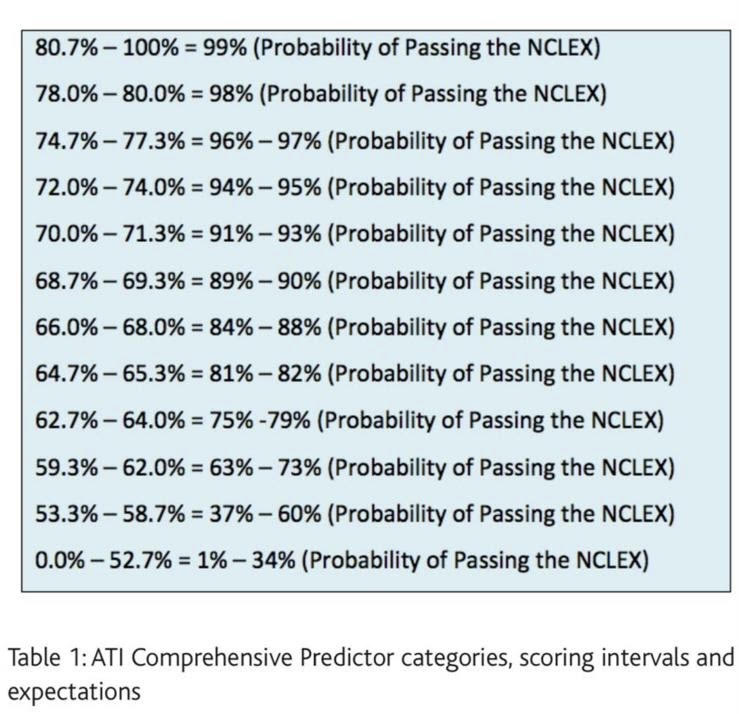
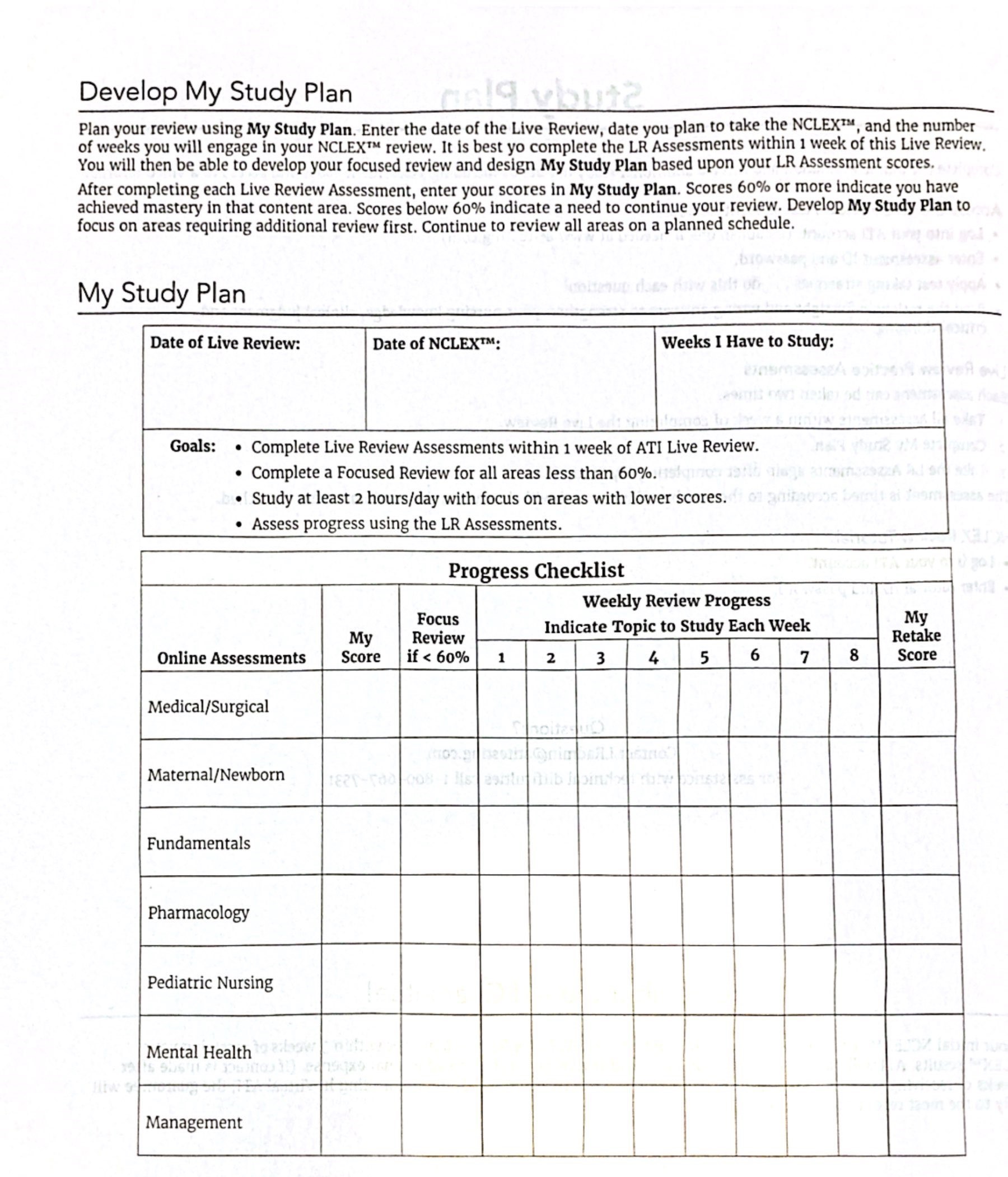
The ATI conversion chart accounts for the increased difficulty of questions that are comparable to NCLEX items, adjusting scores accordingly. According to the ATI chart and the ATI Comprehensive NCLEX-RN Review book, a score of 60% on an ATI assessment is deemed an acceptable passing rate for NCLEX readiness. This information is also detailed in the 20th edition of the ATI Comprehensive NCLEX-RN Review book under the section titled "Develop My Study Plan."
4. Delayed ATI resources provided halfway into our semester
We received ATI materials only after Exam 1, which took place in week 7—halfway through our program. Despite the lack of timely access to these resources, we were still expected to catch up to meet the course demands, resulting in significant lost time. This delay severely jeopardized our exam scores and overall progress in the capstone course, leading to feelings of being overwhelmed by the sudden influx of materials amidst an already demanding workload.
The extensive list of essential practice assessments, detailed in the July 24 announcement on Canvas titled “ATI Practice Quizzes and Assessments,” included:
Dynamic Quizzing
33 standard quizzes under Learning Systems RN 3.0
29 practice assessments
On August 1, in a Canvas announcement titled “ATI Demonstration,” it was clear that many students were still struggling to navigate and understand the ATI platform. While a demonstration video was provided to assist us, it was too late for students to get fully acclimated to the ATI platform. ICHS was aware of these challenges but continued to impose unreasonable expectations on us.
Unlike other schools that integrate ATI throughout their entire curriculum, we were required to learn and master the ATI resources during our final semester, despite having been primarily prepared using HESI materials. This created an unfair disadvantage for us as we approached the exit exam.
5. Stress placed on students due to time constraints
We believe that having skills check-offs and retests scheduled the same week as the exit exam created an unfair testing environment, leading to significant stress among students. Many students were unjustly failed on skills they had not yet performed during clinicals prior to residency week.
Students were informed that the skills check-off was merely a checklist, with no clear implications for pass or fail until just 30 minutes before the assessment, which caused considerable anxiety. Additionally, some instructors seemed to be harsher than others when determining whether students pass or fail creating an unfair situation. If a student failed three out of five skills, they were disqualified from taking the exit exam and required to retake the capstone theory course, with no opportunity for remediation.
Furthermore, the scheduling of skills retests on our designated rest day—Wednesday, the day before the exit exam—left students exhausted and unprepared. This left a situation where a large number of students had almost no time to prepare for the exit exam.
6. Unnecessary and undue emotional distress before the exam
Students experienced significant emotional distress leading up to the exam, and felt that we were given unfair treatment. For instance, the use of metal wand detectors and retina scanners during the check-in process made many feel uncomfortable; one student even reported experiencing a migraine throughout the exam from the beam they experienced from the retina scanner they beamed into their eyes while her glasses were on. Furthermore, the DocuSign document we signed the day before taking the exam did not inform us about the search procedures, and consent was neither sought nor given, yet the process was enforced to allow us to sit for the exit exam.
Additionally, many students encountered technical difficulties on the day of the exam. Logging into the ATI platform proved problematic for several, with some spending over an hour resolving these issues. Others were logged out mid-exam, while many were unable to begin the test until well after the scheduled start time. These complications added unnecessary stress to an already high-stakes situation.
7. Misguided by teachers, deans, and staff of ICHS
Throughout our program, we were repeatedly informed that the platforms and resources used were interchangeable, as the content was fundamentally the same. However, students discovered significant discrepancies among the materials from HESI, Saunders, and ATI. These inconsistencies made it difficult to select the correct answers, as each source prioritized different responses or, in some cases, provided conflicting information based on the presentation of scenarios.
For instance, ATI often failed to provide a clear scenario, asking for an intervention without sufficient context, which created ambiguity in determining the priority of answers. This contrasts with HESI, which typically presents only one definitive correct answer for similar questions. As a result, the reliance on ATI for the exit exam places students at a disadvantage, and we believe that the CFPE passing score should be lowered to account for these disparities.
8. Failure to inform students of content and nature of CFPE
Per NLN Fair Testing Guidelines:
“I. General Guidelines
“E. Standardized tests must have comprehensive testing, administration, and evaluation information readily available to faculty before they administer, grade, distribute results, or write related policies for test results. Faculty have the responsibility to review and incorporate these materials in communications to students about standardized testing and its consequences.”
"A. Selecting Appropriate Tests
5. Test vendors should provide technical manuals that provide information on the test's blueprint, test development procedures, psychometric testing, and norms."
"B. Informing Test Takers
1. Students should be notified as early as possible about the nature and content of the test and any consequences of taking the test (i.e., how test scores will be used).”
Students were not informed about the evaluation criteria, grading metrics, or the specifics of the CFPE exam. When they asked instructors for guidance on what to study, the response was often vague, stating “everything.” Despite repeated requests for detailed blueprints or study guides that outlined the topics and their respective weight on the CFPE, students were not provided with these resources. ICHS policy indicates that study guides are not provided, which contradicts the NLN Fair Testing Guidelines. While students received the ATI Blue Book Review for NCLEX, it is not relevant to the CFPE, which is a custom, non-standardized exam created with ATI, and this severely added a disadvantage to passing the exam.
9. Use of custom exit exam over standardized exam
Nursing schools most often use standardized exams for their exit exam in order to ensure fairness, consistency, and reliability in evaluating the level of students' knowledge. The exams are standardized to provide a consistent measure of competency across all nursing students regardless of which school they attend nationwide. Standardized tests have been developed through an extensive amount of research and analysis in order to ensure that the assessment of students is reliable. Having a standardized exam allows nursing programs to evaluate their students' performance against national averages in order to better prepare them for their profession. Custom exams should not be used as an indication of students' level of knowledge and competency in their field. Custom exams can vary significantly in difficulty and will inevitably carry bias which can skew test results. Standardized exams are used across most nursing programs for a reason as they are proven to be accurate indicators of a students readiness to go out into the field. Examples of schools that use ATI standardized testing include:
- West Coast University
- Yuba College
- Sampson Community College
- University of Arizona
- College of Nursing Gaston College
- University of Southern Indiana
- Neosho County Community College
- Elaine Marieb College of Nursing
- Washington State University
- College of Nursing East Tennessee State University
- TCNJ the college of New Jersey
- California State University, East Bay
- Walden University
Given the above statement, students are concerned with the lack of a proper standardized test and conversion process at ICHS. We believe that we should be treated fairly and equitably, in line with other nursing schools nationwide that utilize standardized predictor testing and conversions for their exit exams. We feel that the current non-standardized testing approach does not accurately reflect our potential success on the NCLEX. Therefore, we request that all future reattempts at ICHS adhere to these established standards.
Closing Statement:
In light of the various challenges we have faced throughout this semester, we, the students of the June 2024 Capstone Cohort, strongly advocate for a reassessment of the exit exam process. The combination of delayed ATI materials, undue emotional stress from testing conditions, inconsistent evaluation criteria, and the overall lack of support has created an environment that is not conducive to fair assessment.
We believe that the custom exit exam, coupled with the high passing score and the circumstances surrounding its administration, does not accurately reflect our knowledge or capabilities as nursing students. The discrepancies among learning resources, the undue pressure from time constraints, and the emotional distress experienced only further underscore the need for change.
We respectfully request that ICHS consider our concerns and take appropriate actions to address these issues, including lowering the CFPE passing score, use of the ATI conversion score, allowing a free retake for the exit, and ensuring that future assessments are standardized, fair, transparent, and aligned with established guidelines. It is essential for the integrity of our education and our future as healthcare professionals that we are assessed in a manner that truly reflects our competencies.

212
The Issue
We, the students of International College of Health Sciences of June 2024 Capstone Cohort, believe that ICHS administered an unfair exit exam and significantly mishandled our Capstone and residency week. We contend that these issues contributed to our inability to pass the exit exam and prohibited us from performing at peak performance to achieve the required 78% benchmark set by ICHS. Furthermore, we feel that ICHS imposes an unreasonably high standard that many students struggle to meet, especially without utilizing any of the proper conversion scores.
In light of these concerns, we respectfully request that ICHS honor the ATI conversion scores for our exit and lower the passing score for the CFPE to 75% or below to better reflect the circumstances we faced during the exam on Thursday, 9/19/24. Additionally, for those of us who do not meet the revised passing requirement for the CFPE, we ask that our current attempts be nullified and that we be granted a free retake of the exit exam.
Reasons why we believe scores should be adjusted and why we think it was unfair:
- Violation of NLN Fair Testing Guidelines and HESI Evolve Elsevier Guidelines
The National League for Nurses Fair Testing Guidelines
HESI Evolve Elsevier- HESI Implementation Guide for RN 2024
The recent exit exam was a custom ATI assessment, not a standardized test, lacking a conversion score to accurately reflect students' knowledge. Both HESI and ATI recognize the importance of question difficulty, awarding more points for challenging questions and offering multiple ways for students to demonstrate mastery of nursing concepts, akin to NCLEX adaptive testing. In contrast, this custom exam failed to implement proper adaptive measures or conversion metrics, undermining its validity and reliability. For example, HESI and ATI incorporate a mix of questions that both have portions of high difficulty and low difficulty within a test, allotting conversion weight and scores to truly gauge a mastery of nursing concepts comparable to NCLEX adaptive testing. NCLEX will give you lower difficulty questions if it feels the difficulty was too high and tailor to showcase if an individual has truly mastered basic nursing concepts. For this reason ATI conversion deems anything above 62% to be mastery mark passing, yet this custom made ATI exam did not calculate any of that within it's metrics or had any proper adaptive measures included within the test to gauge the test score.
ICHS asserts that the goal of the exit exam is to prepare students for the NCLEX. However, this custom exam was the first to be made and administered which has not been properly vetted to ensure its validity or reliability, particularly concerning it’s conversion rate and the justification of the 78% passing mark. According to NLN Fair Testing Guidelines:
- "Selecting Appropriate Tests: Standardized tests must show evidence of reliability, content and predictive validity, and evidence of fairness and equity as shown by test performance across test-taking subgroups based on culture, race, or gender."
- "General Guidelines: Faculty have an ethical obligation to ensure that both tests and the decisions based on tests are valid, supported by solid evidence, consistent across their programs, and fair to all test takers regardless of age, gender, disability, race, ethnicity, national origin, religion, sexual orientation, linguistic background, testing style and ability, or other personal characteristics."
We contend that the custom exit exam violates these guidelines. Furthermore, the introduction of ATI in our final semester, while we were primarily prepared for the HESI exit exam throughout the curriculum, did not provide us adequate time to adapt, particularly given the significant delays in study resources.
Per HESI Evolve Elsevier's "HESI Implementation Guide for RN" (2024), “the testing policy states that exam weight should be fair and not solely based on standardized exam scores.” To qualify for the exit exam, students were required to maintain an overall grade of 75% in capstone theory and pass 10 weekly exams with the same threshold, with mandatory remediation for those who did not comply.
To be eligible to take the exit exam, students were required to maintain an overall grade of 75% in capstone theory and pass ten live proctored weekly exams, each lasting one and a half hours, also with a minimum score of 75%. Students who did not meet this threshold faced mandatory weekly remediation, in addition to a live proctored midterm and final exam, none of which were open book.
We believe one exam, the CFPE exam, should not be the sole determining factor for passing capstone theory and qualifying to take the NCLEX, especially considering the numerous other exams that were not accounted for in the grading scale. We believe that the weekly exams, midterm, and final should all be taken into account when determining whether or not students pass or fail the course. According to our syllabus to pass capstone theory, the grading components are as follows:
- 10 Weekly Proctored Exams: 25%
- Exam 1: 30%
- Exam 2: 40%
- EAQ Questions: 5%
Total 100%
+CFPE Exam P/F
Even if you received 100% in capstone theory on all other criteria, if you failed at the CFPE exam, students are considered not passing capstone theory and are forced to retake and are therefore not a graduate to be eligible to take NCLEX.
This grading structure suggests that multiple assessments contribute to our overall performance, and failing one exam of the capstone should not overshadow these other critical evaluations. We believe that the conditions surrounding the CFPE exam do not align with established fair testing practices. The use of CFPE exit examination as the only determinant for moving forward to graduation is a total pathway to failure set by the school authorities and sets unrealistic standards for students to reach even after demonstrating a mastery passing rate of 75% prior to taking the CFPE.
2. Awarding a inconsistent amount of points to students towards the exit
Following the recent exam, students were awarded varying amounts of extra points based on a faculty decision. The points added to students' scores ranged from 5% to 10%, but the distribution was inconsistent. An announcement from the school clarified this process:
“Hello Students, I am writing to let you know that faculty have performed a very thorough item analysis of the CFPE exams last night, and we have granted credit for some questions. Your grades have been finalized and entered in your gradebook. You can also see the grade changes in your ATI account. Please note that when credit is given for a question, if you already had points granted for it, you will not receive additional points for that question. This is the reason why students have different numbers of points added to their exams. It is all dependent on your answers. We do not give a percentage of points across the board. We do not give double points for questions already marked as correct…”
We believe that the rationale provided for the differing points awarded to students is unfair and violates NLN Fair Testing Guidelines. According to the ICHS policy, "when credit is given for a question, if you already had points granted for it, you will not receive additional points for that question and it does not give double points for questions already marked as correct." By this logic and statement given by ICHS to students, it is implied from students that those whose questions that ICHS deemed to get thrown out, (presumably if it was deemed it was too hard and most of everyone missed it) students who got that current difficult question were not awarded their allotted full weighed points, while other students who didn't get it correct got awarded extra points, causing an imbalance of points allotted as the the person who got the difficult question correct was not given any extra points and ICHS states they will not give double points for questions already marked correct. This is concerning because no weight was given back to students who were able to answer more difficult questions. This further validates that the custom exam provided was not properly vetted for proper conversion for the weight of the difficulty of answers.
The announcement raises concerns that students who answered challenging questions correctly may not receive the appropriate weight in their scores. If questions deemed too difficult were discarded, those who answered them correctly might be penalized by not receiving extra points, while others who answered incorrectly benefited from the awarded points. This creates an imbalance in the scoring system.
Furthermore, ICHS has not provided clear reasoning behind the selection of specific questions for additional credit. The lack of transparency in how exams are graded and the criteria for awarding extra points is troubling. Without this information, it is challenging for students to understand the rationale behind their scores and the fairness of the grading process.
3. ICHS sets an unrealistic standard and unachievable pass rate
According to Canvas, our class average for the exam was 70.15%, with the highest score reaching 88%. The upper quartile score was 77.1%, while the lower quartile was 64.28%. The upper quartile represents the 75th percentile, meaning that 25% of scores fell above this value and 75% fell below it. Therefore, out of the 165 students who took the exam, less than 25% achieved the 78% passing mark, with the highest score being only 88%.
Given the low class average, we believe it is only fair to adopt the ATI conversion scores instead of maintaining the previous cohort’s HESI passing standard. The conversion chart accurately reflects students' probabilities of passing the NCLEX and demonstrates that a passing score of 78 percent without a conversion is an unreasonably high benchmark for our cohort. The chart is provided below for reference:
The ATI conversion chart accounts for the increased difficulty of questions that are comparable to NCLEX items, adjusting scores accordingly. According to the ATI chart and the ATI Comprehensive NCLEX-RN Review book, a score of 60% on an ATI assessment is deemed an acceptable passing rate for NCLEX readiness. This information is also detailed in the 20th edition of the ATI Comprehensive NCLEX-RN Review book under the section titled "Develop My Study Plan."
4. Delayed ATI resources provided halfway into our semester
We received ATI materials only after Exam 1, which took place in week 7—halfway through our program. Despite the lack of timely access to these resources, we were still expected to catch up to meet the course demands, resulting in significant lost time. This delay severely jeopardized our exam scores and overall progress in the capstone course, leading to feelings of being overwhelmed by the sudden influx of materials amidst an already demanding workload.
The extensive list of essential practice assessments, detailed in the July 24 announcement on Canvas titled “ATI Practice Quizzes and Assessments,” included:
Dynamic Quizzing
33 standard quizzes under Learning Systems RN 3.0
29 practice assessments
On August 1, in a Canvas announcement titled “ATI Demonstration,” it was clear that many students were still struggling to navigate and understand the ATI platform. While a demonstration video was provided to assist us, it was too late for students to get fully acclimated to the ATI platform. ICHS was aware of these challenges but continued to impose unreasonable expectations on us.
Unlike other schools that integrate ATI throughout their entire curriculum, we were required to learn and master the ATI resources during our final semester, despite having been primarily prepared using HESI materials. This created an unfair disadvantage for us as we approached the exit exam.
5. Stress placed on students due to time constraints
We believe that having skills check-offs and retests scheduled the same week as the exit exam created an unfair testing environment, leading to significant stress among students. Many students were unjustly failed on skills they had not yet performed during clinicals prior to residency week.
Students were informed that the skills check-off was merely a checklist, with no clear implications for pass or fail until just 30 minutes before the assessment, which caused considerable anxiety. Additionally, some instructors seemed to be harsher than others when determining whether students pass or fail creating an unfair situation. If a student failed three out of five skills, they were disqualified from taking the exit exam and required to retake the capstone theory course, with no opportunity for remediation.
Furthermore, the scheduling of skills retests on our designated rest day—Wednesday, the day before the exit exam—left students exhausted and unprepared. This left a situation where a large number of students had almost no time to prepare for the exit exam.
6. Unnecessary and undue emotional distress before the exam
Students experienced significant emotional distress leading up to the exam, and felt that we were given unfair treatment. For instance, the use of metal wand detectors and retina scanners during the check-in process made many feel uncomfortable; one student even reported experiencing a migraine throughout the exam from the beam they experienced from the retina scanner they beamed into their eyes while her glasses were on. Furthermore, the DocuSign document we signed the day before taking the exam did not inform us about the search procedures, and consent was neither sought nor given, yet the process was enforced to allow us to sit for the exit exam.
Additionally, many students encountered technical difficulties on the day of the exam. Logging into the ATI platform proved problematic for several, with some spending over an hour resolving these issues. Others were logged out mid-exam, while many were unable to begin the test until well after the scheduled start time. These complications added unnecessary stress to an already high-stakes situation.
7. Misguided by teachers, deans, and staff of ICHS
Throughout our program, we were repeatedly informed that the platforms and resources used were interchangeable, as the content was fundamentally the same. However, students discovered significant discrepancies among the materials from HESI, Saunders, and ATI. These inconsistencies made it difficult to select the correct answers, as each source prioritized different responses or, in some cases, provided conflicting information based on the presentation of scenarios.
For instance, ATI often failed to provide a clear scenario, asking for an intervention without sufficient context, which created ambiguity in determining the priority of answers. This contrasts with HESI, which typically presents only one definitive correct answer for similar questions. As a result, the reliance on ATI for the exit exam places students at a disadvantage, and we believe that the CFPE passing score should be lowered to account for these disparities.
8. Failure to inform students of content and nature of CFPE
Per NLN Fair Testing Guidelines:
“I. General Guidelines
“E. Standardized tests must have comprehensive testing, administration, and evaluation information readily available to faculty before they administer, grade, distribute results, or write related policies for test results. Faculty have the responsibility to review and incorporate these materials in communications to students about standardized testing and its consequences.”
"A. Selecting Appropriate Tests
5. Test vendors should provide technical manuals that provide information on the test's blueprint, test development procedures, psychometric testing, and norms."
"B. Informing Test Takers
1. Students should be notified as early as possible about the nature and content of the test and any consequences of taking the test (i.e., how test scores will be used).”
Students were not informed about the evaluation criteria, grading metrics, or the specifics of the CFPE exam. When they asked instructors for guidance on what to study, the response was often vague, stating “everything.” Despite repeated requests for detailed blueprints or study guides that outlined the topics and their respective weight on the CFPE, students were not provided with these resources. ICHS policy indicates that study guides are not provided, which contradicts the NLN Fair Testing Guidelines. While students received the ATI Blue Book Review for NCLEX, it is not relevant to the CFPE, which is a custom, non-standardized exam created with ATI, and this severely added a disadvantage to passing the exam.
9. Use of custom exit exam over standardized exam
Nursing schools most often use standardized exams for their exit exam in order to ensure fairness, consistency, and reliability in evaluating the level of students' knowledge. The exams are standardized to provide a consistent measure of competency across all nursing students regardless of which school they attend nationwide. Standardized tests have been developed through an extensive amount of research and analysis in order to ensure that the assessment of students is reliable. Having a standardized exam allows nursing programs to evaluate their students' performance against national averages in order to better prepare them for their profession. Custom exams should not be used as an indication of students' level of knowledge and competency in their field. Custom exams can vary significantly in difficulty and will inevitably carry bias which can skew test results. Standardized exams are used across most nursing programs for a reason as they are proven to be accurate indicators of a students readiness to go out into the field. Examples of schools that use ATI standardized testing include:
- West Coast University
- Yuba College
- Sampson Community College
- University of Arizona
- College of Nursing Gaston College
- University of Southern Indiana
- Neosho County Community College
- Elaine Marieb College of Nursing
- Washington State University
- College of Nursing East Tennessee State University
- TCNJ the college of New Jersey
- California State University, East Bay
- Walden University
Given the above statement, students are concerned with the lack of a proper standardized test and conversion process at ICHS. We believe that we should be treated fairly and equitably, in line with other nursing schools nationwide that utilize standardized predictor testing and conversions for their exit exams. We feel that the current non-standardized testing approach does not accurately reflect our potential success on the NCLEX. Therefore, we request that all future reattempts at ICHS adhere to these established standards.
Closing Statement:
In light of the various challenges we have faced throughout this semester, we, the students of the June 2024 Capstone Cohort, strongly advocate for a reassessment of the exit exam process. The combination of delayed ATI materials, undue emotional stress from testing conditions, inconsistent evaluation criteria, and the overall lack of support has created an environment that is not conducive to fair assessment.
We believe that the custom exit exam, coupled with the high passing score and the circumstances surrounding its administration, does not accurately reflect our knowledge or capabilities as nursing students. The discrepancies among learning resources, the undue pressure from time constraints, and the emotional distress experienced only further underscore the need for change.
We respectfully request that ICHS consider our concerns and take appropriate actions to address these issues, including lowering the CFPE passing score, use of the ATI conversion score, allowing a free retake for the exit, and ensuring that future assessments are standardized, fair, transparent, and aligned with established guidelines. It is essential for the integrity of our education and our future as healthcare professionals that we are assessed in a manner that truly reflects our competencies.
The Decision Makers
Supporter Voices
Petition Updates
Share this petition
Petition created on September 24, 2024