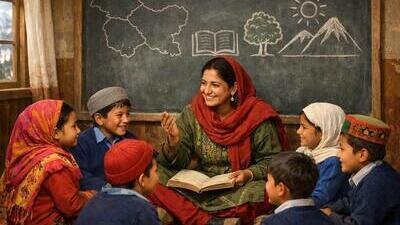

Help preserve Dogri with NEP support in J&K and HP.
The Issue
Dogri is more than a language. It is how many of us express our identity, traditions, and everyday lives. Spoken widely in the Jammu region, Dogri was officially recognized in the Constitution through the 92nd Constitutional Amendment Act, 2003. This recognition affirmed its importance in India’s cultural and linguistic heritage.
Yet, in schools, Dogri remains largely absent. Students rarely have the opportunity to study it, and there is a clear lack of textbooks, trained teachers, and structured programs. At the same time, the National Education Policy 2020 strongly supports the use of mother tongues and regional languages in education, especially in the early years. This gap between policy and reality is deeply concerning.
When a language is not taught, it slowly fades from daily use across generations. Dogri carries stories, history, and a sense of belonging that cannot be replaced. Without meaningful inclusion in education, this heritage is at risk.
We urge the Ministry of Education and relevant authorities to take concrete steps to include Dogri in NEP implementation. This includes introducing Dogri in school curricula, developing learning materials, and training qualified teachers.
Preserving Dogri is about protecting identity, diversity, and cultural continuity. It is time to give Dogri the place it deserves in education.
Citations
- Constitution of India, Eighth Schedule, inclusion of Dogri via the 92nd Constitutional Amendment Act, 2003
- National Education Policy 2020, Government of India
- Ministry of Education, Government of India, policy framework on regional and mother tongue instruction

1
The Issue
Dogri is more than a language. It is how many of us express our identity, traditions, and everyday lives. Spoken widely in the Jammu region, Dogri was officially recognized in the Constitution through the 92nd Constitutional Amendment Act, 2003. This recognition affirmed its importance in India’s cultural and linguistic heritage.
Yet, in schools, Dogri remains largely absent. Students rarely have the opportunity to study it, and there is a clear lack of textbooks, trained teachers, and structured programs. At the same time, the National Education Policy 2020 strongly supports the use of mother tongues and regional languages in education, especially in the early years. This gap between policy and reality is deeply concerning.
When a language is not taught, it slowly fades from daily use across generations. Dogri carries stories, history, and a sense of belonging that cannot be replaced. Without meaningful inclusion in education, this heritage is at risk.
We urge the Ministry of Education and relevant authorities to take concrete steps to include Dogri in NEP implementation. This includes introducing Dogri in school curricula, developing learning materials, and training qualified teachers.
Preserving Dogri is about protecting identity, diversity, and cultural continuity. It is time to give Dogri the place it deserves in education.
Citations
- Constitution of India, Eighth Schedule, inclusion of Dogri via the 92nd Constitutional Amendment Act, 2003
- National Education Policy 2020, Government of India
- Ministry of Education, Government of India, policy framework on regional and mother tongue instruction
Petition Updates
Share this petition
Petition created on 28 March 2026