Petition updateSave the UK by forgetting BREXIT and Rejoining the EU
Bored with BREXIT? Dont be..the disaster continues.

Dr. Michael HopkinsLondon, ENG, United Kingdom
Jan 9, 2018
The Financial Times warns UK Companies of even tougher times ahead. David Davis and Boris Johnson are still in May's ludicrous cabinet as UK Brexit liars continue to be given a soft landing.
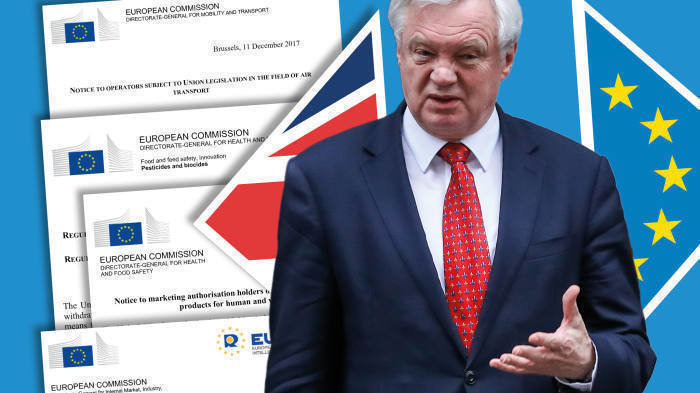
Meanwhile, Brussels warns UK companies of shut-out in event of no-deal Brexit. Drugmakers and airlines are among those told to expect no automatic access to single market.
Even as negotiators neared a breakthrough in Brexit divorce talks, EU regulators issued a flurry of “be prepared” memos to about 15 industries in November and December, ranging from drugmakers, seafarers and mineral water producers to hauliers and airlines that rely on UK operating licences.
The documents call on companies to be ready for the UK to become “a third country” on March 29 2019, with no automatic right to operate in the single market. They also warn that operating licences will automatically lapse after Brexit and that many groups may have to create EU entities for continuity of business.
The flare-up highlights the contrasting approaches to no-deal preparation taken in Westminster and Brussels. While the UK has emphasised government contingency planning, laying aside £3bn to build up regulatory and customs capabilities, the EU is highlighting risks so the private sector makes arrangements for “all circumstances”.
EU negotiators see it as a positive if companies take no chances and trigger comprehensive contingency plans for Brexit, especially if that involves moving business activity from Britain to the continent. A strict approach has also been applied in the awarding of some EU contracts and funding applications.
“We’ve heard pretty concerning reports about negative treatment of UK businesses and universities since the referendum, either on contracts, collaboration or funding,” said Adam Marshall, director-general of the British Chambers of Commerce.
But although some EU notices made passing references to a possible transition deal after 2019, most of the papers issued by the European Commission did not.
The commission repeats in several notices that “preparing for the withdrawal is not just a matter for union and national authorities, but also for private parties”.
In a speech on Tuesday, Michel Barnier, the EU’s chief negotiator, said the EU and the UK were discussing a transition period of 21 months until December 2020 but added: “The real transition period has already begun.”
The commission notes that UK-issued operating licences for airlines “will no longer be valid” in the EU unless carriers are owned and controlled by EU nationals and “have one’s principal place of business” within the EU. Similarly road transport operators “must have an effective and stable establishment in an EU member state”.
Brussels urges some chemicals groups to apply for approvals for biocidal products, such as disinfectants, from within the remaining 27 EU states so that the process is not affected by Brexit. “Holders of product authorisations must be established within the union,” it notes. Drugmakers are urged to revise product information because any UK representatives mentioned will be “obsolete” after March 2019.
One notice is dedicated to the implications for mineral water sourced in the UK, which can no longer be automatically marketed in the EU because they are “extracted from the ground of a third country”.
Highlighting the breadth of legal issues covered, the commission uses a memo to outline the detailed implications for certificates for slaughtering of animals for fur — a practice outlawed in the UK since 2000.
Only one EU notice to trademark holders explicitly mentions that the EU is “trying to agree solutions for some of the issues that might arise”. But in that case the main problem is for the EU side: the memo notes that legal protections for products such as champagne and parmesan will lapse in the UK after Brexit.
Allie Renison of the Institute of Directors said “the EU could do more to convey its aim to secure a ‘business-as-usual’ period to firms on both sides of the Channel”. But she added it was “essential” for the UK to also “provide further clarity about its objectives for our future trade relationship with the EU — and indeed its own guidance if it finds statements from Brussels misleading”.
Meanwhile Nicola Sturgeon, Scotland’s first minister, reacted with incredulity to Mr Davis’s letter. “A government intent on leaving the EU and continually talking about the prospect of ‘no deal’ moaning about EU preparing to treat the UK as a non-member and for the possibility of ‘no deal’,” she said. “Unbelievable.”
Support now
Sign this petition
Copy link
WhatsApp
Facebook
Nextdoor
Email
X