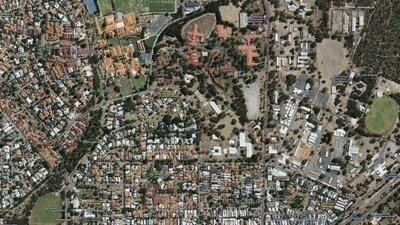

Pause the $698M Graylands forensic campus expansion — consult Mount Claremont first
The issue
Western Australia needs modern, properly resourced forensic mental health services. People in the justice system with serious mental illness deserve humane, well-funded care.
That is not what this petition is about.
This petition is about a $698 million project that will transform a residential suburb — home to four schools and thousands of residents, one school barely 270 metres from the construction zone — where the government's own independent advisor said the business case was not good enough, where the legal framework governing every patient in the facility changed after the expansion was designed, where the decision-making trail has never been made public, and where residents and parents have never been formally consulted or given a genuine opportunity to ask questions before irreversible works begin.
That is not NIMBY. That is the minimum standard of accountability any community is entitled to expect from its government.
We are asking the Cook Government to pause all site works, release the full evidence base, and conduct genuine community consultation before Stage 2 of this project — the path from 40 beds to 136 — is funded.
Full sourced detail, every document referenced in this petition, and ongoing updates on what the government has and hasn't answered: mtclaremontcommunity.github.io/graylandsforensic.
What Is Being Built
Graylands Hospital has operated in Mount Claremont since 1909. It currently functions as a general psychiatric hospital with around 100 beds alongside a 45-bed “high security” forensic mental health unit — the Frankland Centre and Dryandra Ward.
The forensic unit is where patients are held who would otherwise be in prison. Some are sent there from prison when they become too unwell to be cared for there. Others come straight from the courts. They have been charged with the most serious offences — including murder and serious sexual offences — but were found too unwell to stand trial, or not criminally responsible because of mental illness. They are no less of a risk than the people held in prison for similar offences. Every other place in Western Australia that holds people at this level of risk — including the maximum-security prisons at Casuarina and Hakea — is well away from homes and schools. Graylands is the exception.
Forensic mental health is not the same as general mental health care. Patients are detained because of serious offending. The presence of mental illness does not remove the underlying risk. Many mental health conditions are chronic, and a relapse can present the same risk that led to the original offence. Stating this is not stigma. It is a matter of public record and clinical fact — and a responsible government must plan around it.
Stage 1 is funded and now in design: 32 new sub-acute forensic beds plus Western Australia's first dedicated 8-bed child and adolescent forensic mental health unit — 40 new beds, taking the site to approximately 85 forensic beds. This is not a preview of some future decision still to be made. It is happening now, on a legal footing (below) that did not exist when it was planned. The confirmed long-term plan — set out in the government's own independent infrastructure advisor's assessment, not in any campaign document — is 136 forensic beds at an estimated total cost of $698 million. The general psychiatric hospital function will be substantially closed or relocated. What replaces it is a purpose-built forensic campus — nearly three times the current forensic capacity — in the same residential location, with its newest and most sensitive unit built approximately 270 metres from a school of 1,500 students.
The site decision was made in 2021. The project was funded in 2023. A contractor was engaged in April 2026 to begin design work — design, not construction. Nothing has been built yet, and the formal approval steps described later in this petition are still ahead of that date, not behind it. At no point in this five-year process was a single public information session held in Mount Claremont. No residents received direct written notification. No public record shows that parents of the four nearby schools were informed or given any opportunity to raise concerns.
For many years the publicly stated direction for Graylands was decommissioning — replacing an outdated institutional facility with modern services in contemporary settings. We have no record of the government providing a clear public explanation of when that commitment was reversed, by whom, or on what basis. The community is owed that explanation.
Most residents and school parents still do not know this is happening.
The Problems That Cannot Be Dismissed
1. The expansion was designed under a law that no longer exists. The government has not released the evidence that the risk assessment was updated.
The decision to transform Graylands was made in 2021. The business case was developed through 2022 and into 2023. The entire planning process — the Taskforce, the site selection, the bed numbers, the security model — was conceived under the Criminal Law (Mentally Impaired Accused) Act 1996, which allowed indefinite detention of forensic patients with no end date. Under that law, patients went in and largely stayed. The facility held people. It did not cycle them.
That law has been replaced.
The Criminal Law (Mental Impairment) Act 2023 received Royal Assent in April 2023 — at the same moment the business case was being finalised and funded — and came into full legal force on 1 September 2024. It does not simply change the administration of forensic mental health orders. It changes what a facility like Graylands is fundamentally designed to do.
Under the new law: all custody orders must now have an end date. The approximately 56 patients previously held on indefinite orders have had their cases returned to court for limiting terms to be set — some backdated to the original order date, producing what health professionals are now describing as “unplanned discharges.” Courts can now order a forensic patient to live in the community under a Community Supervision Order rather than be detained at all. The new Mental Impairment Review Tribunal can release patients without the Attorney-General's approval. Safe reintegration into the community is now an explicit statutory purpose of the Act — every patient in the proposed Graylands campus will be on a legally mandated pathway toward the surrounding community.
The streets of Mount Claremont are part of the clinical program. A campus of 136 beds, under this legal framework, is categorically different from what the 2021 Taskforce was planning.
The government may say it factored the new law into its planning. If so, it should have no difficulty releasing the updated demand projections, the updated security classification mix, the updated community access model, and the updated risk assessment for the surrounding area that reflect the new legal framework. The community is entitled to see that evidence — not simply be told it exists. It has not been released.
2. The government's own independent advisor said the business case was not good enough. The government funded it three weeks later, and has since given Parliament two different bed counts for the same project.
In March 2023, Infrastructure WA — the State's statutory independent infrastructure advisory body — formally assessed the Graylands business case and concluded that it contained “insufficient information on which to base an investment decision.”
Specific concerns included: the rapid pace of business case development leaving key elements undefined; heritage building refurbishment costs not adequately assessed; a Subiaco Wastewater Treatment Plant odour buffer affecting more than half the site with no management plan; an incomplete social impact assessment; and an incomplete environmental impact assessment.
The government committed $218.9 million approximately three weeks later.
The pace of that sequence — independent advice of insufficiency, followed within weeks by a major funding commitment, with no public release of the work done to address the concerns — is itself a governance question the community is entitled to ask. A government that proceeds with major funding commitments over the explicit concerns of its own independent advisory body has an elevated obligation to show its work. That work has not been shown.
The figures the community has been given have also moved without explanation. In Parliament in May 2023, the responsible Minister described this stage as adding “53 beds, including five for children and adolescents.” Current government project material describes the same stage as 32 sub-acute beds plus an 8-bed child and adolescent unit — 40 beds, not 53. Whichever number is correct, the community is entitled to a stable answer to a basic question: how many beds is this, and why has the number changed?
The community has also never been provided with the cabinet submissions, ministerial briefs, or inter-agency advice that accompanied each key decision — the October 2021 site decision, the November 2022 formal endorsement, or the April 2023 funding commitment. It has never been told which ministers authorised each step, or through what formal approval process. These are not unusual requests. They are the basic documentary record of how a major public decision was made, and the public is entitled to see it.
3. Residents and parents have never been genuinely consulted on a project that directly affects their community.
No public information session has been held in Mount Claremont about this project. No direct written notification was sent to residents. No public record shows that parents of children at the four nearby schools — John XXIII College, Mount Claremont Primary School, Moerlina School, and Quintilian School, with approximately 2,000 students between them — were ever directly informed or given a genuine opportunity to ask questions.
Whether any contact occurred between government officials and school administrators, and on what terms, has never been publicly disclosed. But whatever may have occurred behind closed doors produced no published school-interface safety assessment, no community safety protocol, and no accountability mechanism visible to the parents and residents most directly affected.
Consultation that is invisible to the people it is supposed to serve is not consultation. It is at best a briefing to institutional representatives, with no published outcome and no way for residents or parents to know what was said, what concerns were raised, or what commitments — if any — were made in response.
The government has pointed to notification of the City of Nedlands through a Commonwealth environmental referral process. The City provided no specific response. The government appears to regard this exchange as adequate community engagement for a $698 million transformation of a residential suburb.
It is not adequate. A project of this scale — affecting residential amenity, school safety, local traffic, heritage buildings, and the long-term character of a suburb — required formal, direct, documented engagement with residents and parents, well before contractor engagement. That did not happen.
4. The community has never been told how the clinical program will operate in this suburb.
A campus of 136 beds operating under the new law will involve substantially more patient-community interaction in the surrounding suburb than the existing 45-bed facility ever did. Community Forensic Mental Health Services will operate in local streets to support patients on community supervision orders. The suburb is not adjacent to the facility. It is part of how the facility functions.
No document available to the public discloses: what geographic limits apply to supervised leave programs near this campus; what routes may be used in surrounding streets; how nearby schools are identified and protected in risk assessments; or what notification residents will receive as part of this community access model. The community does not know because it was never told. It was never told because it was never consulted.
5. A documented notification failure at this site has never been publicly resolved — and this is not a uniquely local or historical risk.
In 2014, a patient absconded from the Frankland Centre. The community was not notified. The nearby schools were not notified. The then-Opposition spokesperson for mental health — now a Minister in the Cook Cabinet — stated publicly that it was “an outrage” the community was not warned.
There is no publicly available protocol, published procedure, or government statement confirming that a mandatory community notification system has been established at this facility in the twelve years since.
This is not a theoretical or dated concern. In February 2026, two patients escaped Cumberland Hospital in Sydney — a large public hospital campus with a medium-secure mental health unit, the closest structural parallel to a standalone Graylands campus — within a day of each other. In the fortnight that followed, three people were killed. The New South Wales Government ordered an urgent review of security protocols. Reporting describes both men as involuntary mental health patients; this petition does not assert their forensic-order status specifically, because the available reporting does not confirm it — but the underlying point does not depend on that distinction. A large hospital campus with a medium-secure mental health unit produced two absconding patients and three deaths within ten days, in 2026, not in some earlier and since-corrected era.
We are not asserting the Graylands facility is unsafe today. We are making a simpler point: the last time this community had reason to rely on a notification system at Graylands, one did not exist, and the risk category this petition raises is demonstrably not theoretical elsewhere in Australia right now. The proposed expansion is nearly three times larger, operates under a legal framework that actively drives more patient-community interaction, and sits across the road from a school of 1,500 students built on an open-concept campus. The community is entitled to a clear, publicly documented answer to what happens if a patient is unaccounted for — before construction begins, not after.
6. The full scope has never been disclosed to the community.
Government communications about this project refer to Stage 1 — 40 new beds. The long-term plan, confirmed in Infrastructure WA's own published assessment, is 136 forensic beds at an estimated total cost of $698 million, involving demolition of existing buildings, substantial clearing of the heritage grounds, and the closure of most general psychiatric services on the site.
Residents making decisions about whether to engage with this project — whether to sign a petition, write to a minister, or attend a public meeting — are entitled to understand the full scope of what is planned, not just the first stage. The government has not made that information the subject of any public communication to the Mount Claremont community.
7. The impact on surrounding homes has never been independently assessed.
The government's own independent infrastructure advisor found the social impact assessment for this project incomplete, and no property impact analysis — covering effects on residential values, marketability, or buyer demand — has been made public. This is not a claim that values will fall. It is that no evidence-based answer exists anywhere in the public record, for a project that materially changes the character of a residential suburb. Residents are entitled to the same evidence base the government had when it committed $218.9 million — and if an independent assessment did find a material effect, the community is entitled to know what compensation, acquisition, or redress mechanism would follow.
8. The site was chosen on criteria that never considered security.
Twenty alternative sites were assessed for this facility, on the government's own account, using criteria limited to accessibility, central location, and proximity to public transport. Not one of the twenty was assessed against community safety, school proximity, or security risk. Two other Australian states answered this differently: both New South Wales and Victoria locate their equivalent high-security forensic capacity within or immediately next to existing correctional infrastructure — not inside a general hospital campus bordered by homes and a school. We have not been able to identify a comparable facility of this scale anywhere in Australia sited the way this one is proposed. If the government knows of one, it should say so.
What We Are Asking For
Before any clearing, demolition or construction goes ahead at Graylands or at 9 John XXIII Avenue, we are asking the Cook Government to:
• Stop the works. Pause everything — vegetation clearing, demolition, site preparation, and the riding-centre relocation to 9 John XXIII Avenue — until this community has been properly consulted and the concerns in this petition have been answered.
• Show us the evidence. Release the full business case. Release the Infrastructure WA assessment and the government's response to its findings. Release the Taskforce recommendations, the site-selection analysis, and the masterplan that shows the total bed numbers across every stage.
• Show us how the decision was made. Release the cabinet submissions and ministerial briefings behind the 2021 site decision, the 2022 endorsement, and the 2023 funding commitment. Name the ministers who signed off each step. Explain, on the record, when and why a hospital that was supposed to be closed became a forensic campus instead — and why the public bed count has changed.
• Show us the planning was updated for the new law. Release the records of how the Taskforce, the Attorney-General, the Department of Justice and the Department of Health worked together while the Criminal Law (Mental Impairment) Act 2023 was being drafted. Release the updated demand numbers, security mix, community access model and risk assessment for this suburb under the new law. Saying the work was done is not enough. Show us.
• Tell us what the Education Department was told. Confirm whether the Department of Education was formally consulted about a forensic campus next to four schools before a contractor was engaged. Release any advice given. Confirm which portfolios signed off before the money was committed.
• Tell us what the schools were told. Release all records of any contact with the four nearby schools and their P&Cs. Tell us what was shared, and how each school responded.
• Look at other sites — properly, and in public. Commission an independent assessment of alternative locations, including sites next to Hakea and Casuarina prisons — the model already used elsewhere in Australia. Cost them on the same basis as Graylands, including heritage, environmental, odour-buffer and community-impact costs. The community is entitled to know whether a better site exists before a heritage site in a residential suburb undergoes irreversible changes.
• Show us the risk and impact assessments for this suburb. Publish the assessment of how a campus of this scale, operating under the new law, affects the four schools, the surrounding streets and the residential community — including heritage, environmental, and the property and social impacts Infrastructure WA already found incomplete.
• Show us where patients will go. Publish the boundaries of supervised leave programs. Show the routes that may be used in this suburb. Show how the four schools and surrounding homes are accounted for in the risk assessment under the new law.
• Consult the people who live here. Hold properly advertised public information sessions in Mount Claremont. Notify every nearby household in writing. Cover the full project across every stage. Do this before, not after, the design is finalised.
A Note on What This Petition Is Not
This petition does not oppose mental health services, the provision of forensic care, or the principle that these patients should be supported to return to community life. The community of Mount Claremont has lived alongside Graylands and adjacent mental health residential facilities for many decades without objection.
What we dispute is how this decision was made: without adequate information by the government's own standard; without a publicly documented rationale for reversing a direction that had been publicly committed to; without confirmed integration between the expansion planning and the legal reforms that govern it; without formal sign-off across all relevant government portfolios; and without telling the people who live next to it what was being planned.
Those are process failures. Process failures on a $698 million project in a residential suburb with four schools are not minor administrative matters. They are reasons to pause, to release the evidence, and to do this properly.
Initiated by the Mount Claremont Community Network on behalf of residents, homeowners, parents, and community members of Mount Claremont and surrounding suburbs.
Every factual claim in this petition is drawn from publicly available government sources: the Infrastructure WA Major Infrastructure Proposal Assessment (March 2023); WA Government project pages at wa.gov.au and buildingfortomorrow.wa.gov.au; Hansard, WA Legislative Assembly (17 May 2023 and 14 May 2026); the Criminal Law (Mental Impairment) Act 2023; EPBC Referral No. 2025-10271; the Legal Aid WA CLMI Factsheet (July 2024); Victorian Parliament Hansard and NSW Government reporting on comparable facilities; and credible mainstream media reporting. Every claim can be independently verified — the full list, with links, is on the Sources page of the website below.
Where this petition states that no public record exists of community or parent consultation, this reflects a thorough review of all publicly available government documentation as at July 2026.
Full sourced case, FAQs, and ongoing updates: https://mtclaremontcommunity.github.io/graylandsforensic/index.html

264
The issue
Western Australia needs modern, properly resourced forensic mental health services. People in the justice system with serious mental illness deserve humane, well-funded care.
That is not what this petition is about.
This petition is about a $698 million project that will transform a residential suburb — home to four schools and thousands of residents, one school barely 270 metres from the construction zone — where the government's own independent advisor said the business case was not good enough, where the legal framework governing every patient in the facility changed after the expansion was designed, where the decision-making trail has never been made public, and where residents and parents have never been formally consulted or given a genuine opportunity to ask questions before irreversible works begin.
That is not NIMBY. That is the minimum standard of accountability any community is entitled to expect from its government.
We are asking the Cook Government to pause all site works, release the full evidence base, and conduct genuine community consultation before Stage 2 of this project — the path from 40 beds to 136 — is funded.
Full sourced detail, every document referenced in this petition, and ongoing updates on what the government has and hasn't answered: mtclaremontcommunity.github.io/graylandsforensic.
What Is Being Built
Graylands Hospital has operated in Mount Claremont since 1909. It currently functions as a general psychiatric hospital with around 100 beds alongside a 45-bed “high security” forensic mental health unit — the Frankland Centre and Dryandra Ward.
The forensic unit is where patients are held who would otherwise be in prison. Some are sent there from prison when they become too unwell to be cared for there. Others come straight from the courts. They have been charged with the most serious offences — including murder and serious sexual offences — but were found too unwell to stand trial, or not criminally responsible because of mental illness. They are no less of a risk than the people held in prison for similar offences. Every other place in Western Australia that holds people at this level of risk — including the maximum-security prisons at Casuarina and Hakea — is well away from homes and schools. Graylands is the exception.
Forensic mental health is not the same as general mental health care. Patients are detained because of serious offending. The presence of mental illness does not remove the underlying risk. Many mental health conditions are chronic, and a relapse can present the same risk that led to the original offence. Stating this is not stigma. It is a matter of public record and clinical fact — and a responsible government must plan around it.
Stage 1 is funded and now in design: 32 new sub-acute forensic beds plus Western Australia's first dedicated 8-bed child and adolescent forensic mental health unit — 40 new beds, taking the site to approximately 85 forensic beds. This is not a preview of some future decision still to be made. It is happening now, on a legal footing (below) that did not exist when it was planned. The confirmed long-term plan — set out in the government's own independent infrastructure advisor's assessment, not in any campaign document — is 136 forensic beds at an estimated total cost of $698 million. The general psychiatric hospital function will be substantially closed or relocated. What replaces it is a purpose-built forensic campus — nearly three times the current forensic capacity — in the same residential location, with its newest and most sensitive unit built approximately 270 metres from a school of 1,500 students.
The site decision was made in 2021. The project was funded in 2023. A contractor was engaged in April 2026 to begin design work — design, not construction. Nothing has been built yet, and the formal approval steps described later in this petition are still ahead of that date, not behind it. At no point in this five-year process was a single public information session held in Mount Claremont. No residents received direct written notification. No public record shows that parents of the four nearby schools were informed or given any opportunity to raise concerns.
For many years the publicly stated direction for Graylands was decommissioning — replacing an outdated institutional facility with modern services in contemporary settings. We have no record of the government providing a clear public explanation of when that commitment was reversed, by whom, or on what basis. The community is owed that explanation.
Most residents and school parents still do not know this is happening.
The Problems That Cannot Be Dismissed
1. The expansion was designed under a law that no longer exists. The government has not released the evidence that the risk assessment was updated.
The decision to transform Graylands was made in 2021. The business case was developed through 2022 and into 2023. The entire planning process — the Taskforce, the site selection, the bed numbers, the security model — was conceived under the Criminal Law (Mentally Impaired Accused) Act 1996, which allowed indefinite detention of forensic patients with no end date. Under that law, patients went in and largely stayed. The facility held people. It did not cycle them.
That law has been replaced.
The Criminal Law (Mental Impairment) Act 2023 received Royal Assent in April 2023 — at the same moment the business case was being finalised and funded — and came into full legal force on 1 September 2024. It does not simply change the administration of forensic mental health orders. It changes what a facility like Graylands is fundamentally designed to do.
Under the new law: all custody orders must now have an end date. The approximately 56 patients previously held on indefinite orders have had their cases returned to court for limiting terms to be set — some backdated to the original order date, producing what health professionals are now describing as “unplanned discharges.” Courts can now order a forensic patient to live in the community under a Community Supervision Order rather than be detained at all. The new Mental Impairment Review Tribunal can release patients without the Attorney-General's approval. Safe reintegration into the community is now an explicit statutory purpose of the Act — every patient in the proposed Graylands campus will be on a legally mandated pathway toward the surrounding community.
The streets of Mount Claremont are part of the clinical program. A campus of 136 beds, under this legal framework, is categorically different from what the 2021 Taskforce was planning.
The government may say it factored the new law into its planning. If so, it should have no difficulty releasing the updated demand projections, the updated security classification mix, the updated community access model, and the updated risk assessment for the surrounding area that reflect the new legal framework. The community is entitled to see that evidence — not simply be told it exists. It has not been released.
2. The government's own independent advisor said the business case was not good enough. The government funded it three weeks later, and has since given Parliament two different bed counts for the same project.
In March 2023, Infrastructure WA — the State's statutory independent infrastructure advisory body — formally assessed the Graylands business case and concluded that it contained “insufficient information on which to base an investment decision.”
Specific concerns included: the rapid pace of business case development leaving key elements undefined; heritage building refurbishment costs not adequately assessed; a Subiaco Wastewater Treatment Plant odour buffer affecting more than half the site with no management plan; an incomplete social impact assessment; and an incomplete environmental impact assessment.
The government committed $218.9 million approximately three weeks later.
The pace of that sequence — independent advice of insufficiency, followed within weeks by a major funding commitment, with no public release of the work done to address the concerns — is itself a governance question the community is entitled to ask. A government that proceeds with major funding commitments over the explicit concerns of its own independent advisory body has an elevated obligation to show its work. That work has not been shown.
The figures the community has been given have also moved without explanation. In Parliament in May 2023, the responsible Minister described this stage as adding “53 beds, including five for children and adolescents.” Current government project material describes the same stage as 32 sub-acute beds plus an 8-bed child and adolescent unit — 40 beds, not 53. Whichever number is correct, the community is entitled to a stable answer to a basic question: how many beds is this, and why has the number changed?
The community has also never been provided with the cabinet submissions, ministerial briefs, or inter-agency advice that accompanied each key decision — the October 2021 site decision, the November 2022 formal endorsement, or the April 2023 funding commitment. It has never been told which ministers authorised each step, or through what formal approval process. These are not unusual requests. They are the basic documentary record of how a major public decision was made, and the public is entitled to see it.
3. Residents and parents have never been genuinely consulted on a project that directly affects their community.
No public information session has been held in Mount Claremont about this project. No direct written notification was sent to residents. No public record shows that parents of children at the four nearby schools — John XXIII College, Mount Claremont Primary School, Moerlina School, and Quintilian School, with approximately 2,000 students between them — were ever directly informed or given a genuine opportunity to ask questions.
Whether any contact occurred between government officials and school administrators, and on what terms, has never been publicly disclosed. But whatever may have occurred behind closed doors produced no published school-interface safety assessment, no community safety protocol, and no accountability mechanism visible to the parents and residents most directly affected.
Consultation that is invisible to the people it is supposed to serve is not consultation. It is at best a briefing to institutional representatives, with no published outcome and no way for residents or parents to know what was said, what concerns were raised, or what commitments — if any — were made in response.
The government has pointed to notification of the City of Nedlands through a Commonwealth environmental referral process. The City provided no specific response. The government appears to regard this exchange as adequate community engagement for a $698 million transformation of a residential suburb.
It is not adequate. A project of this scale — affecting residential amenity, school safety, local traffic, heritage buildings, and the long-term character of a suburb — required formal, direct, documented engagement with residents and parents, well before contractor engagement. That did not happen.
4. The community has never been told how the clinical program will operate in this suburb.
A campus of 136 beds operating under the new law will involve substantially more patient-community interaction in the surrounding suburb than the existing 45-bed facility ever did. Community Forensic Mental Health Services will operate in local streets to support patients on community supervision orders. The suburb is not adjacent to the facility. It is part of how the facility functions.
No document available to the public discloses: what geographic limits apply to supervised leave programs near this campus; what routes may be used in surrounding streets; how nearby schools are identified and protected in risk assessments; or what notification residents will receive as part of this community access model. The community does not know because it was never told. It was never told because it was never consulted.
5. A documented notification failure at this site has never been publicly resolved — and this is not a uniquely local or historical risk.
In 2014, a patient absconded from the Frankland Centre. The community was not notified. The nearby schools were not notified. The then-Opposition spokesperson for mental health — now a Minister in the Cook Cabinet — stated publicly that it was “an outrage” the community was not warned.
There is no publicly available protocol, published procedure, or government statement confirming that a mandatory community notification system has been established at this facility in the twelve years since.
This is not a theoretical or dated concern. In February 2026, two patients escaped Cumberland Hospital in Sydney — a large public hospital campus with a medium-secure mental health unit, the closest structural parallel to a standalone Graylands campus — within a day of each other. In the fortnight that followed, three people were killed. The New South Wales Government ordered an urgent review of security protocols. Reporting describes both men as involuntary mental health patients; this petition does not assert their forensic-order status specifically, because the available reporting does not confirm it — but the underlying point does not depend on that distinction. A large hospital campus with a medium-secure mental health unit produced two absconding patients and three deaths within ten days, in 2026, not in some earlier and since-corrected era.
We are not asserting the Graylands facility is unsafe today. We are making a simpler point: the last time this community had reason to rely on a notification system at Graylands, one did not exist, and the risk category this petition raises is demonstrably not theoretical elsewhere in Australia right now. The proposed expansion is nearly three times larger, operates under a legal framework that actively drives more patient-community interaction, and sits across the road from a school of 1,500 students built on an open-concept campus. The community is entitled to a clear, publicly documented answer to what happens if a patient is unaccounted for — before construction begins, not after.
6. The full scope has never been disclosed to the community.
Government communications about this project refer to Stage 1 — 40 new beds. The long-term plan, confirmed in Infrastructure WA's own published assessment, is 136 forensic beds at an estimated total cost of $698 million, involving demolition of existing buildings, substantial clearing of the heritage grounds, and the closure of most general psychiatric services on the site.
Residents making decisions about whether to engage with this project — whether to sign a petition, write to a minister, or attend a public meeting — are entitled to understand the full scope of what is planned, not just the first stage. The government has not made that information the subject of any public communication to the Mount Claremont community.
7. The impact on surrounding homes has never been independently assessed.
The government's own independent infrastructure advisor found the social impact assessment for this project incomplete, and no property impact analysis — covering effects on residential values, marketability, or buyer demand — has been made public. This is not a claim that values will fall. It is that no evidence-based answer exists anywhere in the public record, for a project that materially changes the character of a residential suburb. Residents are entitled to the same evidence base the government had when it committed $218.9 million — and if an independent assessment did find a material effect, the community is entitled to know what compensation, acquisition, or redress mechanism would follow.
8. The site was chosen on criteria that never considered security.
Twenty alternative sites were assessed for this facility, on the government's own account, using criteria limited to accessibility, central location, and proximity to public transport. Not one of the twenty was assessed against community safety, school proximity, or security risk. Two other Australian states answered this differently: both New South Wales and Victoria locate their equivalent high-security forensic capacity within or immediately next to existing correctional infrastructure — not inside a general hospital campus bordered by homes and a school. We have not been able to identify a comparable facility of this scale anywhere in Australia sited the way this one is proposed. If the government knows of one, it should say so.
What We Are Asking For
Before any clearing, demolition or construction goes ahead at Graylands or at 9 John XXIII Avenue, we are asking the Cook Government to:
• Stop the works. Pause everything — vegetation clearing, demolition, site preparation, and the riding-centre relocation to 9 John XXIII Avenue — until this community has been properly consulted and the concerns in this petition have been answered.
• Show us the evidence. Release the full business case. Release the Infrastructure WA assessment and the government's response to its findings. Release the Taskforce recommendations, the site-selection analysis, and the masterplan that shows the total bed numbers across every stage.
• Show us how the decision was made. Release the cabinet submissions and ministerial briefings behind the 2021 site decision, the 2022 endorsement, and the 2023 funding commitment. Name the ministers who signed off each step. Explain, on the record, when and why a hospital that was supposed to be closed became a forensic campus instead — and why the public bed count has changed.
• Show us the planning was updated for the new law. Release the records of how the Taskforce, the Attorney-General, the Department of Justice and the Department of Health worked together while the Criminal Law (Mental Impairment) Act 2023 was being drafted. Release the updated demand numbers, security mix, community access model and risk assessment for this suburb under the new law. Saying the work was done is not enough. Show us.
• Tell us what the Education Department was told. Confirm whether the Department of Education was formally consulted about a forensic campus next to four schools before a contractor was engaged. Release any advice given. Confirm which portfolios signed off before the money was committed.
• Tell us what the schools were told. Release all records of any contact with the four nearby schools and their P&Cs. Tell us what was shared, and how each school responded.
• Look at other sites — properly, and in public. Commission an independent assessment of alternative locations, including sites next to Hakea and Casuarina prisons — the model already used elsewhere in Australia. Cost them on the same basis as Graylands, including heritage, environmental, odour-buffer and community-impact costs. The community is entitled to know whether a better site exists before a heritage site in a residential suburb undergoes irreversible changes.
• Show us the risk and impact assessments for this suburb. Publish the assessment of how a campus of this scale, operating under the new law, affects the four schools, the surrounding streets and the residential community — including heritage, environmental, and the property and social impacts Infrastructure WA already found incomplete.
• Show us where patients will go. Publish the boundaries of supervised leave programs. Show the routes that may be used in this suburb. Show how the four schools and surrounding homes are accounted for in the risk assessment under the new law.
• Consult the people who live here. Hold properly advertised public information sessions in Mount Claremont. Notify every nearby household in writing. Cover the full project across every stage. Do this before, not after, the design is finalised.
A Note on What This Petition Is Not
This petition does not oppose mental health services, the provision of forensic care, or the principle that these patients should be supported to return to community life. The community of Mount Claremont has lived alongside Graylands and adjacent mental health residential facilities for many decades without objection.
What we dispute is how this decision was made: without adequate information by the government's own standard; without a publicly documented rationale for reversing a direction that had been publicly committed to; without confirmed integration between the expansion planning and the legal reforms that govern it; without formal sign-off across all relevant government portfolios; and without telling the people who live next to it what was being planned.
Those are process failures. Process failures on a $698 million project in a residential suburb with four schools are not minor administrative matters. They are reasons to pause, to release the evidence, and to do this properly.
Initiated by the Mount Claremont Community Network on behalf of residents, homeowners, parents, and community members of Mount Claremont and surrounding suburbs.
Every factual claim in this petition is drawn from publicly available government sources: the Infrastructure WA Major Infrastructure Proposal Assessment (March 2023); WA Government project pages at wa.gov.au and buildingfortomorrow.wa.gov.au; Hansard, WA Legislative Assembly (17 May 2023 and 14 May 2026); the Criminal Law (Mental Impairment) Act 2023; EPBC Referral No. 2025-10271; the Legal Aid WA CLMI Factsheet (July 2024); Victorian Parliament Hansard and NSW Government reporting on comparable facilities; and credible mainstream media reporting. Every claim can be independently verified — the full list, with links, is on the Sources page of the website below.
Where this petition states that no public record exists of community or parent consultation, this reflects a thorough review of all publicly available government documentation as at July 2026.
Full sourced case, FAQs, and ongoing updates: https://mtclaremontcommunity.github.io/graylandsforensic/index.html
The Decision Makers
Petition Updates
Share this petition
Petition created on 24 June 2026