Universal Ostrich Farm vs CFIA: Legal Analysis Canadian Bill of Rights & Common Law

PLEASE SHARE FAR AND WIDE
Universal Ostrich Farm vs CFIA: Legal Analysis Canadian Bill of Rights & Common Law – A Unified Defense of Fundamental Rights, “RULE OF LAW”
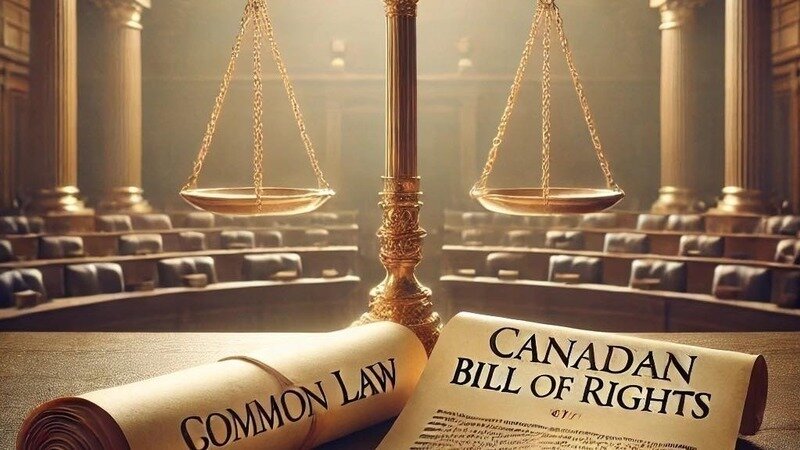
I. The Legal Foundations: Bill of Rights and Common Law Together
Canada’s legal system is built on two pillars of individual liberty:
The Canadian Bill of Rights – A statutory declaration of pre-existing rights, requiring all federal laws to uphold liberty, due process, and property.
Common Law – The inherited legal tradition that recognizes these rights as inherent, inviolable, and not subject to arbitrary interference.
These two sources do not conflict—they reinforce one another. The Bill of Rights codifies rights long protected by common law. Section 2 ensures that even modern federal legislation must not override these rights, while the common law provides the deeper roots and case law enforcing them.
Together, they form a shield against federal overreach.
II. The Violations Committed by CFIA
Under both frameworks, the CFIA’s enforcement actions against Universal Ostrich Farm are illegal:
• Forced destruction of healthy private animals
• Warrantless entry onto private land
• Penalties imposed without hearing
• No independent adjudication, no due process
These actions breach Section 1(a) and 1(b) of the Canadian Bill of Rights and violate the common law’s inviolable protections of property and due process.
III. The Rule of Law: A Foundational Principle Violated
At the core of Canada's legal tradition is the rule of law—the idea that all actions by the government must be authorized by law, applied equally, and subject to oversight. It ensures that no official, agency, or minister acts above the law, and that citizens are protected from arbitrary state power.
This principle is enshrined in multiple foundational instruments:
The Canadian Bill of Rights, particularly Section 1(a), which affirms “the right of the individual to equality before the law and the protection of the law.”
Common law, which requires procedural fairness, lawful authority, and due process.
Seminal case law, such as Roncarelli v. Duplessis (1959), which established that discretionary power must be exercised lawfully and not arbitrarily.
In the case of the Universal Ostrich Farm, the CFIA's unilateral enforcement actions—carried out without hearings, warrants, or judicial orders—violate this fundamental principle. No regulation or departmental policy can override the requirement for lawful justification and due process.
The rule of law is not optional. It is the backbone of democracy and the safeguard of rights. Its breach undermines all legal authority and collapses public trust.
IV. Statutes Are Inoperative Where Rights Are Violated
A. Canadian Bill of Rights – Section 2
“Every law of Canada shall… be so construed and applied as not to abrogate… the rights or freedoms herein recognized…”
If a law does so, and Parliament has not expressly declared otherwise, it is inoperative.
R. v. Drybones [1970] S.C.R. 282 confirms that federal laws violating rights under the Bill must be struck down.
B. Common Law – Campbell Motors v. Gordon [1951] O.R. 545
“The right of property is inviolable. It is not to be taken away except by due process of law.”
Statutory powers must be interpreted narrowly to avoid infringing property rights. When they are applied without due process, they are invalid at common law.
V. Supporting Case Law (Bill of Rights & Common Law)
• R. v. Drybones (1970) – Law invalidated for violating Bill of Rights equality provision.
• Campbell Motors v. Gordon (1951) – Private property is protected unless legislation clearly overrides, and even then must follow due process.
• Entick v. Carrington (1765) – State officials cannot enter property without legal warrant or justification.
• Roncarelli v. Duplessis (1959) – Public officials are personally liable for rights violations.
• Cooper v. Wandsworth (1863) – No punishment or deprivation without a fair hearing.
VI. Grand Conclusion
The actions of the CFIA—based on vague suspicion, internal discretion, and unchecked statutory authority—violate both the Canadian Bill of Rights and foundational common law principles.
• These rights are not granted by the government. They are inherent, and the law must conform to them.
• The Bill of Rights prohibits federal legislation from overriding these rights without express declaration—which the Health of Animals Act lacks.
• The common law forbids interference with property and liberty without lawful cause, process, and judicial oversight.
Therefore, the CFIA’s enforcement measures are unlawful, unconstitutional, and inoperative.
No statute, no bureaucratic power, and no agency directive can override the supreme principles of liberty, due process, and property rights—not in a free and lawful society.
VI. The Right to Trial by Jury and Grand Jury: Alive in Canadian Law
The common law guarantees two essential tools to protect the people from government abuse:
1. Trial by Jury
Section 2(e) of the Canadian Bill of Rights states:
“No law of Canada shall be construed or applied so as to deprive a person of the right to a fair hearing in accordance with the principles of fundamental justice for the determination of his rights and obligations, including a fair and public hearing by an independent and impartial tribunal…”
This section has been interpreted to include the right to trial by jury in serious matters, especially where liberty or property is at stake. The Supreme Court in R. v. Thomas [1974] recognized that trial by jury is a common law right, and that statutory attempts to bypass it must be narrowly interpreted.
Where the state seeks to destroy a person’s livelihood or seize their property—such as CFIA attempting to cull healthy ostriches—a trial by jury is necessary to ensure fairness, independence, and public oversight.
2. Grand Jury: A Living Common Law Right
Although grand juries were removed from Canadian criminal procedure statutes, the common law right to initiate a grand jury remains alive.
Grand juries historically served three roles:
• Screening criminal charges brought against individuals
• Investigating government wrongdoing or abuse of power
• Providing a public check on officials through citizen-led oversight
Common law does not die by disuse. Unless extinguished by express repeal of the right itself (not merely the mechanism), it remains in force. No act of Parliament has extinguished the right of a citizen to request a grand jury to investigate unlawful government actions.
3. Why Grand Jury and Trial Jury Are Needed in This Case
In the case of Universal Ostrich Farm:
• The CFIA’s actions amount to an accusation of wrongdoing without formal charge or hearing.
• The destruction of property, reputational damage, and denial of process are punitive in nature.
• There is no independent venue to challenge the facts or lawfulness of the CFIA’s decisions.
Only a trial by jury offers fair adjudication. Only a grand jury can investigate whether CFIA and its agents have committed abuse of power or misused statutory discretion.
The courts cannot remain passive. Where justice is denied through executive overreach, it is the people’s right and duty to demand grand jury review and trial jury resolution.
VII. Grand Conclusion: Justice Demands Jury Oversight
The actions of the CFIA—executed without warrant, due process, or meaningful recourse—are not merely bureaucratic overreach; they are a direct assault on foundational legal rights protected under both the Canadian Bill of Rights and common law.
These are not abstract ideals. They are real and enforceable:
• Section 1(a), 1(b), and 2(e) of the Canadian Bill of Rights affirm the rights to liberty, property, and due process, including the right to a fair hearing by an impartial tribunal—which in serious matters means a jury.
• Common law has always recognized that no official, however powerful, is above the law, and that the people—through the trial jury and the grand jury—are the final check on state abuse.
• Case law from Drybones to Roncarelli proves that even statutes and Ministers are bound by these principles.
In this case, there was no hearing, no impartial adjudicator, and no public oversight. This is precisely the kind of abuse that trial by jury and grand jury are designed to prevent.
It is time to revive those mechanisms.
Only a trial jury can weigh the evidence and decide whether the CFIA's claims justify the destruction of private animals and livelihoods.
Only a grand jury can investigate whether public servants acted unlawfully, misused their office, or trampled on the rights of law-abiding citizens.
In a free society, the people judge the government—not the other way around.
The Canadian Bill of Rights and common law are not suggestions.
They are binding, enforceable limits on state power.
And when they are ignored, the remedy lies in the hands of the people—through the jury box.
This case is not just about ostriches. It is about Canada’s constitutional fabric—the guarantees enshrined in the Canadian Bill of Rights, the protections embedded in common law, and the right of citizens to be heard before being punished. The CFIA’s actions represent a direct assault on all three.
When a government agency can destroy private property without a hearing, enter land without a warrant, and override fundamental rights with internal policies, the rule of law has been abandoned.
This is precisely why jury trials and grand juries exist under common law: to provide independent oversight, ensure due process, and prevent abuse of executive power. These institutions are not privileges—they are rights that cannot be removed by legislation. Supreme Court rulings, including R. v. Drybones and Roncarelli v. Duplessis, confirm that no statute or regulation may override the Bill of Rights or the rule of law itself.
What happened at the Universal Ostrich Farm is not an isolated incident—it is a warning. Unless Canadians stand up now, defend their rights, and invoke the legal mechanisms available to them, this pattern of arbitrary governance will continue. The law must govern the government—not the other way around.
Let this be the line in the sand.
We are not subjects. We are free people.
The law is not theirs to twist. It is ours to uphold.
Grand Jury Petition ✍️https://www.change.org/GrandJuryPetition
History of Grand Juries: https://docs.google.com/document/d/15s8vFPVkFBP1TUMM7zZ55jPuslTRlL3Zk3ugzCJ76Wc/edit