
Exigir justicia para las víctimas del terremoto en Venezuela
La causa
Versión Español:
Justicia para las víctimas del terremoto de Venezuela: Diosdado Cabello, Delcy Rodríguez y Jorge Rodríguez deben responder ante la Corte Penal Internacional
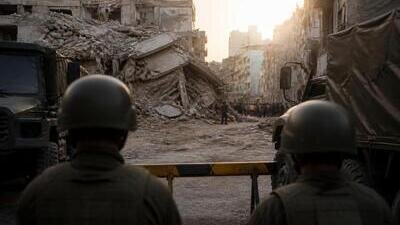
El 24 de junio de 2026, dos terremotos de magnitud 7.2 y 7.5 golpearon el norte de Venezuela en menos de un minuto. Cientos de personas perdieron la vida. Más de 50.000 siguen desaparecidas bajo los escombros. Decenas de edificios colapsaron en Caracas, La Guaira, Carabobo, Miranda, Falcón y Aragua. El país quedó partido.
Lo que ocurrió después no fue un fallo de gestión. Fue una decisión política.
Mientras familias enteras buscan a sus muertos entre los escombros, el régimen venezolano, encabezado en ese momento por Diosdado Cabello como ministro del Interior, Delcy Rodríguez como presidenta encargada y Jorge Rodríguez como presidente de la Asamblea Nacional, convirtió la emergencia en un instrumento de control. Hicieron exactamente lo que han hecho durante años con cualquier crisis: priorizaron el poder sobre las personas.
Exigimos que la Fiscalía de la Corte Penal Internacional incorpore los hechos ocurridos durante el terremoto de junio de 2026 a la investigación activa Venezuela I, y que evalúe la responsabilidad penal individual de Diosdado Cabello, Delcy Rodríguez, Jorge Rodríguez y otros funcionarios del régimen por conductas que constituyen crímenes contra la población civil.
Esto es lo que ocurrió, y está documentado.
LOS HECHOS
1. Militarizaron la emergencia en lugar de humanizarla
Dentro de las primeras 48 horas, Diosdado Cabello anunció la militarización total del estado La Guaira, la zona más afectada por los terremotos, y ordenó el cierre de acceso a partir de las 8:00 pm del 26 de junio. El estado fue puesto bajo control de la Fuerza Armada Nacional Bolivariana. Delcy Rodríguez ratificó la medida al día siguiente.
En esas mismas horas, había más de 50.000 personas desaparecidas bajo los escombros. Las primeras 72 horas son las decisivas para rescatar sobrevivientes con vida. El régimen dedicó esas horas a desplegar 11.500 funcionarios de seguridad en La Guaira "para garantizar la paz y la tranquilidad", según las propias palabras de Cabello.
2. Instalaron un sistema de QR para controlar quién podía ayudar
Cabello anunció que cualquier persona que quisiera entrar a La Guaira a ayudar debía registrarse previamente en el Poliedro de Caracas, recibir un código QR y, en el caso de motorizados, un chaleco identificatorio emitido por el gobierno. Sin ese permiso gubernamental, no había paso.
En términos concretos: para llevar agua, medicinas o alimentos a familias atrapadas en una zona de desastre declarada, era necesario obtener autorización del mismo gobierno que había abandonado esas familias durante años.
3. Bloquearon la ayuda independiente
Efectivos de la Guardia Nacional impidieron el paso de ciudadanos que transportaban alimentos, agua y medicinas hacia los sectores afectados, incluyendo El Junquito. Las imágenes y testimonios circularon en redes sociales. Los dirigentes de oposición denunciaron que las autoridades limitaron la recolección y entrega de donaciones a los centros de acopio autorizados por el gobierno, bloqueando los canales independientes organizados por ciudadanos, iglesias y ONG.
4. Amenazaron a periodistas durante el rescate
El locutor Gabriel Tinocol fue amenazado por un funcionario con ser trasladado al SEBIN (Servicio Bolivariano de Inteligencia) mientras transmitía en vivo por TikTok las labores de rescate en Caracas. La amenaza ocurrió durante las primeras horas de la emergencia, cuando más de 50.000 venezolanos no sabían si sus familiares estaban vivos.
5. Cuarenta organizaciones de derechos humanos firmaron una denuncia formal en 48 horas
El 27 de junio de 2026, apenas 72 horas después del primer terremoto, un grupo de 40 organizaciones venezolanas de derechos humanos firmó en Caracas un comunicado formal denunciando la militarización de La Guaira. El documento señala riesgos específicos documentados: detenciones arbitrarias, restricciones indebidas a la circulación, obstáculos para el trabajo de organizaciones humanitarias independientes y dificultades para el acceso a información sobre familiares desaparecidos.
No lo firmó la oposición política. Lo firmaron organizaciones civiles operando dentro del país, poniendo su nombre en un documento público.
6. Los edificios colapsaron porque el Estado los dejó colapsar
Venezuela tenía normas de construcción sismorresistente obligatorias desde 1982, actualizadas en 2001 y nuevamente en 2019 mediante la norma COVENIN 1756-1:2019. Esas normas no se aplicaron ni fiscalizaron.
La Gran Misión Vivienda Venezuela, el programa de construcción masiva del chavismo que recibió estimados de 67 mil millones de dólares, fue ejecutada sin supervisión técnica independiente, adjudicando contratos a empresas vinculadas a las redes del régimen, en zonas de riesgo sísmico conocido, sin cumplir las normas vigentes. El presidente de la Asociación de Ingenieros de Venezuela declaró que los cálculos estructurales de los edificios de la Misión eran "secreto de Estado". El decano de la Facultad de Arquitectura de la UCV advirtió públicamente desde 2017 que esos edificios eran vulnerables ante un sismo.
En agosto de 2017, un sismo de magnitud 4.5 produjo grietas que hicieron temer el colapso de un edificio de Misión Vivienda en Tanaguarenas, exactamente en el estado que hoy es zona de desastre. El gobierno no actuó.
En septiembre de 2025, nueve meses antes del terremoto de 2026, la misma región fue golpeada por un doblete sísmico de magnitudes 6.2 y 6.3, que causó daños estructurales extensos en Zulia y Lara. El gobierno no tomó ninguna medida de inspección, reforzamiento o actualización de normas en los meses siguientes.
El resultado está en los escombros de La Guaira.
7. El sistema de salud ya estaba colapsado antes del primer temblor
Trece hospitales sufrieron daños en los sismos. Ninguno estaba en condiciones de responder a una emergencia de esta escala antes del terremoto. Los médicos que quedaron disponibles atendieron fracturas, traumatismos, aplastamientos y heridas críticas en instalaciones sin insumos, sin electricidad y sin equipos. El desmoronamiento del sistema de salud venezolano no fue causado por los terremotos. Fue expuesto por ellos.
POR QUÉ LA CPI TIENE COMPETENCIA
La Corte Penal Internacional tiene abierta desde 2021 la investigación Venezuela I, la única investigación activa de la CPI en América Latina, actualmente conducida por el vicefiscal Mame Mandiaye Niang tras la separación del fiscal Karim Khan por conflicto de interés.
Esa investigación cubre crímenes de lesa humanidad cometidos desde el 12 de febrero de 2014. La conducta del régimen durante el terremoto de junio de 2026 no abre un caso nuevo. Es evidencia adicional del mismo patrón: un gobierno que aplica de manera sistemática la lógica del control político sobre la vida y la muerte de la población civil.
El uso deliberado de la emergencia para suprimir la organización civil independiente, bloquear el acceso humanitario, silenciar a periodistas y militarizar una zona de rescate mientras mueren personas que pudieron salvarse, encaja dentro de la categoría de actos inhumanos cometidos como parte de un ataque sistemático contra la población civil, tal como lo define el artículo 7 del Estatuto de Roma.
No pedimos que la CPI juzgue al régimen por el terremoto. Pedimos que juzgue al régimen por lo que hizo mientras el terremoto mataba a sus ciudadanos.
LO QUE SE PIDE
Al firmar esta petición, se exige:
1.Que la Fiscalía de la CPI, bajo la conducción del vicefiscal Mame Mandiaye Niang, incorpore los hechos documentados del 24 al 27 de junio de 2026 a la investigación activa Venezuela I.
2. Que se evalúe la responsabilidad penal individual de Diosdado Cabello, Delcy Rodríguez y Jorge Rodríguez por las decisiones tomadas durante la emergencia, incluyendo la militarización de La Guaira, el bloqueo de la ayuda humanitaria independiente y la restricción del acceso a la información.
3. Que el Consejo de Derechos Humanos de la ONU y el Alto Comisionado de Naciones Unidas para los Derechos Humanos constituyan una misión de verificación independiente para documentar las condiciones de la respuesta humanitaria en Venezuela y las restricciones impuestas por el gobierno.
4. Que los gobiernos democráticos del mundo utilicen todos los mecanismos diplomáticos disponibles para presionar al régimen venezolano a garantizar acceso humanitario irrestricto a las zonas afectadas.
Ya el mundo ha visto esta historia antes: en Haití en 2010, en Siria, en Myanmar. Sabemos lo que ocurre cuando un gobierno autoritario aprovecha un desastre natural para reforzar su control sobre la población. Y sabemos que el silencio tiene un precio.
No pedimos justicia perfecta. Pedimos que el mundo diga, con su firma, que lo que ocurrió en Venezuela no fue solo una tragedia natural. Fue también una decisión política. Y las decisiones políticas tienen responsables.
Néstor Urdaneta
English version
Justice for Venezuela's Earthquake Victims: Diosdado Cabello, Delcy Rodríguez, and Jorge Rodríguez Must Answer to the International Criminal Court
On June 24, 2026, two earthquakes of magnitude 7.2 and 7.5 struck northern Venezuela within less than one minute. Hundreds of people lost their lives. More than 50,000 remain missing under the rubble. Dozens of buildings collapsed across Caracas, La Guaira, Carabobo, Miranda, Falcón, and Aragua. The country was torn apart.
What happened next was not a management failure. It was a political decision.
While entire families search for their dead among the debris, the Venezuelan regime, led at that moment by Diosdado Cabello as Interior Minister, Delcy Rodríguez as Acting President, and Jorge Rodríguez as President of the National Assembly, turned the emergency into an instrument of control. They did exactly what they have done for years with every crisis: they prioritized power over people.
We demand that the Prosecutor's Office of the International Criminal Court incorporate the events that occurred during the June 2026 earthquake into the active Venezuela I investigation, and assess the individual criminal responsibility of Diosdado Cabello, Delcy Rodríguez, Jorge Rodríguez, and other regime officials for conduct that constitutes crimes against the civilian population.
This is what happened. It is documented.
THE FACTS
They militarized the emergency instead of humanizing it
Within the first 48 hours, Diosdado Cabello announced the full militarization of La Guaira state, the hardest-hit area, and ordered access shut down starting at 8:00 pm on June 26. The state was placed under the control of the Bolivarian National Armed Forces. Delcy Rodríguez ratified the measure the following day.
At that same moment, more than 50,000 people were missing under the rubble. The first 72 hours are decisive for rescuing survivors alive. The regime spent those hours deploying 11,500 security forces to La Guaira "to guarantee peace and order," in Cabello's own words.
They installed a QR system to control who could help
Cabello announced that anyone wishing to enter La Guaira to help had to pre-register at the Poliedro de Caracas, receive a government-issued QR code, and in the case of motorcyclists, a government-issued identifying vest. Without that permit, there was no entry.
In concrete terms: to bring water, medicine, or food to families trapped in a declared disaster zone, citizens needed authorization from the same government that had abandoned those families for years.
They blocked independent aid
National Guard troops blocked citizens transporting food, water, and medicine to affected areas, including El Junquito. Images and testimonies spread across social media. Opposition leaders denounced that authorities restricted the collection and delivery of donations to government-authorized collection centers, shutting out independent channels organized by citizens, churches, and NGOs.
They threatened journalists during the rescue
Broadcaster Gabriel Tinocol was threatened by a government official with being transferred to the SEBIN (Bolivarian Intelligence Service) while livestreaming rescue operations in Caracas on TikTok. The threat occurred during the first hours of the emergency, when more than 50,000 Venezuelans did not know whether their family members were alive.
Forty human rights organizations filed a formal complaint within 48 hours
On June 27, 2026, just 72 hours after the first earthquake, a group of 40 Venezuelan human rights organizations signed a formal statement in Caracas denouncing the militarization of La Guaira. The document identifies specific documented risks: arbitrary detentions, unlawful restrictions on freedom of movement, obstruction of independent humanitarian organizations, and difficulties accessing information about missing relatives.
This was not signed by the political opposition. It was signed by civil society organizations operating inside the country, putting their names on a public document.
The buildings collapsed because the State let them collapse
Venezuela had mandatory seismic construction standards since 1982, updated in 2001 and again in 2019 under norm COVENIN 1756-1:2019. Those standards were neither enforced nor monitored.
The Gran Misión Vivienda Venezuela, the regime's mass housing program that received an estimated 67 billion dollars, was executed without independent technical oversight, awarding contracts to companies linked to regime networks, in known seismic risk zones, without complying with existing regulations. The president of the Venezuelan Engineers Association stated that the structural calculations for Mission housing buildings were "a state secret." The dean of the School of Architecture at the Central University of Venezuela publicly warned as early as 2017 that those buildings were vulnerable in the event of an earthquake.
In August 2017, a magnitude 4.5 earthquake produced cracks that raised fears of collapse in a Mission Vivienda building in Tanaguarenas, the same coastal state now declared a disaster zone. The government did not act.
In September 2025, nine months before the 2026 earthquake, the same region was struck by a seismic doublet of magnitudes 6.2 and 6.3, causing extensive structural damage in Zulia and Lara. The government took no inspection, reinforcement, or regulatory action in the months that followed.
The result is visible in the rubble of La Guaira.
The health system had already collapsed before the first tremor
Thirteen hospitals sustained damage in the earthquakes. Not one was equipped to respond to an emergency of this scale before the earthquake hit. The doctors who remained treated fractures, head trauma, crush injuries, and critical wounds in facilities without supplies, without electricity, and without equipment. The collapse of Venezuela's health system was not caused by the earthquakes. It was exposed by them.
WHY THE ICC HAS JURISDICTION
The International Criminal Court has had an active investigation into Venezuela, known as Venezuela I, since 2021. It is the only active ICC investigation in Latin America, currently led by Deputy Prosecutor Mame Mandiaye Niang following the recusal of Chief Prosecutor Karim Khan due to a conflict of interest.
That investigation covers crimes against humanity committed since February 12, 2014. The regime's conduct during the June 2026 earthquake does not open a new case. It is additional evidence of the same pattern: a government that systematically applies the logic of political control over the life and death of its civilian population.
The deliberate use of the emergency to suppress independent civil organization, block humanitarian access, silence journalists, and militarize a rescue zone while people who could have been saved were dying falls within the category of inhumane acts committed as part of a systematic attack against the civilian population, as defined under Article 7 of the Rome Statute.
We are not asking the ICC to judge the regime for the earthquake. We are asking the ICC to judge the regime for what it did while the earthquake was killing its citizens.
WHAT WE ARE ASKING
By signing this petition, we demand:
1.That the ICC Prosecutor's Office, under the leadership of Deputy Prosecutor Mame Mandiaye Niang, incorporate the documented events of June 24-27, 2026, into the active Venezuela I investigation.
2. That the individual criminal responsibility of Diosdado Cabello, Delcy Rodríguez, and Jorge Rodríguez be assessed for decisions made during the emergency, including the militarization of La Guaira, the blockade of independent humanitarian aid, and the restriction of access to information.
3. That the UN Human Rights Council and the UN High Commissioner for Human Rights establish an independent verification mission to document the conditions of the humanitarian response in Venezuela and the restrictions imposed by the government.
4. That democratic governments around the world use all available diplomatic mechanisms to pressure the Venezuelan regime into guaranteeing unrestricted humanitarian access to the affected areas.
The world has seen this before: in Haiti in 2010, in Syria, in Myanmar. We know what happens when an authoritarian government exploits a natural disaster to tighten its grip on the population. And we know that silence carries a price.
We are not asking for perfect justice. We are asking the world to say, with its signature, that what happened in Venezuela was not only a natural tragedy. It was also a political decision. And political decisions have names.
Nestor Urdaneta

53
La causa
Versión Español:
Justicia para las víctimas del terremoto de Venezuela: Diosdado Cabello, Delcy Rodríguez y Jorge Rodríguez deben responder ante la Corte Penal Internacional
El 24 de junio de 2026, dos terremotos de magnitud 7.2 y 7.5 golpearon el norte de Venezuela en menos de un minuto. Cientos de personas perdieron la vida. Más de 50.000 siguen desaparecidas bajo los escombros. Decenas de edificios colapsaron en Caracas, La Guaira, Carabobo, Miranda, Falcón y Aragua. El país quedó partido.
Lo que ocurrió después no fue un fallo de gestión. Fue una decisión política.
Mientras familias enteras buscan a sus muertos entre los escombros, el régimen venezolano, encabezado en ese momento por Diosdado Cabello como ministro del Interior, Delcy Rodríguez como presidenta encargada y Jorge Rodríguez como presidente de la Asamblea Nacional, convirtió la emergencia en un instrumento de control. Hicieron exactamente lo que han hecho durante años con cualquier crisis: priorizaron el poder sobre las personas.
Exigimos que la Fiscalía de la Corte Penal Internacional incorpore los hechos ocurridos durante el terremoto de junio de 2026 a la investigación activa Venezuela I, y que evalúe la responsabilidad penal individual de Diosdado Cabello, Delcy Rodríguez, Jorge Rodríguez y otros funcionarios del régimen por conductas que constituyen crímenes contra la población civil.
Esto es lo que ocurrió, y está documentado.
LOS HECHOS
1. Militarizaron la emergencia en lugar de humanizarla
Dentro de las primeras 48 horas, Diosdado Cabello anunció la militarización total del estado La Guaira, la zona más afectada por los terremotos, y ordenó el cierre de acceso a partir de las 8:00 pm del 26 de junio. El estado fue puesto bajo control de la Fuerza Armada Nacional Bolivariana. Delcy Rodríguez ratificó la medida al día siguiente.
En esas mismas horas, había más de 50.000 personas desaparecidas bajo los escombros. Las primeras 72 horas son las decisivas para rescatar sobrevivientes con vida. El régimen dedicó esas horas a desplegar 11.500 funcionarios de seguridad en La Guaira "para garantizar la paz y la tranquilidad", según las propias palabras de Cabello.
2. Instalaron un sistema de QR para controlar quién podía ayudar
Cabello anunció que cualquier persona que quisiera entrar a La Guaira a ayudar debía registrarse previamente en el Poliedro de Caracas, recibir un código QR y, en el caso de motorizados, un chaleco identificatorio emitido por el gobierno. Sin ese permiso gubernamental, no había paso.
En términos concretos: para llevar agua, medicinas o alimentos a familias atrapadas en una zona de desastre declarada, era necesario obtener autorización del mismo gobierno que había abandonado esas familias durante años.
3. Bloquearon la ayuda independiente
Efectivos de la Guardia Nacional impidieron el paso de ciudadanos que transportaban alimentos, agua y medicinas hacia los sectores afectados, incluyendo El Junquito. Las imágenes y testimonios circularon en redes sociales. Los dirigentes de oposición denunciaron que las autoridades limitaron la recolección y entrega de donaciones a los centros de acopio autorizados por el gobierno, bloqueando los canales independientes organizados por ciudadanos, iglesias y ONG.
4. Amenazaron a periodistas durante el rescate
El locutor Gabriel Tinocol fue amenazado por un funcionario con ser trasladado al SEBIN (Servicio Bolivariano de Inteligencia) mientras transmitía en vivo por TikTok las labores de rescate en Caracas. La amenaza ocurrió durante las primeras horas de la emergencia, cuando más de 50.000 venezolanos no sabían si sus familiares estaban vivos.
5. Cuarenta organizaciones de derechos humanos firmaron una denuncia formal en 48 horas
El 27 de junio de 2026, apenas 72 horas después del primer terremoto, un grupo de 40 organizaciones venezolanas de derechos humanos firmó en Caracas un comunicado formal denunciando la militarización de La Guaira. El documento señala riesgos específicos documentados: detenciones arbitrarias, restricciones indebidas a la circulación, obstáculos para el trabajo de organizaciones humanitarias independientes y dificultades para el acceso a información sobre familiares desaparecidos.
No lo firmó la oposición política. Lo firmaron organizaciones civiles operando dentro del país, poniendo su nombre en un documento público.
6. Los edificios colapsaron porque el Estado los dejó colapsar
Venezuela tenía normas de construcción sismorresistente obligatorias desde 1982, actualizadas en 2001 y nuevamente en 2019 mediante la norma COVENIN 1756-1:2019. Esas normas no se aplicaron ni fiscalizaron.
La Gran Misión Vivienda Venezuela, el programa de construcción masiva del chavismo que recibió estimados de 67 mil millones de dólares, fue ejecutada sin supervisión técnica independiente, adjudicando contratos a empresas vinculadas a las redes del régimen, en zonas de riesgo sísmico conocido, sin cumplir las normas vigentes. El presidente de la Asociación de Ingenieros de Venezuela declaró que los cálculos estructurales de los edificios de la Misión eran "secreto de Estado". El decano de la Facultad de Arquitectura de la UCV advirtió públicamente desde 2017 que esos edificios eran vulnerables ante un sismo.
En agosto de 2017, un sismo de magnitud 4.5 produjo grietas que hicieron temer el colapso de un edificio de Misión Vivienda en Tanaguarenas, exactamente en el estado que hoy es zona de desastre. El gobierno no actuó.
En septiembre de 2025, nueve meses antes del terremoto de 2026, la misma región fue golpeada por un doblete sísmico de magnitudes 6.2 y 6.3, que causó daños estructurales extensos en Zulia y Lara. El gobierno no tomó ninguna medida de inspección, reforzamiento o actualización de normas en los meses siguientes.
El resultado está en los escombros de La Guaira.
7. El sistema de salud ya estaba colapsado antes del primer temblor
Trece hospitales sufrieron daños en los sismos. Ninguno estaba en condiciones de responder a una emergencia de esta escala antes del terremoto. Los médicos que quedaron disponibles atendieron fracturas, traumatismos, aplastamientos y heridas críticas en instalaciones sin insumos, sin electricidad y sin equipos. El desmoronamiento del sistema de salud venezolano no fue causado por los terremotos. Fue expuesto por ellos.
POR QUÉ LA CPI TIENE COMPETENCIA
La Corte Penal Internacional tiene abierta desde 2021 la investigación Venezuela I, la única investigación activa de la CPI en América Latina, actualmente conducida por el vicefiscal Mame Mandiaye Niang tras la separación del fiscal Karim Khan por conflicto de interés.
Esa investigación cubre crímenes de lesa humanidad cometidos desde el 12 de febrero de 2014. La conducta del régimen durante el terremoto de junio de 2026 no abre un caso nuevo. Es evidencia adicional del mismo patrón: un gobierno que aplica de manera sistemática la lógica del control político sobre la vida y la muerte de la población civil.
El uso deliberado de la emergencia para suprimir la organización civil independiente, bloquear el acceso humanitario, silenciar a periodistas y militarizar una zona de rescate mientras mueren personas que pudieron salvarse, encaja dentro de la categoría de actos inhumanos cometidos como parte de un ataque sistemático contra la población civil, tal como lo define el artículo 7 del Estatuto de Roma.
No pedimos que la CPI juzgue al régimen por el terremoto. Pedimos que juzgue al régimen por lo que hizo mientras el terremoto mataba a sus ciudadanos.
LO QUE SE PIDE
Al firmar esta petición, se exige:
1.Que la Fiscalía de la CPI, bajo la conducción del vicefiscal Mame Mandiaye Niang, incorpore los hechos documentados del 24 al 27 de junio de 2026 a la investigación activa Venezuela I.
2. Que se evalúe la responsabilidad penal individual de Diosdado Cabello, Delcy Rodríguez y Jorge Rodríguez por las decisiones tomadas durante la emergencia, incluyendo la militarización de La Guaira, el bloqueo de la ayuda humanitaria independiente y la restricción del acceso a la información.
3. Que el Consejo de Derechos Humanos de la ONU y el Alto Comisionado de Naciones Unidas para los Derechos Humanos constituyan una misión de verificación independiente para documentar las condiciones de la respuesta humanitaria en Venezuela y las restricciones impuestas por el gobierno.
4. Que los gobiernos democráticos del mundo utilicen todos los mecanismos diplomáticos disponibles para presionar al régimen venezolano a garantizar acceso humanitario irrestricto a las zonas afectadas.
Ya el mundo ha visto esta historia antes: en Haití en 2010, en Siria, en Myanmar. Sabemos lo que ocurre cuando un gobierno autoritario aprovecha un desastre natural para reforzar su control sobre la población. Y sabemos que el silencio tiene un precio.
No pedimos justicia perfecta. Pedimos que el mundo diga, con su firma, que lo que ocurrió en Venezuela no fue solo una tragedia natural. Fue también una decisión política. Y las decisiones políticas tienen responsables.
Néstor Urdaneta
English version
Justice for Venezuela's Earthquake Victims: Diosdado Cabello, Delcy Rodríguez, and Jorge Rodríguez Must Answer to the International Criminal Court
On June 24, 2026, two earthquakes of magnitude 7.2 and 7.5 struck northern Venezuela within less than one minute. Hundreds of people lost their lives. More than 50,000 remain missing under the rubble. Dozens of buildings collapsed across Caracas, La Guaira, Carabobo, Miranda, Falcón, and Aragua. The country was torn apart.
What happened next was not a management failure. It was a political decision.
While entire families search for their dead among the debris, the Venezuelan regime, led at that moment by Diosdado Cabello as Interior Minister, Delcy Rodríguez as Acting President, and Jorge Rodríguez as President of the National Assembly, turned the emergency into an instrument of control. They did exactly what they have done for years with every crisis: they prioritized power over people.
We demand that the Prosecutor's Office of the International Criminal Court incorporate the events that occurred during the June 2026 earthquake into the active Venezuela I investigation, and assess the individual criminal responsibility of Diosdado Cabello, Delcy Rodríguez, Jorge Rodríguez, and other regime officials for conduct that constitutes crimes against the civilian population.
This is what happened. It is documented.
THE FACTS
They militarized the emergency instead of humanizing it
Within the first 48 hours, Diosdado Cabello announced the full militarization of La Guaira state, the hardest-hit area, and ordered access shut down starting at 8:00 pm on June 26. The state was placed under the control of the Bolivarian National Armed Forces. Delcy Rodríguez ratified the measure the following day.
At that same moment, more than 50,000 people were missing under the rubble. The first 72 hours are decisive for rescuing survivors alive. The regime spent those hours deploying 11,500 security forces to La Guaira "to guarantee peace and order," in Cabello's own words.
They installed a QR system to control who could help
Cabello announced that anyone wishing to enter La Guaira to help had to pre-register at the Poliedro de Caracas, receive a government-issued QR code, and in the case of motorcyclists, a government-issued identifying vest. Without that permit, there was no entry.
In concrete terms: to bring water, medicine, or food to families trapped in a declared disaster zone, citizens needed authorization from the same government that had abandoned those families for years.
They blocked independent aid
National Guard troops blocked citizens transporting food, water, and medicine to affected areas, including El Junquito. Images and testimonies spread across social media. Opposition leaders denounced that authorities restricted the collection and delivery of donations to government-authorized collection centers, shutting out independent channels organized by citizens, churches, and NGOs.
They threatened journalists during the rescue
Broadcaster Gabriel Tinocol was threatened by a government official with being transferred to the SEBIN (Bolivarian Intelligence Service) while livestreaming rescue operations in Caracas on TikTok. The threat occurred during the first hours of the emergency, when more than 50,000 Venezuelans did not know whether their family members were alive.
Forty human rights organizations filed a formal complaint within 48 hours
On June 27, 2026, just 72 hours after the first earthquake, a group of 40 Venezuelan human rights organizations signed a formal statement in Caracas denouncing the militarization of La Guaira. The document identifies specific documented risks: arbitrary detentions, unlawful restrictions on freedom of movement, obstruction of independent humanitarian organizations, and difficulties accessing information about missing relatives.
This was not signed by the political opposition. It was signed by civil society organizations operating inside the country, putting their names on a public document.
The buildings collapsed because the State let them collapse
Venezuela had mandatory seismic construction standards since 1982, updated in 2001 and again in 2019 under norm COVENIN 1756-1:2019. Those standards were neither enforced nor monitored.
The Gran Misión Vivienda Venezuela, the regime's mass housing program that received an estimated 67 billion dollars, was executed without independent technical oversight, awarding contracts to companies linked to regime networks, in known seismic risk zones, without complying with existing regulations. The president of the Venezuelan Engineers Association stated that the structural calculations for Mission housing buildings were "a state secret." The dean of the School of Architecture at the Central University of Venezuela publicly warned as early as 2017 that those buildings were vulnerable in the event of an earthquake.
In August 2017, a magnitude 4.5 earthquake produced cracks that raised fears of collapse in a Mission Vivienda building in Tanaguarenas, the same coastal state now declared a disaster zone. The government did not act.
In September 2025, nine months before the 2026 earthquake, the same region was struck by a seismic doublet of magnitudes 6.2 and 6.3, causing extensive structural damage in Zulia and Lara. The government took no inspection, reinforcement, or regulatory action in the months that followed.
The result is visible in the rubble of La Guaira.
The health system had already collapsed before the first tremor
Thirteen hospitals sustained damage in the earthquakes. Not one was equipped to respond to an emergency of this scale before the earthquake hit. The doctors who remained treated fractures, head trauma, crush injuries, and critical wounds in facilities without supplies, without electricity, and without equipment. The collapse of Venezuela's health system was not caused by the earthquakes. It was exposed by them.
WHY THE ICC HAS JURISDICTION
The International Criminal Court has had an active investigation into Venezuela, known as Venezuela I, since 2021. It is the only active ICC investigation in Latin America, currently led by Deputy Prosecutor Mame Mandiaye Niang following the recusal of Chief Prosecutor Karim Khan due to a conflict of interest.
That investigation covers crimes against humanity committed since February 12, 2014. The regime's conduct during the June 2026 earthquake does not open a new case. It is additional evidence of the same pattern: a government that systematically applies the logic of political control over the life and death of its civilian population.
The deliberate use of the emergency to suppress independent civil organization, block humanitarian access, silence journalists, and militarize a rescue zone while people who could have been saved were dying falls within the category of inhumane acts committed as part of a systematic attack against the civilian population, as defined under Article 7 of the Rome Statute.
We are not asking the ICC to judge the regime for the earthquake. We are asking the ICC to judge the regime for what it did while the earthquake was killing its citizens.
WHAT WE ARE ASKING
By signing this petition, we demand:
1.That the ICC Prosecutor's Office, under the leadership of Deputy Prosecutor Mame Mandiaye Niang, incorporate the documented events of June 24-27, 2026, into the active Venezuela I investigation.
2. That the individual criminal responsibility of Diosdado Cabello, Delcy Rodríguez, and Jorge Rodríguez be assessed for decisions made during the emergency, including the militarization of La Guaira, the blockade of independent humanitarian aid, and the restriction of access to information.
3. That the UN Human Rights Council and the UN High Commissioner for Human Rights establish an independent verification mission to document the conditions of the humanitarian response in Venezuela and the restrictions imposed by the government.
4. That democratic governments around the world use all available diplomatic mechanisms to pressure the Venezuelan regime into guaranteeing unrestricted humanitarian access to the affected areas.
The world has seen this before: in Haiti in 2010, in Syria, in Myanmar. We know what happens when an authoritarian government exploits a natural disaster to tighten its grip on the population. And we know that silence carries a price.
We are not asking for perfect justice. We are asking the world to say, with its signature, that what happened in Venezuela was not only a natural tragedy. It was also a political decision. And political decisions have names.
Nestor Urdaneta
Las voces de los firmantes
Actualizaciones de la petición
Compartir esta petición
Petición creada en 27 de junio de 2026