
End loneliness: Make social prescribing available to all
The Issue
An estimated 9.3 million people in the UK experience chronic loneliness.
Just as every bee needs a hive, every human needs a tribe.
But modern life has left many of us surrounded by people, yet disconnected from true community and meaningful human connection. We have more ways to connect than at any point in human history. That is not a personal failing. It is a public health issue. Loneliness is the fastest growing health crisis of our time. It is killing us quietly, slowly, and at scale.
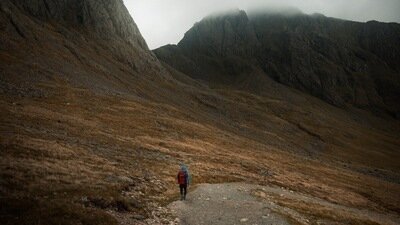
It’s why I chose to carry a 26kg postbox to the highest point in all 15 national parks to raise awareness of an issue that has had a devastating impact on my life. I founded Head Outside to bring outdoor community leaders together, champion connection and belonging, and help create a world where nobody suffers alone.
At a time when demand on mental health, addiction and homelessness services continues to rise, we already know that some of the most effective interventions draw on fundamental human needs: community, connection, movement, shared experiences and time in nature.
Social prescribing allows GPs and health professionals to connect people with community based support alongside traditional treatment. It can include walking groups, outdoor activities, volunteering, peer support and community connection initiatives. Yet many people still have no access to it or have never even heard of it.
Research from the NatureMind project, produced by Mind Over Mountains and the University of Central Lancashire, found significant improvements in wellbeing, confidence, social connection and mental health through nature based interventions. Research from The Wallich and the University of Central Lancashire exploring adventure social prescribing has also shown how outdoor experiences can support people facing homelessness, trauma and addiction by helping rebuild confidence, resilience, routine, purpose and connection.
These approaches are not only effective, they are empowering. They move people from passive recipients of support, to active participants in their own wellbeing, while also helping reduce pressure on overstretched public services. The mental health benefits of outdoor activity are well established, but those benefits are amplified when experienced as part of a community.
Social prescribing support has been associated with an average 28% reduction in GP appointments and 24% reduction in A&E attendances.
The National Academy for Social Prescribing estimated that social prescribing could save the NHS around £300 million per year through reduced GP appointments and prescription costs
But access is a severely limited.
Right now, where you live can determine whether you have access to community walks, outdoor peer support, nature based activities and social prescribing opportunities. That postcode lottery has to change.
I live in area where I don't have access to social prescribing. So this is my action to conquer the loneliness epidemic.
In June, I will begin walking the length of Britain from John O’Groats to Land’s End, around 1,200 miles over 100 days, carrying a 26kg cast iron postbox.
The postbox became a focal point that brought people together. It sparked conversations between strangers, encouraged people to open up, and created moments of connection in communities across the UK.
Along the way, I’ll be collecting petition signatures in the postbox itself, calling on the Government to make social prescribing available in every NHS area, not just where pilots or funding happen to exist. Medication and therapy have helped me. So has walking with strangers who became friends. Everyone deserves a choice in what recovery, connection and community can look like.
Sign the petition. Share it. Or come walk a day with me.
We cannot tackle the loneliness epidemic alone.
If your organisation would like to become a co signatory to the petition or support the campaign, please contact me at stu@headoutside.org

1
The Issue
An estimated 9.3 million people in the UK experience chronic loneliness.
Just as every bee needs a hive, every human needs a tribe.
But modern life has left many of us surrounded by people, yet disconnected from true community and meaningful human connection. We have more ways to connect than at any point in human history. That is not a personal failing. It is a public health issue. Loneliness is the fastest growing health crisis of our time. It is killing us quietly, slowly, and at scale.
It’s why I chose to carry a 26kg postbox to the highest point in all 15 national parks to raise awareness of an issue that has had a devastating impact on my life. I founded Head Outside to bring outdoor community leaders together, champion connection and belonging, and help create a world where nobody suffers alone.
At a time when demand on mental health, addiction and homelessness services continues to rise, we already know that some of the most effective interventions draw on fundamental human needs: community, connection, movement, shared experiences and time in nature.
Social prescribing allows GPs and health professionals to connect people with community based support alongside traditional treatment. It can include walking groups, outdoor activities, volunteering, peer support and community connection initiatives. Yet many people still have no access to it or have never even heard of it.
Research from the NatureMind project, produced by Mind Over Mountains and the University of Central Lancashire, found significant improvements in wellbeing, confidence, social connection and mental health through nature based interventions. Research from The Wallich and the University of Central Lancashire exploring adventure social prescribing has also shown how outdoor experiences can support people facing homelessness, trauma and addiction by helping rebuild confidence, resilience, routine, purpose and connection.
These approaches are not only effective, they are empowering. They move people from passive recipients of support, to active participants in their own wellbeing, while also helping reduce pressure on overstretched public services. The mental health benefits of outdoor activity are well established, but those benefits are amplified when experienced as part of a community.
Social prescribing support has been associated with an average 28% reduction in GP appointments and 24% reduction in A&E attendances.
The National Academy for Social Prescribing estimated that social prescribing could save the NHS around £300 million per year through reduced GP appointments and prescription costs
But access is a severely limited.
Right now, where you live can determine whether you have access to community walks, outdoor peer support, nature based activities and social prescribing opportunities. That postcode lottery has to change.
I live in area where I don't have access to social prescribing. So this is my action to conquer the loneliness epidemic.
In June, I will begin walking the length of Britain from John O’Groats to Land’s End, around 1,200 miles over 100 days, carrying a 26kg cast iron postbox.
The postbox became a focal point that brought people together. It sparked conversations between strangers, encouraged people to open up, and created moments of connection in communities across the UK.
Along the way, I’ll be collecting petition signatures in the postbox itself, calling on the Government to make social prescribing available in every NHS area, not just where pilots or funding happen to exist. Medication and therapy have helped me. So has walking with strangers who became friends. Everyone deserves a choice in what recovery, connection and community can look like.
Sign the petition. Share it. Or come walk a day with me.
We cannot tackle the loneliness epidemic alone.
If your organisation would like to become a co signatory to the petition or support the campaign, please contact me at stu@headoutside.org
The Decision Makers

Petition Updates
Share this petition
Petition created on 18 May 2026