Don't Cap Our Veterans' Mental Health — Reject the $5,000 Cap Before It Costs Lives
Don't Cap Our Veterans' Mental Health — Reject the $5,000 Cap Before It Costs Lives
The issue
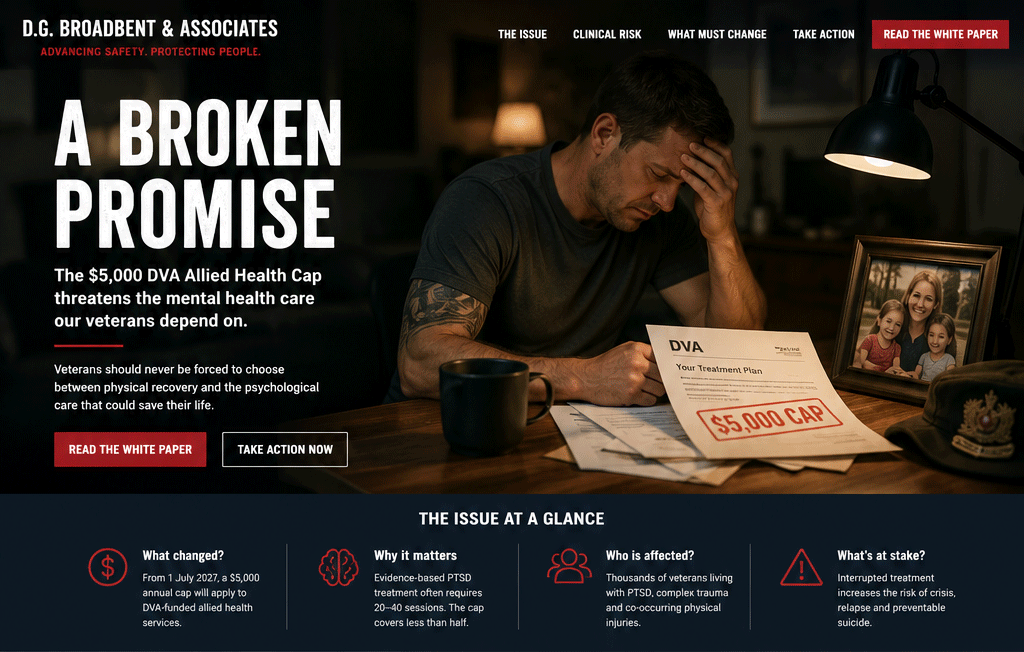
Australia made a promise to its veterans. We promised that those who served — who came home carrying wounds we cannot always see — would be cared for. The Albanese Government's 2026–27 Budget is breaking that promise.
From 1 July 2027, a $5,000 Annual Monetary Limit will apply to all DVA-funded allied health services — including psychology. That sounds like a lot. It isn't.
Here is what $5,000 actually buys a veteran with PTSD who sees a psychologist once a week at the new DVA rate of $260 per session: 19 sessions. Fewer than five months of treatment. Well before Christmas. Well before any evidence-based PTSD treatment is complete.
The minimum recommended treatment for PTSD is 12 to 16 sessions. Many veterans need 40 or more. The Government has raised the per-session fee by 58% — and capped the annual budget at the same time. The maths is simple: veterans get fewer sessions, not more. The $748 million in projected savings tells you exactly who benefits from this arithmetic. It isn't veterans.
17.7% of transitioned ADF personnel have PTSD. Their suicidality rate is ten times the civilian average. Interrupting their treatment is not a budget measure. It is a clinical risk.
The Government says veterans can apply for an exemption if they need more care. But that exemption will be decided by a DVA employee — not a doctor, not a psychologist, not anyone with a clinical qualification or a therapeutic relationship with the veteran. Every other mental health pathway in Australia is governed by a GP. This one will be governed by a bureaucrat in a department that already takes years to process basic claims, and that this same Budget has cut by more than 100 staff.
And here's what the Budget quietly didn't say: the Government's own mental health service — Open Arms — is exempt from the cap entirely. Private psychologists who have spent years building therapeutic relationships with veterans face a $5,000 ceiling. The Government's own competing service faces none. The Australian Competition and Consumer Commission should be asking serious questions about this.
The Royal Commission into Defence and Veteran Suicide told the Government to remove barriers to veteran mental health care. Recommendations 31, 33, 35, and 66 are explicit. This Budget, in the same breath as claiming to implement the Royal Commission, has introduced the single largest financial barrier to veteran psychological care in a generation.
We are asking the Government to do three things:
- Remove psychological and mental health services from the $5,000 cap entirely.
- Return clinical gatekeeping to GPs and treating practitioners — not DVA employees.
- Refer the Open Arms exemption to the ACCC for independent review.
If you know a veteran. If you love someone who has served. If you believe that the people who carried our country's burden deserve better than a budget line — sign this petition and share it.

807
The issue
Australia made a promise to its veterans. We promised that those who served — who came home carrying wounds we cannot always see — would be cared for. The Albanese Government's 2026–27 Budget is breaking that promise.
From 1 July 2027, a $5,000 Annual Monetary Limit will apply to all DVA-funded allied health services — including psychology. That sounds like a lot. It isn't.
Here is what $5,000 actually buys a veteran with PTSD who sees a psychologist once a week at the new DVA rate of $260 per session: 19 sessions. Fewer than five months of treatment. Well before Christmas. Well before any evidence-based PTSD treatment is complete.
The minimum recommended treatment for PTSD is 12 to 16 sessions. Many veterans need 40 or more. The Government has raised the per-session fee by 58% — and capped the annual budget at the same time. The maths is simple: veterans get fewer sessions, not more. The $748 million in projected savings tells you exactly who benefits from this arithmetic. It isn't veterans.
17.7% of transitioned ADF personnel have PTSD. Their suicidality rate is ten times the civilian average. Interrupting their treatment is not a budget measure. It is a clinical risk.
The Government says veterans can apply for an exemption if they need more care. But that exemption will be decided by a DVA employee — not a doctor, not a psychologist, not anyone with a clinical qualification or a therapeutic relationship with the veteran. Every other mental health pathway in Australia is governed by a GP. This one will be governed by a bureaucrat in a department that already takes years to process basic claims, and that this same Budget has cut by more than 100 staff.
And here's what the Budget quietly didn't say: the Government's own mental health service — Open Arms — is exempt from the cap entirely. Private psychologists who have spent years building therapeutic relationships with veterans face a $5,000 ceiling. The Government's own competing service faces none. The Australian Competition and Consumer Commission should be asking serious questions about this.
The Royal Commission into Defence and Veteran Suicide told the Government to remove barriers to veteran mental health care. Recommendations 31, 33, 35, and 66 are explicit. This Budget, in the same breath as claiming to implement the Royal Commission, has introduced the single largest financial barrier to veteran psychological care in a generation.
We are asking the Government to do three things:
- Remove psychological and mental health services from the $5,000 cap entirely.
- Return clinical gatekeeping to GPs and treating practitioners — not DVA employees.
- Refer the Open Arms exemption to the ACCC for independent review.
If you know a veteran. If you love someone who has served. If you believe that the people who carried our country's burden deserve better than a budget line — sign this petition and share it.
The Decision Makers
Supporter voices
Petition Updates
Share this petition
Petition created on 2 June 2026