

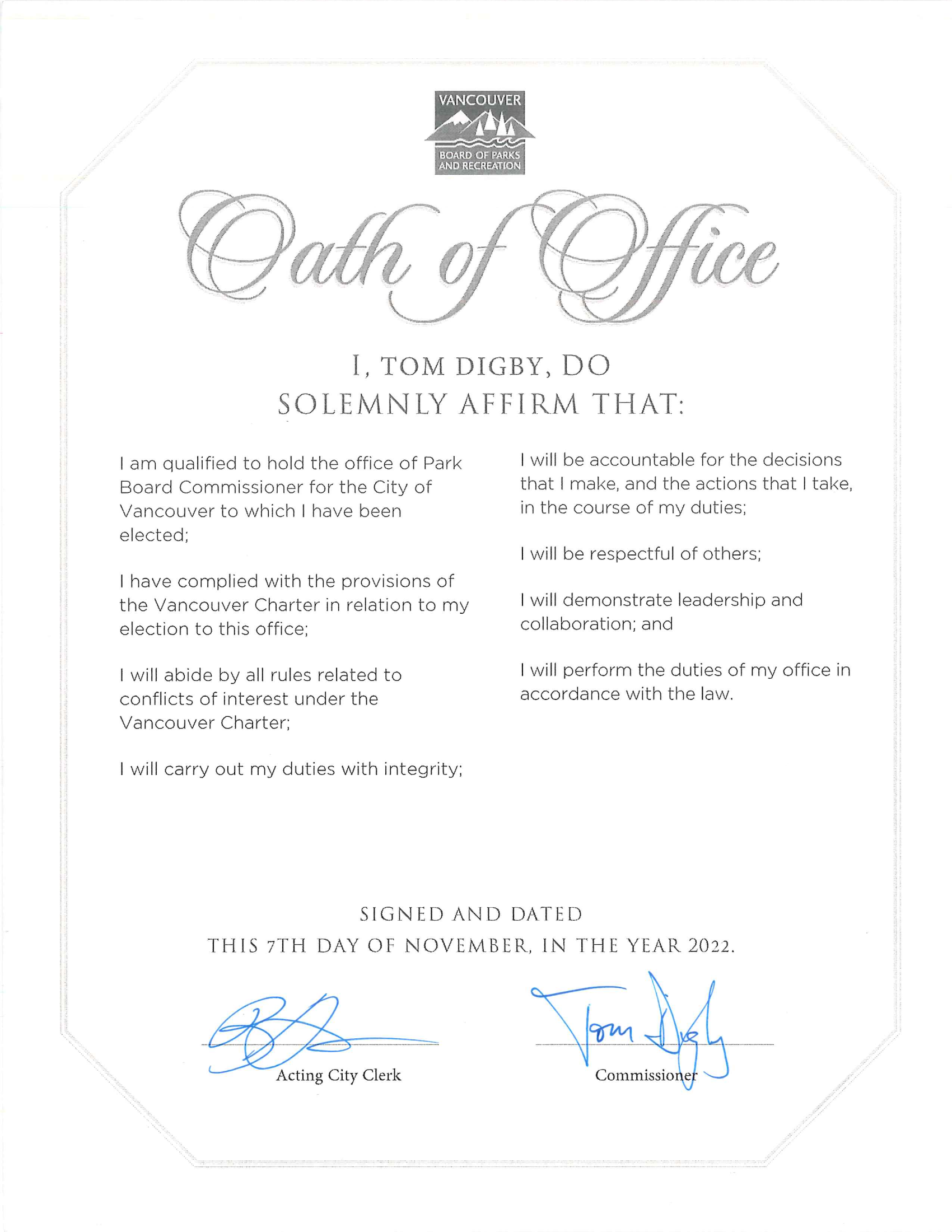
Demand the resignation of Vancouver Green Party Park Board Commissioner Tom Digby
The Issue
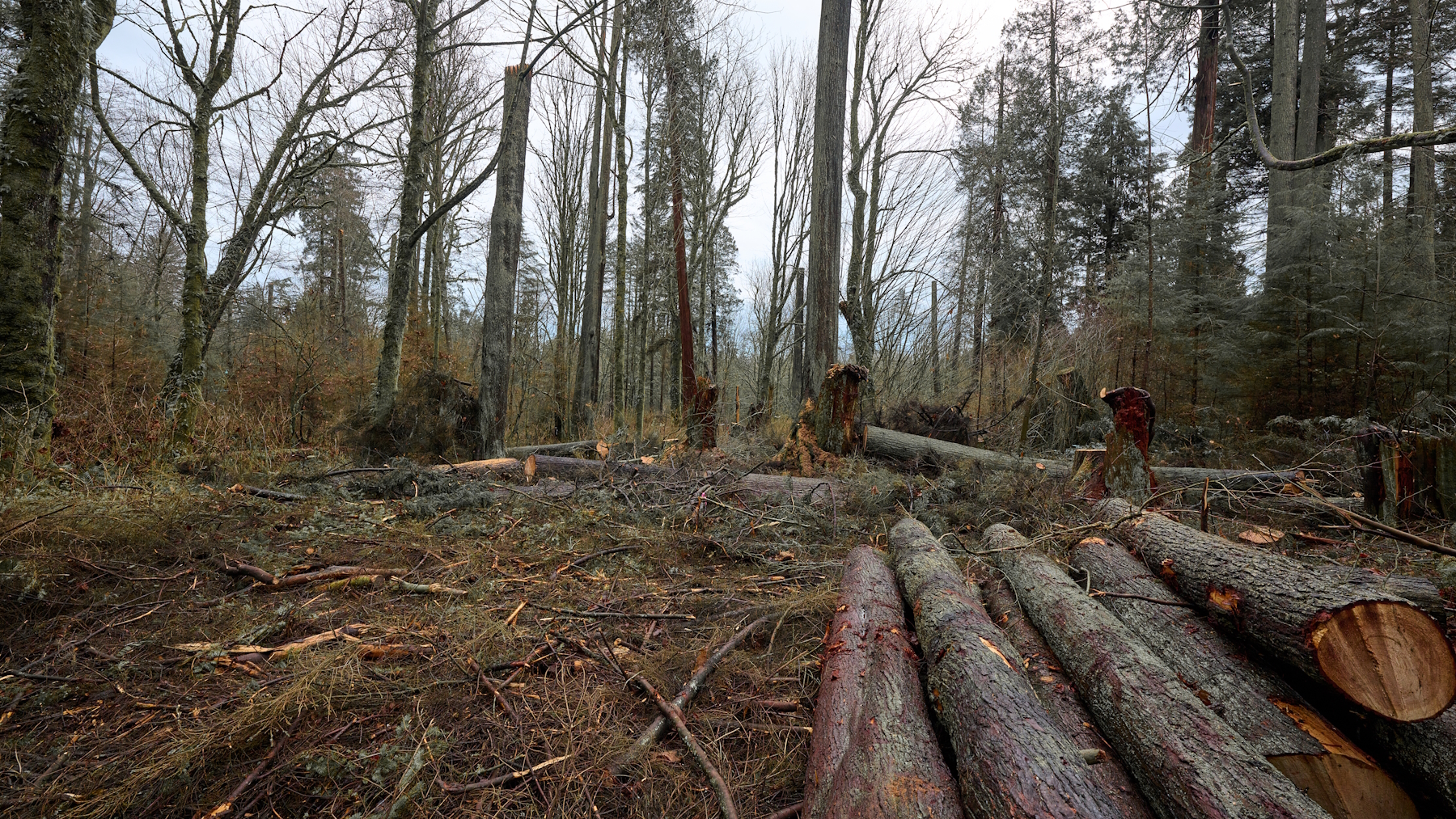
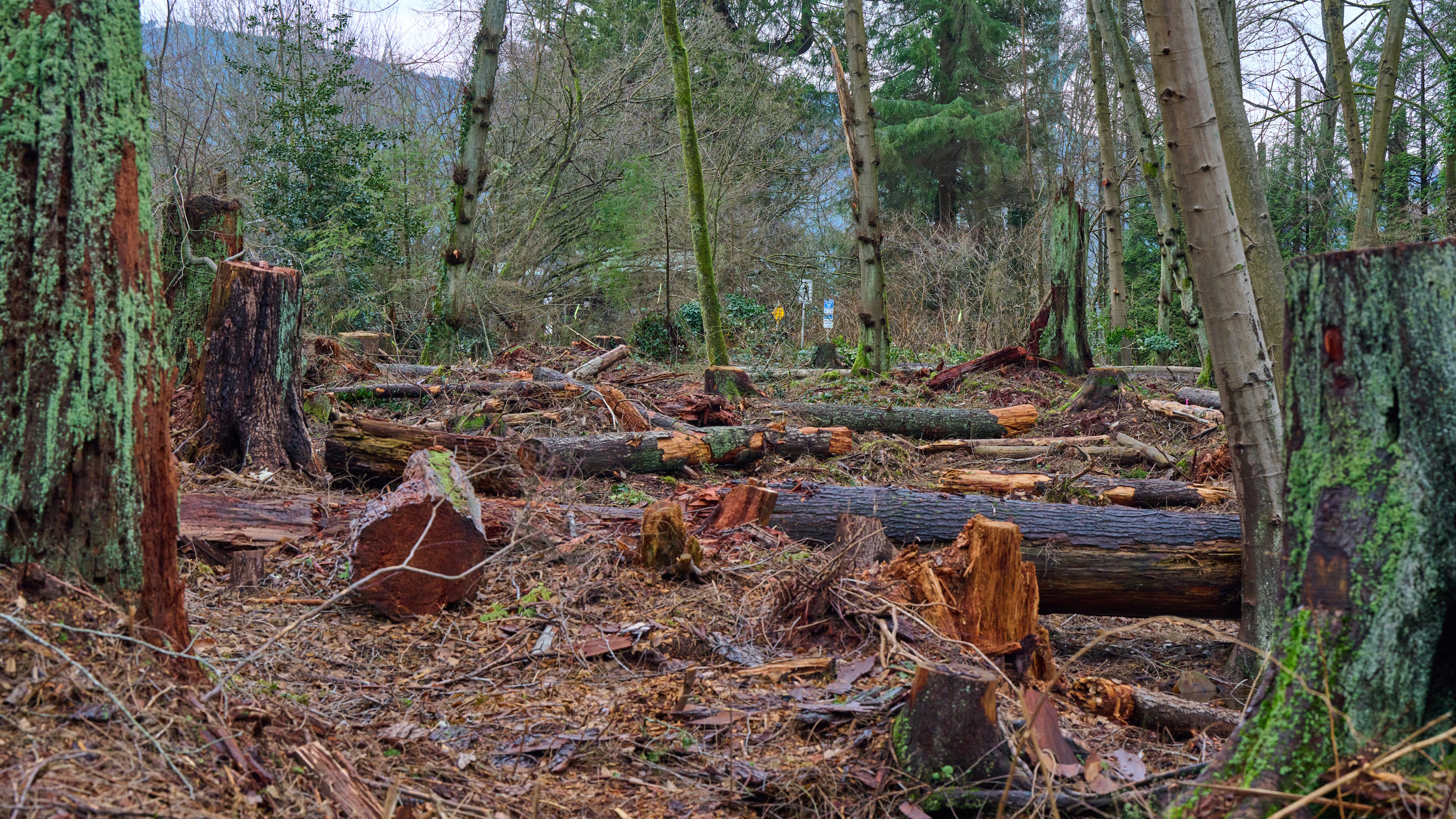
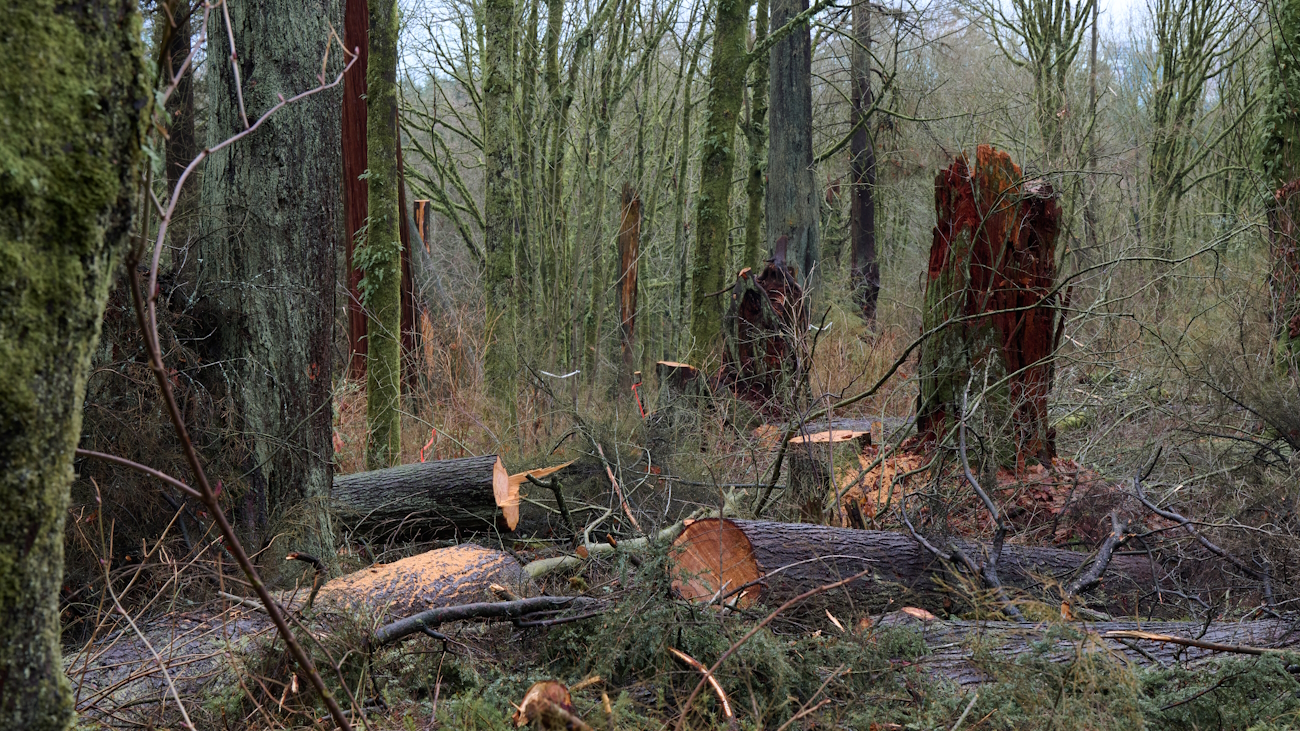
Vancouver Park Board Commissioner Tom Digby, despite being a Green Party representative, has been a vocal and bold proponent of logging of iconic Stanley Park’s coastal rainforest. More than 7,000 trees were needlessly cut down last winter, and the chainsaws are at it again now in 2024-2025.
Without adequate scientific justification, Digby claims that conifers defoliated by the native hemlock looper represent a high risk of wildfire and an extreme hazard of falling on children.
As a result of Digby’s actions, along with those of City of Vancouver employees and five other Park Board commissioners, the ecological damage now being caused to this world-renowned gem—home to the last remaining old growth in Vancouver—is immeasurable and irreversible.
At the Vancouver Park Board meetings of October 7 and October 8, 2024, where the commissioners approved continued logging, Digby seemed to ignore the testimony of multiple scientists. It appeared that rather than learning from them with an open mind, he sought to discredit the scientists with his unsupported claims.
What he heard:
. . . there was no evidence of a wildfire risk requiring the fuel-thinning treatment that was imposed on Stanley Park Forest. Even if there was a wildfire risk, the response taken is not appropriate for Stanley Park. The fuel-thinning treatment has reduced the resilience of the Stanley Park Forest, leaving it more vulnerable to wildfire, insects and disease. . .
--Rhonda Millikin, Ph.D., M.Sc., R.P. Bio
My opinion is that what's been done so far has caused irreparable harm because we are in a situation of novel ecosystems being formed with the way it's being done. And the duty of care to public health and well-being, climate resilience and wildlife should be the highest priority.
--Christine E. Thuring, Ph.D. Landscape, M.Sc. Horticulture
Aggressive forest treatments will over-ventilate forests leading to higher wind speeds, fire spread, and wind throw, will dry out understories, damage soil horizons, spread invasive weeds, and do little to prevent risks of injury and property damage as blow down risks are elevated.
--Dominick DellaSala, Ph. D
There seems to be an impression that these hemlock trees standing are all dangerous and it's a myth. You'll see the hemlock trees impacted by the looper moth, the ones defoliated that are standing, they're standing stable, they're structurally stable. Their anchor roots are fine, their trunk butts are fine.
They're going to be standing for a long time. They actually stand better in windstorms than a live hemlock tree because they've lost their needles, they have less wind throw. So if you watch the performance of these trees during a windstorm, you'll see that there more live hemlock trees will snap or blow down as compared to the standing dead trees.
--Norman Oberson, ISA Qualified Arborist, WDTAC Certified Tree Risk Assessor
See a documentary showing what happened at the Park Board meeting:
See Dr. Dominick DellaSalla's report
We cannot allow this travesty to continue! Tom Digby should resign and be replaced with a commissioner who listens to the science, and who cares about Stanley Park, its value to visitors from all corners of the world, and its immense value to the citizens of Vancouver.
Stanley Park has always been a sanctuary for city dwellers, a retreat from the hustle and bustle of urban life, an attraction for tourists because of its natural beauty, and a proud model of a semi-wild ecosystem within a metropolis. It is the pride of Vancouver, Vancouver's crown jewel, and one important reason many choose to make this city home.
For hundreds of years the lush forest trails have provided Vancouverites and visitors a serene escape, but now they are marred by the sights and sounds of the highway as trees are being felled hour by hour.
Logging in Stanley Park is not just affecting our personal experiences; it is also causing irreversible damage to our environment. Forests play a crucial role in mitigating climate change by absorbing carbon dioxide emissions. According to Natural Resources Canada, forests absorb about 2.6 billion tonnes of carbon dioxide annually, equivalent to about 1/3rd of CO2 emissions from human activities worldwide.
Moreover, deforestation threatens biodiversity as it destroys habitats for countless species that call these forests home. In British Columbia alone, over 1,400 species at risk depend on forests for their survival.
The opinions expressed herein are those of the authors, based upon facts and public interest.
Stanley Park Preservation Society is a British Columbia registered nonprofit organization founded in 2024 for the purpose of protecting Stanley Park from irreparable harm due to actions of political officials without evidence-based scientific justification.

931
The Issue
Vancouver Park Board Commissioner Tom Digby, despite being a Green Party representative, has been a vocal and bold proponent of logging of iconic Stanley Park’s coastal rainforest. More than 7,000 trees were needlessly cut down last winter, and the chainsaws are at it again now in 2024-2025.
Without adequate scientific justification, Digby claims that conifers defoliated by the native hemlock looper represent a high risk of wildfire and an extreme hazard of falling on children.
As a result of Digby’s actions, along with those of City of Vancouver employees and five other Park Board commissioners, the ecological damage now being caused to this world-renowned gem—home to the last remaining old growth in Vancouver—is immeasurable and irreversible.
At the Vancouver Park Board meetings of October 7 and October 8, 2024, where the commissioners approved continued logging, Digby seemed to ignore the testimony of multiple scientists. It appeared that rather than learning from them with an open mind, he sought to discredit the scientists with his unsupported claims.
What he heard:
. . . there was no evidence of a wildfire risk requiring the fuel-thinning treatment that was imposed on Stanley Park Forest. Even if there was a wildfire risk, the response taken is not appropriate for Stanley Park. The fuel-thinning treatment has reduced the resilience of the Stanley Park Forest, leaving it more vulnerable to wildfire, insects and disease. . .
--Rhonda Millikin, Ph.D., M.Sc., R.P. Bio
My opinion is that what's been done so far has caused irreparable harm because we are in a situation of novel ecosystems being formed with the way it's being done. And the duty of care to public health and well-being, climate resilience and wildlife should be the highest priority.
--Christine E. Thuring, Ph.D. Landscape, M.Sc. Horticulture
Aggressive forest treatments will over-ventilate forests leading to higher wind speeds, fire spread, and wind throw, will dry out understories, damage soil horizons, spread invasive weeds, and do little to prevent risks of injury and property damage as blow down risks are elevated.
--Dominick DellaSala, Ph. D
There seems to be an impression that these hemlock trees standing are all dangerous and it's a myth. You'll see the hemlock trees impacted by the looper moth, the ones defoliated that are standing, they're standing stable, they're structurally stable. Their anchor roots are fine, their trunk butts are fine.
They're going to be standing for a long time. They actually stand better in windstorms than a live hemlock tree because they've lost their needles, they have less wind throw. So if you watch the performance of these trees during a windstorm, you'll see that there more live hemlock trees will snap or blow down as compared to the standing dead trees.
--Norman Oberson, ISA Qualified Arborist, WDTAC Certified Tree Risk Assessor
See a documentary showing what happened at the Park Board meeting:
See Dr. Dominick DellaSalla's report
We cannot allow this travesty to continue! Tom Digby should resign and be replaced with a commissioner who listens to the science, and who cares about Stanley Park, its value to visitors from all corners of the world, and its immense value to the citizens of Vancouver.
Stanley Park has always been a sanctuary for city dwellers, a retreat from the hustle and bustle of urban life, an attraction for tourists because of its natural beauty, and a proud model of a semi-wild ecosystem within a metropolis. It is the pride of Vancouver, Vancouver's crown jewel, and one important reason many choose to make this city home.
For hundreds of years the lush forest trails have provided Vancouverites and visitors a serene escape, but now they are marred by the sights and sounds of the highway as trees are being felled hour by hour.
Logging in Stanley Park is not just affecting our personal experiences; it is also causing irreversible damage to our environment. Forests play a crucial role in mitigating climate change by absorbing carbon dioxide emissions. According to Natural Resources Canada, forests absorb about 2.6 billion tonnes of carbon dioxide annually, equivalent to about 1/3rd of CO2 emissions from human activities worldwide.
Moreover, deforestation threatens biodiversity as it destroys habitats for countless species that call these forests home. In British Columbia alone, over 1,400 species at risk depend on forests for their survival.
The opinions expressed herein are those of the authors, based upon facts and public interest.
Stanley Park Preservation Society is a British Columbia registered nonprofit organization founded in 2024 for the purpose of protecting Stanley Park from irreparable harm due to actions of political officials without evidence-based scientific justification.
The Decision Makers

Supporter Voices
Petition Updates
Share this petition
Petition created on November 4, 2024