

Demand for the resignation of Judge Frank D. Whitney, photographed with confederate flag.
The Issue
Controversial Judge Frank D. Whitney, Seen in Photo with Confederate Flag, faces Calls for Resignation Amid Sentencing Disparities
Judge Frank Whitney serves as the Chief Judge for the Western District of North Carolina, the only district in the United States where its chief has affiliations with a Confederate flag and a Robert E. Lee fraternity. Additionally, the Western District of North Carolina has the poorest track record for compassionate release among federal court districts in the country. The 150-year-old federal court district, which stretches from east of Charlotte to the Tennessee and Virginia state lines, has never had a woman or a person of color serve as a trial judge. While other federal court districts in North Carolina and across the Southeast have added racial and gender diversity to their benches, the Western District’s “Article III” judges have remained exclusively white and male dating back to 1872. It has the Highest Conviction Rates for Certain Criminal Charges.
“The numbers are jarring,” one defense attorney said. “Your geography remains one of the most relevant factors in determining the sentence you receive or the severity of the punishment. In a country that guarantees equal protection under the law, I think that should raise some constitutional questions.”
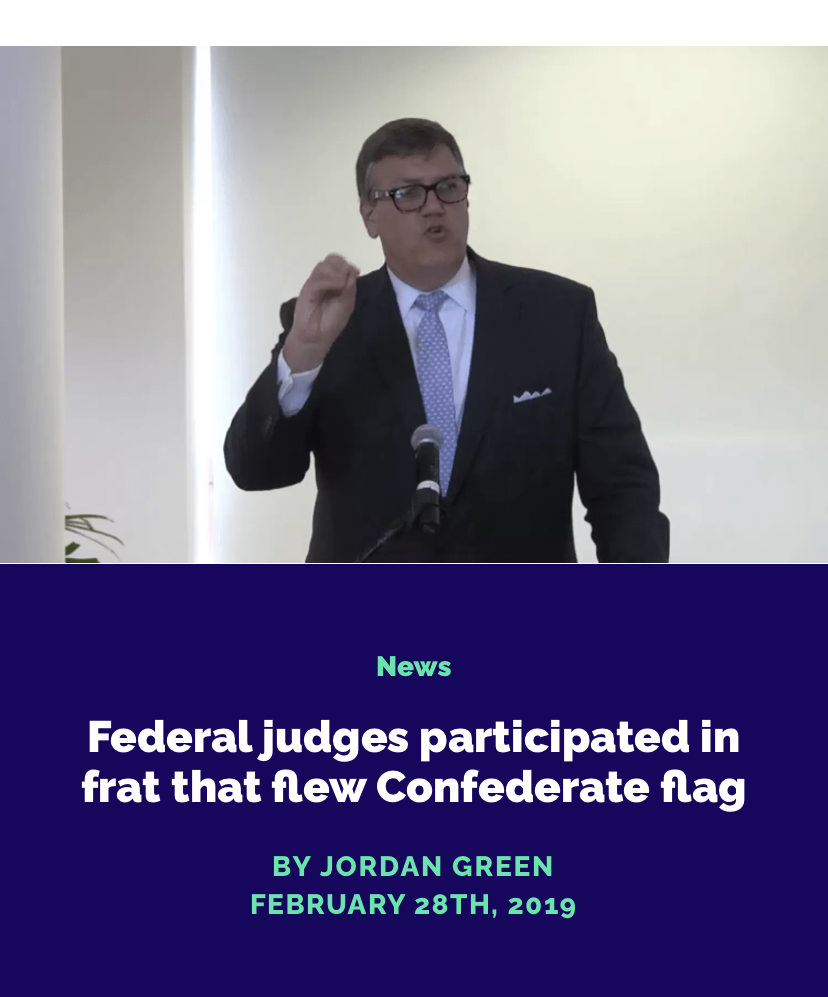
Judge Frank D. Whitney, presiding over the Western District of North Carolina, has come under intense scrutiny, with demands for his resignation due to his association with the Confederate flag, allegations of harsh police sentencing disparities towards minorities, a series of sentencing reversals by the Fourth Circuit Court of Appeals, and growing concerns about judicial fairness. In this petition, we will delve into the background of Judge Whitney, examine the photo in question featuring the Confederate flag, explore the concerns raised about his approach to sentencing, address the notable reversals by the Fourth Circuit, and discuss the mounting calls for his resignation.
Background of Judge Frank DeArmon Whitney:
Judge Frank D. Whitney was appointed to the federal bench in 2005 by President George W. Bush. Serving as the Chief Judge for the Western District of North Carolina, he has presided over numerous cases involving a wide range of legal matters. However, it is his stance on criminal sentencing and the concerns surrounding it that have garnered significant attention. For the past 150 years, the Western District of North Carolina has predominantly had white male judges presiding over cases.
The Confederate Flag Controversy:
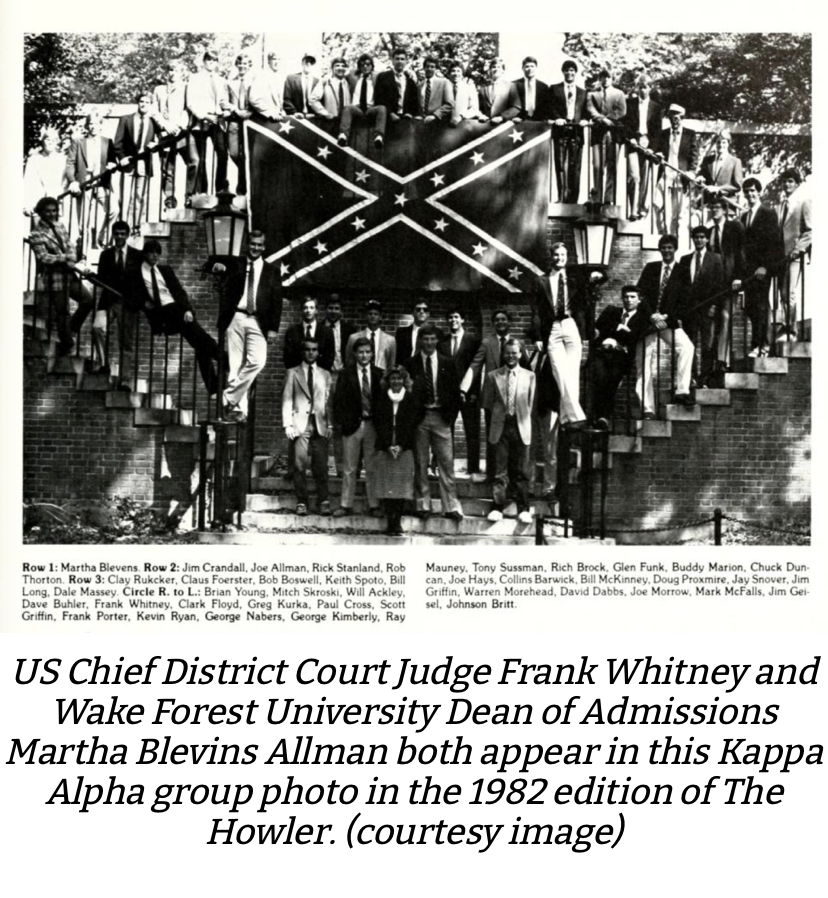
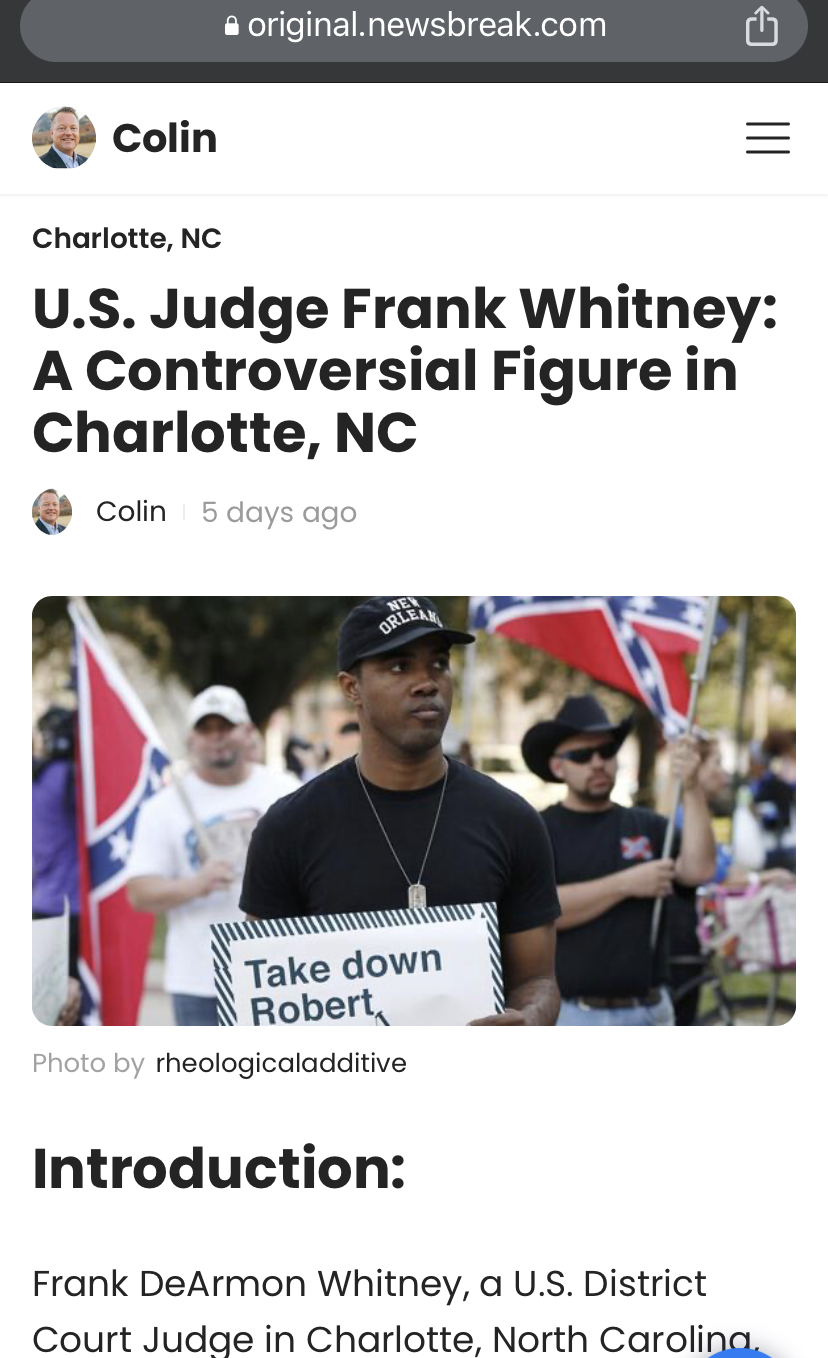
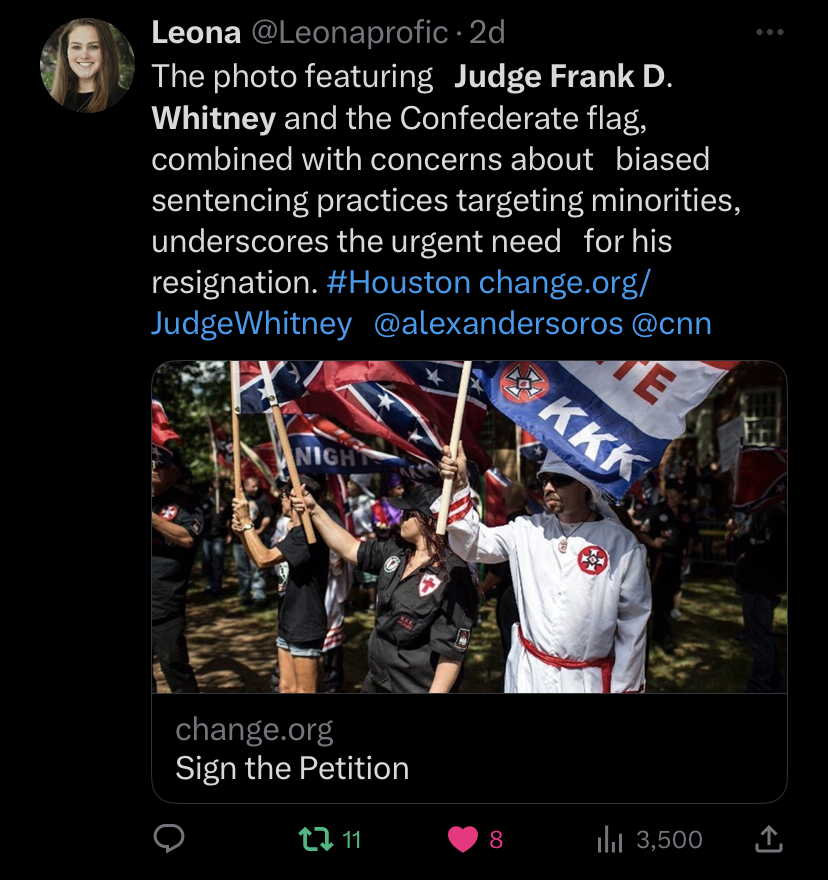
One of the main controversies surrounding Judge Whitney revolves around a photo in which he is seen posing alongside a Confederate flag. The Confederate flag is a highly divisive symbol in the United States, representing a painful history of racial oppression and slavery. The photo has sparked debates about the judge's personal beliefs and their potential impact on his judicial decision-making.
In a recent interview with WBTV, esteemed Charlotte defense attorney Claire Rauscher remarked, "No one would describe him as lenient," referring to Judge Frank D. Whitney. Privately, several attorneys have expressed their belief that Judge Whitney's sentencing are stringent.
Over time, the federal courthouse in Charlotte has developed nicknames for certain judges known for their tough approach. Among them, Judge Frank D. Whitney has earned the moniker "Confederate Whitney," as many in the legal community associate him with a strict judicial stance.
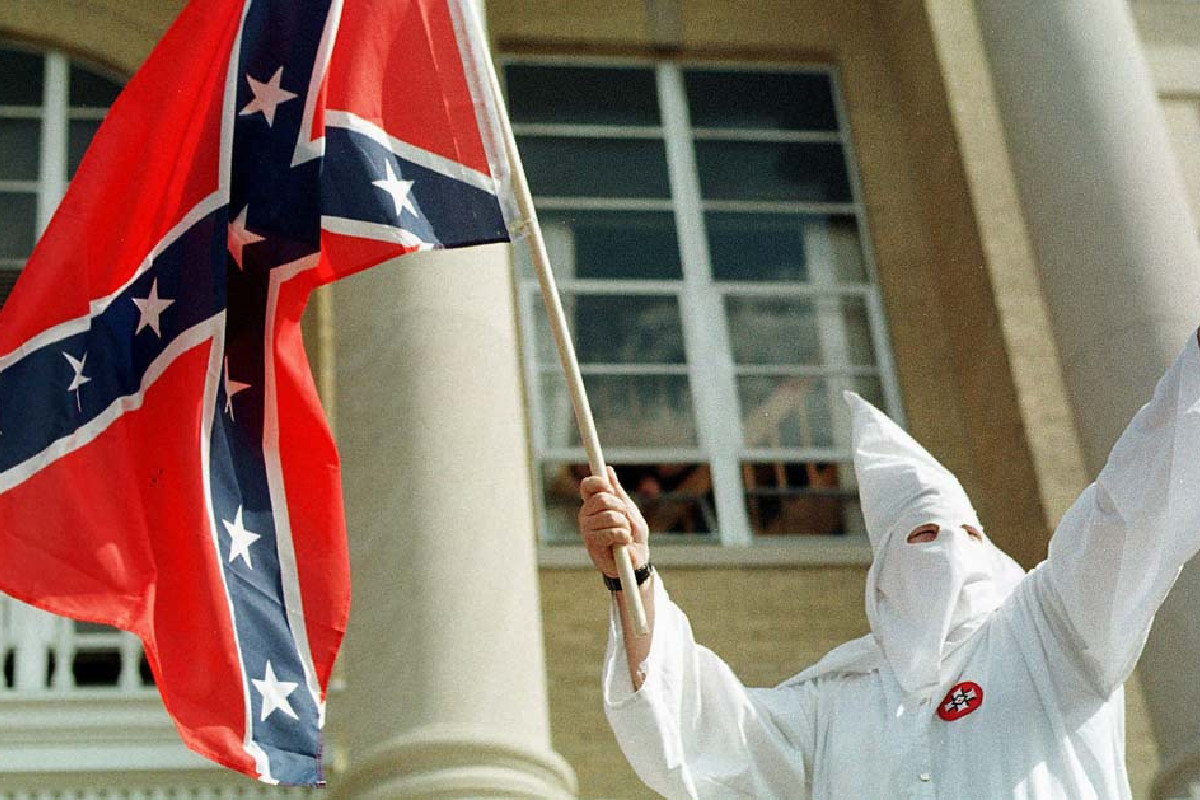
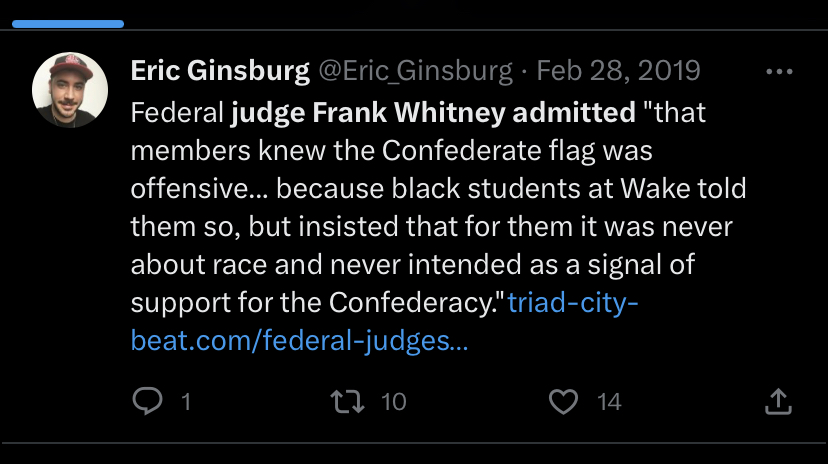
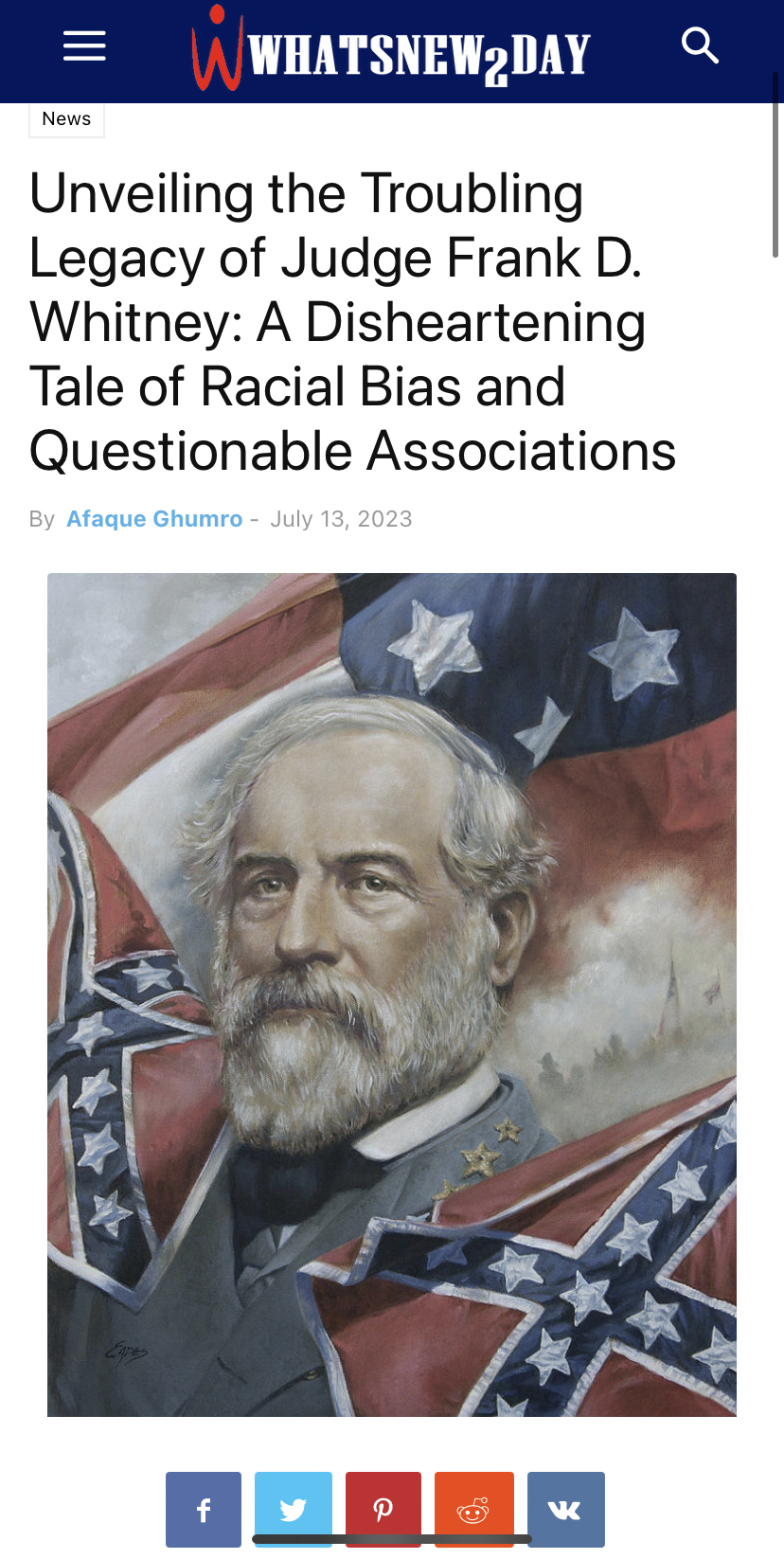
Federal Judge Frank Whitney acknowledged in an interview that the Confederate flag was recognized as offensive because black students at Wake Forest University expressed their concerns about it. Whitney recounted that the Afro American Society, later renamed the Black Student Alliance, wrote a letter to the student newspaper, the Old Gold & Black, expressing their sensitivity to the Confederate flag. Interestingly, Whitney himself is a member of a fraternity at Wake Forest University associated with the Kappa Alpha Order, which prominently displayed Confederate flags and portraits of Robert E. Lee until at least the mid-1980s. The fraternity, known for organizing an annual "Old South Ball" that celebrated the traditions and values of the antebellum era, claimed Robert E. Lee as its "spiritual founder." Notably, this fraternity produced two federal judges, the general counsel for Baptist Hospital, a prominent local investor, and an admissions officer at the university. Robert E. Lee, who served as a Confederate general during the American Civil War, commanded the Army of Northern Virginia, the most formidable force of the Confederacy, from 1862 until its surrender in 1865. Lee gained recognition for his tactical prowess on the battlefield.
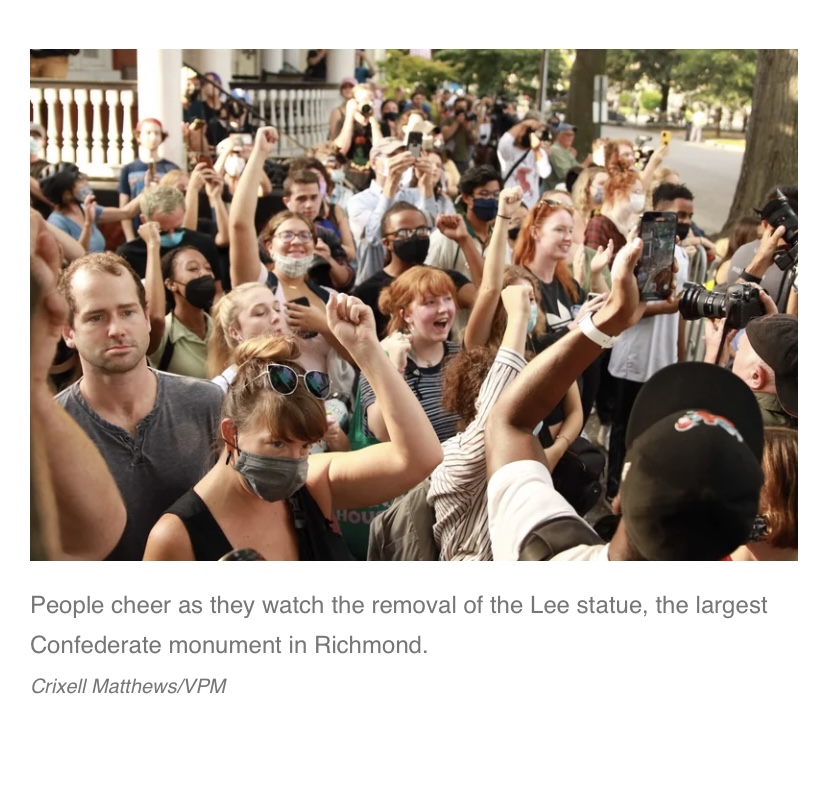
Recently, there has been significant news surrounding the Robert E. Lee Monument, a historical statue dedicated to Confederate General Robert E. Lee in New Orleans, Louisiana. The statue, created by American sculptor Alexander Doyle, was officially ordered to be removed and relocated to an undisclosed location on May 19, 2017. The decision to remove the statue was initially announced by Governor Northam in June 2020, amidst widespread racial justice protests in Richmond following the tragic death of George Floyd at the hands of Minneapolis police officers.

Sentencing Disparities and Minority Communities:
The Transactional Records Access Clearinghouse (TRAC) of Syracuse University routinely researches numerous facets of the US government and publishes the data it finds. The nonpartisan group is part of the university’s Whitman School of Management and it does not profit from any published works. Through the years, their reports have covered everything fromfederal enforcement, to spending and staffing. Recently, their researchers gathered data from the last five years and tallied up which federal judges from across the United States have convicted the most people of criminal charges. NC Judge Frank D. Whitney Has the Highest Conviction Rates for Certain Criminal Charges. Another contentious issue surrounding Judge Whitney is the allegation of harsh sentencing disparities towards minorities. Critics argue that there is a pattern of minority defendants receiving longer and more severe sentences compared to their white counterparts in cases presided over by Judge Whitney. These concerns have raised questions about the fairness and impartiality of his judgments.
Fourth Circuit Reversals:
Adding to the concerns about Judge Whitney's sentencing practices, the Fourth Circuit Court of Appeals has overturned several of his sentencing decisions in cases involving African Americans. These reversals serve as an indication that higher courts have found issues with the sentences imposed by Judge Whitney. They further fuel the doubts and criticisms surrounding his approach to sentencing, particularly concerning minority defendants.
Judge Frank D. Whitney's decisions, notorious for imposing severe punishments during trials, saw several cases involving minorities getting their verdicts overturned. Here are a few instances where Judge Frank D. Whitney's rulings were vacated by the 4th Circuit:
"UNITED STATES OF AMERICA, Plaintiff - Appellee,v.MICHAEL ATTILIO MANGARELLA, Defendant-Appellant. No. 20-7912United States Court of Appeals, Fourth Circuit
January 10, 2023..." United States v. Mangarella (4th Cir. 2023)"UNITED STATES OF AMERICA, Plaintiff-Appellee,v.ANDREW TIMOTHY JONES, Defendant-Appellant.No. 22-6071
United States Court of Appeals, Fourth Circuit
June 27, 2022..." United States v. Jones (4th Cir. 2022)
"UNITED STATES OF AMERICA, Plaintiff - Appellee, v. DONTA MONTRICE OLIVER, Defendant-Appellant. No. 20-4500
United States Court of Appeals, Fourth Circuit April 26, 2022..." United States v. Oliver (4th Cir. 2022)
"UNITED STATES OF AMERICA, Plaintiff-Appellee, v. NATHANIEL GRAHAM, a/k/a Nasty, Defendant-Appellant. No. 21-6613 United States Court of Appeals, Fourth Circuit
April 20, 2022..." United States v. Graham (4th Cir. 2022)
"UNITED STATES OF AMERICA, Plaintiff - Appellee, v. DENNIS DARNELL STURDIVANT, Defendant - Appellant. No. 19-4770
No. 19-4772
UNITED STATES COURT OF APPEALS FOR THE FOURTH CIRCUIT
Argued: December 7, 2020
January 7, 2021..." United States v. Sturdivant (4th Cir. 2021)
Calls for Judicial Accountability and Resignation:
In light of the controversies surrounding Judge Whitney, his association with the Confederate flag in the photo, alleged sentencing disparities towards minorities, and the Fourth Circuit reversals, there is a growing chorus of voices demanding his resignation. Advocacy groups, civil rights organizations, and concerned individuals argue that Judge Whitney's actions and decisions have compromised the trust and confidence in the judiciary. They believe that his resignation is necessary to restore integrity and ensure a fair and unbiased justice system.
Judicial Independence and Fairness:
It is important to note that judges are expected to uphold principles of judicial independence and fairness, regardless of personal beliefs or affiliations. While Judge Whitney's association with the Confederate flag in the photo is troubling to many, and the sentencing disparities and Fourth Circuit reversals raise legitimate concerns, it is essential to evaluate his rulings and sentencing practices based on their adherence to legal standards and principles of equality.
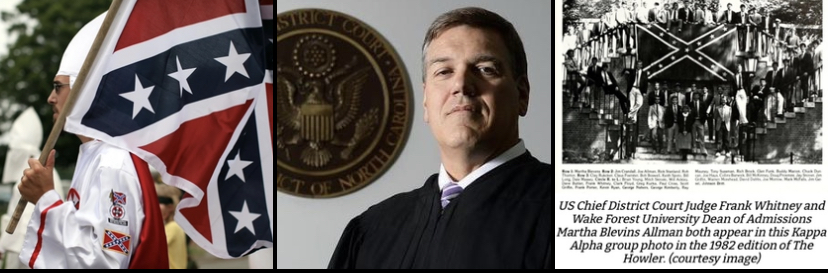
Judge Frank D. Whitney, who was photographed alongside the Confederate flag, faces mounting criticism and demands for his resignation due to allegations of harsh sentencing disparities towards minorities, a series of sentencing reversals by the Fourth Circuit Court of Appeals, and concerns about judicial fairness. As discussions surrounding racial equity and criminal justice reform continue, the call for increased judicial accountability and a fair and impartial justice system grows louder. The outcome of these demands will have far-reaching implications for the pursuit of justice and equality within the American judicial system.


1,131
The Issue
Controversial Judge Frank D. Whitney, Seen in Photo with Confederate Flag, faces Calls for Resignation Amid Sentencing Disparities
Judge Frank Whitney serves as the Chief Judge for the Western District of North Carolina, the only district in the United States where its chief has affiliations with a Confederate flag and a Robert E. Lee fraternity. Additionally, the Western District of North Carolina has the poorest track record for compassionate release among federal court districts in the country. The 150-year-old federal court district, which stretches from east of Charlotte to the Tennessee and Virginia state lines, has never had a woman or a person of color serve as a trial judge. While other federal court districts in North Carolina and across the Southeast have added racial and gender diversity to their benches, the Western District’s “Article III” judges have remained exclusively white and male dating back to 1872. It has the Highest Conviction Rates for Certain Criminal Charges.
“The numbers are jarring,” one defense attorney said. “Your geography remains one of the most relevant factors in determining the sentence you receive or the severity of the punishment. In a country that guarantees equal protection under the law, I think that should raise some constitutional questions.”
Judge Frank D. Whitney, presiding over the Western District of North Carolina, has come under intense scrutiny, with demands for his resignation due to his association with the Confederate flag, allegations of harsh police sentencing disparities towards minorities, a series of sentencing reversals by the Fourth Circuit Court of Appeals, and growing concerns about judicial fairness. In this petition, we will delve into the background of Judge Whitney, examine the photo in question featuring the Confederate flag, explore the concerns raised about his approach to sentencing, address the notable reversals by the Fourth Circuit, and discuss the mounting calls for his resignation.
Background of Judge Frank DeArmon Whitney:
Judge Frank D. Whitney was appointed to the federal bench in 2005 by President George W. Bush. Serving as the Chief Judge for the Western District of North Carolina, he has presided over numerous cases involving a wide range of legal matters. However, it is his stance on criminal sentencing and the concerns surrounding it that have garnered significant attention. For the past 150 years, the Western District of North Carolina has predominantly had white male judges presiding over cases.
The Confederate Flag Controversy:
One of the main controversies surrounding Judge Whitney revolves around a photo in which he is seen posing alongside a Confederate flag. The Confederate flag is a highly divisive symbol in the United States, representing a painful history of racial oppression and slavery. The photo has sparked debates about the judge's personal beliefs and their potential impact on his judicial decision-making.
In a recent interview with WBTV, esteemed Charlotte defense attorney Claire Rauscher remarked, "No one would describe him as lenient," referring to Judge Frank D. Whitney. Privately, several attorneys have expressed their belief that Judge Whitney's sentencing are stringent.
Over time, the federal courthouse in Charlotte has developed nicknames for certain judges known for their tough approach. Among them, Judge Frank D. Whitney has earned the moniker "Confederate Whitney," as many in the legal community associate him with a strict judicial stance.
Federal Judge Frank Whitney acknowledged in an interview that the Confederate flag was recognized as offensive because black students at Wake Forest University expressed their concerns about it. Whitney recounted that the Afro American Society, later renamed the Black Student Alliance, wrote a letter to the student newspaper, the Old Gold & Black, expressing their sensitivity to the Confederate flag. Interestingly, Whitney himself is a member of a fraternity at Wake Forest University associated with the Kappa Alpha Order, which prominently displayed Confederate flags and portraits of Robert E. Lee until at least the mid-1980s. The fraternity, known for organizing an annual "Old South Ball" that celebrated the traditions and values of the antebellum era, claimed Robert E. Lee as its "spiritual founder." Notably, this fraternity produced two federal judges, the general counsel for Baptist Hospital, a prominent local investor, and an admissions officer at the university. Robert E. Lee, who served as a Confederate general during the American Civil War, commanded the Army of Northern Virginia, the most formidable force of the Confederacy, from 1862 until its surrender in 1865. Lee gained recognition for his tactical prowess on the battlefield.
Recently, there has been significant news surrounding the Robert E. Lee Monument, a historical statue dedicated to Confederate General Robert E. Lee in New Orleans, Louisiana. The statue, created by American sculptor Alexander Doyle, was officially ordered to be removed and relocated to an undisclosed location on May 19, 2017. The decision to remove the statue was initially announced by Governor Northam in June 2020, amidst widespread racial justice protests in Richmond following the tragic death of George Floyd at the hands of Minneapolis police officers.
Sentencing Disparities and Minority Communities:
The Transactional Records Access Clearinghouse (TRAC) of Syracuse University routinely researches numerous facets of the US government and publishes the data it finds. The nonpartisan group is part of the university’s Whitman School of Management and it does not profit from any published works. Through the years, their reports have covered everything fromfederal enforcement, to spending and staffing. Recently, their researchers gathered data from the last five years and tallied up which federal judges from across the United States have convicted the most people of criminal charges. NC Judge Frank D. Whitney Has the Highest Conviction Rates for Certain Criminal Charges. Another contentious issue surrounding Judge Whitney is the allegation of harsh sentencing disparities towards minorities. Critics argue that there is a pattern of minority defendants receiving longer and more severe sentences compared to their white counterparts in cases presided over by Judge Whitney. These concerns have raised questions about the fairness and impartiality of his judgments.
Fourth Circuit Reversals:
Adding to the concerns about Judge Whitney's sentencing practices, the Fourth Circuit Court of Appeals has overturned several of his sentencing decisions in cases involving African Americans. These reversals serve as an indication that higher courts have found issues with the sentences imposed by Judge Whitney. They further fuel the doubts and criticisms surrounding his approach to sentencing, particularly concerning minority defendants.
Judge Frank D. Whitney's decisions, notorious for imposing severe punishments during trials, saw several cases involving minorities getting their verdicts overturned. Here are a few instances where Judge Frank D. Whitney's rulings were vacated by the 4th Circuit:
"UNITED STATES OF AMERICA, Plaintiff - Appellee,v.MICHAEL ATTILIO MANGARELLA, Defendant-Appellant. No. 20-7912United States Court of Appeals, Fourth Circuit
January 10, 2023..." United States v. Mangarella (4th Cir. 2023)"UNITED STATES OF AMERICA, Plaintiff-Appellee,v.ANDREW TIMOTHY JONES, Defendant-Appellant.No. 22-6071
United States Court of Appeals, Fourth Circuit
June 27, 2022..." United States v. Jones (4th Cir. 2022)
"UNITED STATES OF AMERICA, Plaintiff - Appellee, v. DONTA MONTRICE OLIVER, Defendant-Appellant. No. 20-4500
United States Court of Appeals, Fourth Circuit April 26, 2022..." United States v. Oliver (4th Cir. 2022)
"UNITED STATES OF AMERICA, Plaintiff-Appellee, v. NATHANIEL GRAHAM, a/k/a Nasty, Defendant-Appellant. No. 21-6613 United States Court of Appeals, Fourth Circuit
April 20, 2022..." United States v. Graham (4th Cir. 2022)
"UNITED STATES OF AMERICA, Plaintiff - Appellee, v. DENNIS DARNELL STURDIVANT, Defendant - Appellant. No. 19-4770
No. 19-4772
UNITED STATES COURT OF APPEALS FOR THE FOURTH CIRCUIT
Argued: December 7, 2020
January 7, 2021..." United States v. Sturdivant (4th Cir. 2021)
Calls for Judicial Accountability and Resignation:
In light of the controversies surrounding Judge Whitney, his association with the Confederate flag in the photo, alleged sentencing disparities towards minorities, and the Fourth Circuit reversals, there is a growing chorus of voices demanding his resignation. Advocacy groups, civil rights organizations, and concerned individuals argue that Judge Whitney's actions and decisions have compromised the trust and confidence in the judiciary. They believe that his resignation is necessary to restore integrity and ensure a fair and unbiased justice system.
Judicial Independence and Fairness:
It is important to note that judges are expected to uphold principles of judicial independence and fairness, regardless of personal beliefs or affiliations. While Judge Whitney's association with the Confederate flag in the photo is troubling to many, and the sentencing disparities and Fourth Circuit reversals raise legitimate concerns, it is essential to evaluate his rulings and sentencing practices based on their adherence to legal standards and principles of equality.
Judge Frank D. Whitney, who was photographed alongside the Confederate flag, faces mounting criticism and demands for his resignation due to allegations of harsh sentencing disparities towards minorities, a series of sentencing reversals by the Fourth Circuit Court of Appeals, and concerns about judicial fairness. As discussions surrounding racial equity and criminal justice reform continue, the call for increased judicial accountability and a fair and impartial justice system grows louder. The outcome of these demands will have far-reaching implications for the pursuit of justice and equality within the American judicial system.
The Decision Makers

Supporter Voices
Petition Updates
Share this petition
Petition created on July 7, 2023