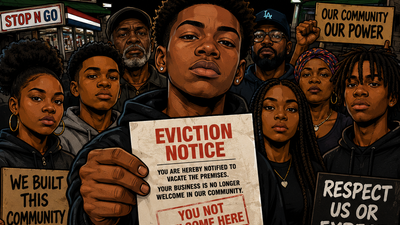

Demand for economic diversity in the black community
Demand for economic diversity in the black community
The Issue
The BLACK community has far too many detrimental Asian businesses operating in clusters of monopolies in them. These businesses sell drug paraphernalia liquor in some cases loose bullets and other detrimental items not allowed in other communities and it's time for them to GO.
DEMAND FOR COMMUNITY SAFETY, ECONOMIC DIVERSITY, ACCOUNTABILITY, AND EQUAL PROTECTION
To: Mayors, City Councils, County Commissioners, State Officials, Health Departments, Licensing Agencies, Law Enforcement Agencies, and Economic Development Authorities
Subject: Demand for Comprehensive Review, Inspection, Licensing Evaluation, and Community Impact Assessment of Businesses Operating Within Black Communities
We, the undersigned citizens, residents, taxpayers, consumers, and stakeholders, hereby demand immediate action to address longstanding concerns regarding public safety, food quality, economic concentration, business accountability, and community well-being within Black communities throughout the United States.
This demand is not based upon race, ethnicity, national origin, or religion. It is based upon legitimate concerns involving public safety, consumer protection, economic fairness, health standards, equal protection, and community development.
For decades, residents in many Black communities have witnessed the concentration of certain business types including, but not limited to:
Liquor stores
Smoke shops
Convenience stores
Mini-marts
Gas stations
Hair supply stores
Food stores
Check-cashing establishments
Businesses selling drug-related paraphernalia
Businesses associated with repeated criminal complaints
While every business owner has the right to operate lawfully, communities also have the right to demand accountability, safety, quality products, and economic diversity.
Accordingly, we demand the following:
1. Comprehensive Health and Safety Inspections
Immediate inspections of businesses operating within Black communities to ensure:
Compliance with all local, county, state, and federal health regulations.
Compliance with food safety standards.
Proper sanitation procedures.
Proper food storage procedures.
Compliance with building and occupancy codes.
Compliance with fire safety regulations.
Compliance with environmental regulations.
2. Food Quality Verification
We demand enhanced testing and inspection of food products sold within affected communities to ensure:
Food is accurately labeled.
Meat products are authentic and properly sourced.
Consumers are protected from fraud, contamination, adulteration, or misrepresentation.
Businesses are held accountable for any violations of food safety laws.
3. Community Impact Reviews
We demand that local governments conduct formal Community Impact Reviews evaluating:
Crime associated with specific business locations.
Calls for police service.
Violent incidents.
Nuisance complaints.
Loitering complaints.
Property maintenance complaints.
Public health concerns.
Quality-of-life concerns.
4. Licensing and Permit Review
We demand a review of all licenses and permits held by businesses that repeatedly:
Violate health regulations.
Violate safety regulations.
Violate zoning regulations.
Contribute to public nuisance conditions.
Fail to maintain their properties.
Businesses found to be chronic violators should face:
Fines.
Suspension of licenses.
Revocation of licenses.
Closure where legally warranted.
5. Public Disclosure
We demand public reporting of:
Inspection results.
Code violations.
Health violations.
Crime statistics associated with business locations.
License suspensions and revocations.
Communities have the right to know which businesses are operating responsibly and which are not.
6. Economic Diversity and Anti-Concentration Policies
We demand that local governments examine excessive concentrations of similar businesses within Black communities and develop policies encouraging:
Greater business diversity.
Mixed-use development.
Community-serving businesses.
Grocery stores.
Educational services.
Professional offices.
Technology businesses.
Family-oriented businesses.
Health and wellness services.
No community should be limited to a narrow range of businesses while other communities enjoy broader economic opportunities.
7. Support for Responsible Black-Owned Businesses
We demand expanded programs that support responsible Black-owned businesses that:
Create jobs.
Improve community conditions.
Maintain clean and safe properties.
Promote positive economic development.
Provide needed goods and services.
Such programs should include:
Access to capital.
Technical assistance.
Commercial property opportunities.
Business development grants.
Procurement opportunities.
8. Community Standards
We demand enforcement against businesses that:
Allow chronic loitering.
Facilitate illegal activity.
Ignore repeated community complaints.
Create unsafe conditions.
Fail to maintain clean and professional environments.
All businesses operating within a community should contribute positively to the quality of life of the residents they serve.
9. Equal Protection and Accountability
We demand equal enforcement of laws, regulations, inspections, and licensing requirements regardless of who owns a business.
Communities deserve equal protection under the law and equal access to safe, clean, professionally operated businesses.
10. Public Response Required
We demand that elected officials publicly state:
Whether they support these measures.
Whether they support stronger inspections and accountability.
Whether they support increased economic diversity in underserved communities.
Whether they support expanding opportunities for responsible community-focused businesses.
If officials oppose these measures, they should publicly explain why.
Conclusion
The deaths of individuals such as Latisha Harlins and Cyrus Carmack-Belton remain painful reminders of tensions, distrust, and unresolved concerns involving businesses and community relations. While every incident has its own facts and circumstances, communities have a right to demand environments that promote safety, mutual respect, accountability, and trust.
This nationwide demand calls for lawful enforcement of existing regulations, equal protection under the law, consumer protection, economic opportunity, and safer communities for future generations.
We seek communities that are clean, safe, economically diverse, professionally maintained, and beneficial to the people who live there.
We demand action.
FOR THE PURPOSE OF COMMUNITY SAFETY, ECONOMIC FAIRNESS, CONSUMER PROTECTION, ACCOUNTABILITY, AND EQUAL PROTECTION UNDER THE LAW

90
The Issue
The BLACK community has far too many detrimental Asian businesses operating in clusters of monopolies in them. These businesses sell drug paraphernalia liquor in some cases loose bullets and other detrimental items not allowed in other communities and it's time for them to GO.
DEMAND FOR COMMUNITY SAFETY, ECONOMIC DIVERSITY, ACCOUNTABILITY, AND EQUAL PROTECTION
To: Mayors, City Councils, County Commissioners, State Officials, Health Departments, Licensing Agencies, Law Enforcement Agencies, and Economic Development Authorities
Subject: Demand for Comprehensive Review, Inspection, Licensing Evaluation, and Community Impact Assessment of Businesses Operating Within Black Communities
We, the undersigned citizens, residents, taxpayers, consumers, and stakeholders, hereby demand immediate action to address longstanding concerns regarding public safety, food quality, economic concentration, business accountability, and community well-being within Black communities throughout the United States.
This demand is not based upon race, ethnicity, national origin, or religion. It is based upon legitimate concerns involving public safety, consumer protection, economic fairness, health standards, equal protection, and community development.
For decades, residents in many Black communities have witnessed the concentration of certain business types including, but not limited to:
Liquor stores
Smoke shops
Convenience stores
Mini-marts
Gas stations
Hair supply stores
Food stores
Check-cashing establishments
Businesses selling drug-related paraphernalia
Businesses associated with repeated criminal complaints
While every business owner has the right to operate lawfully, communities also have the right to demand accountability, safety, quality products, and economic diversity.
Accordingly, we demand the following:
1. Comprehensive Health and Safety Inspections
Immediate inspections of businesses operating within Black communities to ensure:
Compliance with all local, county, state, and federal health regulations.
Compliance with food safety standards.
Proper sanitation procedures.
Proper food storage procedures.
Compliance with building and occupancy codes.
Compliance with fire safety regulations.
Compliance with environmental regulations.
2. Food Quality Verification
We demand enhanced testing and inspection of food products sold within affected communities to ensure:
Food is accurately labeled.
Meat products are authentic and properly sourced.
Consumers are protected from fraud, contamination, adulteration, or misrepresentation.
Businesses are held accountable for any violations of food safety laws.
3. Community Impact Reviews
We demand that local governments conduct formal Community Impact Reviews evaluating:
Crime associated with specific business locations.
Calls for police service.
Violent incidents.
Nuisance complaints.
Loitering complaints.
Property maintenance complaints.
Public health concerns.
Quality-of-life concerns.
4. Licensing and Permit Review
We demand a review of all licenses and permits held by businesses that repeatedly:
Violate health regulations.
Violate safety regulations.
Violate zoning regulations.
Contribute to public nuisance conditions.
Fail to maintain their properties.
Businesses found to be chronic violators should face:
Fines.
Suspension of licenses.
Revocation of licenses.
Closure where legally warranted.
5. Public Disclosure
We demand public reporting of:
Inspection results.
Code violations.
Health violations.
Crime statistics associated with business locations.
License suspensions and revocations.
Communities have the right to know which businesses are operating responsibly and which are not.
6. Economic Diversity and Anti-Concentration Policies
We demand that local governments examine excessive concentrations of similar businesses within Black communities and develop policies encouraging:
Greater business diversity.
Mixed-use development.
Community-serving businesses.
Grocery stores.
Educational services.
Professional offices.
Technology businesses.
Family-oriented businesses.
Health and wellness services.
No community should be limited to a narrow range of businesses while other communities enjoy broader economic opportunities.
7. Support for Responsible Black-Owned Businesses
We demand expanded programs that support responsible Black-owned businesses that:
Create jobs.
Improve community conditions.
Maintain clean and safe properties.
Promote positive economic development.
Provide needed goods and services.
Such programs should include:
Access to capital.
Technical assistance.
Commercial property opportunities.
Business development grants.
Procurement opportunities.
8. Community Standards
We demand enforcement against businesses that:
Allow chronic loitering.
Facilitate illegal activity.
Ignore repeated community complaints.
Create unsafe conditions.
Fail to maintain clean and professional environments.
All businesses operating within a community should contribute positively to the quality of life of the residents they serve.
9. Equal Protection and Accountability
We demand equal enforcement of laws, regulations, inspections, and licensing requirements regardless of who owns a business.
Communities deserve equal protection under the law and equal access to safe, clean, professionally operated businesses.
10. Public Response Required
We demand that elected officials publicly state:
Whether they support these measures.
Whether they support stronger inspections and accountability.
Whether they support increased economic diversity in underserved communities.
Whether they support expanding opportunities for responsible community-focused businesses.
If officials oppose these measures, they should publicly explain why.
Conclusion
The deaths of individuals such as Latisha Harlins and Cyrus Carmack-Belton remain painful reminders of tensions, distrust, and unresolved concerns involving businesses and community relations. While every incident has its own facts and circumstances, communities have a right to demand environments that promote safety, mutual respect, accountability, and trust.
This nationwide demand calls for lawful enforcement of existing regulations, equal protection under the law, consumer protection, economic opportunity, and safer communities for future generations.
We seek communities that are clean, safe, economically diverse, professionally maintained, and beneficial to the people who live there.
We demand action.
FOR THE PURPOSE OF COMMUNITY SAFETY, ECONOMIC FAIRNESS, CONSUMER PROTECTION, ACCOUNTABILITY, AND EQUAL PROTECTION UNDER THE LAW
90
Supporter Voices
Petition Updates
Share this petition
Petition created on June 5, 2026