

Create the Wasatch Back Train - Connecting Provo/Orem to SLC through Heber and Park City
The Issue
Sign this petition to urge Utah Legislatures to adopt a bill creating the Wasatch Back Train connecting FrontRunner in Utah Valley to FrontRunner in Salt Lake Valley via Heber City and Park City.
Contact your state representatives:
Follow this link https://le.utah.gov/GIS/findDistrict.jsp to find the contact information for your representative. State representatives are often very responsive to their constituents. Please remember to be polite and emphasize the benefits and why you want the train and how it will benefit a huge portion of the population of the state.
The Rio Grand Plan:
Be sure to check out this Citizen Proposal to restore rail Service to the Rio Grande Depot and reconnect our divided community. With a line saved to go up to Park City
https://riograndeplansaltlakecity.org/
Travel Times and Safety:
The Wasatch Back Train will be a huge benefit for the Wasatch Front as well as the Wasatch Back. Imagine getting from Salt Lake City to Park City in under 15 minutes, Imagine travel times from Provo to Heber Valley in under 10 minutes, and getting from Provo to Park City in under 20 minutes. Imagine not having to drive in snow storms through Parleys or Provo Canyons.
Building the Wasatch Back Train will save time and save lives.
320 people died on Utah Roads in 2022 see UDOT 2022 fatality report
Traveling by rail is 20 times safer then by road see: Rail vs Road safety
Population Growth and looking Forward:
Heber valley will have over 70,000 residents in the next two decades. Kamas, Jordanelle, Kimball Junction and other areas on the Wasatch Back also have high rates of growth. See the new development being planned on 1500 acres in Hoytsville: https://www.cedarcresthoytsville.com/
Utah is projected to have over 5.5 million residents by 2060. The Wasatch Front has FrontRunner and TRAX; these should be connected to the Wasatch Back by train so that we won't have to widen I-80 and will be a more cost effective and efficient solution then a gondola.
The time to plan and build the Wasatch Back Train is now. It will only get more expensive as time goes on. We need to do what we can to preserve open space, preserve our air and plan appropriately.
Building more roads and paving over our valleys is not the solution. Switzerland, Spain, Japan and others have shown the great value that comes from creating a high speed train network connecting towns and cities. The Wasatch Front has benefited enormously from TRAX and FrontRunner and they have great plans to electrify FrontRunner, let’s continue that momentum and expand access to rail across more of the state.
We should work with Utah Open Lands to pay landowners to create conservation easements and preserve open space and access. We could use tax revenue from higher density areas near mass transit stations to preserve more open space so that even though more people will be traveling and living in the Wasatch Back we can preserve open space and the rural feel.
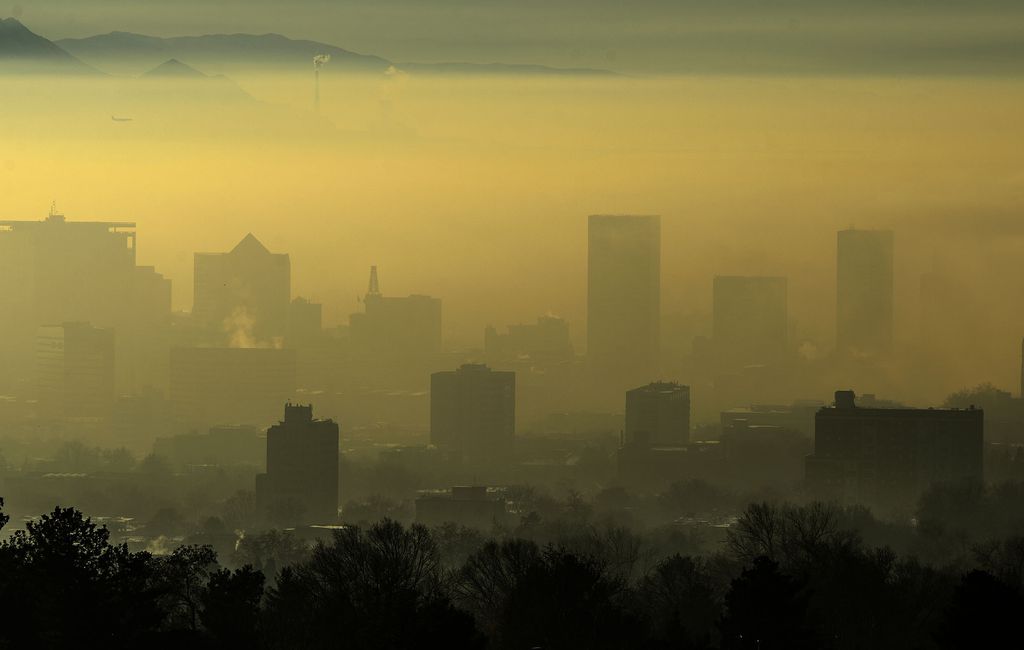
Quality of the air:
Utah has a problem with it's poisoned air, building electrified mass transit can help us fix that.
Feasibility and Funding:
Wikipedia has a great list of the longest rail tunnels showing this is entirely doable and Wasatch Back Train tunnels wouldn’t be unprecedented. https://en.wikipedia.org/wiki/List_of_longest_railway_tunnels
The recent bipartisan infrastructure act makes available a large amount of money to Utah for projects just like this.
Keep Up To Date:
Follow along for updates here and at https://WasatchBackTrain.org
Possible Routes:
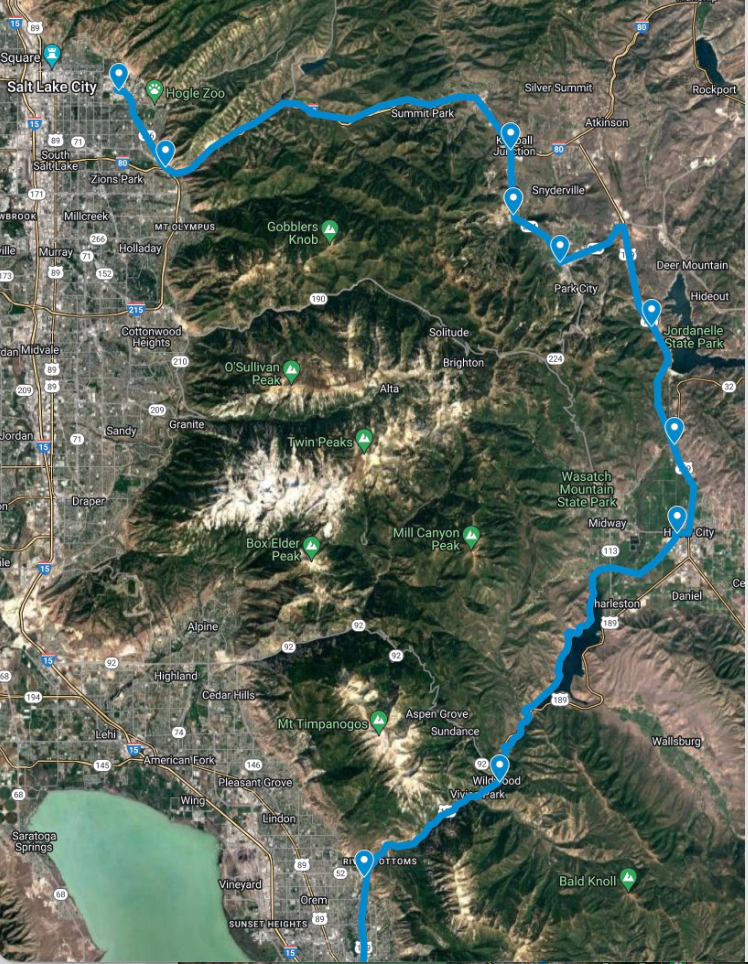
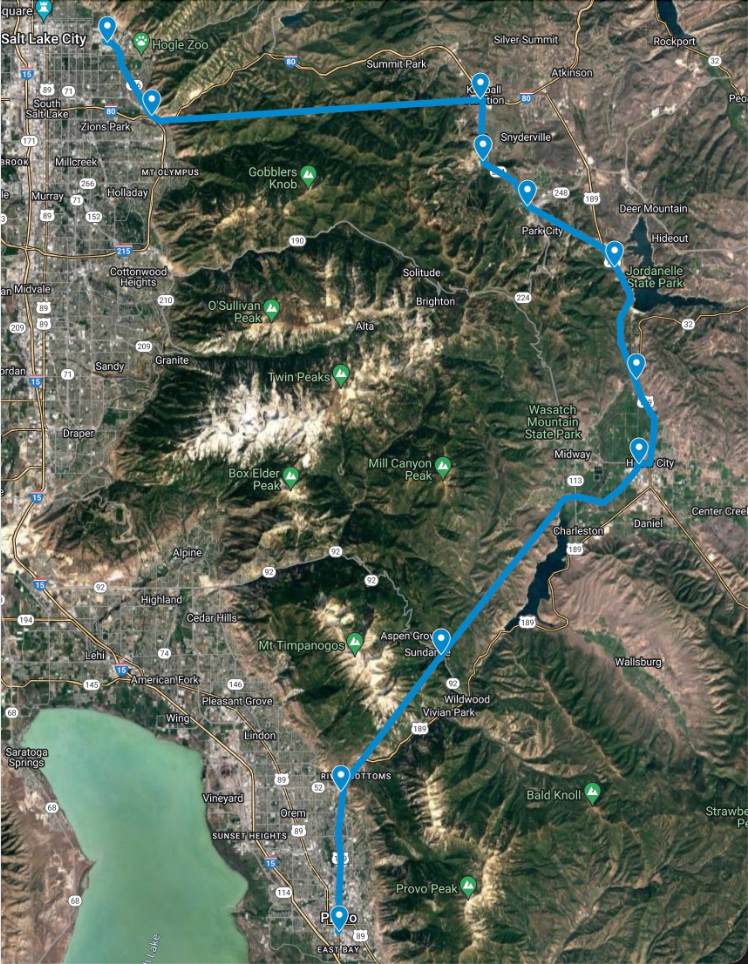
A feasibility study should properly determine the miles of tunnels vs surface miles that should be used. Here are few possibilities created on Google Maps:
Click to view in Google Maps
Possible points to include in the legislation
- Connecting a FrontRunner station in Orem or Provo, to Heber Valley, then Park City, and ending at a TRAX station in the Salt Lake Valley.
- Examine the feasibility of tunnels, look to the many examples worldwide such as those in Switzerland, China and elsewhere.
- Examine the cost and feasibility of a tunnel connecting the Wasatch Back Train from Park City Mountain to Brighton and Alta.
- Calculate the economic benefit of building the Wasatch Back Train vs cost over time.
- Calculate the amount of time saved for travelers.
- Calculate the number of lives saved by comparing safety rates of driving vs train use.
- Calculate the amount of pollutants that will be saved by people using the train vs driving.
- Examine the feasibility of making the train modern and high speed going over 150 mph.
- Calculate the costs of building the train and the timetable for completion.
- Calculate the cost of maintenance for the train line.
Sample Bill Text
Bill Title: Wasatch Back Train Line Feasibility Study and Implementation Act
Section 1. Purpose
The purpose of this act is to authorize the Utah Department of Transportation to conduct a feasibility study for the creation of a train line in the Wasatch Back, connecting Provo at a Front Runner Station to Heber, Park City, down to Salt Lake City, and ending at a TRAX station, and to provide funding for the implementation of the train line if the study finds it to be viable.
Section 2. Feasibility Study
(a) The Utah Department of Transportation shall conduct a feasibility study for the creation of a train line in the Wasatch Back, connecting Provo at a Front Runner Station to Heber, Park City, down to Salt Lake City and ending at a TRAX station.
(b) The feasibility study shall include, but not be limited to, the following elements:
A thorough analysis of the route and alignment options for the train line, including a consideration of environmental and community impacts. An examination of the potential ridership and revenue for the train line. A cost-benefit analysis of the train line, including construction costs, operating costs, and projected revenue. An assessment of the potential economic benefits and job creation resulting from the train line. (c) The feasibility study shall be completed within 18 months of the effective date of this act.
Section 3. Implementation
(a) If the feasibility study finds that the creation of a train line in the Wasatch Back, connecting Provo at a Front Runner Station to Heber, Park City, down to Salt Lake City and ending at a TRAX station is viable, the Utah Department of Transportation shall develop and implement a plan for the construction and operation of the train line.
(b) The plan for implementation shall include a detailed project schedule, a budget for construction and operation, and a plan for the acquisition of any necessary rights-of-way.
(c) The Utah Department of Transportation shall provide regular updates to the Legislature on the progress of the implementation plan.
Section 4. Funding
(a) The Utah Department of Transportation shall use funds from the state transportation fund for the conduct of the feasibility study and the implementation of the train line, if found viable by the study.
(b) The Legislature may appropriate additional funds as needed for the conduct of the feasibility study and the implementation of the train line.
Please Note: This is an example and will have to go through legal review, public hearings and the input of transportation expert, and the state legislature. It might have to go through some changes and adaptations to match the local laws and regulations.

136
The Issue
Sign this petition to urge Utah Legislatures to adopt a bill creating the Wasatch Back Train connecting FrontRunner in Utah Valley to FrontRunner in Salt Lake Valley via Heber City and Park City.
Contact your state representatives:
Follow this link https://le.utah.gov/GIS/findDistrict.jsp to find the contact information for your representative. State representatives are often very responsive to their constituents. Please remember to be polite and emphasize the benefits and why you want the train and how it will benefit a huge portion of the population of the state.
The Rio Grand Plan:
Be sure to check out this Citizen Proposal to restore rail Service to the Rio Grande Depot and reconnect our divided community. With a line saved to go up to Park City
https://riograndeplansaltlakecity.org/
Travel Times and Safety:
The Wasatch Back Train will be a huge benefit for the Wasatch Front as well as the Wasatch Back. Imagine getting from Salt Lake City to Park City in under 15 minutes, Imagine travel times from Provo to Heber Valley in under 10 minutes, and getting from Provo to Park City in under 20 minutes. Imagine not having to drive in snow storms through Parleys or Provo Canyons.
Building the Wasatch Back Train will save time and save lives.
320 people died on Utah Roads in 2022 see UDOT 2022 fatality report
Traveling by rail is 20 times safer then by road see: Rail vs Road safety
Population Growth and looking Forward:
Heber valley will have over 70,000 residents in the next two decades. Kamas, Jordanelle, Kimball Junction and other areas on the Wasatch Back also have high rates of growth. See the new development being planned on 1500 acres in Hoytsville: https://www.cedarcresthoytsville.com/
Utah is projected to have over 5.5 million residents by 2060. The Wasatch Front has FrontRunner and TRAX; these should be connected to the Wasatch Back by train so that we won't have to widen I-80 and will be a more cost effective and efficient solution then a gondola.
The time to plan and build the Wasatch Back Train is now. It will only get more expensive as time goes on. We need to do what we can to preserve open space, preserve our air and plan appropriately.
Building more roads and paving over our valleys is not the solution. Switzerland, Spain, Japan and others have shown the great value that comes from creating a high speed train network connecting towns and cities. The Wasatch Front has benefited enormously from TRAX and FrontRunner and they have great plans to electrify FrontRunner, let’s continue that momentum and expand access to rail across more of the state.
We should work with Utah Open Lands to pay landowners to create conservation easements and preserve open space and access. We could use tax revenue from higher density areas near mass transit stations to preserve more open space so that even though more people will be traveling and living in the Wasatch Back we can preserve open space and the rural feel.
Quality of the air:
Utah has a problem with it's poisoned air, building electrified mass transit can help us fix that.
Feasibility and Funding:
Wikipedia has a great list of the longest rail tunnels showing this is entirely doable and Wasatch Back Train tunnels wouldn’t be unprecedented. https://en.wikipedia.org/wiki/List_of_longest_railway_tunnels
The recent bipartisan infrastructure act makes available a large amount of money to Utah for projects just like this.
Keep Up To Date:
Follow along for updates here and at https://WasatchBackTrain.org
Possible Routes:
A feasibility study should properly determine the miles of tunnels vs surface miles that should be used. Here are few possibilities created on Google Maps:
Click to view in Google Maps
Possible points to include in the legislation
- Connecting a FrontRunner station in Orem or Provo, to Heber Valley, then Park City, and ending at a TRAX station in the Salt Lake Valley.
- Examine the feasibility of tunnels, look to the many examples worldwide such as those in Switzerland, China and elsewhere.
- Examine the cost and feasibility of a tunnel connecting the Wasatch Back Train from Park City Mountain to Brighton and Alta.
- Calculate the economic benefit of building the Wasatch Back Train vs cost over time.
- Calculate the amount of time saved for travelers.
- Calculate the number of lives saved by comparing safety rates of driving vs train use.
- Calculate the amount of pollutants that will be saved by people using the train vs driving.
- Examine the feasibility of making the train modern and high speed going over 150 mph.
- Calculate the costs of building the train and the timetable for completion.
- Calculate the cost of maintenance for the train line.
Sample Bill Text
Bill Title: Wasatch Back Train Line Feasibility Study and Implementation Act
Section 1. Purpose
The purpose of this act is to authorize the Utah Department of Transportation to conduct a feasibility study for the creation of a train line in the Wasatch Back, connecting Provo at a Front Runner Station to Heber, Park City, down to Salt Lake City, and ending at a TRAX station, and to provide funding for the implementation of the train line if the study finds it to be viable.
Section 2. Feasibility Study
(a) The Utah Department of Transportation shall conduct a feasibility study for the creation of a train line in the Wasatch Back, connecting Provo at a Front Runner Station to Heber, Park City, down to Salt Lake City and ending at a TRAX station.
(b) The feasibility study shall include, but not be limited to, the following elements:
A thorough analysis of the route and alignment options for the train line, including a consideration of environmental and community impacts. An examination of the potential ridership and revenue for the train line. A cost-benefit analysis of the train line, including construction costs, operating costs, and projected revenue. An assessment of the potential economic benefits and job creation resulting from the train line. (c) The feasibility study shall be completed within 18 months of the effective date of this act.
Section 3. Implementation
(a) If the feasibility study finds that the creation of a train line in the Wasatch Back, connecting Provo at a Front Runner Station to Heber, Park City, down to Salt Lake City and ending at a TRAX station is viable, the Utah Department of Transportation shall develop and implement a plan for the construction and operation of the train line.
(b) The plan for implementation shall include a detailed project schedule, a budget for construction and operation, and a plan for the acquisition of any necessary rights-of-way.
(c) The Utah Department of Transportation shall provide regular updates to the Legislature on the progress of the implementation plan.
Section 4. Funding
(a) The Utah Department of Transportation shall use funds from the state transportation fund for the conduct of the feasibility study and the implementation of the train line, if found viable by the study.
(b) The Legislature may appropriate additional funds as needed for the conduct of the feasibility study and the implementation of the train line.
Please Note: This is an example and will have to go through legal review, public hearings and the input of transportation expert, and the state legislature. It might have to go through some changes and adaptations to match the local laws and regulations.
Petition Updates
Share this petition
Petition created on January 25, 2023