
Commemorate the Kensington Riots of 1844 with a Pennsylvania Historical Marker
The Issue
Help recognize an overlooked chapter of Philadelphia’s history by supporting our application for a Pennsylvania Historical Marker to commemorate the Kensington Riots of 1844—an event crucial to understanding the Irish immigrant experience in America.
By signing this petition, you support our formal application to the Pennsylvania Historical and Museum Commission.
The Kensington Riots of 1844 were a brutal outbreak of sectarian and anti-immigrant violence, targeting Irish Catholics as they sought to establish a new life in America.
From May 6 to May 8, 1844, Nativist American mobs repeatedly invaded Kensington’s Third Ward, a stronghold of Irish Catholic immigrants, setting fire to St. Michael’s Church, destroying homes and businesses—including the well-known “Nanny Goat Market”—and displacing more than 200 Irish Catholics.
The riots resulted in at least 20 deaths and 50 injuries, making them one of the deadliest urban riots in early American history, and exposing the fragility of religious freedom and immigrant rights in the young republic. The failure to quell the violence in Kensington led to further escalation, including the burning of St. Augustine’s Church in Philadelphia and a violent standoff in Southwark (now Queen Village) during Fourth of July celebrations. These civic failures ultimately led to sweeping reforms, including the 1854 consolidation of Philadelphia County into a single city and the creation of a unified police force.
Although widespread prejudice fueled the riots, the immediate spark was a dispute over Bible readings in Protestant-controlled public schools, which reinforced anti-Catholic bias. In the wake of the riots, Philadelphia’s Bishop Francis Kenrick championed an independent Catholic school system. By 1850, nearly every Catholic parish in Philadelphia had established a free school, and in 1852, a national Catholic council expanded this initiative, mandating the creation of parish schools across the country.
The riots also had lasting architectural consequences. Fearing future attacks, Philadelphia’s Cathedral Basilica of Saints Peter and Paul—begun in 1846 and now a landmark at the head of the Benjamin Franklin Parkway—was designed with minimal street-level windows as a defensive measure.
At the same time, the violence became a rallying cry for the growing Nativist movement, fueling anti-immigrant and anti-Catholic sentiment across the United States. The riots contributed to the rise of the Know-Nothing Party, which gained significant political power in the 1850s and sought to restrict immigration and Catholic influence.
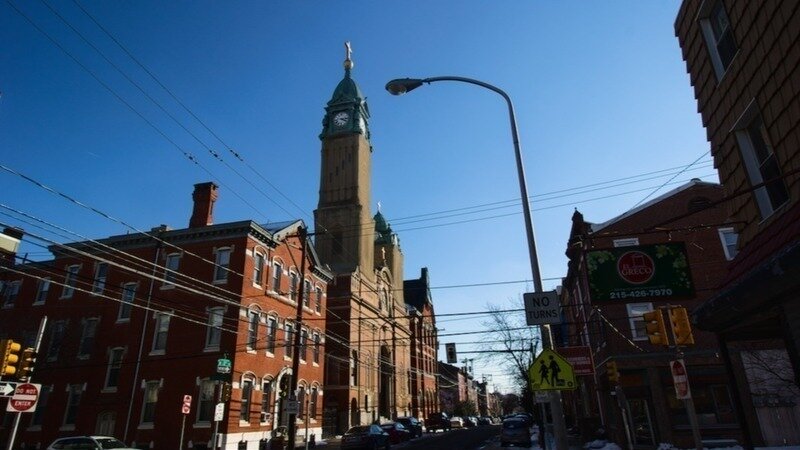
Demonstrating remarkable strength and resilience, the Irish in Kensington rebuilt St. Michael’s Church and went on to establish Catholic parishes throughout Greater Kensington, ensuring their community not only endured but flourished for generations to come.
The Kensington Riots of 1844 serve as a stark reminder of the dangers of religious intolerance and ethnic prejudice—forces that have shaped the experiences of many immigrant communities throughout American history. Out of this turmoil arose a broader narrative about religious freedom, immigrant dignity, and inclusion—values that continue to shape our society today.
A dedicated historical marker in Kensington would recognize the neighborhood’s central role in this pivotal event, restoring dignity to a community often defined by its present struggles. This marker would reclaim Kensington’s legacy of resilience while honoring the Irish Catholic immigrants who helped shape its identity.
This petition will be submitted with all accompanying signatures to the Pennsylvania Historical and Museum Commission by April 1, 2025 as part of our completed application for the state historical marker. We will provide progress updates throughout the year to all supporters. Pending approval, we anticipate a dedication ceremony in Spring 2026.
To learn more, check out the following books:

Victory
The Issue
Help recognize an overlooked chapter of Philadelphia’s history by supporting our application for a Pennsylvania Historical Marker to commemorate the Kensington Riots of 1844—an event crucial to understanding the Irish immigrant experience in America.
By signing this petition, you support our formal application to the Pennsylvania Historical and Museum Commission.
The Kensington Riots of 1844 were a brutal outbreak of sectarian and anti-immigrant violence, targeting Irish Catholics as they sought to establish a new life in America.
From May 6 to May 8, 1844, Nativist American mobs repeatedly invaded Kensington’s Third Ward, a stronghold of Irish Catholic immigrants, setting fire to St. Michael’s Church, destroying homes and businesses—including the well-known “Nanny Goat Market”—and displacing more than 200 Irish Catholics.
The riots resulted in at least 20 deaths and 50 injuries, making them one of the deadliest urban riots in early American history, and exposing the fragility of religious freedom and immigrant rights in the young republic. The failure to quell the violence in Kensington led to further escalation, including the burning of St. Augustine’s Church in Philadelphia and a violent standoff in Southwark (now Queen Village) during Fourth of July celebrations. These civic failures ultimately led to sweeping reforms, including the 1854 consolidation of Philadelphia County into a single city and the creation of a unified police force.
Although widespread prejudice fueled the riots, the immediate spark was a dispute over Bible readings in Protestant-controlled public schools, which reinforced anti-Catholic bias. In the wake of the riots, Philadelphia’s Bishop Francis Kenrick championed an independent Catholic school system. By 1850, nearly every Catholic parish in Philadelphia had established a free school, and in 1852, a national Catholic council expanded this initiative, mandating the creation of parish schools across the country.
The riots also had lasting architectural consequences. Fearing future attacks, Philadelphia’s Cathedral Basilica of Saints Peter and Paul—begun in 1846 and now a landmark at the head of the Benjamin Franklin Parkway—was designed with minimal street-level windows as a defensive measure.
At the same time, the violence became a rallying cry for the growing Nativist movement, fueling anti-immigrant and anti-Catholic sentiment across the United States. The riots contributed to the rise of the Know-Nothing Party, which gained significant political power in the 1850s and sought to restrict immigration and Catholic influence.
Demonstrating remarkable strength and resilience, the Irish in Kensington rebuilt St. Michael’s Church and went on to establish Catholic parishes throughout Greater Kensington, ensuring their community not only endured but flourished for generations to come.
The Kensington Riots of 1844 serve as a stark reminder of the dangers of religious intolerance and ethnic prejudice—forces that have shaped the experiences of many immigrant communities throughout American history. Out of this turmoil arose a broader narrative about religious freedom, immigrant dignity, and inclusion—values that continue to shape our society today.
A dedicated historical marker in Kensington would recognize the neighborhood’s central role in this pivotal event, restoring dignity to a community often defined by its present struggles. This marker would reclaim Kensington’s legacy of resilience while honoring the Irish Catholic immigrants who helped shape its identity.
This petition will be submitted with all accompanying signatures to the Pennsylvania Historical and Museum Commission by April 1, 2025 as part of our completed application for the state historical marker. We will provide progress updates throughout the year to all supporters. Pending approval, we anticipate a dedication ceremony in Spring 2026.
To learn more, check out the following books:
The Decision Makers

Supporter Voices
Petition Updates
Share this petition
Petition created on February 28, 2025