.
The Issue
How can we turn London from just a location into an immediately recognizable destination? By changing its name.
Our city is a corporation and it’s about time it acted like one which means having a clear value proposition, a strong identity and unique characteristics that differentiate it from other cities around the world.
Ultimately it means that we need strong place-branding strategies to attract investment, people and capital to our city.
And yes, we need to be thinking big. We are in a global marketplace and if we don’t offer anything unique then we will become a sinking ship.
What comes to mind when you think of a city like Paris? Romance? How about Las Vegas? Sin City? Stratford, Ontario? Shakespeare Festival?
When I travel around the world, I’m often asked what city I’m from. When I tell people that I’m from London, they immediately ask “London, England?” Believe it or not, I even get that from those who are from our country. But, I just smile explain that there is another London situated in Canada.
So with that, it's time to end the London name confusion. It's time for London to seek its own independence. We are perceived to be a second-class city compared to our dominant counterpart because our name puts us at a disadvantage.
If we want to compete with a city like London, England, it’s a losing battle. Therefore we need to be more innovative so that we are an international destination for business, tourism, and immigration.
That is why I have started a city-wide regeneration campaign to crowd-source ideas to brand our city and change its name and slogan.
I am proposing to change the City's name to “New London.” The name speaks for itself but think of it like New York (which used to be called New Amsterdam).
If you think changing the city’s name is unrealistic, think again because Kitchener, Ontario used to be called Berlin and Mumbai, India was once known as Bombay. Ottawa is no longer called Bytown, Kingston was formerly called Fort Frontenac and Collingwood used to be called Hens and Chicken's Harbour. This is just to show that it is possible to change a city's name.
Place-branding is an initiative many cities have undertaken to distinguish themselves.
Though it is a small sized city, Stratford has recently rebranded to focus efforts on promoting it as a forward-thinking technology centre to stay competitive in our globalized world.
“Now that we have the brand, we can be much more progressive and aggressive in terms of how we sell this community,” said investStratford CEO Marlene Coffey.
Mississauga is reshaping its image beyond the shadow of nearby Toronto as a magnet for international talent and investment.
A key strategy in fuelling the city’s momentum is a multi-year brand-building commitment. “It is deeply rooted in the idea of growth,” says the mississaugabrand.ca website. “We are a young city and are on the cusp of something big, of finding our voice, our identity.”
Last year Halifax launched a place branding campaign in which they changed their name to Halifax from HRM and slogan to “be bold”.
Although at first many opposed the name change and even the need to rebrand, Halifax Mayor Mike Savage said, “It’s going to allow us to promote Halifax in a cohesive way, in a strategic way.” More than 20,000 residents provided feedback over a three-month period on what it means to live and work in the Halifax region.
We need to be willing to think differently. And the difference we need to embrace is the reality of who we are, where we want to be in the future and our value proposition as a place.
As the Greek oracle put it, “know thyself.” Now, live out that reality. A great city, like a great wine, has to express its terroir,” says Aaron Renn of the Manhattan Institute.
Let me be clear about my intentions. I have a vested interest in giving back to my community but also doing everything in my capacity to ensure that our city is flourishing
I am proposing this change so we can proclaim this London as literally the New London of the 21st century.
The old London can be attributed to the first industrial revolution, but this new London will give rise to the fourth industrial revolution (Industry 4.0), artificial intelligence, 3D printing, synthetic biology, nanotechnology, digital manufacturing, the internet of things, and the sharing economy just to name a few.
Our city will be a global hub to test and prototype new technologies, new ideas and new inventions. We have the credentials of being a tester city and we can do a whole lot branding the city as New London.
Indeed, our slogan should be changed to “Tester City”, "Living Lab” or "City Lab". If it works here, sells here, and succeeds here it’s bound to be that way anywhere.
I firmly believe that our democracy is strong not in-spite of the differences of opinion but because of them. A healthy debate and conversation about a city we care about is always needed in order for us to progress.
Our classic tendency to cantankerously criticize and condemn rather than try to be open minded will not only bankrupt our city but cause all the innovative, energetic, and forward-thinking young people to leave. Being so resistant to even a conversation about new ideas and change doesn’t work.
Although I applaud those who work hard in our community there are many who just want to be comfortable and are resistant to real change.
The reality is that we need entrepreneurial people who will actively promote our city and encourage its growth for a vital and prosperous future for all.
London has had a rich history and many success stories of creative individuals and companies who have changed the world and we must build our brand around that.
The federal government recently gave Fanshawe College $16.2-million to build the Canadian Centre for Product Validation. It is a national first and one of only a few such industrial product test centres in the world.
Boundary Layer Wind Tunnel is another London asset, in fact the birthplace of modern wind engineering. It is designed to simulate localized, high-intensity wind patterns such as downbursts and tornadoes that have never been studied before. This facility has tested scaled structures as the World Trade Center, Sears Tower and Jakarta Tower, and even the Emirates Towers located in Dubai.
These are just two facilities, out of many, that already shaped our city as a living lab.
Place branding is about how a community sees itself in relation to the rest of the world. It gives a distinctive, memorable voice to become noticed, build a reputation and sustain loyalty.
Understanding the value proposition of a community attracts the right types of businesses and allows existing businesses to cater to proper internal markets.
A strong identity is vital if you are competing with other places for attention in tourism, business or talent.
Branding our city on a global scale, changing its name and its slogan may be a good start.
For those who say there are other cities named New London, that’s true; there are 19 cities named New London in the world (most referenced one is in Connecticut). However there's only one London that comes to mind and that's the world-class city of London, England.
Is New London, Connecticut a world class city? No, because it’s considered by many to be an insignificant village that no-one cares to know about until he or she tries to do research. With the name change our city would immediately be the biggest and strongest New London.
My proposal is backed by academic research and data. For example, Laura Kostanski, research fellow at the University of Ballarat, Australia indicates that “while people are dependent on a place to provide particular facilities, people and governments are also dependent on toponyms (place name) to distinguish the unique aspects of one place from another. This comes into focus particularly with tourism promotion, or place branding.”
Jane Jacobs said “cities have the capability of providing something for everybody only because, and only when they are created by everybody.”
Cities are built by people, they don’t just pop into existence.
So what kind of city do we want to build that is relevant and ahead of the game?
----------------------------------------------------
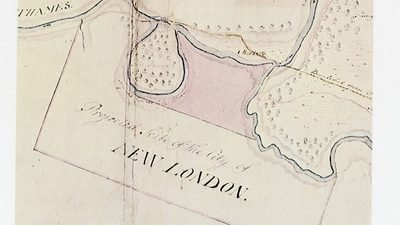
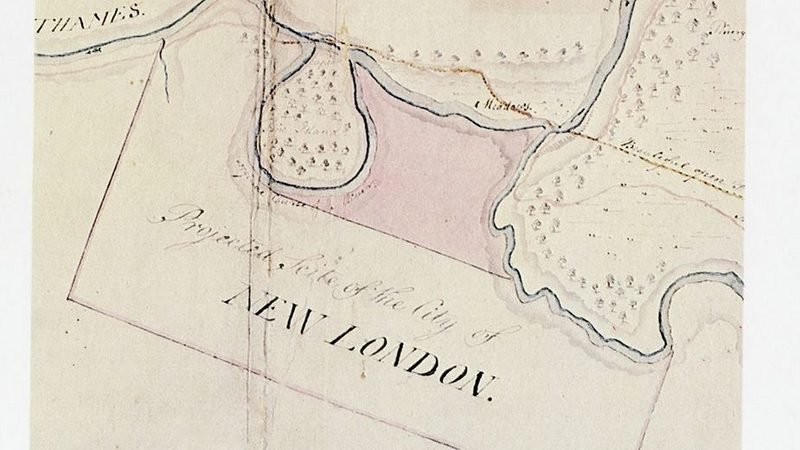
Joseph O'Neil shared this image with me. The image in this petition is from the 1984 book "Ontario's History in Books", University of Toronto Press. Page 232. The image above is a copy of a map from 1795, a survey by Patrick McNiff showing the proposed site of - wait for it - "New London."
Yes ladies and gentlemen, the first proposed name for our city - from 1795 (that is about 220 years ago) was "New London".
Got ideas, comments and feedback you'd like to share with me? Email me amir@londoninstitute.ca

Petition Closed
The Issue
How can we turn London from just a location into an immediately recognizable destination? By changing its name.
Our city is a corporation and it’s about time it acted like one which means having a clear value proposition, a strong identity and unique characteristics that differentiate it from other cities around the world.
Ultimately it means that we need strong place-branding strategies to attract investment, people and capital to our city.
And yes, we need to be thinking big. We are in a global marketplace and if we don’t offer anything unique then we will become a sinking ship.
What comes to mind when you think of a city like Paris? Romance? How about Las Vegas? Sin City? Stratford, Ontario? Shakespeare Festival?
When I travel around the world, I’m often asked what city I’m from. When I tell people that I’m from London, they immediately ask “London, England?” Believe it or not, I even get that from those who are from our country. But, I just smile explain that there is another London situated in Canada.
So with that, it's time to end the London name confusion. It's time for London to seek its own independence. We are perceived to be a second-class city compared to our dominant counterpart because our name puts us at a disadvantage.
If we want to compete with a city like London, England, it’s a losing battle. Therefore we need to be more innovative so that we are an international destination for business, tourism, and immigration.
That is why I have started a city-wide regeneration campaign to crowd-source ideas to brand our city and change its name and slogan.
I am proposing to change the City's name to “New London.” The name speaks for itself but think of it like New York (which used to be called New Amsterdam).
If you think changing the city’s name is unrealistic, think again because Kitchener, Ontario used to be called Berlin and Mumbai, India was once known as Bombay. Ottawa is no longer called Bytown, Kingston was formerly called Fort Frontenac and Collingwood used to be called Hens and Chicken's Harbour. This is just to show that it is possible to change a city's name.
Place-branding is an initiative many cities have undertaken to distinguish themselves.
Though it is a small sized city, Stratford has recently rebranded to focus efforts on promoting it as a forward-thinking technology centre to stay competitive in our globalized world.
“Now that we have the brand, we can be much more progressive and aggressive in terms of how we sell this community,” said investStratford CEO Marlene Coffey.
Mississauga is reshaping its image beyond the shadow of nearby Toronto as a magnet for international talent and investment.
A key strategy in fuelling the city’s momentum is a multi-year brand-building commitment. “It is deeply rooted in the idea of growth,” says the mississaugabrand.ca website. “We are a young city and are on the cusp of something big, of finding our voice, our identity.”
Last year Halifax launched a place branding campaign in which they changed their name to Halifax from HRM and slogan to “be bold”.
Although at first many opposed the name change and even the need to rebrand, Halifax Mayor Mike Savage said, “It’s going to allow us to promote Halifax in a cohesive way, in a strategic way.” More than 20,000 residents provided feedback over a three-month period on what it means to live and work in the Halifax region.
We need to be willing to think differently. And the difference we need to embrace is the reality of who we are, where we want to be in the future and our value proposition as a place.
As the Greek oracle put it, “know thyself.” Now, live out that reality. A great city, like a great wine, has to express its terroir,” says Aaron Renn of the Manhattan Institute.
Let me be clear about my intentions. I have a vested interest in giving back to my community but also doing everything in my capacity to ensure that our city is flourishing
I am proposing this change so we can proclaim this London as literally the New London of the 21st century.
The old London can be attributed to the first industrial revolution, but this new London will give rise to the fourth industrial revolution (Industry 4.0), artificial intelligence, 3D printing, synthetic biology, nanotechnology, digital manufacturing, the internet of things, and the sharing economy just to name a few.
Our city will be a global hub to test and prototype new technologies, new ideas and new inventions. We have the credentials of being a tester city and we can do a whole lot branding the city as New London.
Indeed, our slogan should be changed to “Tester City”, "Living Lab” or "City Lab". If it works here, sells here, and succeeds here it’s bound to be that way anywhere.
I firmly believe that our democracy is strong not in-spite of the differences of opinion but because of them. A healthy debate and conversation about a city we care about is always needed in order for us to progress.
Our classic tendency to cantankerously criticize and condemn rather than try to be open minded will not only bankrupt our city but cause all the innovative, energetic, and forward-thinking young people to leave. Being so resistant to even a conversation about new ideas and change doesn’t work.
Although I applaud those who work hard in our community there are many who just want to be comfortable and are resistant to real change.
The reality is that we need entrepreneurial people who will actively promote our city and encourage its growth for a vital and prosperous future for all.
London has had a rich history and many success stories of creative individuals and companies who have changed the world and we must build our brand around that.
The federal government recently gave Fanshawe College $16.2-million to build the Canadian Centre for Product Validation. It is a national first and one of only a few such industrial product test centres in the world.
Boundary Layer Wind Tunnel is another London asset, in fact the birthplace of modern wind engineering. It is designed to simulate localized, high-intensity wind patterns such as downbursts and tornadoes that have never been studied before. This facility has tested scaled structures as the World Trade Center, Sears Tower and Jakarta Tower, and even the Emirates Towers located in Dubai.
These are just two facilities, out of many, that already shaped our city as a living lab.
Place branding is about how a community sees itself in relation to the rest of the world. It gives a distinctive, memorable voice to become noticed, build a reputation and sustain loyalty.
Understanding the value proposition of a community attracts the right types of businesses and allows existing businesses to cater to proper internal markets.
A strong identity is vital if you are competing with other places for attention in tourism, business or talent.
Branding our city on a global scale, changing its name and its slogan may be a good start.
For those who say there are other cities named New London, that’s true; there are 19 cities named New London in the world (most referenced one is in Connecticut). However there's only one London that comes to mind and that's the world-class city of London, England.
Is New London, Connecticut a world class city? No, because it’s considered by many to be an insignificant village that no-one cares to know about until he or she tries to do research. With the name change our city would immediately be the biggest and strongest New London.
My proposal is backed by academic research and data. For example, Laura Kostanski, research fellow at the University of Ballarat, Australia indicates that “while people are dependent on a place to provide particular facilities, people and governments are also dependent on toponyms (place name) to distinguish the unique aspects of one place from another. This comes into focus particularly with tourism promotion, or place branding.”
Jane Jacobs said “cities have the capability of providing something for everybody only because, and only when they are created by everybody.”
Cities are built by people, they don’t just pop into existence.
So what kind of city do we want to build that is relevant and ahead of the game?
----------------------------------------------------
Joseph O'Neil shared this image with me. The image in this petition is from the 1984 book "Ontario's History in Books", University of Toronto Press. Page 232. The image above is a copy of a map from 1795, a survey by Patrick McNiff showing the proposed site of - wait for it - "New London."
Yes ladies and gentlemen, the first proposed name for our city - from 1795 (that is about 220 years ago) was "New London".
Got ideas, comments and feedback you'd like to share with me? Email me amir@londoninstitute.ca
The Decision Makers

Petition Updates
Share this petition
Petition created on 10 December 2015