Bottom-Up: How TCS Can (or Fail to) Deliver Real End-User Value in the Agentic AI + GCC Era❓️

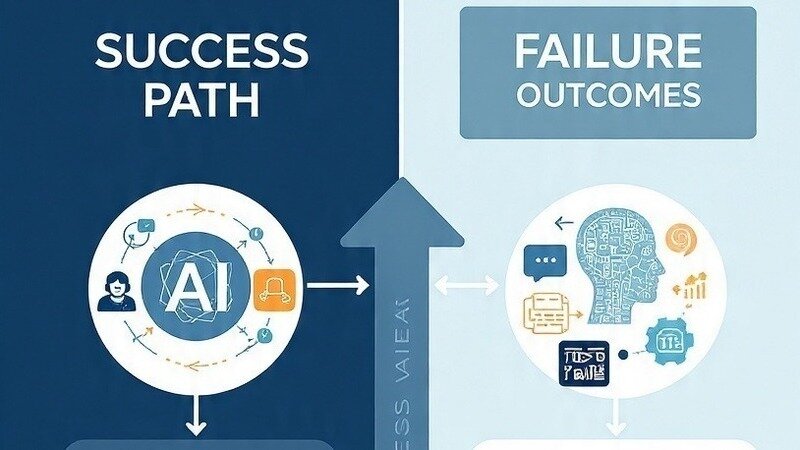
Here's a worthy simulator of the CEO's desk/dashboard at leading IT and ITES companies absolutely free.
https://itessimulator.netlify.app/
Bottom-Up Implementation: How TCS Delivers (or Fails to Deliver) End-User Value and Wins/Loses Business
End-user value is the ultimate filter. Clients pay for outcomes experienced by their employees, customers, citizens, or partners—not for code shipped or tickets closed. Below is a granular, implementation-level dissection of how TCS can succeed or fail in the GCC + Agentic AI era. This flows from the ground (daily delivery, tech stack, people) upward to business wins.
1. Ground-Level Delivery: Where Value is Created or Lost Daily
Success Path (Value Creation):
- Agentic AI Integration in Workflows: TCS deploys specialized agents (e.g., TCS Autonomous Operations on Azure or custom SDLC agents) that autonomously handle multi-step processes. Example: In a bank’s customer service, an agent detects a delayed transaction, pulls data from legacy systems + GCC feeds, reasons through rules/fraud checks, resolves it, updates the customer via preferred channel, and logs for audit. End-user (customer) gets instant resolution; internal user (agent) focuses on exceptions. Implementation: Pre-built agent libraries + orchestration layer (TCS’s full-stack) + human-in-loop governance. This delivers 40-60% MTTR reduction and higher CSAT.
- Hybrid GCC + TCS Model: TCS acts as “GCC accelerator.” Bottom-up: Joint teams map processes, deploy agents on client’s captive infrastructure, integrate with TCS platforms for scale/security. TCS brings proven patterns from past sovereign projects (Aadhaar-scale data handling, GeM procurement). End-user value: Faster innovation cycles without clients building everything from scratch.
- Domain-Specific Customization: Leverage historical moats. In government/PSU: Agents for citizen services (e.g., auto-approvals in procurement or passport renewals) reduce wait times from weeks to hours while maintaining compliance. In BFSI: Predictive agents for personalized offers using combined TCS + client data.
Failure Path (Value Erosion):
- Agent Silos or Poor Integration: Agents built in isolation fail at edge cases (legacy system quirks, regulatory changes). End-user experiences broken journeys (e.g., “agent couldn’t resolve, escalate to human” loops). Implementation gap: Weak orchestration, insufficient testing on real client data, or over-reliance on generic models → lower reliability than pure GCC in-house work.
- Talent/Change Friction: Reskilling lags. On-ground engineers stick to old FTE habits instead of agent supervision + exception design. Clients see no productivity jump; end-users feel no improvement.
2. Mid-Level: Governance, Data, and Orchestration (The Glue)
Success Path:
- TCS owns the “AgentOps” layer: Monitoring, versioning, security, continuous improvement of agents. Bottom-up: Real-time dashboards showing agent performance metrics tied directly to end-user KPIs (resolution time, error rate, satisfaction). In practice: For a retailer, agents optimize inventory + personalize recommendations; TCS ensures compliance with privacy laws and seamless handover to human merchandisers. This creates defensible value through trust and measurability.
- Sovereign/Enterprise Data Foundations: Using experience from large government projects, TCS builds secure, governed data platforms that feed agents. End-user value: Accurate, personalized experiences without breaches.
Failure Path:
- Governance gaps lead to “agent sprawl,” hallucinations, or compliance violations. Clients pull back to GCCs for control. End-user impact: Inconsistent experiences or trust erosion (e.g., wrong citizen benefit approvals). TCS loses differentiation if clients view it as just another vendor supplying tools rather than accountable outcomes.
3. Top-Level Business Outcomes and Commercial Models
Success Path (Winning More Business):
- Outcome-Based Contracting: Tie fees to end-user metrics (e.g., +X% customer retention, -Y% cost-per-service, improved Net Promoter Score). Implementation: Pilot on one process (e.g., IT ops or claims processing), prove ROI with data, expand. This converts historical scale moats into pricing power. Medium-term: TCS becomes the “guaranteed transformation partner” for clients wary of pure AI risks or GCC limitations.
- Platform + Services Hybrid: Sell agentic platforms (customized Ignio-like or new offerings) + managed services. Recurring revenue from optimization/updates. In government: Expand GeM-like platforms with agentic intelligence for predictive procurement—citizens/businesses get faster, fairer services.
- Ecosystem Play: Partner deeply with hyperscalers while owning industry vertical agents. End result: Clients achieve “perpetually adaptive” operations; TCS gains wallet share as the orchestrator.
Failure Path (Losing Ground):
- Stick to traditional T&M/FTE billing while competitors shift to value pricing. Clients see automation benefits but capture most savings internally via GCCs → TCS volume shrinks.
- Slow adaptation: If mega-deals focus on legacy modernization without clear agentic end-user roadmaps, discretionary spend shifts elsewhere. Long-term: Erosion in core accounts as GCCs mature and open-source/low-code agent tools proliferate.
Realistic Medium-to-Long Term Scenarios
- Optimistic (High Value Delivery): TCS leverages $2.3B+ AI run-rate and TCV pipeline to become the default partner for complex, regulated transformations. End-user value compounds via network effects (more clients → better patterns → superior agents). Business gain: Sustained mid-single digit growth, premium margins, expanded sovereign plays. Moats strengthen around integration expertise + accountability.
- Pessimistic (Value Shortfall): Fragmented implementation, slower reskilling, or clients preferring captive control leads to commoditization. TCS retains large base but grows slower (low-single digits), with pressure on utilization and pricing. Historical government moats help stabilize but don’t drive expansion.
- Most Likely Balanced: Hybrid success—strong in sovereign/gov and complex BFSI transformations; challenged in commoditized areas. Key differentiator: Speed and depth of bottom-up execution (agent reliability, governance maturity, measurable KPIs).
Practical Levers TCS Must Nail:
- Invest heavily in agent testing harnesses and real-world simulation (using past large-project data).
- Cultural shift: Reward outcomes over effort in delivery teams.
- Client co-creation: Joint value workshops mapping end-user journeys to agentic solutions.
- Metrics rigor: Every engagement tracked with end-user proxies (not just internal utilization).
TCS has the scale, cash, IP, and reference projects to excel here, but success is execution-heavy at the implementation coalface. The companies that win long-term are those that make end-users noticeably better off—faster, happier, more empowered—while taking accountability for the complex reality behind the scenes. This is the deepest moat left in the industry.
Here's a worthy simulator of the CEO's desk/dashboard at leading IT and ITES companies absolutely free.