Campaigning for Systemic Change: Inclusive Transportation & TfL iBus Accessibility
The Issue
Campaigning for Systemic Change: Inclusive Transportation & TfL iBus Accessibility
Your work advocating for systemic change and addressing the financial barriers faced by disabled individuals—specifically concerning transport accessibility with TfL and the iBus system—tackles a crucial intersection of mobility, poverty, and social equity.
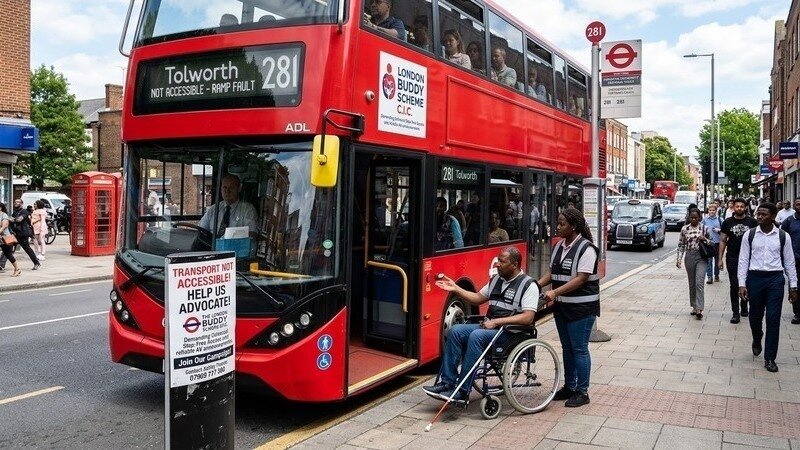
Transportation poverty is a significant driver of social exclusion. When disabled individuals face both physical barriers (like lack of real-time audio-visual announcements, broken lifts, or poorly integrated bus routes) and financial barriers (such as the prohibitive cost of fares or inadequate concessionary schemes), it restricts access to employment, healthcare, education, and community life.
Key Pillars of Inclusive Transport Advocacy
When structuring a campaign or research proposal aimed at making TfL fully inclusive and subsidizing accessibility to combat disabled poverty, several core areas form the foundation of a robust systemic argument:
Financial Equity & Subsidy Solutions:
Targeted Concessions: Expanding or reforming existing travel concessions (such as the Freedom Pass or Disabled Person's Railcard equivalents within London) to address the higher living costs associated with disability (often referred to as the "disability price tag").
Funding Mechanisms: Researching ring-fenced municipal grants, congestion charge revenues, or public-private partnerships specifically allocated to subsidize fare reduction or zero-fare mobility schemes for low-income disabled Londoners.
Technological & Infrastructural Integration (TfL iBus & Beyond):
Real-Time Information: Ensuring the iBus system consistently provides accurate, synchronized audio and visual next-stop announcements across all routes, benefiting neurodivergent passengers, visually impaired riders, and wheelchair users alike.
First-and-Last-Mile Connectivity: Integrating accessible bus travel with step-free tube and rail stations to ensure seamless end-to-end journeys without unexpected disruptions.
Data-Driven Advocacy:
Leveraging intersectional data that demonstrates how transport poverty disproportionately impacts disabled people from lower-income backgrounds, making a compelling economic and moral case to TfL and the Greater London Authority (GLA).
Accessible Transport & Economic Justice Advocate
Spearheaded systemic advocacy initiatives targeting Transport for London (TfL) to enhance the inclusivity of the iBus network and public transit infrastructure.
Researched and proposed financial subsidization models and funding solutions aimed at mitigating disabled poverty and dismantling cost barriers to public mobility.
Bridged policy gaps by connecting universal accessibility standards with economic relief strategies for low-income disabled commuters.
Formal Escalation & TfL iBus Challenge (March 2026)
Following TfL Customer Services' rejection of an audio announcement request for an accessibility venue serving individuals with severe sight loss, The London Buddy Scheme C.I.C. formally escalated the issue to TfL leadership and the Commissioner.
Key Campaign Actions & Next Steps:
Formal Escalation to TfL: Submitted a formal challenge demanding TfL leadership review and overturn the decision, urging them to prioritize human safety, inclusion, and equal access over technical rigidity within the iBus framework.
Parliamentary & Local Advocacy: Mobilized community members and supporters to contact local councillors and MPs to hold TfL accountable to its statutory duties under the Equality Act 2010.
Community Mobilization: Integrating campaign discussions into upcoming London Buddy Scheme community meetings and coffee mornings to drive co-produced accessibility solutions.

23
The Issue
Campaigning for Systemic Change: Inclusive Transportation & TfL iBus Accessibility
Your work advocating for systemic change and addressing the financial barriers faced by disabled individuals—specifically concerning transport accessibility with TfL and the iBus system—tackles a crucial intersection of mobility, poverty, and social equity.
Transportation poverty is a significant driver of social exclusion. When disabled individuals face both physical barriers (like lack of real-time audio-visual announcements, broken lifts, or poorly integrated bus routes) and financial barriers (such as the prohibitive cost of fares or inadequate concessionary schemes), it restricts access to employment, healthcare, education, and community life.
Key Pillars of Inclusive Transport Advocacy
When structuring a campaign or research proposal aimed at making TfL fully inclusive and subsidizing accessibility to combat disabled poverty, several core areas form the foundation of a robust systemic argument:
Financial Equity & Subsidy Solutions:
Targeted Concessions: Expanding or reforming existing travel concessions (such as the Freedom Pass or Disabled Person's Railcard equivalents within London) to address the higher living costs associated with disability (often referred to as the "disability price tag").
Funding Mechanisms: Researching ring-fenced municipal grants, congestion charge revenues, or public-private partnerships specifically allocated to subsidize fare reduction or zero-fare mobility schemes for low-income disabled Londoners.
Technological & Infrastructural Integration (TfL iBus & Beyond):
Real-Time Information: Ensuring the iBus system consistently provides accurate, synchronized audio and visual next-stop announcements across all routes, benefiting neurodivergent passengers, visually impaired riders, and wheelchair users alike.
First-and-Last-Mile Connectivity: Integrating accessible bus travel with step-free tube and rail stations to ensure seamless end-to-end journeys without unexpected disruptions.
Data-Driven Advocacy:
Leveraging intersectional data that demonstrates how transport poverty disproportionately impacts disabled people from lower-income backgrounds, making a compelling economic and moral case to TfL and the Greater London Authority (GLA).
Accessible Transport & Economic Justice Advocate
Spearheaded systemic advocacy initiatives targeting Transport for London (TfL) to enhance the inclusivity of the iBus network and public transit infrastructure.
Researched and proposed financial subsidization models and funding solutions aimed at mitigating disabled poverty and dismantling cost barriers to public mobility.
Bridged policy gaps by connecting universal accessibility standards with economic relief strategies for low-income disabled commuters.
Formal Escalation & TfL iBus Challenge (March 2026)
Following TfL Customer Services' rejection of an audio announcement request for an accessibility venue serving individuals with severe sight loss, The London Buddy Scheme C.I.C. formally escalated the issue to TfL leadership and the Commissioner.
Key Campaign Actions & Next Steps:
Formal Escalation to TfL: Submitted a formal challenge demanding TfL leadership review and overturn the decision, urging them to prioritize human safety, inclusion, and equal access over technical rigidity within the iBus framework.
Parliamentary & Local Advocacy: Mobilized community members and supporters to contact local councillors and MPs to hold TfL accountable to its statutory duties under the Equality Act 2010.
Community Mobilization: Integrating campaign discussions into upcoming London Buddy Scheme community meetings and coffee mornings to drive co-produced accessibility solutions.
Petition Updates
Share this petition
Petition created on 25 October 2026