

Campaign for Arthur Wontner to be recognised by the Sherlock Holmes Museum
The Issue
I recently visited the Sherlock Holmes Museum in London in July 2026 but was extremely disappointed to discover that there is not a single mention of Arthur Wontner (1875-1960) amongst any of the museum's displays. This is a cultural whitewash and fundamentally wrong. They say he is "one of many" and not significant but despite being a "forgotten Holmes" he still ranks amongst the Top 20 film portrayals of Holmes according to Imdb and was recently featured in a magazine article as well the subject of numerous book chapters. Aficionados of Holmes do know of him and he is worthy of wider recognition. The museum should therefore address his omission from their displays hence my campaign for his recognition and celebration at the museum.
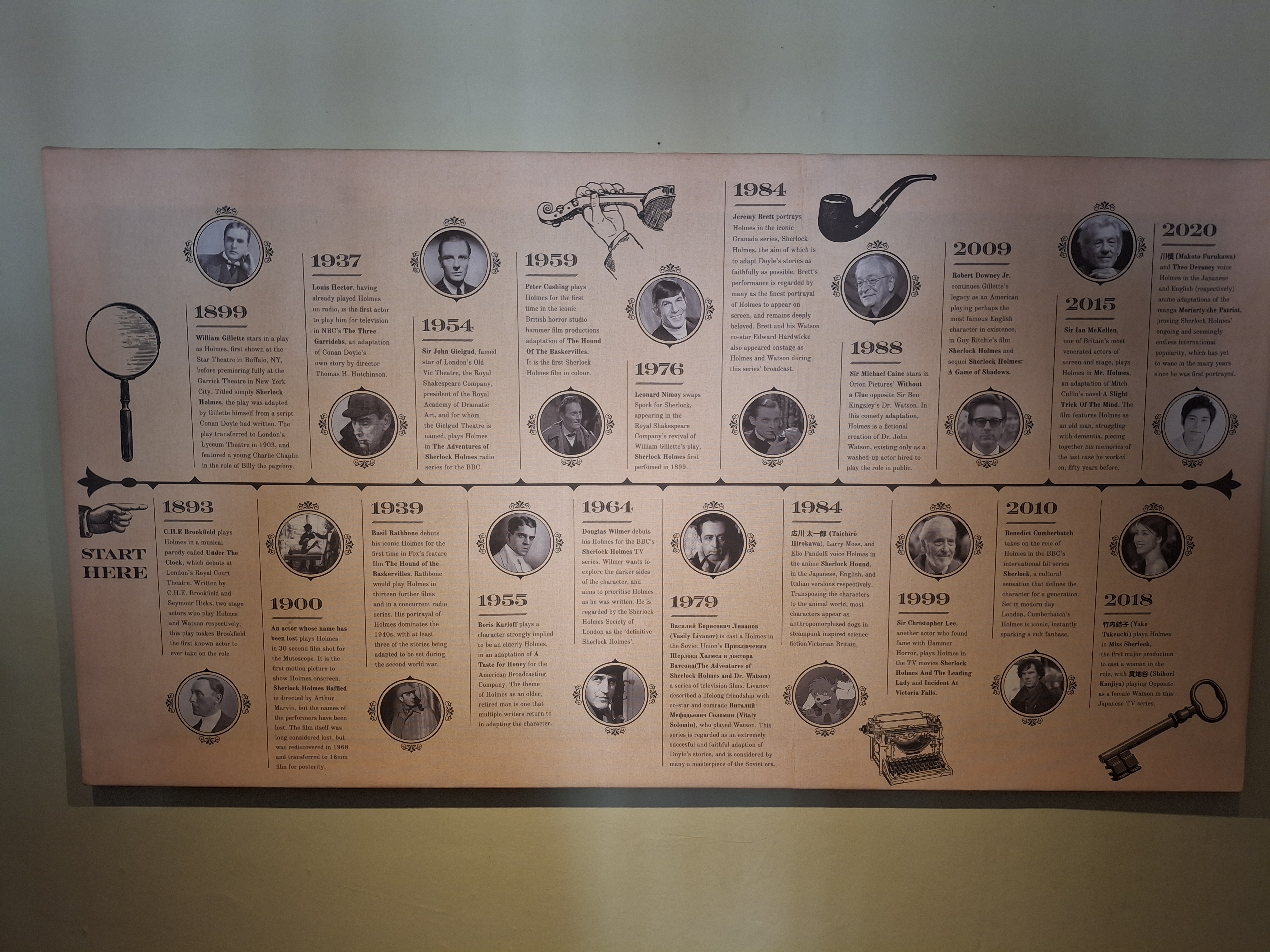
Join me in signing the petition to get Arthur Wontner recognised and celebrated with due respect and not ignored or overlooked by the Sherlock Holmes Museum. Why does this matter?
He was
- Islington, London born - and one of only handful of Sherlock Holmes film stars born in London.
- Lived close to Baker Street at Cumberland Terrace and also Albert Terrace the other side of Regents Park - in fact he is the Sherlock Holmes who is most closely associated with the Baker Street / Regents Park / Marylebone area
- Starred as Holmes in 5 British Sherlock Holmes films and admired by Conan Doyle's family
- BUT wrongly ignored and not included in the Sherlock Holmes Museum displays
Join the campaign today #RecogniseWontner
More detail
For those who are unaware, Arthur Wontner was a London born actor and major West End performer and also the star of five British Sherlock Holmes films in the 1930s. He acted in more films that William Gillette and was a contemporary of Basil Rathbone (they both starred on stage together in the 1920s).
The Sherlock Holmes Museum's omission is not a simple oversight - it is a distortion of Sherlock Holmes's cultural history in the UK. Wontner was not just any actor to portray Sherlock Holmes. His portrayal was widely praised in his time. Critics described him as one of the most faithful screen Holmes interpretations and Jean Conan Doyle, daughter of Arthur Conan Doyle, wrote that the family "liked Arthur Wontner in the 1930s". His films formed a major part of early Holmes cinema, shaping how audiences first saw the detective on screen.
What makes any absence of Arthur Wontner at the Sherlock Holmes Museum particularly striking is that Wontner has a deep connection to London and the local Marylebone area. He was born in Islington London and lived within walking distance of Baker Street, on the other side of Regents Park (which could form the basis of a Sherlock Holmes walking tour).
https://www.youtube.com/watch?v=e-Kvcsnxvfo
He also worked extensively in the West End as a leading theatre actor and was also a key attendee of the 1951 Sherlock Holmes Exhibition, held close to the museum's present location. As London marks the 75th anniversary of that exhibition, it is more important than ever to recognise the actors who helped build Holmes early screen identity - especially those rooted in the city that created Holmes.
More than 130 actors have portrayed Sherlock Holmes on screen but Wontner was NOT one of many but instead he deserves full recognition amongst the great of Holmes film portrayals. When a museum, omits an actor of Wontner's stature, this is a major failing. This is not a matter of space but a cultural whitewash.
The museum should appropriately recognise Arthur Wontner in its displays and in the museum shop because he offers what the modern visitor pays for - authenticity, locality and story. Tourists - whether they are film history tourists, literary tourists, Sherlockian Society members, cultural heritage tourists or others - collectively come for authentic London connections, local stories and hidden history. Arthur Wontner's story is commercially strong because it provides visitors with a sense of discovery - the London Holmes who walked the same streets as visitors to Baker Street. His likeness is in the public domain and his nearby former homes make him perfect for walking tour integration. It is the duty of the museum to be accurate and acknowledge Arthur Wontner's contribution to the film history of Sherlock Holmes.
Arthur Wontner belongs in the museum narrative. Arthur Wontner deserves recognition. London deserves accuracy. Sherlock Holmes deserves completeness. Tourists deserve better.
Join the campaign today #RecogniseWontner

25
The Issue
I recently visited the Sherlock Holmes Museum in London in July 2026 but was extremely disappointed to discover that there is not a single mention of Arthur Wontner (1875-1960) amongst any of the museum's displays. This is a cultural whitewash and fundamentally wrong. They say he is "one of many" and not significant but despite being a "forgotten Holmes" he still ranks amongst the Top 20 film portrayals of Holmes according to Imdb and was recently featured in a magazine article as well the subject of numerous book chapters. Aficionados of Holmes do know of him and he is worthy of wider recognition. The museum should therefore address his omission from their displays hence my campaign for his recognition and celebration at the museum.
Join me in signing the petition to get Arthur Wontner recognised and celebrated with due respect and not ignored or overlooked by the Sherlock Holmes Museum. Why does this matter?
He was
- Islington, London born - and one of only handful of Sherlock Holmes film stars born in London.
- Lived close to Baker Street at Cumberland Terrace and also Albert Terrace the other side of Regents Park - in fact he is the Sherlock Holmes who is most closely associated with the Baker Street / Regents Park / Marylebone area
- Starred as Holmes in 5 British Sherlock Holmes films and admired by Conan Doyle's family
- BUT wrongly ignored and not included in the Sherlock Holmes Museum displays
Join the campaign today #RecogniseWontner
More detail
For those who are unaware, Arthur Wontner was a London born actor and major West End performer and also the star of five British Sherlock Holmes films in the 1930s. He acted in more films that William Gillette and was a contemporary of Basil Rathbone (they both starred on stage together in the 1920s).
The Sherlock Holmes Museum's omission is not a simple oversight - it is a distortion of Sherlock Holmes's cultural history in the UK. Wontner was not just any actor to portray Sherlock Holmes. His portrayal was widely praised in his time. Critics described him as one of the most faithful screen Holmes interpretations and Jean Conan Doyle, daughter of Arthur Conan Doyle, wrote that the family "liked Arthur Wontner in the 1930s". His films formed a major part of early Holmes cinema, shaping how audiences first saw the detective on screen.
What makes any absence of Arthur Wontner at the Sherlock Holmes Museum particularly striking is that Wontner has a deep connection to London and the local Marylebone area. He was born in Islington London and lived within walking distance of Baker Street, on the other side of Regents Park (which could form the basis of a Sherlock Holmes walking tour).
https://www.youtube.com/watch?v=e-Kvcsnxvfo
He also worked extensively in the West End as a leading theatre actor and was also a key attendee of the 1951 Sherlock Holmes Exhibition, held close to the museum's present location. As London marks the 75th anniversary of that exhibition, it is more important than ever to recognise the actors who helped build Holmes early screen identity - especially those rooted in the city that created Holmes.
More than 130 actors have portrayed Sherlock Holmes on screen but Wontner was NOT one of many but instead he deserves full recognition amongst the great of Holmes film portrayals. When a museum, omits an actor of Wontner's stature, this is a major failing. This is not a matter of space but a cultural whitewash.
The museum should appropriately recognise Arthur Wontner in its displays and in the museum shop because he offers what the modern visitor pays for - authenticity, locality and story. Tourists - whether they are film history tourists, literary tourists, Sherlockian Society members, cultural heritage tourists or others - collectively come for authentic London connections, local stories and hidden history. Arthur Wontner's story is commercially strong because it provides visitors with a sense of discovery - the London Holmes who walked the same streets as visitors to Baker Street. His likeness is in the public domain and his nearby former homes make him perfect for walking tour integration. It is the duty of the museum to be accurate and acknowledge Arthur Wontner's contribution to the film history of Sherlock Holmes.
Arthur Wontner belongs in the museum narrative. Arthur Wontner deserves recognition. London deserves accuracy. Sherlock Holmes deserves completeness. Tourists deserve better.
Join the campaign today #RecogniseWontner
The Decision Makers
Supporter Voices
Petition Updates
Share this petition
Petition created on 25 August 2026