IT IS FRAUDULENT TO PLAN FOR PART-TIME SOLAR AND WIND CATCHERS TO POWER AUST ELECTRICITY GRID

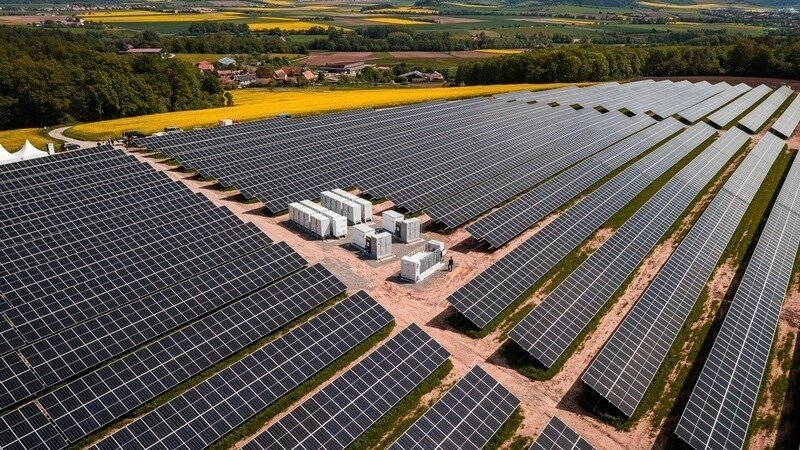
Federal Energy Minister Chris Bowen has set a target of having the Australian Grid powered by 82% Renewables by 2030. This is setting up a guaranteed scenario of unaffordable electricity prices, power rationing and blackouts.
1. This is because so called Solar Farms and Wind Farms, are in reality not genuine electricity generators, but are unreliable, intermittent, inefficient, extremely expensive part-time Solar and Wind Catchers.
2. A Solar Farm, should be properly described as a part-time Solar Catcher. Because of the fact that a Solar panel does not generate electricity by burning the fuel (Sunshine), but instead catches it and converts it into electricity. The huge disadvantage that a Solar catcher has is that every day it has no control over the availability or quantity of its fuel (Sunshine) supply. Particularly with the supply of Sunshine being restricted by 16 hours of darkness every night and whenever cloud or rain covers the sky.
This daily restriction and uncertainty of fuel availability, results in a part-time Solar Catcher being unable to do the following.
A. Failure to supply on demand. A part-time Solar Catcher cannot supply electricity on demand, to meet changed supply needs.
B. Failure to supply for an extended period of time. A part-time Solar Catcher cannot supply electricity on demand for an uninterrupted period of say 4 hours.
C. Risk of not maintaining Grid at 240v and 50Hz frequency. A part-time Solar Catcher is not able to maintain the extremely important stability of the Grid at 240v and 50Hz frequency, every second of the day. Because it does not have the inertia of a turbine/flywheel to soak up, sudden disruptions in supply.
D. Misleading claim of electricity supply. The claim by a part-time Solar Catcher that in can supply power for E.g. 110,000 homes (24hrs/day, 7 days/wk?) is misleading. Because due to the lack of fuel, the part-time Solar Catcher can at best power the 110,000 homes for 8 hours a day. (And with rain and cloud the 8 hours can be reduced to a little or nothing). This means that the 110,000 homes will have to seek an alternative supply of electricity for at least 16 hours a day, if not many more.
E. Misleading and worthless claims of emissions reduction. If a part-time Solar Catcher claims that in the converting Sunshine into electricity, some 108,000 tons of CO2 emissions have been offset. This claim may be misleading if the part-time solar catcher is only able to operate for much less hours than is claimed. E.g. If the part-time Solar Catcher is only able to operate for an average of 3 hours per day, then there may have been only 20,000 000 tons of CO2 emissions have been offset.
But as China, India, Russia, USA and Indonesia, (who are producing 60% plus of CO2 emissions) have abandoned Net Zero, makes Australia trying to reach 45% emission reduction targets is a worthless waste of money and grief.
F. Permanent polluting of agricultural land. The placing of the part-time Solar Catcher on agricultural land, results in the permanent pollution of the land. And lost economical agricultural production, (with accompanying employment) to the farmer, local community and Australia as a whole. Not only for the 20 or so years of the operation of the part-time Solar Catcher, but for the next 100 years plus.
Example: In the Meadow Creek area near Wangaratta, a hectare of agricultural land will produce prime beef production, to the present-day retail value of $7,471,199 per hectare. For the land of the proposed Solar Catcher, of 566 hectares that is a retail sum of $4.229 billion annually, that is lost from the farmer to the butcher shop. Over a period of one hundred years, 2025 to 2125, the economic value would amount to $423 billion dollars. That is an economic loss, from the farmer to the butcher shop. Plus, the flow on of jobs to the Wangaratta community, surrounding areas and Australia as a whole.
G. If all costs, mining, transport, manufacture, building infrastructure, running costs, BESS storage are added together. Then the small amount of electricity produced by a part time solar catcher, would have to be sold at an extremely high price in order to recoup the costs. Which is why if it were not for installation subsidies, large scale generation certificates, carbon credits and cost of living subsidies. If it was not for these subsidies the part-time Solar Catchers would have to charge the highest electricity prices in the World in order to be solvent.
As well what has not been considered is the cost involved in the decommissioning, disposal and restoration of the site. The cost of this ‘is the elephant in the room’, it will run into tens, if not hundreds of millions of dollars. If added to the production cost of a part-time Solar Catcher, it would make it completely uneconomical.
There is a very big risk, because of the decommissioning, disposal and restoration of the site cost. Of at the end of the life of a part-time Solar Catcher, of the project owner becoming insolvent and abandoning the site. I believe there is nothing in the permit to stop this from happening.
3. Equally, a Wind Farm should be known as a Part-Time Wind Catcher, referring to the fact that a Wind Turbine does not generate electricity by burning the fuel (Wind at the right speed), but instead attempts to catch it and convert it into electricity. The huge disadvantage that a Wind catcher has that it has no control over the availability or quantity of its fuel (Wind at the right speed) supply. Particularly with the supply of suitable wind (at a speed of between 12kms/hr and 90kms/hr) being required. This supply of suitable wind is restricted by gales and more importantly by wind droughts, that can last for hours, days and even weeks. In addition, part-time wind catchers have other downsides. Such as environmental damage in drying out surrounding land https://news.harvard.edu/gazette/story/2018/10/large-scale-wind-power-has-its-down-side/ and shedding a toxic epoxy resin bisphenol across surrounding land. https://gerardrennick.com.au/is-there-a-toxic-chemical-in-wind-turbine-blades/
6A. Failure to supply on demand. A part-time Wind Catcher cannot supply electricity on demand, to meet changed supply needs.
6B. Failure to supply for an extended period of time. A part-time Wind Catcher cannot supply electricity on demand for an uninterrupted period of say 4 hours.
6C. Risk of not maintaining Grid at 240v and 50Hz frequency. A part-time Wind Catcher is not able to maintain the extremely important stability of the Grid at 240v and 50Hz frequency, every second of the day. Because it does not have the inertia of a turbine/flywheel to soak up, sudden disruptions in supply.
6D. Claims of electricity production made by part-time wind catcher operators are misleading. The claim a part-time wind catcher will power 395,000 homes (Spicers Creek Wind Farm https://www.squadronenergy.com/our-projects/spicers-creek-wind-farm ) needs to be qualified to say that the part-time windcatcher may power the 395,000 homes intermittently for an average of 9hrs a day. With the 395,000 homes needing at any time to seek a completely different source of power for the remaining 15hrs of each day.
6E. Wind turbines are designed to last 20 – 25years however with each turbine having over 8,000 parts, breakdowns may be earlier. It is reported that at 10 years of life, blades and gearboxes are needing to be replaced already so it is unlikely they will make it another 10 years. https://energyfollower.com/how-long-do-wind-turbines-last/
6F. A part-time wind catcher is usually sited, hundreds of kilometres from the Grid. Extra HV Transmission lines have to be constructed across productive farmland and national parkland to connect the solar catchers, causing havoc to farmers, including paying a rent fee. Altogether greatly increasing the cost to the consumer.
6G. Increased heating of surrounding land. It has been found that Wind Turbines actually increase the land temperature downwind of where they are operating. (It only stands to reason as we see how winds dry up the Country. Wind Turbines, chop and change the wind as it passes through the blades, causing a more drying effect. And it even has a global effect https://www.instituteforenergyresearch.org/renewable/wind/wind-farms-raise-temperatures-at-the-surface-level/
6E. Decommissioning. The cost to teardown a single turbine is estimated at $A650,000. Wind Catchers, proposers or actual operators, I believe, have an understanding in the industry that when it comes to decommissioning that the base will NOT be removed only covered up. Being covered up by only 75cms or 1m of soil, will not grow good crops or pasture
In my opinion the proposers/operators have not done a close analyse of how the removal of the wind turbines will done, where the debris will be taken too. In particular the huge fibreglass blades. Most of them will left in paddocks or go to landfill. https://stopthesethings.com/2023/10/31/touring-texan-turbine-graveyards-becomes-latest-green-tourism-venture/
AS THE TRUTH IS REVEALED, IT BECOMES MORE IMPORTANT THAT OUR PETITION TO STOP THE CLOSURE OF MORE AUSTRALIAN COAL FIRED POWER STATIONS AND KEEP THEM RUNNING.
This includes Eraring NOW 2027, Yallourn NOW 2032), Bayswater in 2033, with Loyang A in 2045 and all other coal fired power stations.
And no consideration of them being closed be considered until assured supplies of base load electricity 24/7 is available from coal, gas or uranium powered generators. Even if this requires the coal fired generators be compulsory acquired by the relevant Government, in the National interest and to maintain the supply of base load electricity 24/7 that is essential to STOP the Grid from collapsing.
OUR PETITION TO KEEP OUR COAL FIRED POWER STATIONS RUNNING. Is educating everyone of how important coal fired power stations are to keeping the Grid from crashing.
https://www.change.org/p/blackouts-will-be-devastating-they-must-be-avoided-at-all-costs
YOUR SUPPORT FOR OUR PETITION WITH DONATIONS WILL BE REPAID WITH BASELOAD ELECTRICITY FOR THE NEXT CRITICAL FIFTEEN TO TWENTY YEARS. Be it $10, $20, $50 or $100 please make a donation and keep our petition in the public eye. AND KEEP THE BLACKOUTS AT BAY. The more signatures we get the more wins will keep coming and the coal fired power stations will be kept running. Promote the petition on Change.org and share it on Facebook, Twitter, Instagram, Whatsapp or Email.
KEEP INFORMED BY DAILY MONITORING THE AEMO DATA DASHBOARD. And alert your friends to watch the AEMO dashboard, the more know what's happening the better.
Particularly at 7pm and 7am (Or a time that suits you?) watch (and record) the mix of coal, gas hydro, batteries, solar and wind generation and the prices per MWh for each State on the AEMO dashboard.
Example: Eastern States 12th June 4.25pm AEST. Batteries 0%, Biomass 0%, Black Coal 47% Brown Coal 12%, Gas 18%, Hydro 16% Diesel 1% Solar 3%, Wind 3%. 4.25pm a time when Solar only an hour away from entering its daily 16 hours (lack of fuel), zero production period. Unreliable wind is all over the place averaging only 3%, but ranging from a pathetic 0% in Vic and Tas up to 19% in SA.
To underline the importance of our coal fired generators 12/06/25, 4.25 pm AEST. In NSW coal is producing 70% Solar 1%, Wind 1%, Qld coal 69%, solar 5% wind 3% Vic Brown coal 61%, solar 1%, wind 0%. SA batteries 0%, gas 70%, solar 3%, wind 19% and Tas hydro 95%, wind 0%.
WITHOUT COAL AUSTRALIA WOULD BE BLACKED OUT.
STOP PRESS: WHAT CAN HAPPEN. South Australia 4th June 2024 9.05pm EST. Batteries 0%, Gas 97%, Diesel 3% Solar 0%, Wind 0%.
SA RENEWABLES CAPITAL OF AUSTRALIA WITH BATTERIES, SOLAR AND WIND PRODUCING NO ELECTRICITY, ZERO, NOTHING
We are up to 4,367 signatures, let’s increase it by many more, everyone’s future depends on it. Continue to spread the word, to all family, friends, anyone you meet, particularly discuss it with shop and business owners. Ask the question, “How do you plan to cope when the blackouts come? The possibility is too awful to contemplate.
WE MUST KEEP THOSE COAL FIRED GENERATORS GOING, TO KEEP OUR SOCIETY FROM HAVING BLACKOUTS, POWER RATIONING AND EXHORBITENT ENERGY PRICES.