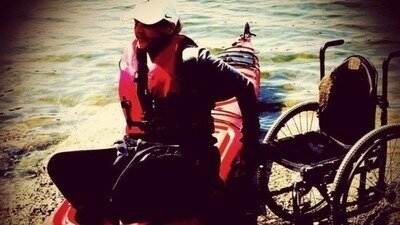

Bar Harbor Risks Closing The Outdoors To Kids And People With Disabilities
The Issue
Hadley Point is a valued public park that has long served a wide range of community members and visitors — families, youth groups, swimmers, picnickers, paddlers, and those seeking quiet time by the water. Its strength has always been its openness and flexibility, allowing people to choose how they responsibly enjoy this shared public space.
Recently, discussions have emerged about changing how Hadley Point is used, particularly around parking and access related to guided youth kayaking and other active recreational experiences. While no final decisions have been made, the conversation has leaned toward restricting certain uses in order to “preserve parking for the public” or to limit what may be perceived as business-related activity. These restrictions, challenge longstanding traditions of meeting Registered Maine Guide's in public parks and further restrict which methods the public may safely recreate. In this particular case, most at risk, are those with already existing barriers to recreate in the region.
We believe that any changes to land use, parking rules, or access at Hadley Point should be preceded by a formal, transparent impact study — not assumptions or anecdotal concerns.
Inclusive Adventures Are a Core Value-
A core value of the programs and community members affected by these discussions is inclusive access to outdoor adventure.
Guided outdoor experiences are not simply commercial activities — they are often the only safe, accessible way for many people to enjoy the water and the outdoors.
Restricting these uses would disproportionately impact:
Youth and Experiential Education- Many children experience the ocean and coastal environment for the first time through guided, educational programs.
Youth kayaking and outdoor education foster:
- Environmental stewardship
- Confidence and resilience
- Teamwork and leadership
A lifelong connection to nature
These experiences are especially critical for:
- Younger children
- First-time paddlers
- School and community youth groups
Families without prior outdoor experience or equipment
Limiting access at Hadley Point would remove one of the safest, most appropriate launch locations for these programs and significantly reduce opportunities for youth to engage in hands-on, experiential learning outdoors.
People with Disabilities and Accessibility Needs
Many individuals with disabilities rely on:
- Guided instruction
- Adaptive equipment
- Trained staff
- Predictable access points- Without nearby, legal parking and structured support, participation becomes impractical or impossible.
Passive recreation alternatives (e.g., sitting on the beach) are not equivalent substitutes for meaningful, accessible outdoor experiences. Any policy that unintentionally limits guided access risks excluding people who already face barriers to outdoor recreation, raising serious equity and accessibility concerns.
Why an Impact Study Is Necessary
We respectfully call on the Town to pause and commit to an impact study that examines:
Parking usage data: when congestion actually occurs, by season and time of day
Public access impacts: whether current uses prevent others from enjoying the park
Environmental considerations: evidence of ecological harm, if any
Neighborhood impacts: traffic, noise, and abutter concerns, supported by data
Youth and accessibility impacts: how restrictions would affect children, educational programs, and people with disabilities
Equity and fairness: whether certain recreational choices are being unfairly limited while others are favored
Public parks exist to serve the public — and that includes allowing people to choose how they recreate, whether that’s sitting on the beach, enjoying a picnic, or safely learning to kayak with their children or with the support they need.
Redefining certain recreational choices as less “public” than others risks narrowing access and excluding those who benefit most from inclusive, guided outdoor experiences.
We are asking for:
No changes to Hadley Point land use, access, or parking rules until an impact study is completed.
A transparent, inclusive process that invites public input.
Decisions grounded in data, equity, and accessibility — not perception alone.
Thoughtful stewardship of public spaces requires care, clarity, and community engagement. An impact study ensures that future decisions reflect real conditions and shared values, while protecting inclusive access to the outdoors for all.
Please join us in calling for a data-driven, inclusive approach before any changes are made to Hadley Point.

70
The Issue
Hadley Point is a valued public park that has long served a wide range of community members and visitors — families, youth groups, swimmers, picnickers, paddlers, and those seeking quiet time by the water. Its strength has always been its openness and flexibility, allowing people to choose how they responsibly enjoy this shared public space.
Recently, discussions have emerged about changing how Hadley Point is used, particularly around parking and access related to guided youth kayaking and other active recreational experiences. While no final decisions have been made, the conversation has leaned toward restricting certain uses in order to “preserve parking for the public” or to limit what may be perceived as business-related activity. These restrictions, challenge longstanding traditions of meeting Registered Maine Guide's in public parks and further restrict which methods the public may safely recreate. In this particular case, most at risk, are those with already existing barriers to recreate in the region.
We believe that any changes to land use, parking rules, or access at Hadley Point should be preceded by a formal, transparent impact study — not assumptions or anecdotal concerns.
Inclusive Adventures Are a Core Value-
A core value of the programs and community members affected by these discussions is inclusive access to outdoor adventure.
Guided outdoor experiences are not simply commercial activities — they are often the only safe, accessible way for many people to enjoy the water and the outdoors.
Restricting these uses would disproportionately impact:
Youth and Experiential Education- Many children experience the ocean and coastal environment for the first time through guided, educational programs.
Youth kayaking and outdoor education foster:
- Environmental stewardship
- Confidence and resilience
- Teamwork and leadership
A lifelong connection to nature
These experiences are especially critical for:
- Younger children
- First-time paddlers
- School and community youth groups
Families without prior outdoor experience or equipment
Limiting access at Hadley Point would remove one of the safest, most appropriate launch locations for these programs and significantly reduce opportunities for youth to engage in hands-on, experiential learning outdoors.
People with Disabilities and Accessibility Needs
Many individuals with disabilities rely on:
- Guided instruction
- Adaptive equipment
- Trained staff
- Predictable access points- Without nearby, legal parking and structured support, participation becomes impractical or impossible.
Passive recreation alternatives (e.g., sitting on the beach) are not equivalent substitutes for meaningful, accessible outdoor experiences. Any policy that unintentionally limits guided access risks excluding people who already face barriers to outdoor recreation, raising serious equity and accessibility concerns.
Why an Impact Study Is Necessary
We respectfully call on the Town to pause and commit to an impact study that examines:
Parking usage data: when congestion actually occurs, by season and time of day
Public access impacts: whether current uses prevent others from enjoying the park
Environmental considerations: evidence of ecological harm, if any
Neighborhood impacts: traffic, noise, and abutter concerns, supported by data
Youth and accessibility impacts: how restrictions would affect children, educational programs, and people with disabilities
Equity and fairness: whether certain recreational choices are being unfairly limited while others are favored
Public parks exist to serve the public — and that includes allowing people to choose how they recreate, whether that’s sitting on the beach, enjoying a picnic, or safely learning to kayak with their children or with the support they need.
Redefining certain recreational choices as less “public” than others risks narrowing access and excluding those who benefit most from inclusive, guided outdoor experiences.
We are asking for:
No changes to Hadley Point land use, access, or parking rules until an impact study is completed.
A transparent, inclusive process that invites public input.
Decisions grounded in data, equity, and accessibility — not perception alone.
Thoughtful stewardship of public spaces requires care, clarity, and community engagement. An impact study ensures that future decisions reflect real conditions and shared values, while protecting inclusive access to the outdoors for all.
Please join us in calling for a data-driven, inclusive approach before any changes are made to Hadley Point.
Supporter Voices
Petition Updates
Share this petition
Petition created on January 21, 2026