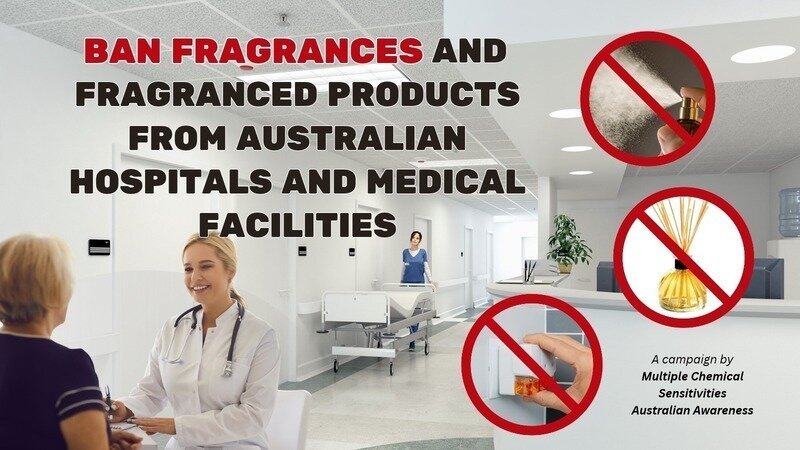
Ban fragrances and fragranced products from Australian hospitals and medical facilities
The issue
Many Australians experience sensitivity to fragrance products. For some of us, this is a debilitating condition that can be life-threatening or worsen quality of life with each exposure.
This condition is commonly referred to as Multiple Chemical Sensitivity (MCS).
Reactions to fragranced products vary, but can include symptoms such as headaches and migraines, nausea, vomiting, asthma attacks, anaphylaxis, racing heart, and neurological symptoms like dizziness and tremors.
Fragrance can also negatively affect people with cancer, asthma, COPD, migraine conditions, or neurodivergent conditions, as well as pregnant women and the elderly.
This petition was created by members of MCS Australian Awareness, an online group of Australians whose lives have been severely impacted by MCS.
MCS sufferers are finding it increasingly difficult to attend medical clinics and services (e.g. hospitals, medical centres, imaging, pathology) due to use of unnecessary and unregulated fragrance products, and perfumed products used by staff.
Hospitals and medical offices should accommodate all sickness and disabilities so that health care and support are there for all Australians.
The Australian Charter of Healthcare Rights (second edition) by the Australian Commission on Safety and Quality in Health Care states that Australians have a right to:
- Access: Healthcare services and treatment that meets my needs
- Safety: Receive safe and high quality health care that meets national standards
- Be cared for in an environment that makes me feel safe.
These rights apply to all people in all places where health care is provided in Australia. This includes public and private hospitals, paramedic services, day procedure services, general practice, and other community health services.
We therefore request the house to ban the use of perfumes, fragranced or scented air-fresheners, deodorisers, laundry and cleaning products, diffusers, dispensers, hand sanitisers, and cosmetics in hospitals and medical centres.
We request that these fragranced products be replaced with fragrance-free products, and that a fragrance-free policy be adopted for staff in medical facilities.
A 2016 study published in the Preventive medicine reports by Professor Anne Steinemann has found that:
“Fragranced consumer products— such as air fresheners, cleaning supplies, and personal care products — pervade society.
This study investigated the occurrence and types of adverse effects associated with exposure to fragranced products in Australia, and opportunities for prevention.
Data were collected in June 2016 using an on-line survey with a representative national sample (n = 1098). Overall, 33% of Australians report health problems, such as migraine headaches and asthma attacks, when exposed to fragranced products.
Of these health effects, more than half (17.1%) could be considered disabling under the Australian Disability Discrimination Act.
Additionally, 7.7% of Australians have lost workdays or a job due to illness from fragranced product exposure in the workplace, 16.4% reported health problems when exposed to air fresheners or deodorizers, 15.3% from being in a room after it was cleaned with scented products, and 16.7% would enter but then leave a business as quickly as possible due to fragranced products.
About twice as many respondents would prefer that workplaces, health care facilities and professionals, hotels, and airplanes were fragrance-free rather than fragranced.
While 73.7% were not aware that fragranced products, even ones called green, natural and organic, emitted hazardous air pollutants, 56.3% would not continue to use a product if they knew it did.”
A 2019 Australian National Register of Environmental Sensitivities (ANRES) report shows that 74.1% of people with fragrance sensitivity have difficulty in obtaining Medical Assistance due to the use of personal fragranced products and use of fragranced products in medical facilities. (Martin, 2019).
An editorial in the Canadian Medical Association Journal, in 2OI5 states that, "Artificial scents have no place in our hospitals", about 30% of people report having some sensitivity to perfumes worn by others.
"We have much to learn about the mechanisms underlying scent sensitivity, but we know enough now to take precautionary measures in our hospitals."
Their recommendation - "Hospital environments free from artificial scents should become a uniform policy, promoting the safety of patients, staff and visitors alike." (Flegel and Martin, 2015). This precautionary measure should also be extended to other health facilities and aged care facilities.
The US Centers for Disease Control and Prevention, Indoor Air Quality Policy (CDC, 2009) states that “Scented or fragranced products are prohibited at all times in all interior space owned or leased by CDC”. (CDC, 2009)
Fragrance-free healthcare is essential for disability access, inclusion and patient safety. Help us make Australian hospitals and medical facilities fragrance-free. Thank you to everyone who reads and supports this initiative.
References
Steinemann A. (2016). Health and societal effects from exposure to fragranced consumer products. Preventive medicine reports, 5, 45–47. https://doi.org/10.1016/j.pmedr.2016.11.011
More studies on this issue on this link below
http://www.drsteinemann.com/publications.html
Flegel, K. and Martin, J. (2015). Artificial scents have no place in our hospitals. Canadian Medical Association Journal, 187(16), pp.1187-1187.
CDC, 2009. US Centers for Disease Control and Prevention. Indoor Environmental Quality Policy, excerpt available at: https://aessra.org/resources/CDC%20Indoor%20Environmental%20Quality%20Policy.pdf
Martin S. (2019). A snapshot of living with Environmental Sensitivities in Australia in 2019. Available at: https://mecfssa.org.au/docs/South-Australia/General/ANRES_2019_Results_n_310.pdf
Australian Charter of Healthcare Rights (second edition), 2020. https://www.safetyandquality.gov.au/resources/australian-charter-healthcare-rights-second-edition-a4-accessible
A campaign by Multiple Chemical Sensitivities Australian Awareness.
301
The issue
Many Australians experience sensitivity to fragrance products. For some of us, this is a debilitating condition that can be life-threatening or worsen quality of life with each exposure.
This condition is commonly referred to as Multiple Chemical Sensitivity (MCS).
Reactions to fragranced products vary, but can include symptoms such as headaches and migraines, nausea, vomiting, asthma attacks, anaphylaxis, racing heart, and neurological symptoms like dizziness and tremors.
Fragrance can also negatively affect people with cancer, asthma, COPD, migraine conditions, or neurodivergent conditions, as well as pregnant women and the elderly.
This petition was created by members of MCS Australian Awareness, an online group of Australians whose lives have been severely impacted by MCS.
MCS sufferers are finding it increasingly difficult to attend medical clinics and services (e.g. hospitals, medical centres, imaging, pathology) due to use of unnecessary and unregulated fragrance products, and perfumed products used by staff.
Hospitals and medical offices should accommodate all sickness and disabilities so that health care and support are there for all Australians.
The Australian Charter of Healthcare Rights (second edition) by the Australian Commission on Safety and Quality in Health Care states that Australians have a right to:
- Access: Healthcare services and treatment that meets my needs
- Safety: Receive safe and high quality health care that meets national standards
- Be cared for in an environment that makes me feel safe.
These rights apply to all people in all places where health care is provided in Australia. This includes public and private hospitals, paramedic services, day procedure services, general practice, and other community health services.
We therefore request the house to ban the use of perfumes, fragranced or scented air-fresheners, deodorisers, laundry and cleaning products, diffusers, dispensers, hand sanitisers, and cosmetics in hospitals and medical centres.
We request that these fragranced products be replaced with fragrance-free products, and that a fragrance-free policy be adopted for staff in medical facilities.
A 2016 study published in the Preventive medicine reports by Professor Anne Steinemann has found that:
“Fragranced consumer products— such as air fresheners, cleaning supplies, and personal care products — pervade society.
This study investigated the occurrence and types of adverse effects associated with exposure to fragranced products in Australia, and opportunities for prevention.
Data were collected in June 2016 using an on-line survey with a representative national sample (n = 1098). Overall, 33% of Australians report health problems, such as migraine headaches and asthma attacks, when exposed to fragranced products.
Of these health effects, more than half (17.1%) could be considered disabling under the Australian Disability Discrimination Act.
Additionally, 7.7% of Australians have lost workdays or a job due to illness from fragranced product exposure in the workplace, 16.4% reported health problems when exposed to air fresheners or deodorizers, 15.3% from being in a room after it was cleaned with scented products, and 16.7% would enter but then leave a business as quickly as possible due to fragranced products.
About twice as many respondents would prefer that workplaces, health care facilities and professionals, hotels, and airplanes were fragrance-free rather than fragranced.
While 73.7% were not aware that fragranced products, even ones called green, natural and organic, emitted hazardous air pollutants, 56.3% would not continue to use a product if they knew it did.”
A 2019 Australian National Register of Environmental Sensitivities (ANRES) report shows that 74.1% of people with fragrance sensitivity have difficulty in obtaining Medical Assistance due to the use of personal fragranced products and use of fragranced products in medical facilities. (Martin, 2019).
An editorial in the Canadian Medical Association Journal, in 2OI5 states that, "Artificial scents have no place in our hospitals", about 30% of people report having some sensitivity to perfumes worn by others.
"We have much to learn about the mechanisms underlying scent sensitivity, but we know enough now to take precautionary measures in our hospitals."
Their recommendation - "Hospital environments free from artificial scents should become a uniform policy, promoting the safety of patients, staff and visitors alike." (Flegel and Martin, 2015). This precautionary measure should also be extended to other health facilities and aged care facilities.
The US Centers for Disease Control and Prevention, Indoor Air Quality Policy (CDC, 2009) states that “Scented or fragranced products are prohibited at all times in all interior space owned or leased by CDC”. (CDC, 2009)
Fragrance-free healthcare is essential for disability access, inclusion and patient safety. Help us make Australian hospitals and medical facilities fragrance-free. Thank you to everyone who reads and supports this initiative.
References
Steinemann A. (2016). Health and societal effects from exposure to fragranced consumer products. Preventive medicine reports, 5, 45–47. https://doi.org/10.1016/j.pmedr.2016.11.011
More studies on this issue on this link below
http://www.drsteinemann.com/publications.html
Flegel, K. and Martin, J. (2015). Artificial scents have no place in our hospitals. Canadian Medical Association Journal, 187(16), pp.1187-1187.
CDC, 2009. US Centers for Disease Control and Prevention. Indoor Environmental Quality Policy, excerpt available at: https://aessra.org/resources/CDC%20Indoor%20Environmental%20Quality%20Policy.pdf
Martin S. (2019). A snapshot of living with Environmental Sensitivities in Australia in 2019. Available at: https://mecfssa.org.au/docs/South-Australia/General/ANRES_2019_Results_n_310.pdf
Australian Charter of Healthcare Rights (second edition), 2020. https://www.safetyandquality.gov.au/resources/australian-charter-healthcare-rights-second-edition-a4-accessible
A campaign by Multiple Chemical Sensitivities Australian Awareness.
The Decision Makers

Supporter voices
Petition Updates
Share this petition
Petition created on 17 October 2026