
Ban Flock Safety from Barrow County, GA
The Issue
Flock Safety creates a permanent searchable record of where people live and drive, even when they have never been suspected of a crime (https://deflock.org/what-is-an-alpr That means an authorized officer can potentially learn where a person travels, where they spend time, and how their movements connect over years and lifetimes. The rules governing access can change long after the cameras are installed. What is restricted today could be permitted tomorrow. We should not build permanent surveillance infrastructure and leave future generations to live under whatever rules future officials decide to impose.
The system is already being misused by law-enforcement personnel in Georgia and across the country. An authorized user can provide a justification that appears legitimate, while whether it was actually legitimate may only be discovered later through an audit. Georgia has already seen multiple cases demonstrating this risk. On July 6, 2026, the Georgia Bureau of Investigation arrested five former Albany police officers after an internal Flock audit found they had repeatedly accessed license-plate data for non-law-enforcement purposes (https://gbi.georgia.gov/press-releases/2026-07-06/gbi-arrests-five-former-albany-police-department-officers-misuse-license Collectively, they faced 21 counts of misuse of license-plate data. On July 23, the GBI arrested a Conyers Police Department dispatcher supervisor after investigators determined she had accessed Flock more than 30 times for non-law-enforcement purposes (https://gbi.georgia.gov/press-releases/2026-07-23/gbi-arrests-conyers-police-department-employee-misuse-license-plate Nationally, more than 50 officers have reportedly been accused of misusing Flock, including allegations of stalking. (https://www.theguardian.com/technology/2026/aug/13/flock-safety-police-abuse-surveillance-cameras
The problem goes beyond individual misconduct. Flock’s national network now includes roughly 120,000 cameras, allowing participating law-enforcement agencies to search vehicle data across jurisdictions. A young officer given access today could eventually be working under completely different laws decades from now, with the ability to investigate past movements over a lifetime based on conduct that was legal when it occurred. The danger is not what today’s government can do with Flock, but what future governments could do with the infrastructure and data we choose to create today.
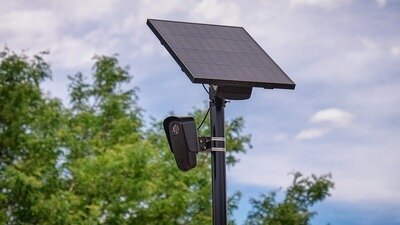
Flock cameras are networked computers collecting sensitive information using AI. In 2025, security researcher Benn Jordan demonstrated serious vulnerabilities in certain Flock cameras, including ways to gain extensive control of an affected device. Benn Jordan — “We Hacked Flock Safety Cameras in under 30 Seconds” These incidents demonstrate that the physical devices collecting this information can have serious security weaknesses. (https://youtu.be/uB0gr7Fh6lY?si=my0cdU0TJd4HnX0g
EFF analyzed datasets containing more than 12 million Flock searches by over 3,900 law-enforcement agencies from December 2024 through October 2025. They found hundreds of searches connected to political protests and activist groups, as well as searches using discriminatory language, showing that ALPR systems can be used to monitor people engaged in lawful activity—not simply investigate specific crimes. (https://www.eff.org/deeplinks/2025/12/effs-investigations-expose-flock-safetys-surveillance-abuses-2025-review?utm_source=chatgpt.com
Flock cameras appeared in Barrow County through the Winder Police Department by December 2021. By December 2022, the Barrow County Sheriff’s Office was using Flock cameras in investigations, and in January 2024, BCSO publicly announced its partnership with Flock Safety. Barrow County’s FY2026 budget includes $54,750 for Flock LPR cameras and $25,000 for Flock OS 911 licensing—$79,750 for one year. The county’s five-year projection identifies approximately $359,750 in Flock-related spending through FY2030.
Barrow residents should have the final say over if this technology is allowed in and around our homes and communities.
DeFlock.org maps known ALPR cameras and provides tools for public-records research and community organizing. No ALPRs is a national coalition working to oppose ALPR surveillance and provides resources for communities seeking greater transparency, accountability, or removal of these systems. (https://noalprs.com/index.html)
We support effective law enforcement. But there is a difference between investigating people suspected of crimes and creating searchable records of where everyone drives. Barrow County can pursue public safety without permanently tracking the movements of ordinary residents. We are asking Barrow County to stop expanding Flock, end its use of the system, and protect the privacy of Barrow County residents before this surveillance infrastructure becomes a permanent reality for future generations.

37
The Issue
Flock Safety creates a permanent searchable record of where people live and drive, even when they have never been suspected of a crime (https://deflock.org/what-is-an-alpr That means an authorized officer can potentially learn where a person travels, where they spend time, and how their movements connect over years and lifetimes. The rules governing access can change long after the cameras are installed. What is restricted today could be permitted tomorrow. We should not build permanent surveillance infrastructure and leave future generations to live under whatever rules future officials decide to impose.
The system is already being misused by law-enforcement personnel in Georgia and across the country. An authorized user can provide a justification that appears legitimate, while whether it was actually legitimate may only be discovered later through an audit. Georgia has already seen multiple cases demonstrating this risk. On July 6, 2026, the Georgia Bureau of Investigation arrested five former Albany police officers after an internal Flock audit found they had repeatedly accessed license-plate data for non-law-enforcement purposes (https://gbi.georgia.gov/press-releases/2026-07-06/gbi-arrests-five-former-albany-police-department-officers-misuse-license Collectively, they faced 21 counts of misuse of license-plate data. On July 23, the GBI arrested a Conyers Police Department dispatcher supervisor after investigators determined she had accessed Flock more than 30 times for non-law-enforcement purposes (https://gbi.georgia.gov/press-releases/2026-07-23/gbi-arrests-conyers-police-department-employee-misuse-license-plate Nationally, more than 50 officers have reportedly been accused of misusing Flock, including allegations of stalking. (https://www.theguardian.com/technology/2026/aug/13/flock-safety-police-abuse-surveillance-cameras
The problem goes beyond individual misconduct. Flock’s national network now includes roughly 120,000 cameras, allowing participating law-enforcement agencies to search vehicle data across jurisdictions. A young officer given access today could eventually be working under completely different laws decades from now, with the ability to investigate past movements over a lifetime based on conduct that was legal when it occurred. The danger is not what today’s government can do with Flock, but what future governments could do with the infrastructure and data we choose to create today.
Flock cameras are networked computers collecting sensitive information using AI. In 2025, security researcher Benn Jordan demonstrated serious vulnerabilities in certain Flock cameras, including ways to gain extensive control of an affected device. Benn Jordan — “We Hacked Flock Safety Cameras in under 30 Seconds” These incidents demonstrate that the physical devices collecting this information can have serious security weaknesses. (https://youtu.be/uB0gr7Fh6lY?si=my0cdU0TJd4HnX0g
EFF analyzed datasets containing more than 12 million Flock searches by over 3,900 law-enforcement agencies from December 2024 through October 2025. They found hundreds of searches connected to political protests and activist groups, as well as searches using discriminatory language, showing that ALPR systems can be used to monitor people engaged in lawful activity—not simply investigate specific crimes. (https://www.eff.org/deeplinks/2025/12/effs-investigations-expose-flock-safetys-surveillance-abuses-2025-review?utm_source=chatgpt.com
Flock cameras appeared in Barrow County through the Winder Police Department by December 2021. By December 2022, the Barrow County Sheriff’s Office was using Flock cameras in investigations, and in January 2024, BCSO publicly announced its partnership with Flock Safety. Barrow County’s FY2026 budget includes $54,750 for Flock LPR cameras and $25,000 for Flock OS 911 licensing—$79,750 for one year. The county’s five-year projection identifies approximately $359,750 in Flock-related spending through FY2030.
Barrow residents should have the final say over if this technology is allowed in and around our homes and communities.
DeFlock.org maps known ALPR cameras and provides tools for public-records research and community organizing. No ALPRs is a national coalition working to oppose ALPR surveillance and provides resources for communities seeking greater transparency, accountability, or removal of these systems. (https://noalprs.com/index.html)
We support effective law enforcement. But there is a difference between investigating people suspected of crimes and creating searchable records of where everyone drives. Barrow County can pursue public safety without permanently tracking the movements of ordinary residents. We are asking Barrow County to stop expanding Flock, end its use of the system, and protect the privacy of Barrow County residents before this surveillance infrastructure becomes a permanent reality for future generations.
The Decision Makers


Petition Updates
Share this petition
Petition created on August 18, 2026