

Allow Pets on Singapore Public Transport (Pilot Programme for MRT & Buses)
Masalahnya
To:
The Government of Singapore (Ministry of Transport, Land Transport Authority, SMRT, SBS Transit)
Petition Statement:
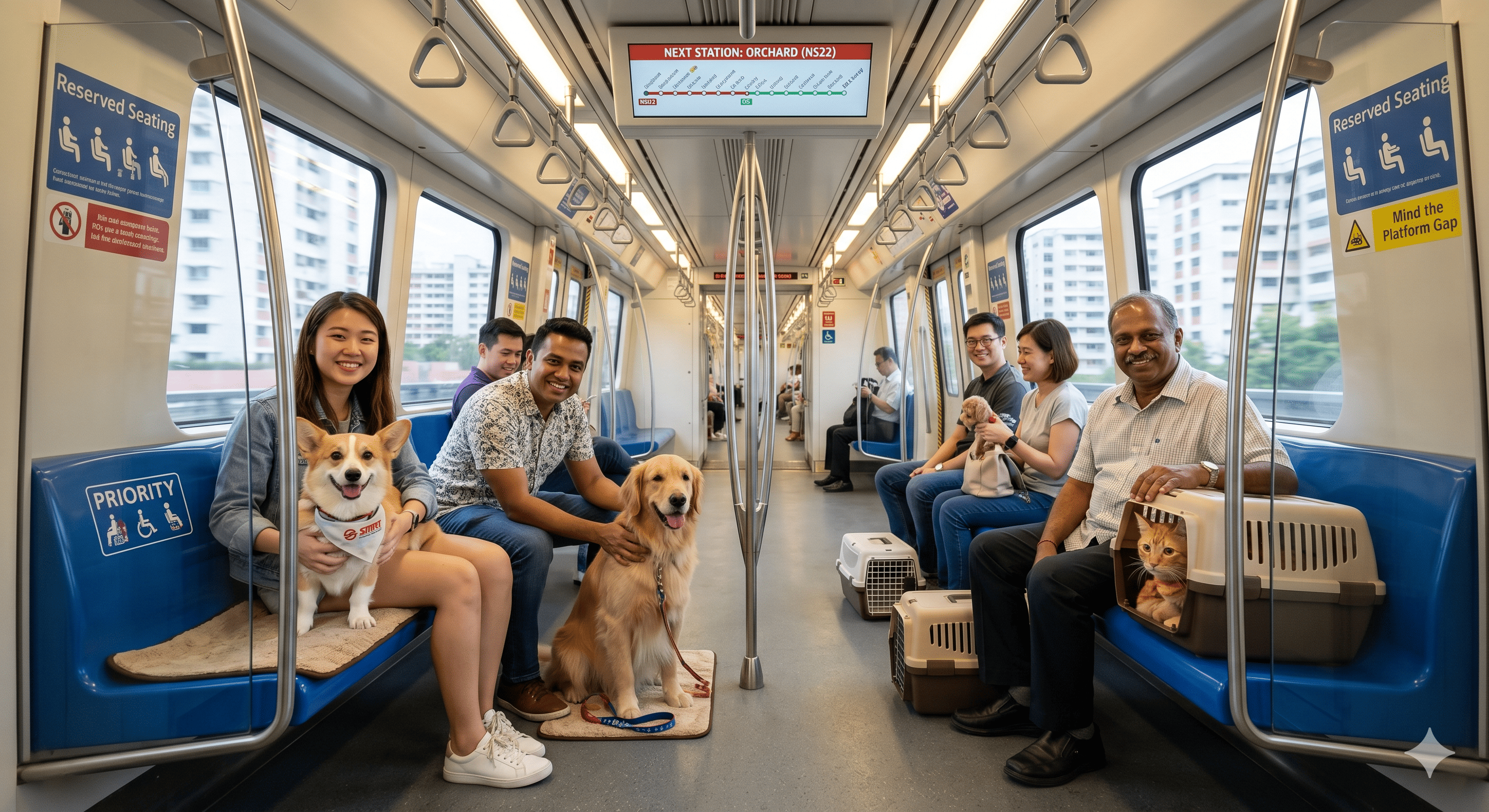
We, the undersigned Singapore residents and pet owners, respectfully call for the introduction of a pilot programme allowing pets on public transport, including MRT and buses, under controlled, regulated, and evidence-based conditions.
Proven Case Study: Hong Kong MTR Pilot
In 2025, Hong Kong’s MTR Corporation launched a “Cat/Dog Carrying Trial Scheme” on its Light Rail network.
Key features of the programme include:
- Pets allowed only on weekends and public holidays
- Mandatory enclosed carriers with strict size limits
- One pet per passenger rule
- Designated boarding areas and train sections
- Introduction of a paid monthly pet pass (HK$99) (thestandard.com.hk)
Following implementation:
- The trial was extended after smooth operations and high compliance
- Authorities reported that most passengers followed the rules
- The system maintained operational safety, hygiene, and passenger comfort (hongkongfp.com)
- Subsequently, the programme was formalised into a regular weekend service, demonstrating policy viability and public acceptance (spca.org.hk)
This provides a real-world, urban, high-density benchmark highly comparable to Singapore.
🇸🇬 Why This Matters for Singapore
- Accessibility & Equity
Many Singapore pet owners do not own cars. Current restrictions:
- Limit access to veterinary care, training, and services
- Increase reliance on private transport or ride-hailing
- A regulated system improves mobility equity, especially for elderly and lower-income residents. - Public Health Through Regulation (Not Prohibition)
Hong Kong’s model shows that strict rules—not bans—are effective:
- Enclosed carriers prevent hygiene issues
- Designated boarding zones reduce crowd friction
- Paid permits ensure accountability
Singapore can adopt an even stricter, compliance-driven model. - Data-Driven Policy (Pilot First, Decide Later)
Instead of permanent change, this proposal advocates:
- Controlled pilot programme
- Real data collection (ridership, complaints, hygiene incidents)
- Evidence-based expansion or rollback
This aligns with Singapore’s testbed policy approach.
Proposed Singapore Pilot Framework
Phase 1: Controlled Trial
- Selected MRT lines or carriages
- Off-peak hours only (e.g. weekends, late evenings)
- Mandatory fully enclosed carriers
- Limit to small pets initially
Phase 2: Pet Travel Pass System
- Paid monthly permit (similar to Hong Kong)
- Registered pets linked to owners
- Enforcement via digital verification
Phase 3: Evaluation & Scaling
- Track
- Cleanliness incidents
- Commuter feedback
- Operational delays (if any)
- Expand gradually if successful
🔒 Safeguards (Non-Negotiable)
- Mandatory licensing & vaccination compliance
- Strict penalties for non-compliance
- Breed/size controls if required
- Clear etiquette and enforcement rules
- Immediate revocation for violations
⚖️ Balanced Approach
This proposal does not advocate unrestricted access.
Instead, it calls for:
A controlled, evidence-based integration of pets into Singapore’s transport system—designed to protect the experience of all commuters.
📢 Conclusion
Hong Kong’s experience demonstrates that pet-inclusive transport is possible—even in dense Asian cities—when implemented carefully.
Singapore has the opportunity to:
- Improve urban liveability
- Support responsible pet ownership
- Lead as a model for modern, inclusive cities
We urge the Government to initiate a pilot programme and study its feasibility.
*Sign this petition to support a more inclusive, forward-looking Singapore.
-TheAsianPawrent Team-

7.498
Masalahnya
To:
The Government of Singapore (Ministry of Transport, Land Transport Authority, SMRT, SBS Transit)
Petition Statement:
We, the undersigned Singapore residents and pet owners, respectfully call for the introduction of a pilot programme allowing pets on public transport, including MRT and buses, under controlled, regulated, and evidence-based conditions.
Proven Case Study: Hong Kong MTR Pilot
In 2025, Hong Kong’s MTR Corporation launched a “Cat/Dog Carrying Trial Scheme” on its Light Rail network.
Key features of the programme include:
- Pets allowed only on weekends and public holidays
- Mandatory enclosed carriers with strict size limits
- One pet per passenger rule
- Designated boarding areas and train sections
- Introduction of a paid monthly pet pass (HK$99) (thestandard.com.hk)
Following implementation:
- The trial was extended after smooth operations and high compliance
- Authorities reported that most passengers followed the rules
- The system maintained operational safety, hygiene, and passenger comfort (hongkongfp.com)
- Subsequently, the programme was formalised into a regular weekend service, demonstrating policy viability and public acceptance (spca.org.hk)
This provides a real-world, urban, high-density benchmark highly comparable to Singapore.
🇸🇬 Why This Matters for Singapore
- Accessibility & Equity
Many Singapore pet owners do not own cars. Current restrictions:
- Limit access to veterinary care, training, and services
- Increase reliance on private transport or ride-hailing
- A regulated system improves mobility equity, especially for elderly and lower-income residents. - Public Health Through Regulation (Not Prohibition)
Hong Kong’s model shows that strict rules—not bans—are effective:
- Enclosed carriers prevent hygiene issues
- Designated boarding zones reduce crowd friction
- Paid permits ensure accountability
Singapore can adopt an even stricter, compliance-driven model. - Data-Driven Policy (Pilot First, Decide Later)
Instead of permanent change, this proposal advocates:
- Controlled pilot programme
- Real data collection (ridership, complaints, hygiene incidents)
- Evidence-based expansion or rollback
This aligns with Singapore’s testbed policy approach.
Proposed Singapore Pilot Framework
Phase 1: Controlled Trial
- Selected MRT lines or carriages
- Off-peak hours only (e.g. weekends, late evenings)
- Mandatory fully enclosed carriers
- Limit to small pets initially
Phase 2: Pet Travel Pass System
- Paid monthly permit (similar to Hong Kong)
- Registered pets linked to owners
- Enforcement via digital verification
Phase 3: Evaluation & Scaling
- Track
- Cleanliness incidents
- Commuter feedback
- Operational delays (if any)
- Expand gradually if successful
🔒 Safeguards (Non-Negotiable)
- Mandatory licensing & vaccination compliance
- Strict penalties for non-compliance
- Breed/size controls if required
- Clear etiquette and enforcement rules
- Immediate revocation for violations
⚖️ Balanced Approach
This proposal does not advocate unrestricted access.
Instead, it calls for:
A controlled, evidence-based integration of pets into Singapore’s transport system—designed to protect the experience of all commuters.
📢 Conclusion
Hong Kong’s experience demonstrates that pet-inclusive transport is possible—even in dense Asian cities—when implemented carefully.
Singapore has the opportunity to:
- Improve urban liveability
- Support responsible pet ownership
- Lead as a model for modern, inclusive cities
We urge the Government to initiate a pilot programme and study its feasibility.
*Sign this petition to support a more inclusive, forward-looking Singapore.
-TheAsianPawrent Team-
Suara Pendukung
Perkembangan Terakhir Petisi
Bagikan petisi ini
Petisi dibuat pada 6 Mei 2026