
A Safe and Clean Berkeley Now!
The Issue
Mayor Adena Ishii
Members of the Berkeley City Council
Candidates for the Berkeley City Council, November 2026 Election
2180 Milvia Street, 5th Floor
Berkeley, CA 94704
Mayor Ishii, Members of the Berkeley City Council, and Candidates for the November 2026 Election,
We are writing as Berkeley residents and constituents to urge you to introduce and support legislation establishing a clear, enforceable prohibition on street camping, sidewalk encampments, and unauthorized RV dwelling in Berkeley — consistent with both the U.S. Supreme Court's 2024 decision in City of Grants Pass v. Johnson and Governor Newsom's model ordinance for addressing dangerous and unhealthy encampments.
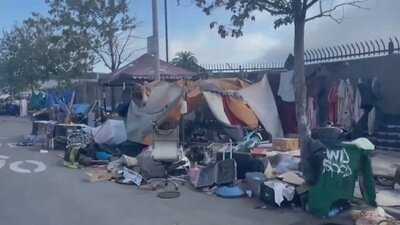
The status quo is not working, and the data shows it. The encampment along the Harrison Street corridor grew from roughly 37 to over 80 residents before the city finally began clearing it this week, and even that action took more than a year of litigation to accomplish. The same pattern is now emerging on Dwight Way, next to Bayer, where a longtime RV encampment has recently been joined by a growing influx of new arrivals — new tent encampments and additional vehicle dwellers setting up alongside the existing population. Meanwhile, neighboring jurisdictions have adopted clearer, more enforceable standards, and the predictable result is that Berkeley increasingly functions as the regional destination for individuals displaced from cities with firmer policies. Without a clear ordinance of our own, that dynamic will only continue, and will likely repeat itself on Dwight Way and other parts of the city just as it did on Harrison.
This week's action at Harrison, while overdue, proves the point rather than resolving it. The city has begun clearing the site only after a year-plus legal battle, a health emergency declaration tied to a leptospirosis risk, and a court order requiring individualized accommodation findings for every affected resident — not because Berkeley has a standing policy that lets it act decisively when an encampment reaches this scale. Even now, the closure remains partial: vehicles and residents with pending disability accommodation requests are still being addressed case by case, and there is still no framework in place to prevent the same slow, litigation-driven cycle from repeating at Dwight Way or wherever the next encampment grows next. A single difficult closure is not a substitute for the ordinance we are asking you to adopt.
The legal landscape has changed, and Berkeley's policy has not kept pace. Grants Pass settled the constitutional question: cities may enforce generally applicable restrictions on public camping without violating the Eighth Amendment, even absent guaranteed shelter placement. Governor Newsom followed that decision with a model ordinance specifically designed to give California cities and counties a template for adopting clear, humane, and legally defensible encampment policy. Berkeley has neither adopted anything comparable nor updated its own enforcement framework to reflect this shift. The result is a policy vacuum that has left the city relying on ad hoc closure notices, public-health emergency declarations, and case-by-case litigation to accomplish what a properly drafted ordinance could establish directly.
The current approach is costly and slow. The Harrison closure alone has involved a preliminary injunction, a temporary restraining order granted without the city even given the chance to respond, multiple rounds of individualized accommodation negotiations, and two pending Ninth Circuit appeals — with no final resolution in sight even as crews work through this week's closure. Each additional month of legal uncertainty means more strain on nearby residents and businesses, deteriorating public health and safety conditions at encampments citywide, and mounting legal costs to the city with no guarantee of a durable outcome the next time an encampment reaches this size.
A clear ordinance would not preclude compassion or due process. Newsom's model ordinance itself calls for advance notice, coordination with outreach and shelter services, and accommodation for individuals with documented disabilities — it does not require Berkeley to abandon services or support. What it would provide is a predictable, city-wide legal standard, rather than the current pattern of encampment-by-encampment litigation that has made Berkeley's approach both inconsistent and unsustainable. The full text of the Governor's model ordinance is available here: https://www.gov.ca.gov/wp-content/uploads/2025/05/Encampment-Ordinance-formatted.pdf
We recognize this is a difficult and often polarizing issue, and we do not raise it lightly. But we believe the city owes its residents, businesses, and the unhoused individuals themselves a clearer and more consistently enforced policy than what currently exists. We hope current officeholders and candidates alike will commit to bringing forward an ordinance grounded in the Grants Pass decision and the Governor's model framework, so that Berkeley is never again forced to spend a year in court simply to clear a single encampment.
Thank you for your time and your service to the City of Berkeley.

240
The Issue
Mayor Adena Ishii
Members of the Berkeley City Council
Candidates for the Berkeley City Council, November 2026 Election
2180 Milvia Street, 5th Floor
Berkeley, CA 94704
Mayor Ishii, Members of the Berkeley City Council, and Candidates for the November 2026 Election,
We are writing as Berkeley residents and constituents to urge you to introduce and support legislation establishing a clear, enforceable prohibition on street camping, sidewalk encampments, and unauthorized RV dwelling in Berkeley — consistent with both the U.S. Supreme Court's 2024 decision in City of Grants Pass v. Johnson and Governor Newsom's model ordinance for addressing dangerous and unhealthy encampments.
The status quo is not working, and the data shows it. The encampment along the Harrison Street corridor grew from roughly 37 to over 80 residents before the city finally began clearing it this week, and even that action took more than a year of litigation to accomplish. The same pattern is now emerging on Dwight Way, next to Bayer, where a longtime RV encampment has recently been joined by a growing influx of new arrivals — new tent encampments and additional vehicle dwellers setting up alongside the existing population. Meanwhile, neighboring jurisdictions have adopted clearer, more enforceable standards, and the predictable result is that Berkeley increasingly functions as the regional destination for individuals displaced from cities with firmer policies. Without a clear ordinance of our own, that dynamic will only continue, and will likely repeat itself on Dwight Way and other parts of the city just as it did on Harrison.
This week's action at Harrison, while overdue, proves the point rather than resolving it. The city has begun clearing the site only after a year-plus legal battle, a health emergency declaration tied to a leptospirosis risk, and a court order requiring individualized accommodation findings for every affected resident — not because Berkeley has a standing policy that lets it act decisively when an encampment reaches this scale. Even now, the closure remains partial: vehicles and residents with pending disability accommodation requests are still being addressed case by case, and there is still no framework in place to prevent the same slow, litigation-driven cycle from repeating at Dwight Way or wherever the next encampment grows next. A single difficult closure is not a substitute for the ordinance we are asking you to adopt.
The legal landscape has changed, and Berkeley's policy has not kept pace. Grants Pass settled the constitutional question: cities may enforce generally applicable restrictions on public camping without violating the Eighth Amendment, even absent guaranteed shelter placement. Governor Newsom followed that decision with a model ordinance specifically designed to give California cities and counties a template for adopting clear, humane, and legally defensible encampment policy. Berkeley has neither adopted anything comparable nor updated its own enforcement framework to reflect this shift. The result is a policy vacuum that has left the city relying on ad hoc closure notices, public-health emergency declarations, and case-by-case litigation to accomplish what a properly drafted ordinance could establish directly.
The current approach is costly and slow. The Harrison closure alone has involved a preliminary injunction, a temporary restraining order granted without the city even given the chance to respond, multiple rounds of individualized accommodation negotiations, and two pending Ninth Circuit appeals — with no final resolution in sight even as crews work through this week's closure. Each additional month of legal uncertainty means more strain on nearby residents and businesses, deteriorating public health and safety conditions at encampments citywide, and mounting legal costs to the city with no guarantee of a durable outcome the next time an encampment reaches this size.
A clear ordinance would not preclude compassion or due process. Newsom's model ordinance itself calls for advance notice, coordination with outreach and shelter services, and accommodation for individuals with documented disabilities — it does not require Berkeley to abandon services or support. What it would provide is a predictable, city-wide legal standard, rather than the current pattern of encampment-by-encampment litigation that has made Berkeley's approach both inconsistent and unsustainable. The full text of the Governor's model ordinance is available here: https://www.gov.ca.gov/wp-content/uploads/2025/05/Encampment-Ordinance-formatted.pdf
We recognize this is a difficult and often polarizing issue, and we do not raise it lightly. But we believe the city owes its residents, businesses, and the unhoused individuals themselves a clearer and more consistently enforced policy than what currently exists. We hope current officeholders and candidates alike will commit to bringing forward an ordinance grounded in the Grants Pass decision and the Governor's model framework, so that Berkeley is never again forced to spend a year in court simply to clear a single encampment.
Thank you for your time and your service to the City of Berkeley.
The Decision Makers

Petition Updates
Share this petition
Petition created on August 27, 2026