Nearing 50,000 Signatures, Yet the Harm Remains Under-Recognised

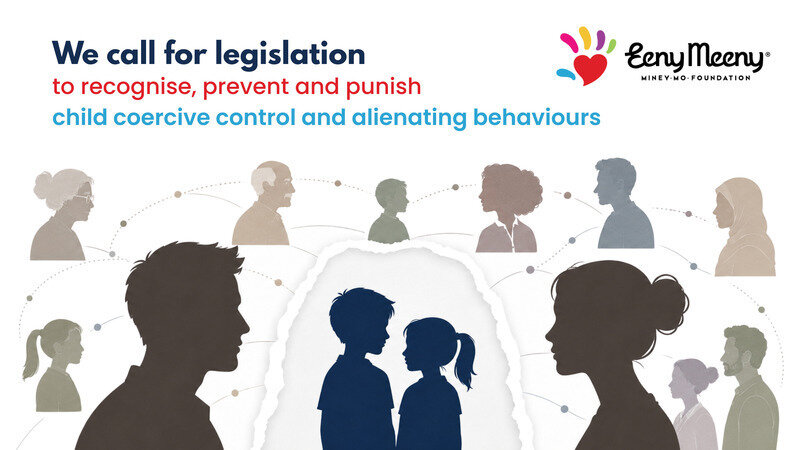
New resources, policy submissions, and continued advocacy for the recognition of child coercive control and alienating behaviours as serious forms of post-separation family violence and child psychological abuse.
Since this petition was launched, more families, professionals, and community members have begun to recognise the dynamics of child coercive control and alienating behaviours in post-separation family violence. These behaviours are often difficult to identify while they are occurring. Many families only begin to understand the pattern after a child has become fearful, hostile, rejecting, or cut off from a safe parent, sibling, grandparent, or wider family network.
This delayed recognition is part of the problem. When these behaviours are not properly understood, families can spend months or years trying to protect or restore a child’s relationship in systems that still too often minimise the harm, misread the child’s rejection, or reduce the matter to ordinary post-separation conflict.
The Eeny Meeny Miney Mo Foundation has continued to develop resources to support clearer understanding, earlier identification, and more informed responses. Some of the recent resources include:
- Coercive Control of Children in Post Separation Family Violence
- The Child's Voice is Evidence: It is Not Automatically Evidence
- Clarification Questions to a Single Expert
- Repeated Psychological Inputs & Resulting Child Adaptations
- Schools Role in Alienation Dynamics
- and many more psychoeducational outputs
In 2026, the Foundation made a submission on domestic, family and sexual violence and suicide data, highlighting the need for more accurate recognition of the harm caused by post-separation coercive control, alienating behaviours, family disconnection, and system failure. This work sits alongside our public petition and education resources, and reflects the urgent need for these dynamics to be properly identified in policy, research, data collection, and frontline responses.
Submission on Domestic, Family and Sexual Violence and Suicide Data
In 2023, EMMM made a detailed submission to the Family Law Amendment Bill. The submission raised concerns about the limited consultation period, the removal of the presumption of shared parental responsibility, the risks of legally enabling obstructed parent-child relationships, the need for properly trained and accountable experts, the limits of relying on children’s stated views without assessing influence or coercion, and the absence of robust long-term outcome tracking for children and families after family law decisions.
EMMM also called for scientifically grounded definitions, trauma-informed family law responses, stronger collaboration between courts and therapeutic intervention programs, properly trained practitioners, evidence-based interventions, and research into the long-term psychosocial outcomes for children involved in parenting disputes. Many of those concerns remain unresolved, which is why this petition remains current and why legislative reform must go further.
Submission to the Family Law Amendment Bill
The petition is now nearing 50,000 signatures.
This is significant, but it does not reflect the scale of harm reported to us by families at the frontline. Many people affected by these dynamics do not have the language to describe what is happening at the time. Others are overwhelmed by litigation, financial pressure, protective concerns, report processes, breaches of orders, and the urgent task of trying to keep a relationship with their child alive.
That is why this petition remains current and necessary.
Child coercive control and alienating behaviours must be recognised as serious forms of post-separation family violence and, in severe cases, child psychological abuse. Children need early identification, proper assessment, timely intervention, and protection before safe family relationships, identity, family history, and belonging are damaged beyond repair.