Prevent Stillbirth by Measuring the Placenta Size!
The Issue
Hudson's Story
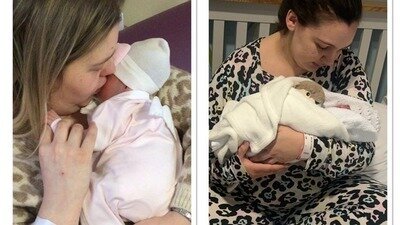
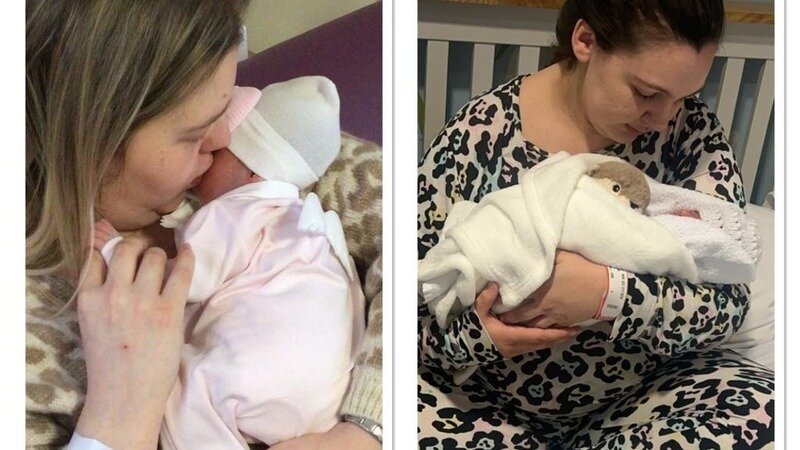
My name is Chloe Treadway. On the 11th of February 2025 my son Hudson was stillborn.
Hudson was our 4th baby, our first little boy after 3 girls. We were all so excited to finally have our baby boy, the final piece of our family puzzle. This was quickly ripped away from us after 32 weeks of pregnancy.
I had a high risk pregnancy. I have Antiphospholipid Syndrome (APS) which is a blood clotting disorder putting women at higher risk for stillbirth and miscarriages as it can affect the placenta.
Throughout my pregnancy, I had episodes of feeling lightheaded and dizzy, but the midwife put this down to anxiety and just pregnancy in general.
Then came the 6th of February 2025. I went for a scan at 32 weeks (due to having APS I had to have 4-weekly growth scans). Here we found out Hudson's heart had stopped beating!
After his birth Hudson went for a postmortem and my placenta had tests carried out too. We found out that the reason Hudson's heart stopped is because his placenta was too small- on the 5th-10th percentile! We were told that this couldn't have been prevented as their "isn't a way to check the placenta". In the same meeting we were told that "placenta insufficiencies are the leading cause of stillbirth."
Hudson was completely healthy, it was his placenta that failed him! Caused by APS!
Life since having Hudson has been filled with sadness, heartbreak and so much love. I've been juggling navigating my grief aswell as parenting his big sisters and navigating their grief too. To think that this could have all been prevented with a simple placental measurement, an extra 30 seconds in a ultrasound scan, haunts me everyday!
Rhylie's Story
My name is Laura Finlay. On the 15th of January 2025 my daughter Rhylie was stillborn.
After her postmortem, I was told something that will stay with me forever:
"Rhylie was completely fine."
There were no genetic abnormalities, no infections- nothing wrong with her. The problem was her placenta. It had been deteriorating for a long time and no one knew!
But Rhylie's story started long before that day!
I have PCOS and had struggled with infertility and my weight for years. In November 2022, I made one of the hardest decisions of my life and had gastric sleeve surgery to bring my BMI under 30 so that I could qualify for NHS fertility treatment. In May 2024, I was told I had low AMH, meaning that my egg reserve was low and that I would need to be referred for IVF. I was meant to be referred in August 2024.
But then a miracle happened. On the 9th of June 2024, I found out I was pregnant naturally. I was over the moon- but I couldn't shake the anxiety. From the very start something didn't feel right!
I was constantly at triage with reduced movements. It wasn't just fear- it was instinct. I was classed as high risk because of my surgery and PCOS, so I had 4-weekly growth scans. As I got further along, I was also being seen twice a week at the day bed unit, where they monitored me with CTG's, checked my blood pressure and urine.
I did everything I was supposed to. I followed my gut. But it wasn't enough.
After losing Rhylie, I was told I had tested positive for Antiphospholipid Syndrome (APS)_ a blood clotting condition that can affect the placenta and lead to stillbirth. I'm currently waiting on my 12-week postnatal blood results to confirm the diagnosis.
The most heartbreaking part is knowing that Rhylie's death could have been prevented. If her placenta had been measured, if its function and size were monitored as part of routine care, things might have been different. I live with that every single day.
Our Reason For Petitioning
We've joined together and started a petition to push for routine placental measurements in pregnancy- especially for women at higher risk. It's such a small change, but one that could save lives.
We're not doing this for sympathy. We're doing it for our babies. For Rhylie. For Hudson.
So that no more families have to leave the hospital with empty arms and unanswered questions.
We were both told the same thing during our pregnancies:
“You can’t check the placenta.”
That wasn’t true!
After our losses, we started researching. We learned that the size of the placenta can be measured during pregnancy using standard ultrasound methods. A simple 3D measurement — length, width, and thickness — can be entered into a tool called the EPV (Estimated Placental Volume) Calculator. This is free, accessible, and available on both Android and iOS devices.
So why isn’t this being done?
Placental problems are the leading cause of stillbirth in the UK — yet we are not routinely checking the one organ keeping our babies alive! There are a few specialised clinics around the UK, called Rainbow clinics. These are run by the charity Tommy's. They're special clinics for people who are pregnant after loss and they check placenta size. So placental checks can be done but the NHS choose not to do it, even though it could save many lives, and prevent families from having to experience the heartbreak of losing their baby.
We’re calling for:
• Placental volume measurements to be introduced into standard antenatal care for all pregnancies, especially those considered high-risk
• Greater awareness and training for sonographers and midwives on the use of EPV calculations
• National guidance on monitoring placental health, not just fetal growth
It’s simply not enough to say, “the baby looks fine.”
We need to start asking: is the placenta working?
Because sometimes, by the time the baby shows signs of distress — it’s already too late.
Help us change this! Help us save future babies!
In memory of Hudson and Rhylie — and every baby lost to preventable placental failure.
#MeasureThePlacenta #HudsonAndRhylie #StillbornButStillLoved #BabyLossAwareness #PlacentalHealthMatters

2,518
The Issue
Hudson's Story
My name is Chloe Treadway. On the 11th of February 2025 my son Hudson was stillborn.
Hudson was our 4th baby, our first little boy after 3 girls. We were all so excited to finally have our baby boy, the final piece of our family puzzle. This was quickly ripped away from us after 32 weeks of pregnancy.
I had a high risk pregnancy. I have Antiphospholipid Syndrome (APS) which is a blood clotting disorder putting women at higher risk for stillbirth and miscarriages as it can affect the placenta.
Throughout my pregnancy, I had episodes of feeling lightheaded and dizzy, but the midwife put this down to anxiety and just pregnancy in general.
Then came the 6th of February 2025. I went for a scan at 32 weeks (due to having APS I had to have 4-weekly growth scans). Here we found out Hudson's heart had stopped beating!
After his birth Hudson went for a postmortem and my placenta had tests carried out too. We found out that the reason Hudson's heart stopped is because his placenta was too small- on the 5th-10th percentile! We were told that this couldn't have been prevented as their "isn't a way to check the placenta". In the same meeting we were told that "placenta insufficiencies are the leading cause of stillbirth."
Hudson was completely healthy, it was his placenta that failed him! Caused by APS!
Life since having Hudson has been filled with sadness, heartbreak and so much love. I've been juggling navigating my grief aswell as parenting his big sisters and navigating their grief too. To think that this could have all been prevented with a simple placental measurement, an extra 30 seconds in a ultrasound scan, haunts me everyday!
Rhylie's Story
My name is Laura Finlay. On the 15th of January 2025 my daughter Rhylie was stillborn.
After her postmortem, I was told something that will stay with me forever:
"Rhylie was completely fine."
There were no genetic abnormalities, no infections- nothing wrong with her. The problem was her placenta. It had been deteriorating for a long time and no one knew!
But Rhylie's story started long before that day!
I have PCOS and had struggled with infertility and my weight for years. In November 2022, I made one of the hardest decisions of my life and had gastric sleeve surgery to bring my BMI under 30 so that I could qualify for NHS fertility treatment. In May 2024, I was told I had low AMH, meaning that my egg reserve was low and that I would need to be referred for IVF. I was meant to be referred in August 2024.
But then a miracle happened. On the 9th of June 2024, I found out I was pregnant naturally. I was over the moon- but I couldn't shake the anxiety. From the very start something didn't feel right!
I was constantly at triage with reduced movements. It wasn't just fear- it was instinct. I was classed as high risk because of my surgery and PCOS, so I had 4-weekly growth scans. As I got further along, I was also being seen twice a week at the day bed unit, where they monitored me with CTG's, checked my blood pressure and urine.
I did everything I was supposed to. I followed my gut. But it wasn't enough.
After losing Rhylie, I was told I had tested positive for Antiphospholipid Syndrome (APS)_ a blood clotting condition that can affect the placenta and lead to stillbirth. I'm currently waiting on my 12-week postnatal blood results to confirm the diagnosis.
The most heartbreaking part is knowing that Rhylie's death could have been prevented. If her placenta had been measured, if its function and size were monitored as part of routine care, things might have been different. I live with that every single day.
Our Reason For Petitioning
We've joined together and started a petition to push for routine placental measurements in pregnancy- especially for women at higher risk. It's such a small change, but one that could save lives.
We're not doing this for sympathy. We're doing it for our babies. For Rhylie. For Hudson.
So that no more families have to leave the hospital with empty arms and unanswered questions.
We were both told the same thing during our pregnancies:
“You can’t check the placenta.”
That wasn’t true!
After our losses, we started researching. We learned that the size of the placenta can be measured during pregnancy using standard ultrasound methods. A simple 3D measurement — length, width, and thickness — can be entered into a tool called the EPV (Estimated Placental Volume) Calculator. This is free, accessible, and available on both Android and iOS devices.
So why isn’t this being done?
Placental problems are the leading cause of stillbirth in the UK — yet we are not routinely checking the one organ keeping our babies alive! There are a few specialised clinics around the UK, called Rainbow clinics. These are run by the charity Tommy's. They're special clinics for people who are pregnant after loss and they check placenta size. So placental checks can be done but the NHS choose not to do it, even though it could save many lives, and prevent families from having to experience the heartbreak of losing their baby.
We’re calling for:
• Placental volume measurements to be introduced into standard antenatal care for all pregnancies, especially those considered high-risk
• Greater awareness and training for sonographers and midwives on the use of EPV calculations
• National guidance on monitoring placental health, not just fetal growth
It’s simply not enough to say, “the baby looks fine.”
We need to start asking: is the placenta working?
Because sometimes, by the time the baby shows signs of distress — it’s already too late.
Help us change this! Help us save future babies!
In memory of Hudson and Rhylie — and every baby lost to preventable placental failure.
#MeasureThePlacenta #HudsonAndRhylie #StillbornButStillLoved #BabyLossAwareness #PlacentalHealthMatters
Supporter Voices
Petition Updates
Share this petition
Petition created on 18 May 2025