

Housing With Honor: Odum Village, Jackson Hall, and an On-Campus Admissions Home
Housing With Honor: Odum Village, Jackson Hall, and an On-Campus Admissions Home
The Issue
Summary
UNC–Chapel Hill plans to demolish Jackson Hall (the longtime home of Undergraduate Admissions) to build a new 600–700-bed residence hall on that site, aiming to start construction in 2026 and open by Fall 2028. Jackson Hall, an 83-year-old building named for Dr. Blyden and Dr. Roberta Jackson (the first Black tenured professors at Carolina), serves as the front door for prospective students, where families are welcomed and campus tours begin. Yet the University has no public, detailed plan for where Admissions will go during this project as UNC officials have confirmed that a final decision on an interim or new location for Admissions “has not yet been made”. In fact, administrators only recently began studying the George Watts Hill Alumni Center as a possible future home for Undergraduate Admissions (a feasibility study is underway), but nothing has been finalized and no interim swing space has been identified. Demolishing Carolina’s front door without a clear, on-campus relocation plan (one that is fully accessible and welcoming) would be short-sighted and harmful.
Meanwhile, Odum Village (a former student housing complex on South Campus) has sat largely unused for almost a decade. It was closed after 2016 when University officials deemed it “not cost-effective” to retrofit the aging apartments with sprinklers and other code upgrades. Most of Odum’s 47 buildings have since been torn down (UNC spent ~$2.9 million demolishing 37 units by 2020), and in 2025 the University even solicited bids to raze the remaining structures. Yet no new student housing has been built on the Odum site, despite a chronic housing crunch on campus. This dormancy defies UNC’s 2019 Campus Master Plan, which explicitly envisioned Odum Village as a “Campus South Hub” with new student housing, services, and transit connections.
UNC can add much-needed beds without sacrificing its central Admissions space or the legacy of the Jacksons. Instead of a zero-sum tradeoff, we urge a “both/and” approach: build new housing at Odum first, keep the Admissions welcome center on campus with a proper ADA-accessible relocation plan or renovation, and honor Dr. Blyden and Roberta Jackson’s legacy moving forward. In practice, that means pausing the demolition of Jackson Hall until UNC has: (1) created new housing capacity on the Odum site, and (2) published a transparent plan for an on-campus, accessible Undergraduate Admissions office during any construction. Add beds. Reuse Odum. Keep Carolina’s welcome on campus. (This student-led petition and proposal was even highlighted by The Daily Tar Heel in November 2025, reflecting growing concern in the Carolina community.)
Why cost and priorities matter
Students are being asked to pay more while major decisions move forward without the basics: a published, on-campus plan for Admissions and a real timeline for housing at Odum. The UNC Board of Trustees has approved tuition increases, and university budget materials show big capital projects increasingly financed through student fees (including debt-service charges). Meanwhile, public reporting shows major spending continues elsewhere, including large athletics commitments and other high-cost branding decisions.

Why Jackson Hall Matters
Jackson Hall is more than just an old building as it’s Carolina’s welcome mat. Generations of prospective Tar Heels (and their parents) have walked through its doors to hear a warm “Welcome to Carolina,” meet Admissions staff and student ambassadors, and embark on campus tours. The building sits in the heart of North Campus, receiving almost 20,000 visitors each year. t’s also a landmark of progress: Jackson Hall is named after Dr. Blyden Jackson and Dr. Roberta Jackson, who were trailblazing Black faculty members at UNC. Dr. Blyden Jackson was the first Black professor to earn tenure at UNC, and Dr. Roberta Jackson was the first Black woman on the UNC faculty (School of Education). The name on the building honors their legacy and contributions. Any decision to tear down this hall should not be taken lightly as the university must consider how it will preserve and honor that legacy going forward.
UNC’s current plan would eliminate Jackson Hall to make room for a large new dorm. Yes, Carolina urgently needs more student housing – we agree on that. (Even Chancellor Lee Roberts has affirmed that building new residence halls and upgrading student facilities is crucial to “increasing our capacity and modernizing our capacity” in the face of enrollment growth.) The proposed residence hall (~600–700 beds) is slated to be the first new dorm built on campus since 2006, targeted for completion by 2028 to help address surging enrollment. (Fall 2025 saw UNC enroll its largest-ever first-year class: 5,094 first-years out of a record 84,317 applicants, a 15% jump in applications in just one year. This boom is straining both Admissions and campus housing capacity.) Removing Jackson Hall would free up a prime site for those new dorm beds as more people would love to live on north campus, but coming at a significant cost to accessibility and history if mishandled.
What's the problem?
The University has not explained how Undergraduate Admissions will function during and after this project. Taking Jackson Hall offline means Carolina’s main Admissions center would be displaced for years. As of now, there is no publicly available “swing space” plan on or near campus for Admissions – no confirmed temporary location, no published maps for tour routes or visitor parking, no clear plan for maintaining accessibility. Prospective students, for example, have no assurance that tour drop-offs, pathways, and facilities will remain accessible if Admissions is moved off-site. University leaders have floated the idea of eventually moving Admissions into the Alumni Center (which is being evaluated for feasibility), but nothing is finalized. And crucially, UNC has not secured any interim location to house Admissions during construction.
Demolishing Carolina’s front door without a guaranteed on-campus, ADA-compliant alternative is an avoidable self-inflicted wound. It risks sending the wrong message about who is welcome at UNC. This is also a priorities problem. Students are being asked to pay more through rising tuition and fees while major decisions move forward without basic planning for Admissions access or a clear housing replacement strategy at Odum. Over the past year, UNC approved tuition/fee increases tied to new projects (including a $53 per-student debt service fee connected to a new ~$120M rec center), while also paying about $600,000 for a logo change and committing to a football head coach contract reported around $10M per year. At the same time, UNC moved to close six area studies centers with projected savings around $7M. These choices make it harder to accept that an on-campus, ADA-ready Admissions plan and a firm housing timeline for Odum are somehow impossible.
To be clear, Jackson Hall itself is an aging building with serious accessibility shortcomings that absolutely must be addressed. A detailed ADA assessment in May 2024 found dozens of barriers in and around the building: for example, exterior stairs with irregular heights and missing handrails, steep sloping walkways, interior ramps without proper railings, doorways too narrow for wheelchairs, and even the designated accessible restroom lacking the required clearance space. In total, the auditors identified 106 separate ADA compliance issues, estimating about $448,000 in work would be needed to fully fix Jackson Hall’s physical accessibility. We acknowledge these problems – accessibility is non-negotiable. But that is all the more reason UNC should be transparent about its plan: whether it’s renovating the existing structure or constructing a new one, the University must show how it will provide a fully ADA-compliant Admissions center. Simply knocking down Jackson Hall without a clear accessibility roadmap (for a replacement building or an interim solution) fails to uphold Carolina’s commitment to inclusion.
Jackson Hall deserves a thoughtful approach as one that upgrades or replaces its facilities without erasing its welcoming presence on campus or the history it represents. UNC should make the planning process transparent, so that students, alumni, and the public can see that all options (renovation, partial preservation, or rebuild) were fairly evaluated with the outcome of enhancing accessibility and honoring the Jacksons’ legacy.
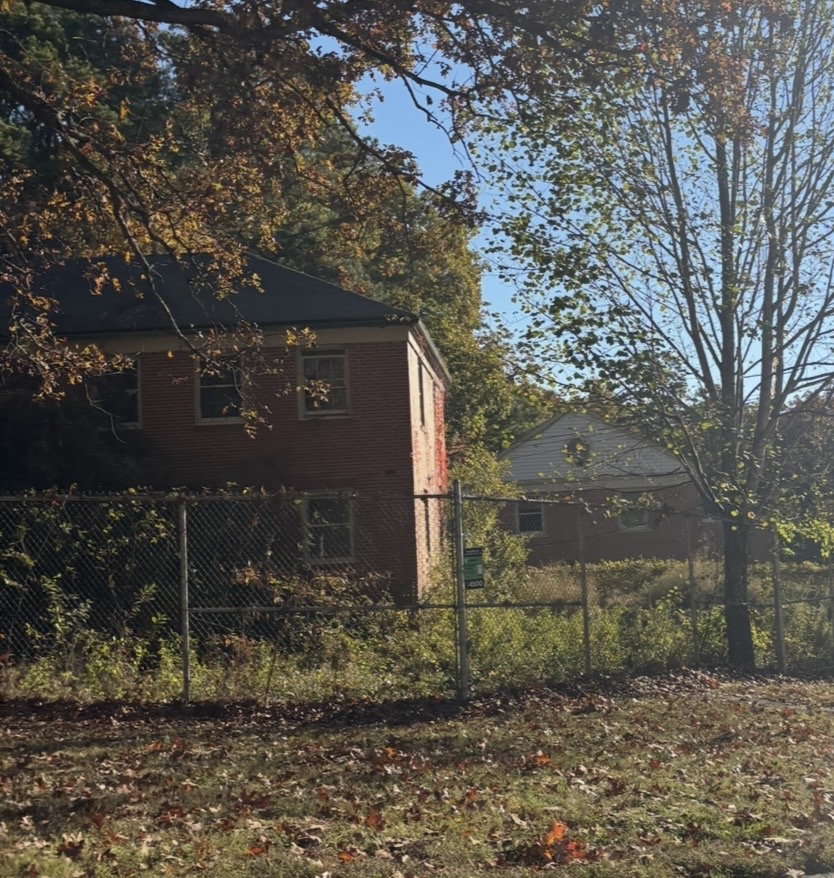
While there are plans to demolish Jackson Hall, a huge opportunity sits just a short bus ride away on South Campus near Ram Village and Baity Hill: the site of Odum Village. Odum Village was once a cluster of 47 two-story apartment buildings, home to hundreds of graduate students, student families, and even some undergraduates. By design, it was student housing, until it wasn’t. In 2015, new safety regulations (requiring sprinkler systems in all UNC dorms) caught up with Odum’s 1960s-era buildings, which lacked sprinklers and other modern systems. The University got a temporary waiver to keep Odum open briefly, but ultimately decided that bringing those old apartments up to code would not be cost-effective. The last residents moved out after the 2015–2016 year, and Odum Village was decommissioned. As one UNC official put it, “it was not cost-effective to update these buildings, so the buildings were closed.”
That made sense at the time as Odum’s buildings were indeed aging and not built to last forever. What doesn’t make sense is what happened next. Rather than promptly rebuilding on that land, the University let Odum Village languish. Demolition began in 2016 and proceeded in phases. By 2020, 37 of the 47 buildings were torn down at considerable expense. Even as recently as late 2025, roughly 23 structures remained standing – boarded up, overgrown with vines, an eerie ghost town of what used to be vibrant student homes. (Only a couple of former Odum buildings have found new purpose as one was renovated into the Carolina Veterans Resource Center, for example. Most of the land sits behind fences, unused.) In late November 2025, UNC finally moved to finish the job as it advertised bids to demolish the remaining Odum Village apartments, but again without announcing any concrete plan for the site’s future. The demolition bid documents did not outline any replacement housing or new construction to follow. It’s as if the land where Odum once sat is being cleared and then left in limbo, with no public discussion of what comes next.
All of this is happening while students scramble for on campus housing. UNC’s enrollment has grown, but on-campus housing has not kept pace. Every year, news reports highlight housing shortages, waitlist, and disappointment. (In my own case as a transfer student, I was waitlisted for a dorm and ended up in off-campus housing which I will cover in another section). Students are also charged the same housing rates for very different living conditions. For 2026–2027, a standard double is listed at $8,858 for the year across residence halls. That means students in older buildings without elevators or modern HVAC can pay the same as students in newer halls with elevators, HVAC, and in-hall laundry. If UNC is going to raise prices and expand enrollment, it should also expand modern, accessible housing supply by starting with a site like Odum that was already student housing.
The irony is painful: we have a large tract of university-owned land, already intended for student housing, lying fallow during a housing crunch. Meanwhile, UNC’s approach to add beds has been to repurpose existing spaces – for example, starting fall 2028, Odum’s neighbor, Baity Hill (the on-campus apartment complex for graduate students and student families) will transition to undergraduate housing, rather than building new dorms on available land like Odum. UNC’s official Master Plan (2019) classifies the Odum site as part of the future “Campus South Hub,” explicitly proposing to redevelop it with new housing (especially for graduate, transfer, and family populations), along with research space, student services, retail, recreation, and even improved transit infrastructure. The idea was to create a vibrant mixed-use cluster on South Campus, leveraging the existing bus routes and space. In that vision, Odum would help Carolina grow, and it can be done without sacrificing core facilities like the Admissions office.
Odum Village: Lost To Time
While plans are barreling ahead to bulldoze Jackson Hall, a huge opportunity sits just a short bus ride away on South Campus: the site of Odum Village. Odum Village was once a cluster of 47 two-story apartment buildings, home to hundreds of graduate students, student families, and some undergraduates. By design, it was student housing – until it wasn’t. In 2015, new safety regulations (requiring sprinkler systems in all UNC dorms) caught up with Odum’s 1960s-era buildings, which lacked sprinklers and other modern systems. The University got a temporary waiver to keep Odum open briefly, but ultimately decided that bringing those old apartments up to code would not be cost-effective. The last residents moved out after the 2015–2016 year, and Odum Village was decommissioned. As one UNC official put it, “it was not cost-effective to update these buildings, so the buildings were closed”.
That made sense at the time – Odum’s buildings were indeed aging and not built to last forever. What doesn’t make sense is what happened next. Rather than promptly rebuilding on that land, the University let Odum Village languish. Demolition began in 2016 and proceeded in phases. By 2020, 37 of the 47 buildings were torn down at considerable expense. Even today, nearly a decade later, 22 structures remained standing as of 2023 - boarded up, overgrown with vines, an eerie ghost town of what used to be vibrant student homes. Only a couple of former Odum buildings have found new purpose (one was renovated into the Carolina Veterans Resource Center, for example). Most of the land sits behind fences, unused. In spring 2025, UNC finally moved to finish the job – it advertised bids to demolish the remaining Odum Village apartments - but again without announcing any concrete plan for the site’s future. The demolition bid documents did not outline any replacement housing or new construction to follow. It’s as if the land where Odum once sat is in limbo or wiped off the map with no public discussion of what comes next.
All of this is happening while students scramble for affordable housing. UNC’s enrollment has grown, but on-campus housing has not kept pace. Every year, news reports highlight housing shortages and overflow. (In my own case as a transfer student, I was waitlisted for a dorm and ended up in off-campus housing – more on that in my story below.) The irony is painful: we have a large tract of university-owned land, already intended for student housing, lying fallow during a housing crunch. This isn’t just my opinion – it’s stated University policy. UNC’s official Master Plan (2019) classifies the Odum site as part of the future “Campus South Hub,” explicitly proposing to redevelop it with new housing (especially for graduate, transfer, and family populations), along with research space, student services, retail, recreation, and even improved transit infrastructure. The idea was to create a vibrant mixed-use cluster on South Campus, leveraging the existing bus routes and space. In that vision, Odum would help Carolina grow without overburdening central campus, and without sacrificing core facilities like the Admissions office. UNC literally drew itself a roadmap for adding beds at Odum while keeping Admissions strong, but now seems to be ignoring it.
Some have asked: Isn’t there a reason nothing’s been built at Odum yet? We’ve heard a few theories and concerns, and we want to address them:
- “Odum might be unsafe (asbestos, lead, etc.) – isn’t that why it’s still empty?” Environmental hazards like asbestos are a real concern in any old buildings, but they are manageable with proper procedures. In fact, UNC is already required by law to handle this. Before any Odum building can be demolished or renovated, federal EPA regulations (NESHAP) and NC health rules mandate thorough inspections, asbestos abatement plans, and removal by licensed contractors. UNC’s Facilities department has an asbestos management program in place. The ongoing demolition work at Odum has included asbestos removal steps – for instance, documents for the 2025 Odum demolition bid referenced asbestos survey drawings from late 2024, showing the hazard was identified and planned for. In short, the presence of asbestos in some old materials is not a permanent barrier to building on the site; it’s a process to be completed. The right approach now is for UNC to finish safely abating and clearing the remaining structures (which it’s in the process of doing) and then move forward with new construction on that cleaned land. Let’s not use asbestos as an excuse for inaction – let’s treat it as a step to be handled properly (as UNC has been doing).
- “Doesn’t UNC Health or the hospital own that land now?” – No. Odum Village’s land is part of UNC–Chapel Hill’s campus, state-owned and managed by the University. It’s true that UNC Hospitals (which are closely affiliated but a separate entity) have been utilizing part of the area for temporary needs – for example, contractors for the new UNC Medical Center surgical tower and other projects have set up offices or staging in Odum’s vicinity. And a major utilities project is underway there: UNC is building the Bernard Street Chiller Plant, a ~$155 million facility to boost campus cooling capacity (sited on the footprint of five former Odum apartment buildings). These uses might give the impression that “the hospital took Odum,” but in reality UNC Facilities and Campus Planning still list Odum as a University asset under the Campus South Hub vision. If any portions of the land have indeed been permanently transferred or dedicated solely to hospital use, UNC should state so clearly – but so far, planning documents do not indicate that the entire area is off-limits for student housing. There is plenty of land at Odum to accommodate both the needed utility infrastructure and new student housing. It’s not an either/or; it can be a both/and. (For example, build upward – a multi-story residence hall or apartment complex could utilize the available footprint around the chiller plant and existing roads.)
- “Is building at Odum even realistic or financially feasible?” Any construction is costly and takes time. But the University is already spending money regardless as it has spent millions to demolish Odum, and it will spend more on whatever new dorm comes next. The question is about priorities and sequencing. UNC leaders have shown they can mobilize enormous resources when they deem something a priority. For instance, UNC is investing around $120 million in a new student recreation and wellness center (funded by a $53 per-student debt service fee), and it recently paid nearly $600,000 for a branding refresh that dropped the Old Well logo in favor of an interlocking “NC” symbol used by athletics. The University also made headlines by hiring a high-profile football coach at about $10 million per year, and it’s spending $155 million on the new chiller plant to support future campus growth. At the same time, UNC’s leadership decided to close six area studies research centers – a move expected to save only around $7 million – effective 2026. Clearly, when something is a priority, the money is found. Student housing and access should be treated with the same urgency and problem-solving. There are also smart financing options (public-private partnerships, state capital funding, etc.) that UNC could leverage to jump-start housing at Odum if it truly wanted to. The 2019 Master Plan already lays out a blueprint – it’s not like we lack ideas or land, just the will to act quickly. Building a new residence hall at Odum first could even provide “swing space” for housing: those new beds could temporarily house students from other dorms while older halls on North Campus (like the mid-century buildings that need renovation, such as Parker or Teague) are updated or taken offline. This phased approach can help avoid displacement elsewhere. Odum should be seen as an investment in relieving the pressure on the student body.
What Is Being Asked
UNC–Chapel Hill’s administration and Board of Trustees should commit – in writing and in public – to the following steps before taking a wrecking ball to Jackson Hall (or tearing down any remaining Odum buildings in a way that forecloses future housing there). These asks are practical measures to ensure transparency, accessibility, and accountability:
- Jackson Hall Facility & Accessibility Assessment – Release a full comparative analysis of Jackson Hall’s future, examining all options side-by-side: a renovation of the existing building, a partial preservation with an addition, and a complete tear-down and rebuild. For each scenario, provide estimated costs, timelines, and plans for meeting ADA standards, as well as impacts on Admissions operations. Critically, explain how the legacy of Dr. Blyden and Dr. Roberta Jackson would be preserved or honored in each option (e.g. retaining the name, incorporating historical elements, etc.). The UNC community deserves to see that due diligence was done to consider renovating or expanding in place – not just demolition by default. If a new building truly is the best path, let the data make that case openly. If renovation is viable, it should be on the table.
- Undergraduate Admissions Swing-Space Plan (On-Campus, ADA-Compliant) – Before construction begins, UNC must publish a detailed interim operations plan for Undergraduate Admissions that keeps its services on or immediately adjacent to campus. This plan needs to specify exactly where the Admissions office will be located during any Jackson Hall closure, and how campus tours and information sessions will be handled without interruption. It should include: designated temporary office and meeting spaces; accessible tour route maps that account for any detours; provisions for indoor waiting areas and presentation rooms (especially for rainy or hot days when visitors need shelter, as Jackson Hall currently provides); a parking and drop-off plan, including spots for visitors with disabilities; clear signage and navigation so guests can find the temporary location; and details on maintaining staffing and technology (Admissions systems, call lines, etc.) throughout the transition. Importantly, this plan must also ensure that student workers and staff are protected – no pay cuts or layoffs due to the move, and adequate support for them to do their jobs (like moving assistance, equipment setup, etc.). In essence, we want a promise that Carolina’s welcome will remain as warm and accessible as ever, even if it’s delivered from a different building for a while. Prospective students shouldn’t get a third-class experience during construction.
- Odum Village / Bernard Street Site Use Plan – Commit to a public plan for the Odum Village site, including how the new Bernard Street Chiller Plant and other utilities will fit in alongside future housing. We ask UNC to publish a siting memo and map showing the footprint of the utility projects in that area and delineating how much land remains available for new student housing. Crucially, we want an official commitment that a substantial portion of the Odum land will be reserved for developing student housing, consistent with the Campus South Hub vision. This should come with at least a rough timeline or benchmarks (e.g. when planning for a new housing project there would begin) and an opportunity for public input or questions. Essentially, before Odum’s last remnants are demolished or permanently taken over by something else, UNC should declare, “This is what we’re going to use this valuable land for, and here’s roughly when.” No more silence, ambiguity, or misconceptions about ownership and the future.
To emphasize: these steps are not about throwing up roadblocks or delaying progress – they’re about ensuring the progress is done right. We are not calling for a complete cancelation of the new dorm, nor are we clinging to an unsafe, inaccessible status quo. This is a push for transparency and planning that align with UNC’s professed values. The above measures are basic good governance for major changes that will affect thousands of students, employees, and visitors. Carolina can absolutely do this as it’s a matter of will and accountability.
What UNC’s 2019 Campus Master Plan Already Says
UNC’s 2019 University Master Plan:
- Reimagines Odum Village as the "Campus South Hub":
- mixed-use, transit-oriented,
- graduate/transfer and family housing,
- research/entrepreneurship spaces,
- retail/recreation,
- a future regional transit corridor.
- Calls for a stronger, clearer Admissions-to-Polk Place tour route to make the welcome experience accessible and legible.
A “Both/And” Path Forward
UNC can seize this moment as a chance to both build much-needed housing and uphold its commitments to access and history. Here’s what a smarter path could look like:
- Stabilize and Prepare Odum Now: Finish the environmental abatement and demolition of Odum’s old buildings with a purpose – to clear the way for new housing. As you do, keep the site secure and maintained (no more letting it rot and become an eyesore). In the interim, perhaps some of the land could be used for short-term needs (construction staging, modular housing, etc.), but always with the end goal in mind: new student residences.
- Build a New ~700+-Bed Residence Hall at Odum: Make the planned “Residence Hall 1” (the dorm currently slated for Jackson’s lot) a kickstarter for Odum Village’s land redevelopment. Constructing a modern dorm at Odum Village could add hundreds of beds before removing any existing housing or Admissions space. Those beds could even serve as swing space to temporarily house students from other dorms under renovation (e.g. if UNC needs to renovate halls such as Spencer or Hinton James which don't have HVAC; or when Parker and Teague get demolished). This approach grows capacity without displacing Undergraduate Admissions or cutting any services immediately. It also serves as a pilot for the “Campus South Hub” concept – proving that students will indeed live and thrive slightly further south when you provide good facilities and reliable transit (which we already have!). In the future, once the Odum land is activated with housing, UNC would have eased the housing crunch and could then turn its attention back to North Campus projects knowing it’s not leaving students in the cold.
My Personal Story (Why I Care)
I’m not just a concerned student in the abstract – this issue affects me personally, which is why I felt moved to start this petition. I’d like to share a bit of my experience as a first-generation college student and a transfer to UNC, as well as someone with a disability and a former Admissions student employee, to illustrate why these details matter:
Housing Insecurity and Accessibility: When I transferred to UNC, I desperately wanted to live on campus to fully immerse myself in the community. But I was told that housing for transfers wasn’t guaranteed. I applied anyway... and ended up waitlisted then denied. As the semester neared, I had to scramble to sign a last-minute lease in an off-campus apartment. That apartment turned out to have its own issues (safety concerns and unexpected utility costs), but I had no other choice. As someone with a disability, living farther from campus created daily challenges. I relied on the city bus system to get to classes and libraries. The route I lived on stopped running around 8 or 9 PM. That meant if I was studying at Davis Library in the evening (which stays open until 2 AM), I had to watch the clock and often cut my research short to catch the last bus home. There were nights I simply couldn’t stay late to use campus facilities or attend review sessions because I had to get back before transit ended – and walking a long distance at night, given my disability and the hour, was not feasible. I often thought how much more I could engage with campus life if only I had a bed in a residence hall nearby. No student should have to budget their study time around bus schedules or worry about getting home safely because there weren’t enough on-campus rooms. Using Odum Village for new housing would directly help students that were in my shoes by increasing inventory and possibly accommodating more transfers or students with special circumstances. Being closer to academic resources and classrooms isn’t a luxury; for many of us, it’s the difference between struggling and succeeding.
Orientation and the Bigger Picture: Later, I served as an OL through New Student & Family Programs, helping new first-year and transfer students get acclimated to UNC. One of the hardest parts of that job was facing families and students who asked about housing and having to tell them the reality. First-years are guaranteed a living space on campus, but many had heard they should still apply early or risk getting a less desirable assignment. Worse, transfer students would often be in limbo, like I was. It felt so wrong to stand in front of eager new Tar Heels and suggested that “you might want to start looking off-campus, just in case" as people tend to look for off-campus housing a year in advance... which is unacceptable for a first-year to think about during their first semester at Carolina. UNC is their dream school; they worked so hard to get here – and we can’t even assure some of them a roof over their heads on campus. I could see the tension in those students, especially those without the financial cushion to afford off-campus rents or able to sign off on a lease. Housing insecurity is not the welcome anyone deserves. This experience impressed on me that expanding housing isn’t just about hitting some metric or accommodating growth – it’s about basic student welfare and peace of mind. It’s about a moral obligation to take care of our community. That’s why I feel so strongly that every available avenue (like Odum Village) should be used to address housing needs before we displace any service or tear down any building that students rely on. We have to think holistically: admissions, housing, campus life – they’re all pieces of the student experience puzzle. We can’t sacrifice one piece for another without harming the whole picture.
Working for Admissions: I had the privilege of working for Undergraduate Admissions as a Student Ambassador – a tour guide and front-desk helper for visiting families. Through this role, I learned firsthand how vital the location and setup of the Admissions space are. From Jackson Hall, our tour groups can step directly out onto campus routes as it’s a short walk to Polk Place (the main quad) and other iconic sites. On our busiest days, the crowd would overflow Jackson’s capacity, and we’d relocate the welcome talk to a larger venue like Carmichael Arena or the Union auditorium or even a big lecture hall in Genome. I worry deeply about what will happen if Admissions is moved to some temporary trailer or an off-campus office park. One suggestion that comes up is the UNC Visitors Center on Franklin Street – I love that little center, but it is way too small to handle full Admissions operations (it’s essentially one lobby room). Without Jackson, UNC would need significant, well-planned space to replicate what we currently do. I also think about the intangible: Jackson Hall has character and history – it subtly tells visitors that UNC respects its past and the people who paved the way. If we end up in a generic space, I hope UNC at least brings along some of that history (even if it’s just the name “Jackson Hall” transferred to the new location, or displays about the Jacksons). Working in Admissions taught me that details matter in making prospective students feel welcome.
In sharing my story, I hope you see that this petition comes from a place of sincere love for UNC and concern for its people. I’m not an enemy of the administration or for anti-housing/future projects. I’m a student who has felt the sting of our housing shortfall and who cherishes the welcome I received (and later helped extend) at Jackson Hall.
Call to Action
As members of the Carolina community (students, alumni, parents, faculty, staff, and neighbors), we urge UNC-Chapel Hill’s leaders to choose a better path – one that truly lives up to prioritizing student life. Transparency and proactive planning is the point here, not confrontation; we speak not as adversaries, but as stakeholders who want our University to succeed without leaving anyone behind. This call for a “pause until plan” approach isn’t about resistance to change, but about guiding change to reflect Carolina’s values.
Our call to action is simple: Please explore alternatives and publicly rethink the Jackson Hall demolition timeline. Before any irrevocable steps are taken, publish the comparative analysis, the Admissions swing-space plan, and the Odum Village site use plan as outlined above. Show us the data, show us the maps, and show us that you have accounted for accessibility and continuity. Simultaneously, make it a priority to reuse Odum Village land for new student housing, in line with the Master Plan and common sense – instead of quietly erasing our “welcome” and heritage in the rush to add beds. We truly believe UNC can do both: add housing capacity and uphold its values of accessibility, history, and community – if it commits to thoughtful, transparent action.
We are not asking UNC to halt progress; we are asking UNC to fulfill the best version of its progress. The University has navigated challenging projects before, balancing growth with respect for what makes UNC special. This situation should be no different. Carolina can build new housing and keep the spirit of Carolina alive at its front door.
If you share these concerns and hopes, please sign this petition. By signing, you’re telling UNC leaders that we care about both housing and heritage, both new students and old values. You’re saying that Carolina’s future should be built on transparency, inclusion, and honor – not at the expense of those principles.
Sharing this petition with others (friends, UNC classmates, alumni networks, local community members) would be highly appreciated. The more voices that join in this ask, the more our leaders will see that this matters to people across the Carolina family. Let’s send a clear message that we want a “both/and” solution: one that adds beds, honors promises, and keeps Carolina’s welcome on campus for future generations.
Together, we can help UNC do the right thing – for current students, for future Tar Heels, and for the legacy of those who came before us. Thank you for reading, and thank you for supporting this cause. Go Heels! :)
Update 1 (Nov 15 2025). UNC’s trustees just voted to raise tuition for incoming in-state undergrads by 3%, and materials also show higher mandatory fees coming, including a $53 per-student “debt service” increase tied to a new $120M rec center. Students are being asked to pay more while there’s still no published, on-campus plan for Admissions and the Odum site sits in limbo. If we can commit dollars to big projects, we can also commit to a no-net-loss housing rule and a clear, ADA swing plan for Admissions.
Update 2 (Feb 1, 2026): Several developments in the past few months have further underscored our concerns. In late 2025, UNC–Chapel Hill announced plans to close all six of its area studies centers (effective 2026) as part of budget cuts – a decision expected to save only about $7 million. Around the same time, the University unveiled a costly rebranding effort, paying nearly $600,000 to replace the iconic Old Well logo with an interlocking “NC” emblem for its primary logo, sparking controversy among students and alumni. Meanwhile, student and alumni voices have grown louder in advocating for smarter growth: Hall of Fame coach Roy Williams publicly joined a campaign to “Renovate, Don’t Relocate” the Dean Smith Center, urging UNC not to move the basketball arena off campus.
All of these events point to a common theme... the Carolina community wants the University’s investments and decisions to align with its core mission and values. Most importantly, as of early 2026, Jackson Hall is still slated for demolitionand UNC has still not announced any concrete on-campus swing space for Admissions (the Alumni Center study is ongoing, but nothing is finalized). In other words, the University’s current course remains unchanged despite the outcry. If UNC can find the money for new logos, massive athletic contracts, and state-of-the-art facilities, it can surely find a way to add housing without displacing Admissions – and to prioritize transparency and inclusion in the process. Now more than ever, the case for a “both/and” solution is clear and compelling.
Sources/Info:
- New residence hall replacing Jackson Hall; 2028 target — Daily Tar Heel coverage of BOT plan (May 27, 2025). https://dailytarheel.com/article/university-bot-new-residence-hall-20250527
- UNC’s decade-long housing plan; 600–700 beds on North Campus — DTH explainer (June 16, 2025). https://dailytarheel.com/article/new-unc-student-housing-developments-to-come-in-the-next-two-decades-20250616
- Admissions location — Jackson Hall, 174 Country Club Rd. (UNC Admissions). https://admissions.unc.edu/
- Largest class; record applicants (84,317) — UNC News (Sept. 8, 2025) & Admissions stats page. https://www.unc.edu/posts/2025/09/08/carolina-welcomes-largest-first-year-class-ever/ ; https://admissions.unc.edu/explore/our-newest-class/
- Odum Village history, closures, counts, costs — INDY Week feature (Apr. 28, 2023). https://indyweek.com/news/orange/past-present-future-unc-odum-village/
- Odum demolition phases (37 buildings 2019–2020) — UNC Facilities (Nov. 8, 2019). https://facilities.unc.edu/news/2019/11/08/odum-village-demolition-in-progress/
- Chilled-water expansion / Bernard Street plant — UNC Facilities project brief (May 2022) & Chapelboro BOT recap (Jan. 24, 2025). https://facilities.unc.edu/wp-content/uploads/sites/256/2022/05/chilled-water-infrastructure-expansion-project-brief.pdf ; https://chapelboro.com/news/unc/unc-trustees-approve-designs-for-new-research-building-advance-planning-efforts-for-new-dorms-and-student-gym
- Athletics contract context (Belichick) — Reuters & ABC11 reporting on compensation terms (Dec. 2024 / Jan. 2025). https://www.reuters.com/sports/unc-releases-bill-belichick-contract-10m-year-plenty-extras-2025-01-23/ ; https://abc11.com/post/bill-belichick-unc-contract-details-released-showing-tar-heels-significant-monetary-commitment-football-coach/15647886/
- Tuition & fees / $53 “debt service” fee / $120M rec center. WRAL. (2025, November). UNC Board of Trustees approves tuition hike for undergraduate students. WRAL. https://www.wral.com/story/unc-board-of-trustees-approves-tuition-hike-for-undergraduate-students/21572963 https://www.wral.com/video/unc-leadership-votes-to-raise-tuition-reversing-committee-decision/22245242/
- Asbestos and hazard abatement – regulated process in place (inspections, permits, removal) for Odum demolitions; ; UNC Environmental Health & Safety manages asbestos per rules
- ADA Assessment of Jackson Hall (May 2024) – identified major accessibility barriers (irregular stairs, missing handrails, steep ramps, narrow doorways, inadequate restroom clearance); estimated remediation cost ~$448,000
- Chapelboro. (2026, January 26). “Renovate, don’t relocate”: Roy Williams joins petition to keep UNC basketball at Dean Smith Center. https://chapelboro.com/sports/renovate-dont-relocate-roy-williams-joins-petition-to-keep-unc-basketball-at-dean-smith-center
- Crabtree, M. (2025, December 20). What area studies centers do at UNC—and what happens when they close. The Assembly NC. https://www.theassemblync.com/news/education/higher-education/unc-chapel-hill-area-studies-centers-what-they-do
- Stancill, J. (2026, January 22). UNC’s new interlocking logo to replace Old Well at cost of $600,000. The News & Observer. https://www.newsobserver.com/news/local/education/article314427680.html
- Daily Tar Heel. (2025, November 21). Students launch petition urging UNC to redevelop Odum Village for housing. https://www.dailytarheel.com/article/university-odum-village-student-housing-petition-20251121
Disclaimer: I’m posting in my personal capacity as a UNC student. Mentions of Undergraduate Admissions, New Student & Family Programs (NSFP), Carolina Housing, the Visitors Center, the Carolina Union, or any other UNC office are solely to describe my lived experience and public information. None of these units (nor UNC or the UNC System) is affiliated with, sponsoring, or endorsing this petition. All views are my own, and no confidential information is shared.

249
The Issue
Summary
UNC–Chapel Hill plans to demolish Jackson Hall (the longtime home of Undergraduate Admissions) to build a new 600–700-bed residence hall on that site, aiming to start construction in 2026 and open by Fall 2028. Jackson Hall, an 83-year-old building named for Dr. Blyden and Dr. Roberta Jackson (the first Black tenured professors at Carolina), serves as the front door for prospective students, where families are welcomed and campus tours begin. Yet the University has no public, detailed plan for where Admissions will go during this project as UNC officials have confirmed that a final decision on an interim or new location for Admissions “has not yet been made”. In fact, administrators only recently began studying the George Watts Hill Alumni Center as a possible future home for Undergraduate Admissions (a feasibility study is underway), but nothing has been finalized and no interim swing space has been identified. Demolishing Carolina’s front door without a clear, on-campus relocation plan (one that is fully accessible and welcoming) would be short-sighted and harmful.
Meanwhile, Odum Village (a former student housing complex on South Campus) has sat largely unused for almost a decade. It was closed after 2016 when University officials deemed it “not cost-effective” to retrofit the aging apartments with sprinklers and other code upgrades. Most of Odum’s 47 buildings have since been torn down (UNC spent ~$2.9 million demolishing 37 units by 2020), and in 2025 the University even solicited bids to raze the remaining structures. Yet no new student housing has been built on the Odum site, despite a chronic housing crunch on campus. This dormancy defies UNC’s 2019 Campus Master Plan, which explicitly envisioned Odum Village as a “Campus South Hub” with new student housing, services, and transit connections.
UNC can add much-needed beds without sacrificing its central Admissions space or the legacy of the Jacksons. Instead of a zero-sum tradeoff, we urge a “both/and” approach: build new housing at Odum first, keep the Admissions welcome center on campus with a proper ADA-accessible relocation plan or renovation, and honor Dr. Blyden and Roberta Jackson’s legacy moving forward. In practice, that means pausing the demolition of Jackson Hall until UNC has: (1) created new housing capacity on the Odum site, and (2) published a transparent plan for an on-campus, accessible Undergraduate Admissions office during any construction. Add beds. Reuse Odum. Keep Carolina’s welcome on campus. (This student-led petition and proposal was even highlighted by The Daily Tar Heel in November 2025, reflecting growing concern in the Carolina community.)
Why cost and priorities matter
Students are being asked to pay more while major decisions move forward without the basics: a published, on-campus plan for Admissions and a real timeline for housing at Odum. The UNC Board of Trustees has approved tuition increases, and university budget materials show big capital projects increasingly financed through student fees (including debt-service charges). Meanwhile, public reporting shows major spending continues elsewhere, including large athletics commitments and other high-cost branding decisions.
Why Jackson Hall Matters
Jackson Hall is more than just an old building as it’s Carolina’s welcome mat. Generations of prospective Tar Heels (and their parents) have walked through its doors to hear a warm “Welcome to Carolina,” meet Admissions staff and student ambassadors, and embark on campus tours. The building sits in the heart of North Campus, receiving almost 20,000 visitors each year. t’s also a landmark of progress: Jackson Hall is named after Dr. Blyden Jackson and Dr. Roberta Jackson, who were trailblazing Black faculty members at UNC. Dr. Blyden Jackson was the first Black professor to earn tenure at UNC, and Dr. Roberta Jackson was the first Black woman on the UNC faculty (School of Education). The name on the building honors their legacy and contributions. Any decision to tear down this hall should not be taken lightly as the university must consider how it will preserve and honor that legacy going forward.
UNC’s current plan would eliminate Jackson Hall to make room for a large new dorm. Yes, Carolina urgently needs more student housing – we agree on that. (Even Chancellor Lee Roberts has affirmed that building new residence halls and upgrading student facilities is crucial to “increasing our capacity and modernizing our capacity” in the face of enrollment growth.) The proposed residence hall (~600–700 beds) is slated to be the first new dorm built on campus since 2006, targeted for completion by 2028 to help address surging enrollment. (Fall 2025 saw UNC enroll its largest-ever first-year class: 5,094 first-years out of a record 84,317 applicants, a 15% jump in applications in just one year. This boom is straining both Admissions and campus housing capacity.) Removing Jackson Hall would free up a prime site for those new dorm beds as more people would love to live on north campus, but coming at a significant cost to accessibility and history if mishandled.
What's the problem?
The University has not explained how Undergraduate Admissions will function during and after this project. Taking Jackson Hall offline means Carolina’s main Admissions center would be displaced for years. As of now, there is no publicly available “swing space” plan on or near campus for Admissions – no confirmed temporary location, no published maps for tour routes or visitor parking, no clear plan for maintaining accessibility. Prospective students, for example, have no assurance that tour drop-offs, pathways, and facilities will remain accessible if Admissions is moved off-site. University leaders have floated the idea of eventually moving Admissions into the Alumni Center (which is being evaluated for feasibility), but nothing is finalized. And crucially, UNC has not secured any interim location to house Admissions during construction.
Demolishing Carolina’s front door without a guaranteed on-campus, ADA-compliant alternative is an avoidable self-inflicted wound. It risks sending the wrong message about who is welcome at UNC. This is also a priorities problem. Students are being asked to pay more through rising tuition and fees while major decisions move forward without basic planning for Admissions access or a clear housing replacement strategy at Odum. Over the past year, UNC approved tuition/fee increases tied to new projects (including a $53 per-student debt service fee connected to a new ~$120M rec center), while also paying about $600,000 for a logo change and committing to a football head coach contract reported around $10M per year. At the same time, UNC moved to close six area studies centers with projected savings around $7M. These choices make it harder to accept that an on-campus, ADA-ready Admissions plan and a firm housing timeline for Odum are somehow impossible.
To be clear, Jackson Hall itself is an aging building with serious accessibility shortcomings that absolutely must be addressed. A detailed ADA assessment in May 2024 found dozens of barriers in and around the building: for example, exterior stairs with irregular heights and missing handrails, steep sloping walkways, interior ramps without proper railings, doorways too narrow for wheelchairs, and even the designated accessible restroom lacking the required clearance space. In total, the auditors identified 106 separate ADA compliance issues, estimating about $448,000 in work would be needed to fully fix Jackson Hall’s physical accessibility. We acknowledge these problems – accessibility is non-negotiable. But that is all the more reason UNC should be transparent about its plan: whether it’s renovating the existing structure or constructing a new one, the University must show how it will provide a fully ADA-compliant Admissions center. Simply knocking down Jackson Hall without a clear accessibility roadmap (for a replacement building or an interim solution) fails to uphold Carolina’s commitment to inclusion.
Jackson Hall deserves a thoughtful approach as one that upgrades or replaces its facilities without erasing its welcoming presence on campus or the history it represents. UNC should make the planning process transparent, so that students, alumni, and the public can see that all options (renovation, partial preservation, or rebuild) were fairly evaluated with the outcome of enhancing accessibility and honoring the Jacksons’ legacy.
While there are plans to demolish Jackson Hall, a huge opportunity sits just a short bus ride away on South Campus near Ram Village and Baity Hill: the site of Odum Village. Odum Village was once a cluster of 47 two-story apartment buildings, home to hundreds of graduate students, student families, and even some undergraduates. By design, it was student housing, until it wasn’t. In 2015, new safety regulations (requiring sprinkler systems in all UNC dorms) caught up with Odum’s 1960s-era buildings, which lacked sprinklers and other modern systems. The University got a temporary waiver to keep Odum open briefly, but ultimately decided that bringing those old apartments up to code would not be cost-effective. The last residents moved out after the 2015–2016 year, and Odum Village was decommissioned. As one UNC official put it, “it was not cost-effective to update these buildings, so the buildings were closed.”
That made sense at the time as Odum’s buildings were indeed aging and not built to last forever. What doesn’t make sense is what happened next. Rather than promptly rebuilding on that land, the University let Odum Village languish. Demolition began in 2016 and proceeded in phases. By 2020, 37 of the 47 buildings were torn down at considerable expense. Even as recently as late 2025, roughly 23 structures remained standing – boarded up, overgrown with vines, an eerie ghost town of what used to be vibrant student homes. (Only a couple of former Odum buildings have found new purpose as one was renovated into the Carolina Veterans Resource Center, for example. Most of the land sits behind fences, unused.) In late November 2025, UNC finally moved to finish the job as it advertised bids to demolish the remaining Odum Village apartments, but again without announcing any concrete plan for the site’s future. The demolition bid documents did not outline any replacement housing or new construction to follow. It’s as if the land where Odum once sat is being cleared and then left in limbo, with no public discussion of what comes next.
All of this is happening while students scramble for on campus housing. UNC’s enrollment has grown, but on-campus housing has not kept pace. Every year, news reports highlight housing shortages, waitlist, and disappointment. (In my own case as a transfer student, I was waitlisted for a dorm and ended up in off-campus housing which I will cover in another section). Students are also charged the same housing rates for very different living conditions. For 2026–2027, a standard double is listed at $8,858 for the year across residence halls. That means students in older buildings without elevators or modern HVAC can pay the same as students in newer halls with elevators, HVAC, and in-hall laundry. If UNC is going to raise prices and expand enrollment, it should also expand modern, accessible housing supply by starting with a site like Odum that was already student housing.
The irony is painful: we have a large tract of university-owned land, already intended for student housing, lying fallow during a housing crunch. Meanwhile, UNC’s approach to add beds has been to repurpose existing spaces – for example, starting fall 2028, Odum’s neighbor, Baity Hill (the on-campus apartment complex for graduate students and student families) will transition to undergraduate housing, rather than building new dorms on available land like Odum. UNC’s official Master Plan (2019) classifies the Odum site as part of the future “Campus South Hub,” explicitly proposing to redevelop it with new housing (especially for graduate, transfer, and family populations), along with research space, student services, retail, recreation, and even improved transit infrastructure. The idea was to create a vibrant mixed-use cluster on South Campus, leveraging the existing bus routes and space. In that vision, Odum would help Carolina grow, and it can be done without sacrificing core facilities like the Admissions office.
Odum Village: Lost To Time
While plans are barreling ahead to bulldoze Jackson Hall, a huge opportunity sits just a short bus ride away on South Campus: the site of Odum Village. Odum Village was once a cluster of 47 two-story apartment buildings, home to hundreds of graduate students, student families, and some undergraduates. By design, it was student housing – until it wasn’t. In 2015, new safety regulations (requiring sprinkler systems in all UNC dorms) caught up with Odum’s 1960s-era buildings, which lacked sprinklers and other modern systems. The University got a temporary waiver to keep Odum open briefly, but ultimately decided that bringing those old apartments up to code would not be cost-effective. The last residents moved out after the 2015–2016 year, and Odum Village was decommissioned. As one UNC official put it, “it was not cost-effective to update these buildings, so the buildings were closed”.
That made sense at the time – Odum’s buildings were indeed aging and not built to last forever. What doesn’t make sense is what happened next. Rather than promptly rebuilding on that land, the University let Odum Village languish. Demolition began in 2016 and proceeded in phases. By 2020, 37 of the 47 buildings were torn down at considerable expense. Even today, nearly a decade later, 22 structures remained standing as of 2023 - boarded up, overgrown with vines, an eerie ghost town of what used to be vibrant student homes. Only a couple of former Odum buildings have found new purpose (one was renovated into the Carolina Veterans Resource Center, for example). Most of the land sits behind fences, unused. In spring 2025, UNC finally moved to finish the job – it advertised bids to demolish the remaining Odum Village apartments - but again without announcing any concrete plan for the site’s future. The demolition bid documents did not outline any replacement housing or new construction to follow. It’s as if the land where Odum once sat is in limbo or wiped off the map with no public discussion of what comes next.
All of this is happening while students scramble for affordable housing. UNC’s enrollment has grown, but on-campus housing has not kept pace. Every year, news reports highlight housing shortages and overflow. (In my own case as a transfer student, I was waitlisted for a dorm and ended up in off-campus housing – more on that in my story below.) The irony is painful: we have a large tract of university-owned land, already intended for student housing, lying fallow during a housing crunch. This isn’t just my opinion – it’s stated University policy. UNC’s official Master Plan (2019) classifies the Odum site as part of the future “Campus South Hub,” explicitly proposing to redevelop it with new housing (especially for graduate, transfer, and family populations), along with research space, student services, retail, recreation, and even improved transit infrastructure. The idea was to create a vibrant mixed-use cluster on South Campus, leveraging the existing bus routes and space. In that vision, Odum would help Carolina grow without overburdening central campus, and without sacrificing core facilities like the Admissions office. UNC literally drew itself a roadmap for adding beds at Odum while keeping Admissions strong, but now seems to be ignoring it.
Some have asked: Isn’t there a reason nothing’s been built at Odum yet? We’ve heard a few theories and concerns, and we want to address them:
- “Odum might be unsafe (asbestos, lead, etc.) – isn’t that why it’s still empty?” Environmental hazards like asbestos are a real concern in any old buildings, but they are manageable with proper procedures. In fact, UNC is already required by law to handle this. Before any Odum building can be demolished or renovated, federal EPA regulations (NESHAP) and NC health rules mandate thorough inspections, asbestos abatement plans, and removal by licensed contractors. UNC’s Facilities department has an asbestos management program in place. The ongoing demolition work at Odum has included asbestos removal steps – for instance, documents for the 2025 Odum demolition bid referenced asbestos survey drawings from late 2024, showing the hazard was identified and planned for. In short, the presence of asbestos in some old materials is not a permanent barrier to building on the site; it’s a process to be completed. The right approach now is for UNC to finish safely abating and clearing the remaining structures (which it’s in the process of doing) and then move forward with new construction on that cleaned land. Let’s not use asbestos as an excuse for inaction – let’s treat it as a step to be handled properly (as UNC has been doing).
- “Doesn’t UNC Health or the hospital own that land now?” – No. Odum Village’s land is part of UNC–Chapel Hill’s campus, state-owned and managed by the University. It’s true that UNC Hospitals (which are closely affiliated but a separate entity) have been utilizing part of the area for temporary needs – for example, contractors for the new UNC Medical Center surgical tower and other projects have set up offices or staging in Odum’s vicinity. And a major utilities project is underway there: UNC is building the Bernard Street Chiller Plant, a ~$155 million facility to boost campus cooling capacity (sited on the footprint of five former Odum apartment buildings). These uses might give the impression that “the hospital took Odum,” but in reality UNC Facilities and Campus Planning still list Odum as a University asset under the Campus South Hub vision. If any portions of the land have indeed been permanently transferred or dedicated solely to hospital use, UNC should state so clearly – but so far, planning documents do not indicate that the entire area is off-limits for student housing. There is plenty of land at Odum to accommodate both the needed utility infrastructure and new student housing. It’s not an either/or; it can be a both/and. (For example, build upward – a multi-story residence hall or apartment complex could utilize the available footprint around the chiller plant and existing roads.)
- “Is building at Odum even realistic or financially feasible?” Any construction is costly and takes time. But the University is already spending money regardless as it has spent millions to demolish Odum, and it will spend more on whatever new dorm comes next. The question is about priorities and sequencing. UNC leaders have shown they can mobilize enormous resources when they deem something a priority. For instance, UNC is investing around $120 million in a new student recreation and wellness center (funded by a $53 per-student debt service fee), and it recently paid nearly $600,000 for a branding refresh that dropped the Old Well logo in favor of an interlocking “NC” symbol used by athletics. The University also made headlines by hiring a high-profile football coach at about $10 million per year, and it’s spending $155 million on the new chiller plant to support future campus growth. At the same time, UNC’s leadership decided to close six area studies research centers – a move expected to save only around $7 million – effective 2026. Clearly, when something is a priority, the money is found. Student housing and access should be treated with the same urgency and problem-solving. There are also smart financing options (public-private partnerships, state capital funding, etc.) that UNC could leverage to jump-start housing at Odum if it truly wanted to. The 2019 Master Plan already lays out a blueprint – it’s not like we lack ideas or land, just the will to act quickly. Building a new residence hall at Odum first could even provide “swing space” for housing: those new beds could temporarily house students from other dorms while older halls on North Campus (like the mid-century buildings that need renovation, such as Parker or Teague) are updated or taken offline. This phased approach can help avoid displacement elsewhere. Odum should be seen as an investment in relieving the pressure on the student body.
What Is Being Asked
UNC–Chapel Hill’s administration and Board of Trustees should commit – in writing and in public – to the following steps before taking a wrecking ball to Jackson Hall (or tearing down any remaining Odum buildings in a way that forecloses future housing there). These asks are practical measures to ensure transparency, accessibility, and accountability:
- Jackson Hall Facility & Accessibility Assessment – Release a full comparative analysis of Jackson Hall’s future, examining all options side-by-side: a renovation of the existing building, a partial preservation with an addition, and a complete tear-down and rebuild. For each scenario, provide estimated costs, timelines, and plans for meeting ADA standards, as well as impacts on Admissions operations. Critically, explain how the legacy of Dr. Blyden and Dr. Roberta Jackson would be preserved or honored in each option (e.g. retaining the name, incorporating historical elements, etc.). The UNC community deserves to see that due diligence was done to consider renovating or expanding in place – not just demolition by default. If a new building truly is the best path, let the data make that case openly. If renovation is viable, it should be on the table.
- Undergraduate Admissions Swing-Space Plan (On-Campus, ADA-Compliant) – Before construction begins, UNC must publish a detailed interim operations plan for Undergraduate Admissions that keeps its services on or immediately adjacent to campus. This plan needs to specify exactly where the Admissions office will be located during any Jackson Hall closure, and how campus tours and information sessions will be handled without interruption. It should include: designated temporary office and meeting spaces; accessible tour route maps that account for any detours; provisions for indoor waiting areas and presentation rooms (especially for rainy or hot days when visitors need shelter, as Jackson Hall currently provides); a parking and drop-off plan, including spots for visitors with disabilities; clear signage and navigation so guests can find the temporary location; and details on maintaining staffing and technology (Admissions systems, call lines, etc.) throughout the transition. Importantly, this plan must also ensure that student workers and staff are protected – no pay cuts or layoffs due to the move, and adequate support for them to do their jobs (like moving assistance, equipment setup, etc.). In essence, we want a promise that Carolina’s welcome will remain as warm and accessible as ever, even if it’s delivered from a different building for a while. Prospective students shouldn’t get a third-class experience during construction.
- Odum Village / Bernard Street Site Use Plan – Commit to a public plan for the Odum Village site, including how the new Bernard Street Chiller Plant and other utilities will fit in alongside future housing. We ask UNC to publish a siting memo and map showing the footprint of the utility projects in that area and delineating how much land remains available for new student housing. Crucially, we want an official commitment that a substantial portion of the Odum land will be reserved for developing student housing, consistent with the Campus South Hub vision. This should come with at least a rough timeline or benchmarks (e.g. when planning for a new housing project there would begin) and an opportunity for public input or questions. Essentially, before Odum’s last remnants are demolished or permanently taken over by something else, UNC should declare, “This is what we’re going to use this valuable land for, and here’s roughly when.” No more silence, ambiguity, or misconceptions about ownership and the future.
To emphasize: these steps are not about throwing up roadblocks or delaying progress – they’re about ensuring the progress is done right. We are not calling for a complete cancelation of the new dorm, nor are we clinging to an unsafe, inaccessible status quo. This is a push for transparency and planning that align with UNC’s professed values. The above measures are basic good governance for major changes that will affect thousands of students, employees, and visitors. Carolina can absolutely do this as it’s a matter of will and accountability.
What UNC’s 2019 Campus Master Plan Already Says
UNC’s 2019 University Master Plan:
- Reimagines Odum Village as the "Campus South Hub":
- mixed-use, transit-oriented,
- graduate/transfer and family housing,
- research/entrepreneurship spaces,
- retail/recreation,
- a future regional transit corridor.
- Calls for a stronger, clearer Admissions-to-Polk Place tour route to make the welcome experience accessible and legible.
A “Both/And” Path Forward
UNC can seize this moment as a chance to both build much-needed housing and uphold its commitments to access and history. Here’s what a smarter path could look like:
- Stabilize and Prepare Odum Now: Finish the environmental abatement and demolition of Odum’s old buildings with a purpose – to clear the way for new housing. As you do, keep the site secure and maintained (no more letting it rot and become an eyesore). In the interim, perhaps some of the land could be used for short-term needs (construction staging, modular housing, etc.), but always with the end goal in mind: new student residences.
- Build a New ~700+-Bed Residence Hall at Odum: Make the planned “Residence Hall 1” (the dorm currently slated for Jackson’s lot) a kickstarter for Odum Village’s land redevelopment. Constructing a modern dorm at Odum Village could add hundreds of beds before removing any existing housing or Admissions space. Those beds could even serve as swing space to temporarily house students from other dorms under renovation (e.g. if UNC needs to renovate halls such as Spencer or Hinton James which don't have HVAC; or when Parker and Teague get demolished). This approach grows capacity without displacing Undergraduate Admissions or cutting any services immediately. It also serves as a pilot for the “Campus South Hub” concept – proving that students will indeed live and thrive slightly further south when you provide good facilities and reliable transit (which we already have!). In the future, once the Odum land is activated with housing, UNC would have eased the housing crunch and could then turn its attention back to North Campus projects knowing it’s not leaving students in the cold.
My Personal Story (Why I Care)
I’m not just a concerned student in the abstract – this issue affects me personally, which is why I felt moved to start this petition. I’d like to share a bit of my experience as a first-generation college student and a transfer to UNC, as well as someone with a disability and a former Admissions student employee, to illustrate why these details matter:
Housing Insecurity and Accessibility: When I transferred to UNC, I desperately wanted to live on campus to fully immerse myself in the community. But I was told that housing for transfers wasn’t guaranteed. I applied anyway... and ended up waitlisted then denied. As the semester neared, I had to scramble to sign a last-minute lease in an off-campus apartment. That apartment turned out to have its own issues (safety concerns and unexpected utility costs), but I had no other choice. As someone with a disability, living farther from campus created daily challenges. I relied on the city bus system to get to classes and libraries. The route I lived on stopped running around 8 or 9 PM. That meant if I was studying at Davis Library in the evening (which stays open until 2 AM), I had to watch the clock and often cut my research short to catch the last bus home. There were nights I simply couldn’t stay late to use campus facilities or attend review sessions because I had to get back before transit ended – and walking a long distance at night, given my disability and the hour, was not feasible. I often thought how much more I could engage with campus life if only I had a bed in a residence hall nearby. No student should have to budget their study time around bus schedules or worry about getting home safely because there weren’t enough on-campus rooms. Using Odum Village for new housing would directly help students that were in my shoes by increasing inventory and possibly accommodating more transfers or students with special circumstances. Being closer to academic resources and classrooms isn’t a luxury; for many of us, it’s the difference between struggling and succeeding.
Orientation and the Bigger Picture: Later, I served as an OL through New Student & Family Programs, helping new first-year and transfer students get acclimated to UNC. One of the hardest parts of that job was facing families and students who asked about housing and having to tell them the reality. First-years are guaranteed a living space on campus, but many had heard they should still apply early or risk getting a less desirable assignment. Worse, transfer students would often be in limbo, like I was. It felt so wrong to stand in front of eager new Tar Heels and suggested that “you might want to start looking off-campus, just in case" as people tend to look for off-campus housing a year in advance... which is unacceptable for a first-year to think about during their first semester at Carolina. UNC is their dream school; they worked so hard to get here – and we can’t even assure some of them a roof over their heads on campus. I could see the tension in those students, especially those without the financial cushion to afford off-campus rents or able to sign off on a lease. Housing insecurity is not the welcome anyone deserves. This experience impressed on me that expanding housing isn’t just about hitting some metric or accommodating growth – it’s about basic student welfare and peace of mind. It’s about a moral obligation to take care of our community. That’s why I feel so strongly that every available avenue (like Odum Village) should be used to address housing needs before we displace any service or tear down any building that students rely on. We have to think holistically: admissions, housing, campus life – they’re all pieces of the student experience puzzle. We can’t sacrifice one piece for another without harming the whole picture.
Working for Admissions: I had the privilege of working for Undergraduate Admissions as a Student Ambassador – a tour guide and front-desk helper for visiting families. Through this role, I learned firsthand how vital the location and setup of the Admissions space are. From Jackson Hall, our tour groups can step directly out onto campus routes as it’s a short walk to Polk Place (the main quad) and other iconic sites. On our busiest days, the crowd would overflow Jackson’s capacity, and we’d relocate the welcome talk to a larger venue like Carmichael Arena or the Union auditorium or even a big lecture hall in Genome. I worry deeply about what will happen if Admissions is moved to some temporary trailer or an off-campus office park. One suggestion that comes up is the UNC Visitors Center on Franklin Street – I love that little center, but it is way too small to handle full Admissions operations (it’s essentially one lobby room). Without Jackson, UNC would need significant, well-planned space to replicate what we currently do. I also think about the intangible: Jackson Hall has character and history – it subtly tells visitors that UNC respects its past and the people who paved the way. If we end up in a generic space, I hope UNC at least brings along some of that history (even if it’s just the name “Jackson Hall” transferred to the new location, or displays about the Jacksons). Working in Admissions taught me that details matter in making prospective students feel welcome.
In sharing my story, I hope you see that this petition comes from a place of sincere love for UNC and concern for its people. I’m not an enemy of the administration or for anti-housing/future projects. I’m a student who has felt the sting of our housing shortfall and who cherishes the welcome I received (and later helped extend) at Jackson Hall.
Call to Action
As members of the Carolina community (students, alumni, parents, faculty, staff, and neighbors), we urge UNC-Chapel Hill’s leaders to choose a better path – one that truly lives up to prioritizing student life. Transparency and proactive planning is the point here, not confrontation; we speak not as adversaries, but as stakeholders who want our University to succeed without leaving anyone behind. This call for a “pause until plan” approach isn’t about resistance to change, but about guiding change to reflect Carolina’s values.
Our call to action is simple: Please explore alternatives and publicly rethink the Jackson Hall demolition timeline. Before any irrevocable steps are taken, publish the comparative analysis, the Admissions swing-space plan, and the Odum Village site use plan as outlined above. Show us the data, show us the maps, and show us that you have accounted for accessibility and continuity. Simultaneously, make it a priority to reuse Odum Village land for new student housing, in line with the Master Plan and common sense – instead of quietly erasing our “welcome” and heritage in the rush to add beds. We truly believe UNC can do both: add housing capacity and uphold its values of accessibility, history, and community – if it commits to thoughtful, transparent action.
We are not asking UNC to halt progress; we are asking UNC to fulfill the best version of its progress. The University has navigated challenging projects before, balancing growth with respect for what makes UNC special. This situation should be no different. Carolina can build new housing and keep the spirit of Carolina alive at its front door.
If you share these concerns and hopes, please sign this petition. By signing, you’re telling UNC leaders that we care about both housing and heritage, both new students and old values. You’re saying that Carolina’s future should be built on transparency, inclusion, and honor – not at the expense of those principles.
Sharing this petition with others (friends, UNC classmates, alumni networks, local community members) would be highly appreciated. The more voices that join in this ask, the more our leaders will see that this matters to people across the Carolina family. Let’s send a clear message that we want a “both/and” solution: one that adds beds, honors promises, and keeps Carolina’s welcome on campus for future generations.
Together, we can help UNC do the right thing – for current students, for future Tar Heels, and for the legacy of those who came before us. Thank you for reading, and thank you for supporting this cause. Go Heels! :)
Update 1 (Nov 15 2025). UNC’s trustees just voted to raise tuition for incoming in-state undergrads by 3%, and materials also show higher mandatory fees coming, including a $53 per-student “debt service” increase tied to a new $120M rec center. Students are being asked to pay more while there’s still no published, on-campus plan for Admissions and the Odum site sits in limbo. If we can commit dollars to big projects, we can also commit to a no-net-loss housing rule and a clear, ADA swing plan for Admissions.
Update 2 (Feb 1, 2026): Several developments in the past few months have further underscored our concerns. In late 2025, UNC–Chapel Hill announced plans to close all six of its area studies centers (effective 2026) as part of budget cuts – a decision expected to save only about $7 million. Around the same time, the University unveiled a costly rebranding effort, paying nearly $600,000 to replace the iconic Old Well logo with an interlocking “NC” emblem for its primary logo, sparking controversy among students and alumni. Meanwhile, student and alumni voices have grown louder in advocating for smarter growth: Hall of Fame coach Roy Williams publicly joined a campaign to “Renovate, Don’t Relocate” the Dean Smith Center, urging UNC not to move the basketball arena off campus.
All of these events point to a common theme... the Carolina community wants the University’s investments and decisions to align with its core mission and values. Most importantly, as of early 2026, Jackson Hall is still slated for demolitionand UNC has still not announced any concrete on-campus swing space for Admissions (the Alumni Center study is ongoing, but nothing is finalized). In other words, the University’s current course remains unchanged despite the outcry. If UNC can find the money for new logos, massive athletic contracts, and state-of-the-art facilities, it can surely find a way to add housing without displacing Admissions – and to prioritize transparency and inclusion in the process. Now more than ever, the case for a “both/and” solution is clear and compelling.
Sources/Info:
- New residence hall replacing Jackson Hall; 2028 target — Daily Tar Heel coverage of BOT plan (May 27, 2025). https://dailytarheel.com/article/university-bot-new-residence-hall-20250527
- UNC’s decade-long housing plan; 600–700 beds on North Campus — DTH explainer (June 16, 2025). https://dailytarheel.com/article/new-unc-student-housing-developments-to-come-in-the-next-two-decades-20250616
- Admissions location — Jackson Hall, 174 Country Club Rd. (UNC Admissions). https://admissions.unc.edu/
- Largest class; record applicants (84,317) — UNC News (Sept. 8, 2025) & Admissions stats page. https://www.unc.edu/posts/2025/09/08/carolina-welcomes-largest-first-year-class-ever/ ; https://admissions.unc.edu/explore/our-newest-class/
- Odum Village history, closures, counts, costs — INDY Week feature (Apr. 28, 2023). https://indyweek.com/news/orange/past-present-future-unc-odum-village/
- Odum demolition phases (37 buildings 2019–2020) — UNC Facilities (Nov. 8, 2019). https://facilities.unc.edu/news/2019/11/08/odum-village-demolition-in-progress/
- Chilled-water expansion / Bernard Street plant — UNC Facilities project brief (May 2022) & Chapelboro BOT recap (Jan. 24, 2025). https://facilities.unc.edu/wp-content/uploads/sites/256/2022/05/chilled-water-infrastructure-expansion-project-brief.pdf ; https://chapelboro.com/news/unc/unc-trustees-approve-designs-for-new-research-building-advance-planning-efforts-for-new-dorms-and-student-gym
- Athletics contract context (Belichick) — Reuters & ABC11 reporting on compensation terms (Dec. 2024 / Jan. 2025). https://www.reuters.com/sports/unc-releases-bill-belichick-contract-10m-year-plenty-extras-2025-01-23/ ; https://abc11.com/post/bill-belichick-unc-contract-details-released-showing-tar-heels-significant-monetary-commitment-football-coach/15647886/
- Tuition & fees / $53 “debt service” fee / $120M rec center. WRAL. (2025, November). UNC Board of Trustees approves tuition hike for undergraduate students. WRAL. https://www.wral.com/story/unc-board-of-trustees-approves-tuition-hike-for-undergraduate-students/21572963 https://www.wral.com/video/unc-leadership-votes-to-raise-tuition-reversing-committee-decision/22245242/
- Asbestos and hazard abatement – regulated process in place (inspections, permits, removal) for Odum demolitions; ; UNC Environmental Health & Safety manages asbestos per rules
- ADA Assessment of Jackson Hall (May 2024) – identified major accessibility barriers (irregular stairs, missing handrails, steep ramps, narrow doorways, inadequate restroom clearance); estimated remediation cost ~$448,000
- Chapelboro. (2026, January 26). “Renovate, don’t relocate”: Roy Williams joins petition to keep UNC basketball at Dean Smith Center. https://chapelboro.com/sports/renovate-dont-relocate-roy-williams-joins-petition-to-keep-unc-basketball-at-dean-smith-center
- Crabtree, M. (2025, December 20). What area studies centers do at UNC—and what happens when they close. The Assembly NC. https://www.theassemblync.com/news/education/higher-education/unc-chapel-hill-area-studies-centers-what-they-do
- Stancill, J. (2026, January 22). UNC’s new interlocking logo to replace Old Well at cost of $600,000. The News & Observer. https://www.newsobserver.com/news/local/education/article314427680.html
- Daily Tar Heel. (2025, November 21). Students launch petition urging UNC to redevelop Odum Village for housing. https://www.dailytarheel.com/article/university-odum-village-student-housing-petition-20251121
Disclaimer: I’m posting in my personal capacity as a UNC student. Mentions of Undergraduate Admissions, New Student & Family Programs (NSFP), Carolina Housing, the Visitors Center, the Carolina Union, or any other UNC office are solely to describe my lived experience and public information. None of these units (nor UNC or the UNC System) is affiliated with, sponsoring, or endorsing this petition. All views are my own, and no confidential information is shared.
249
The Decision Makers

Supporter Voices
Petition Updates
Share this petition
Petition created on November 2, 2025