

Change NSULA’s Title IX Office and How Survivors Are Supported on Campus
Change NSULA’s Title IX Office and How Survivors Are Supported on Campus
The Issue
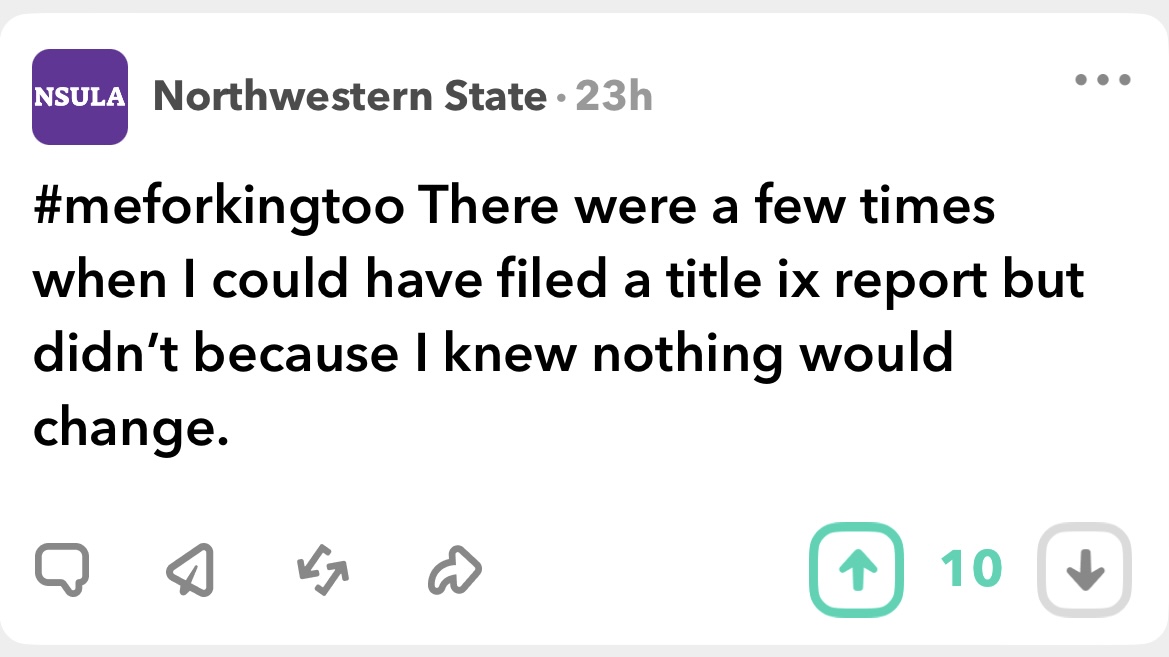
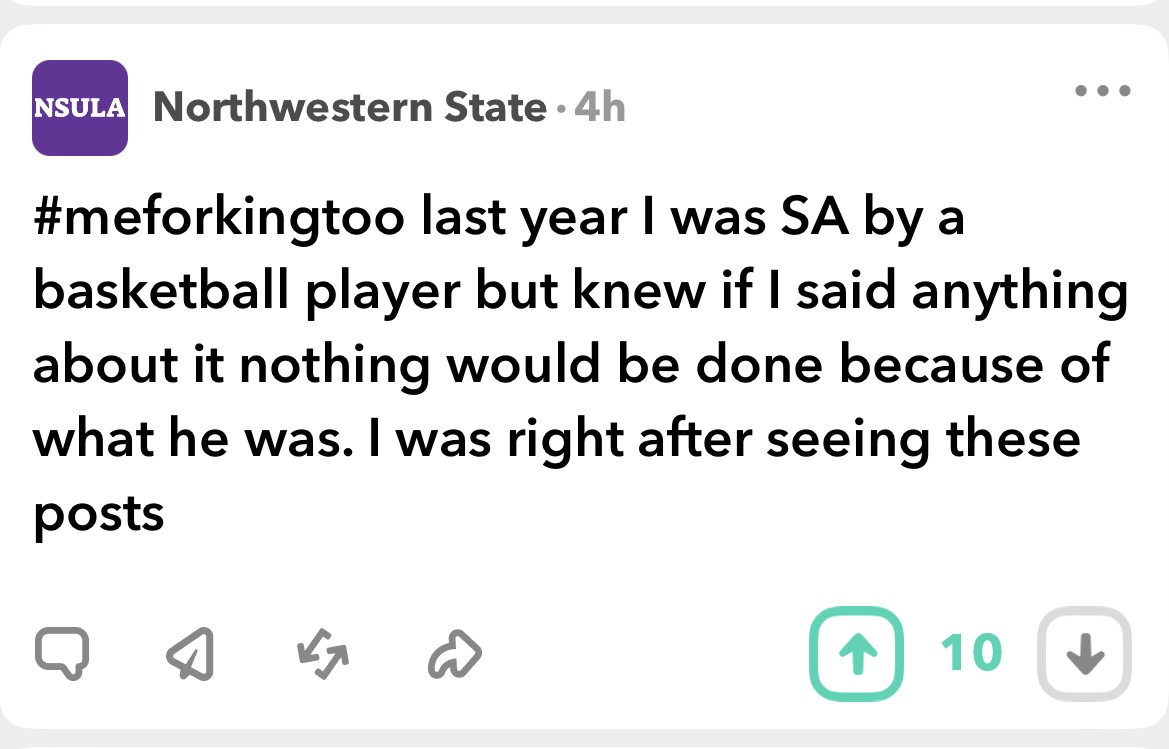
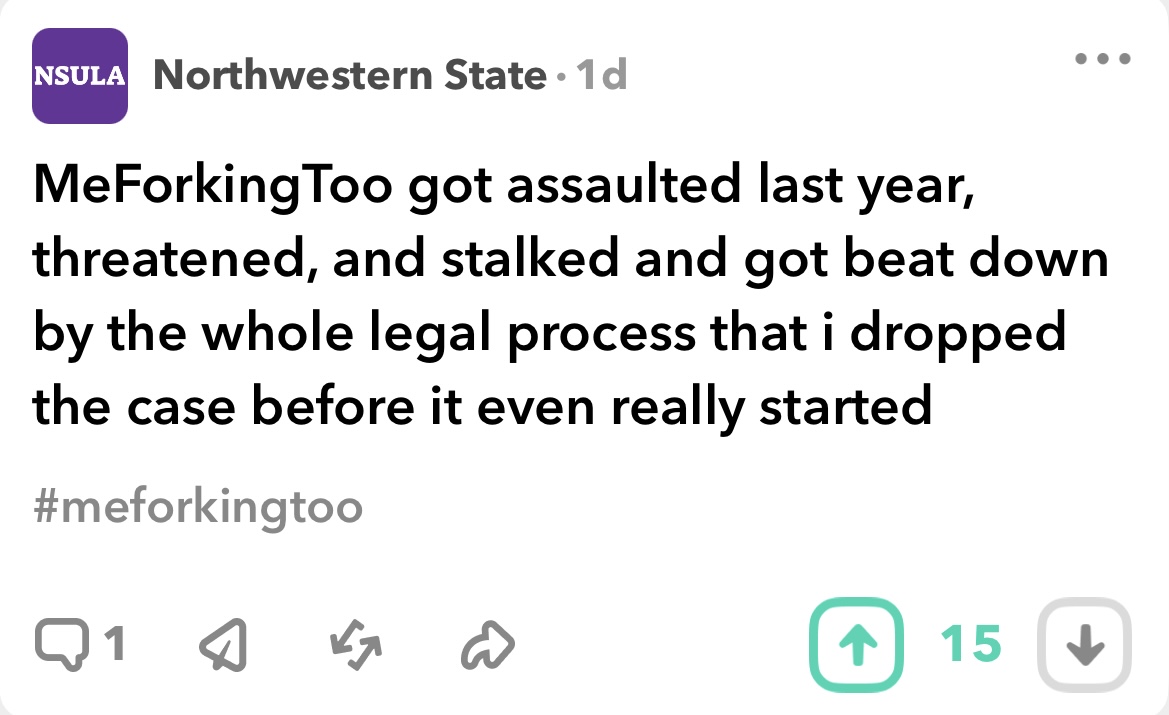
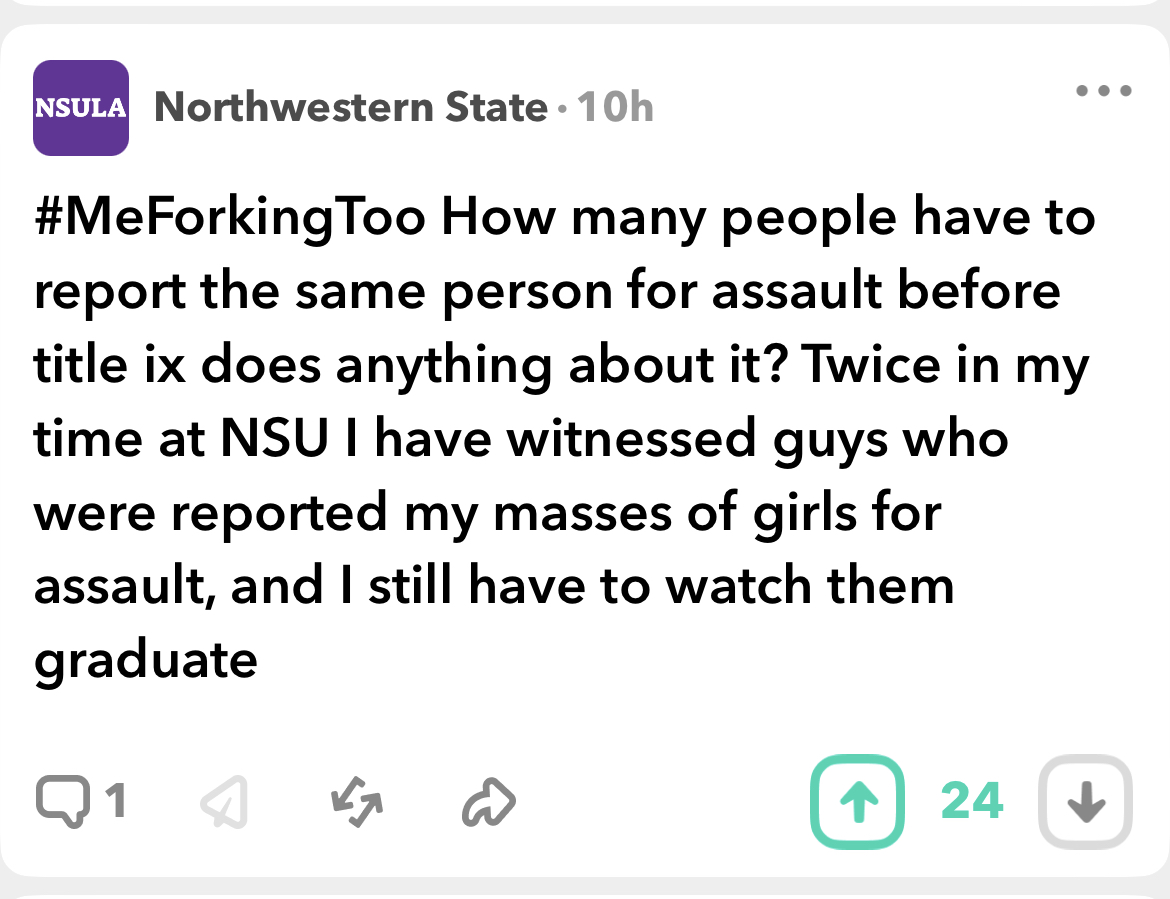
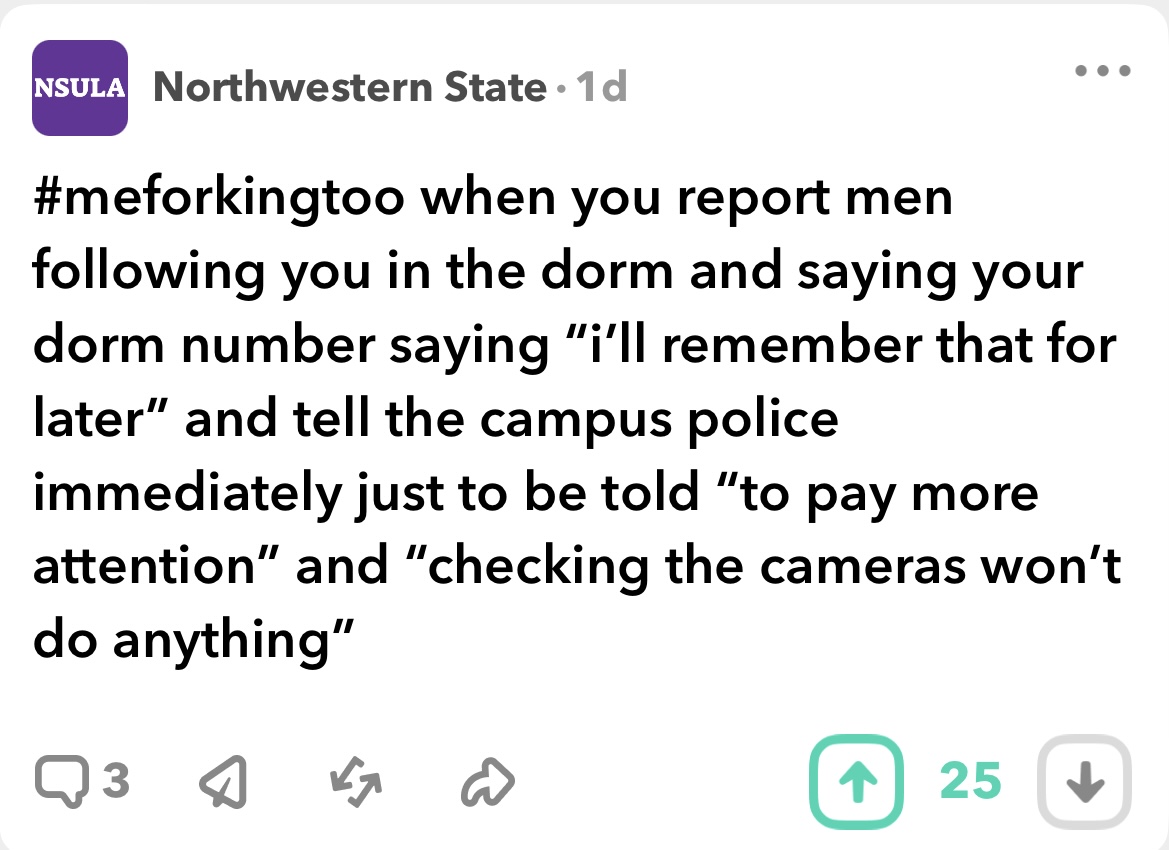
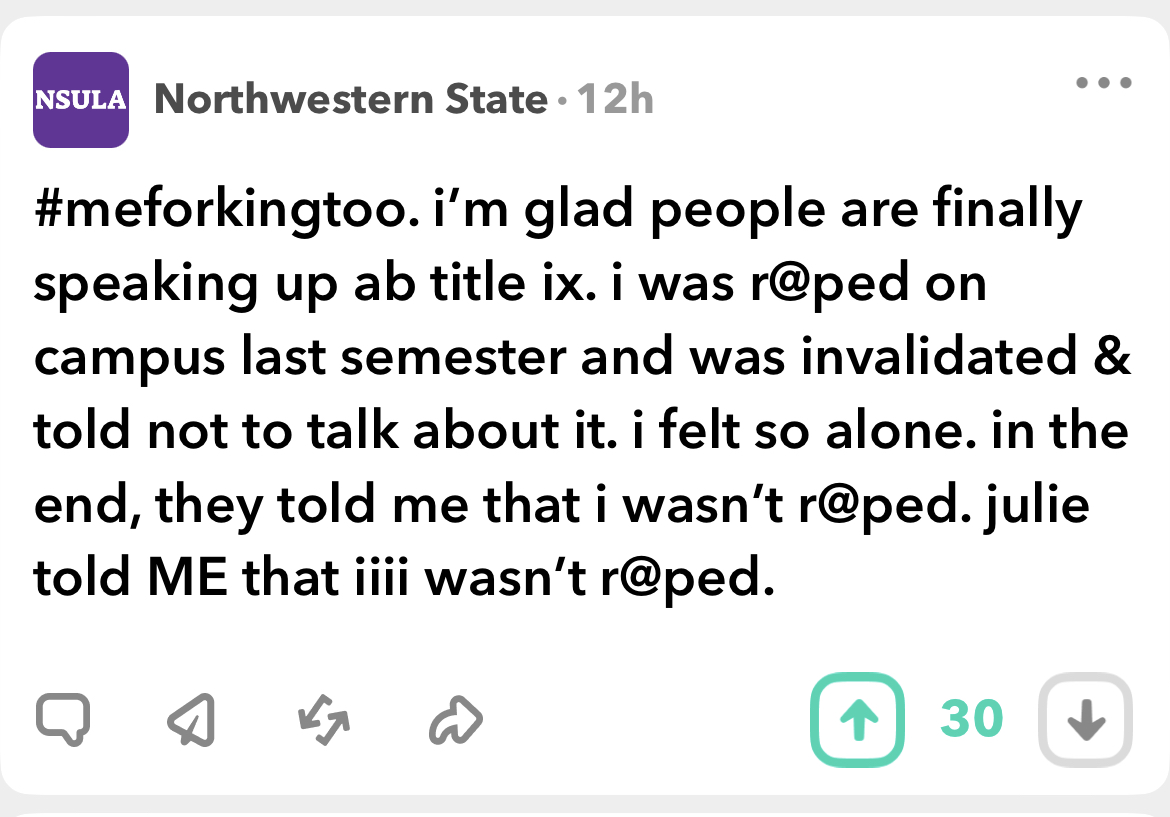
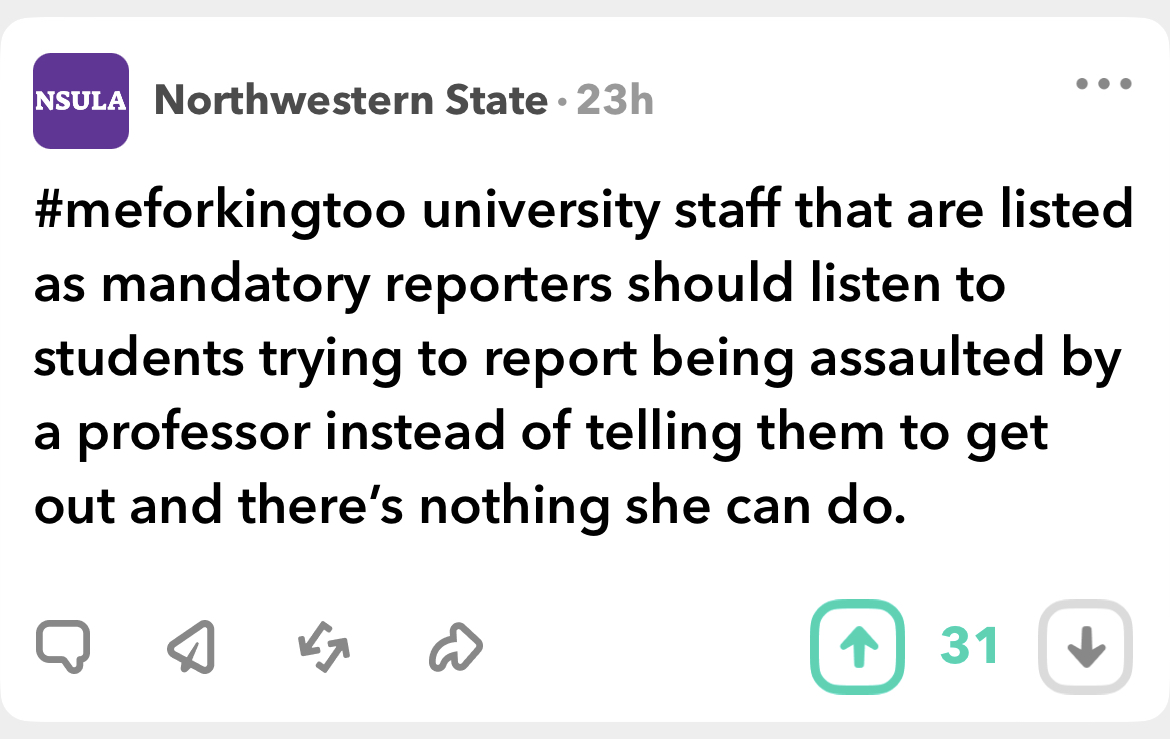
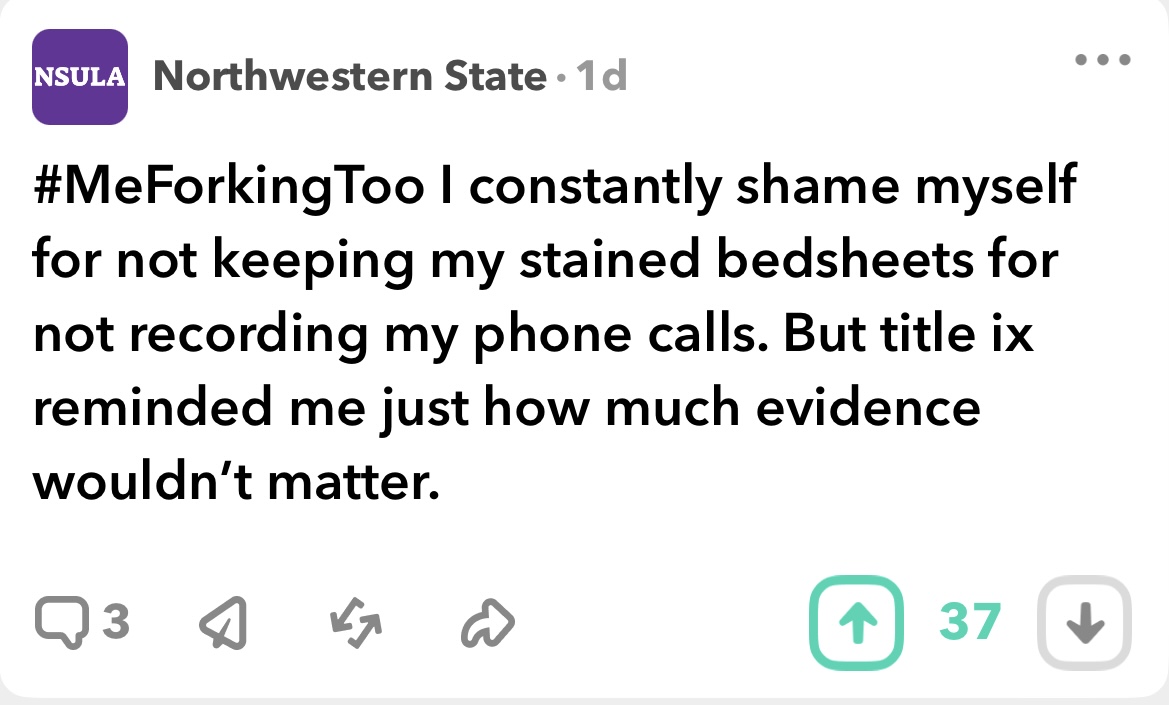
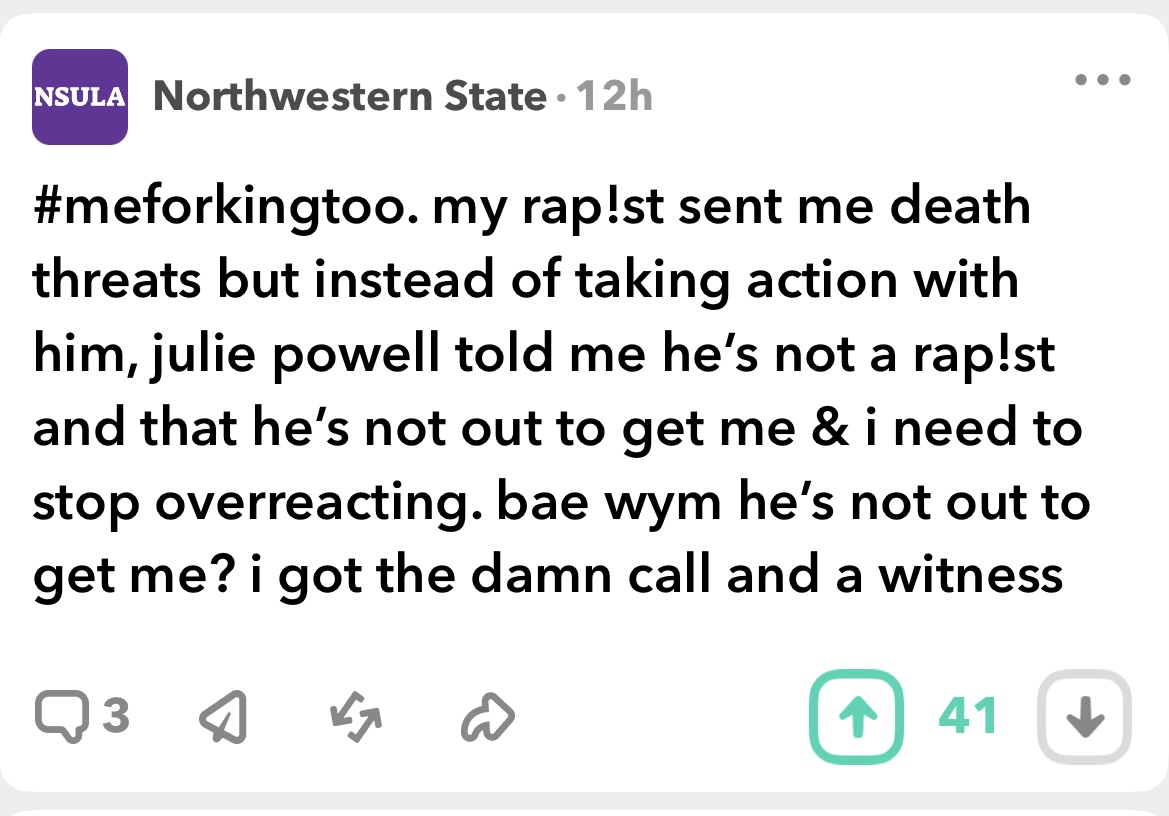
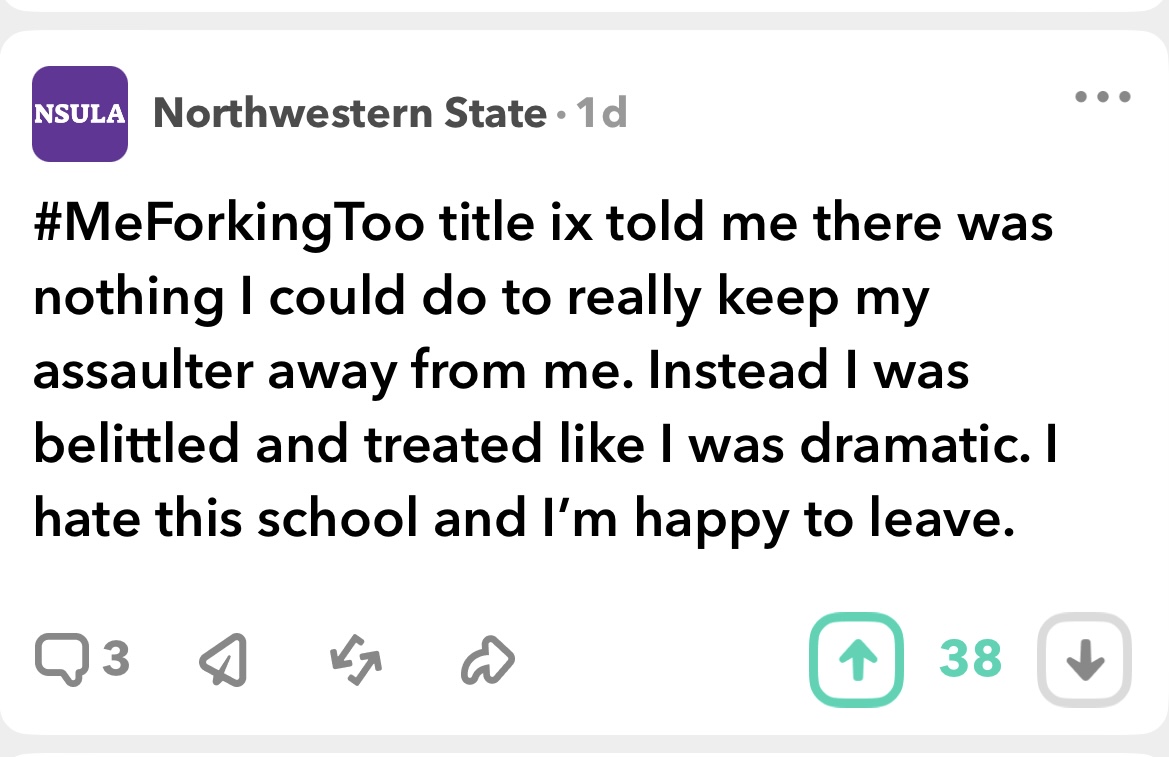
Title IX went through major changes on a national level in 2020. Many schools, including Northwestern State University, struggled to adhere to those changes while still supporting survivors of sexual assault and harassment and power based violence. We’ve heard from many survivors on our campus this past week, and we’ve compiled a list of ways that NSU can improve:
- Implementing support groups on campus for survivors of sexual assault. No matter when or how an assault happened, the impacts of sexual assault can get in the way of students receiving a fair and equitable education, forming social connections, and being active members of our community if they are not met with adequate support while healing from the trauma.
- Hiring a student rights advocate to work within the Title IX and Student Conduct offices. One of the biggest concerns we’ve heard from survivors that have attempted or have gone through with the formal process in Title IX cases are that the process is not being thoroughly explained to them and that they are not given clarity about what they can and cannot say to third parties. A student rights advocate would also function to ensure that survivors are being given access to all the resources that they need to continue their education.
- A “situational” clause with the Office of Accessibility and Disability so students going through extenuating circumstances can receive academic support. If a survivor has no prior mental or physical health diagnosis, they are not eligible for the academic support that they might need in order to continue their education until they receive a diagnosis that qualifies them. The process of diagnosing the anxiety, depression, or PTSD that might follow an assault can take months. And if a survivor is met with adequate supportive measures on multiple levels, the more extreme mental and physical health effects of an assault are less likely to be long-lasting.
And when it comes to the Title IX process:
- We want trauma-informed employees working on Title IX cases; that’s anyone from the school advisors, to the investigators, to the hearing board chairman, to the Title IX coordinator. If an employee is ignorant to the lasting effects of trauma and how it looks different for everyone, they should not be working on a case surrounding a trauma.
- Stop. Silencing. Students. Telling students that they cannot talk about their case to anybody goes against not only school policy but also that student’s first amendment rights. Not only that, but the blanket statement “don’t talk about the case with anyone” without clarification on what a student can and cannot say without violating confidentiality agreements or FERPA further isolates survivors who, after enduring a trauma that should have never happened to them in the first place, are now going through a long, exhausting, and retraumatizing process and are in need support from their friends and families. It’s hard to receive that support when they are scared of saying something they aren’t supposed to say and are worried about facing punitive action from the school for doing such.
- Stop. Dismissing. Students. If an action against a student is pervasive enough for them to be in your office, reporting the conduct to you, then the action against that student is pervasive enough for a formal Title IX investigation. If a student is concerned about the violation of a no-contact or no-retaliation order, your job is to fully investigate the issue and ensure that the no-contact order is being upheld. If you can’t do that, then students might as well start getting restraining orders instead. (Note: dismissing students also includes that stupid dining hall analogy that’s used anytime a student raises a concern about their no-contact order. Survivors aren’t stupid, stop treating them as such.)
AND FROM EVERYONE:
GET MORE CAMERAS THAT WORK.


The Issue
Title IX went through major changes on a national level in 2020. Many schools, including Northwestern State University, struggled to adhere to those changes while still supporting survivors of sexual assault and harassment and power based violence. We’ve heard from many survivors on our campus this past week, and we’ve compiled a list of ways that NSU can improve:
- Implementing support groups on campus for survivors of sexual assault. No matter when or how an assault happened, the impacts of sexual assault can get in the way of students receiving a fair and equitable education, forming social connections, and being active members of our community if they are not met with adequate support while healing from the trauma.
- Hiring a student rights advocate to work within the Title IX and Student Conduct offices. One of the biggest concerns we’ve heard from survivors that have attempted or have gone through with the formal process in Title IX cases are that the process is not being thoroughly explained to them and that they are not given clarity about what they can and cannot say to third parties. A student rights advocate would also function to ensure that survivors are being given access to all the resources that they need to continue their education.
- A “situational” clause with the Office of Accessibility and Disability so students going through extenuating circumstances can receive academic support. If a survivor has no prior mental or physical health diagnosis, they are not eligible for the academic support that they might need in order to continue their education until they receive a diagnosis that qualifies them. The process of diagnosing the anxiety, depression, or PTSD that might follow an assault can take months. And if a survivor is met with adequate supportive measures on multiple levels, the more extreme mental and physical health effects of an assault are less likely to be long-lasting.
And when it comes to the Title IX process:
- We want trauma-informed employees working on Title IX cases; that’s anyone from the school advisors, to the investigators, to the hearing board chairman, to the Title IX coordinator. If an employee is ignorant to the lasting effects of trauma and how it looks different for everyone, they should not be working on a case surrounding a trauma.
- Stop. Silencing. Students. Telling students that they cannot talk about their case to anybody goes against not only school policy but also that student’s first amendment rights. Not only that, but the blanket statement “don’t talk about the case with anyone” without clarification on what a student can and cannot say without violating confidentiality agreements or FERPA further isolates survivors who, after enduring a trauma that should have never happened to them in the first place, are now going through a long, exhausting, and retraumatizing process and are in need support from their friends and families. It’s hard to receive that support when they are scared of saying something they aren’t supposed to say and are worried about facing punitive action from the school for doing such.
- Stop. Dismissing. Students. If an action against a student is pervasive enough for them to be in your office, reporting the conduct to you, then the action against that student is pervasive enough for a formal Title IX investigation. If a student is concerned about the violation of a no-contact or no-retaliation order, your job is to fully investigate the issue and ensure that the no-contact order is being upheld. If you can’t do that, then students might as well start getting restraining orders instead. (Note: dismissing students also includes that stupid dining hall analogy that’s used anytime a student raises a concern about their no-contact order. Survivors aren’t stupid, stop treating them as such.)
AND FROM EVERYONE:
GET MORE CAMERAS THAT WORK.
Petition Closed
Share this petition
Petition Updates
Share this petition
Petition created on April 24, 2023