Message aux signatairesSecretive and Harmful Sums Up the CDC Lyme Corps Program
The Presidential Race, Lyme and the CDC (update 11)

Jenna Luche-ThayerRoan Mountain, TN, États-Unis
28 mars 2016
Greetings from Jenna,
During the course of the 2016 presidential primaries, a number of compelling issues have moved onto the political platforms. Among these, the heroin epidemic and the Flint MI water scandal are topping the health agenda. These tragedies are rightly worthy of the attention and problem-solving efforts of all serious presidential candidates and the political parties.
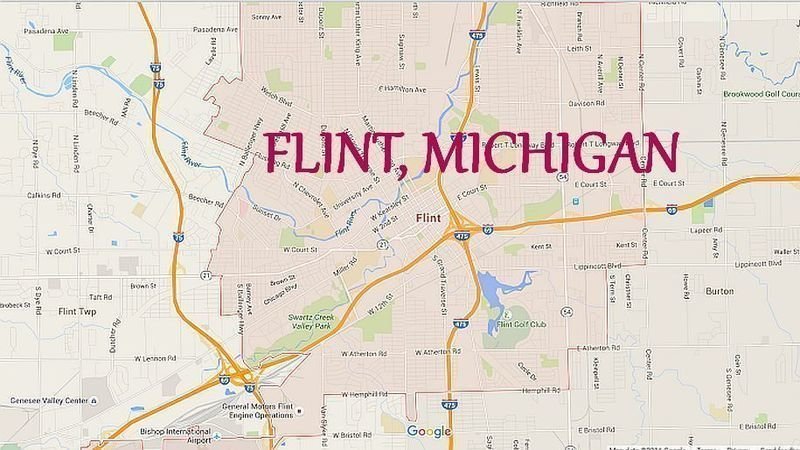
The Flint MI scandal, where children and adults have been lead poisoned by water infrastructure, is a compelling and live study on the harm caused by less than accountable government institutions. The National Public Radio’s March 23, 2016 article “Independent Investigators: State Officials Mostly To Blame for Flint Water Crisis” (Merrit Kennedy) presents a clear analysis on how state government failed the Flint community. [Ref1]
According to this article, the final report by an independent task force on the Flint lead-poisoning tragedy concluded that certain state agencies and Governor Rick Snyder are at the center of the crisis. They reported that primary responsibility lies with the Michigan Department of Environmental Quality, a state environmental agency. Their failure was supported the Michigan Department of Health and Human Services’ incompetent data analysis. State-appointed emergency managers were responsible for the switch to the less expensive and inadequately treated water sources. The slow response by the federal EPA is questioned as well.
However, there is one federal agency that has received little mention with regards to the Flint tragedy. This phantom agency is the CDC.
The CDC has a National Center for Environmental Health (NCEH). [Ref 2] The CDC/NCEH is charged with “national leadership in prevention programs, global health, tests, and services”, provides the related “standards, guidelines, and recommendations” and the “training and technical assistance of officials of state, local, and tribal environmental health agencies in preventing and responding to environmental public health challenges”.
For example, the Florida Environmental Public Health Tracking program works in partnership with the Florida Department of Health and the CDC/NCEH “to track diseases that may be related to environmental exposures.” CDC/NCEH has collaborated with the Florida Department of Health to gather data sets on environmental hazards - such as lead and arsenic - and associated health outcomes. [Ref 3] The scope of the arsenic-ground water issue in Florida is significant and linked to clusters of pancreatic cancers. However, the success of this collaboration remain open to interpretation. [Ref 4] [Ref 5]
The CDC/NCEH website states that it partners with all state, local, and tribal health departments. As noted, incompetent data analysis by the Michigan Department of Health and Human Services contributed to government’s untimely response to Flint’s public health threat.
What responsibility does the CDC/NCEH have in the case of Flint? As in Florida, has the CDC/NCEH has collaborated with the Michigan Department of Health and Human Services to gather data sets on environmental hazards - such as lead - and associated health outcomes? What “standards, guidelines, and recommendations” has the CDC/NCEH provided the Michigan Department of Health and Human Services regarding lead? Is the analytical incompetency that helped to create this lead poisoning tragedy a result of CDC/NCEH training or technical support? What role will the CDC/NCEH play in addressing the current crisis? Will it include data sampling and analysis training and technical support for the Michigan Department of Health and Human Services?
Certain CDC programs might provide insight related to these questions. For example, the CDC response to the Lyme epidemic is rolling out in much the same manner as the CDC/NCEH leadership model. The CDC Lyme response includes nationwide “training and technical assistance of officials of state, local, and tribal environmental health agencies” and the dissemination of “standards, guidelines, and recommendations.” The CDC provides state level training for Lyme surveillance and data analysis for Lyme infection rates.
The CDC is supporting a national public health program called Lyme Corps. The Lyme Corps program is training university students in the fields of health and in turn these students are “training” health provider centers and the public about Lyme. Lyme Corps is promoting the Infectious Disease Society of America’s (IDSA) Lyme Guidelines even though these guidelines have been removed from the National Guidelines Clearinghouse (NGC). These outdated guidelines do not meet current NGC criteria nor comply with the Health and Medicine Division (HMD – formerly Institute of Medicine) Standards for Developing Trustworthy Clinical Practice Guidelines and the Grading of Recommendations Assessment, Development and Evaluation (GRADE) Working Group standard.
The IDSA guidelines are keeping many thousands of Lyme patients from being diagnosed and accessing sufficient and quality treatment. Based on CDC numbers for the USA, annual Lyme infections break down to 900 - 1,000 new infections per day or 40 new infections per hour. [Ref 6] Those who are able to access Lyme diagnostic testing face a 50 percent chance of inaccurate results. [Ref 7] Inaccurate false negative test results often lead to delayed diagnosis and full systemic complications. These may include serious heart, nervous system and immune impairments, dysfunction and life-altering damage. According to the IDSA and CDC, patients suffering Stage III Lyme complications should be cleared of systemic infection with 21 to 28 days of antibiotics. Many such patients remain significantly compromised after the short course of antibiotics and are denied additional treatment by the majority of medical professionals who are trained to follow CDC/IDSA Lyme Guidelines.
In the case of the CDC Lyme response, the promotion of subpar guidelines via Lyme Corps may be driven by the fact that CDC/Director of Office of Infectious Diseases, the CDC/Director of the National Center for Emerging and Zoonotic Infectious Diseases and the CDC/Director for the Division of Vector-Borne Diseases are in an unbroken chain of command and all three are members of the IDSA.
It remains unverified as to whether the CDC played a significant role in the Flint tragedy. It is verified that the CDC promotes comprehensive outdated and subpar Lyme guidelines via their training in Lyme Corps.
The infrastructure and governance failures in the Flint crisis are now being discussed as regional and national issues. [Ref 8] In a similar vein, the Lyme epidemic is widely recognized as an expanding national health threat, rather than a hazard for those living and visiting the nation’s northeast.
In closing, I say the Lyme epidemic merits attention and discussion on the platforms of the presidential race. Like the Flint tragedy, the Lyme epidemic highlights the nationwide dysfunctions of public institutions at the federal, state and local level. Like Flint, many of those affected are children. Like Flint, much devastation and suffering can be reduced or prevented if our public institutions and elected officials fulfill their duty.
Thanks - Jenna
[Ref 1] http://www.npr.org/sections/thetwo-way/2016/03/23/471585633/independent-investigators-state-officials-mostly-to-blame-for-flint-water-crisis
[Ref 2] http://www.cdc.gov/nceh/
[Ref 3] http://www.floridatracking.com/HealthTrackFL/default.aspx
[Ref 4] http://www.floridahealth.gov/environmental-health/private-well-testing/_documents/arsenic_well_water_facts_2015.pdf
[Ref 5] http://www.ncbi.nlm.nih.gov/pubmed/23510413 BMC Cancer. 2013 Mar 12;13:111. doi: 10.1186/1471-2407-13-111. Pancreatic cancer clusters and arsenic-contaminated drinking water wells in Florida. Liu-Mares, Mackinnon JA, Sherman R, Fleming LE, Rocha-Lima C, Hu JJ, Lee DJ. “Spatial modeling identified 16 clusters in which 22.6% of all pancreatic cancer cases were located. Cases living within 1 mile of known arsenic-contaminated wells were significantly more likely to be diagnosed within a cluster of pancreatic cancers relative to cases living more than 3 miles from known sites.”
[Ref 6] The CDC number of estimated annual Lyme infections does not take into account the anticipated increases in infections that correlate with recent CDC findings that Lyme is now in every other county in the USA.
[Ref 7] The two-tiered Lyme test system misses roughly 54% of patients. (Stricker Minerva 2010)
[Ref 8] There are many sources supporting this information including http://www.dailyherald.com/article/20160327/news/160329070/
In light of Flint water crisis, is there lead in our supply? By Jake Griffin 3.28.2016
Copier le lien
Facebook
WhatsApp
X
E-mail