
Dear Friends,
On Sunday, 21 May 2023, I attended a forum, Be Informed: What is the Voice to Parliament?
It was organized by the Canberra Multicultural Community Forum (CMCF) and the keynote speaker was Professor Tom Calma, AO.
The forum also included a panel discussion led by Professor Tom Calma, Katrina Fanning, and Paul Collis.
The keynote address and the panel discussion attracted many questions which were answered by the three speakers. The most common question put to the panelists was about the lack of detail about the ‘Voice.’
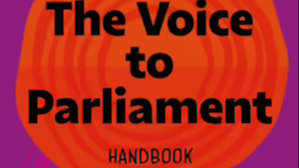
I have just finished reading The Voice to Parliament: Handbook (Hardie Grant, 2023), written by Thomas Mayo and Kerry O’Brien. The book is illustrated by Cathy Wilcox’s brilliant cartoons.
The book gives answers to all the questions commonly asked about the ‘Voice’.
It has a brief chapter How the Voice can help to close the gap, written by Professor Fiona Stanley and Professor Marcia Langton.
In the chapter What the Voice means to me, Thomas Mayo writes about his conversations with children about his book Finding Our Heart: A Story about the Uluru Statement for Young Australians. During his conversation, Mayo writes, he 'invites children to write and draw a response to the Uluru Statement’s invitation to recognize Indigenous peoples with a Voice to Parliament.'
These are the two responses he cites in the book:
“Dear Aboriginal people, if I could vote yes, I would. Your voices are important to finding the heart of our country so it can be better again (Peter, Launceston, page 2).”
“Dear Prime Minister, saying Yes to a Voice is a fair thing to do. When I am going to play a game with my friends, it is fair that we make the rules together before we play so we are all happy. Please listen to Aboriginal people (Sophie, Canberra, page 2).”
Thank you Peter and Sophie I say after reading their words, and thank you Thomas Mayo for talking to them.
In the chapter, The history of struggle for an effective voice, Kerry O’Brien quotes words from Paul Keating’s famous Redfern Park Speech of December 1992. Most of us know the words but here they are again because it is hard not to be moved by them:
“The starting point might be to recognize that the problem starts with us non-Aboriginal Australians. It begins, I think, with that of recognition. Recognition that it was we who did the dispossessing. We took the traditional lands and smashed the traditional way of life. We brought the diseases. The alcohol. We committed the murders. We took the children from their mothers. We practiced discrimination and exclusion. It was our ignorance and our prejudice. And our failure to imagine these things being done to us (page 34).”
The referendum gives us a chance to redeem our pride, our dignity, our humanity.
Thank you once again for your support and your comments. Please spread the word about this wonderful little book.
With best wishes to you all,
Subhash