Landlords can legally evict tenants in B.C. with 10-Day Notice

The response to this “auto-evict” petition has been phenomenal with an average 2,500 signatures per day, and about 17,500 signatures in the six days since its introduction. Clearly, the top-of-mind issue for rental housing providers is repossession of their property when a tenant hasn’t paid the rent.
The legislation that our “auto-evict” petition is demanding at Ontario’s Landlord and Tenant Board (“LTB”) already exists in Canada. It’s been thoroughly thought through and tested in balancing the rights of housing providers and tenants. It also permits security and pet damage deposits.
The governments of Ontario and British Columbia (BC) often exchange programs and tax schemes. However, the two governments couldn’t be further apart when it comes to residential tenancy legislation, policies and procedures.
Under Section 46 of BC’s Residential Tenancy Act, a housing provider can evict a tenant with a 10-Day Notice to End Tenancy if the rent is unpaid, even by a few dollars.
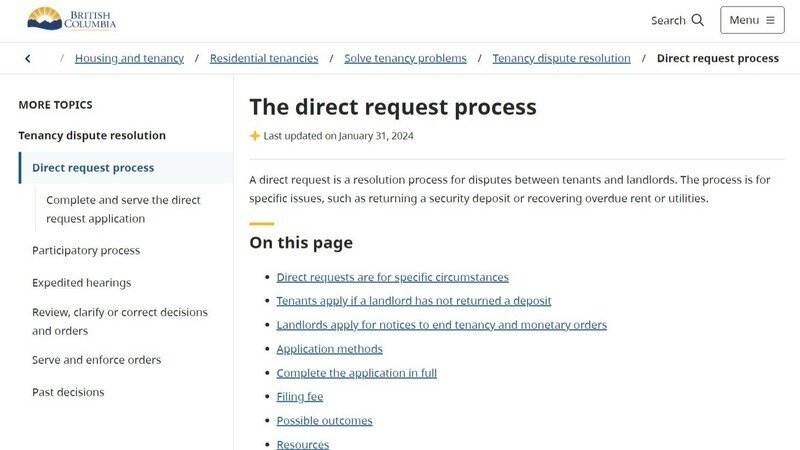
According to the Government of BC website (last updated 2024 01 31):
The following text is extracted verbatim from the website:
- “Landlords can legally evict tenants with 10 Day Notice to End Tenancy … if rent is unpaid.
- “If your tenant is late paying by even one day, or the rent is short by any amount of money, the landlord has the right to serve them with a 10 day eviction notice for non-payment of rent.”
- “Tenants have 5 days to dispute their eviction and apply for dispute resolution after receiving a 10 day notice … If your tenant has not paid the overdue amount or disputed the notice within 5 days, you can apply for a direct request for one or all of the following:
- An order of possession
- A monetary order for unpaid rent and/or utilities
- A monetary order for the tenant to pay the filing fee
- “If a tenant does not pay the rent or apply for dispute resolution, the landlord can use the Direct request process to request an Order of Possession without participating in a dispute resolution hearing (emphases by me)
- “A direct request is a resolution process for disputes between tenants and landlords … such as returning a security deposit or recovering overdue rent or utilities.
- “The adjudicator relies only on the applicant's written submission. Direct requests have no hearing to attend and verbal testimony is not included. (emphasis by me)
- “A tenant or landlord submits the applicable application form and evidence to the Residential Tenancy Branch (RTB). An adjudicator reviews the written evidence, makes a decision and sends the decision to both parties. (emphasis by me)
- “You must print or pick it up and serve the package to the other party no more than 3 days after it is ready.
- “If the orders are served and the other party does not comply, you may enforce the order through the court system.
- Garnishment
- Seizure and sale of assets
- Registration against land
Tenants and landlords can apply online, or in person with a paper application.
The court fee to apply for a direct request is $100. Legal fees are roughly estimated at $800 and the sheriff fee is $150.
The BC website cited earlier above also provides the following resources:
- Tenant's Direct Request Policy Guideline (PDF, 170KB) - RTB Form-49
- Tenant's Direct Request Information Sheet (PDF, 130KB) - RTB Form-131
- Landlord's Direct Request Policy Guideline (PDF, 223KB) - RTB Form-39
- Landlord’s Direct Requests Information Sheet (PDF, 130KB) - RTB Form-130
- Ending a Tenancy for Renovations or Repairs (PDF, 84KB) - RTB Form-150
- Dispute Resolution Options When a Tenant Hasn't Paid Rent (PDF, 140KB)
BC’s “… Residential Tenancies Act is current to February 20, 2024.”
Separately but related, Quebec has a notably higher number of tenants per capita than Ontario. Nevertheless, Quebec’s Housing Minister, France-Élaine Duranceau stood firm in defending Quebec’s Bill 31, which allows landlords to reject a lease transfer for any reason, unlike previously when only serious concerns about a prospective tenant could justify a rejection (as it is now in Ontario): “This story of lease assignment or shopping between tenants is an obstacle to the property rights of property owners … the landlord owns the building, they invested in it and took the risks, and it should be up to them to decide who lives there.” (emphasis by me)
SUMMARY
The legislation, policies, procedures and “what-if” scenarios related to our “auto-evict” petition have already been worked out and addressed. The time frame to implement the demand in our petition at the LTB can be extremely quick and there would be no legitimate reason for the Ontario government to delay such an implementation.