

𝗪𝗘 𝗔𝗥𝗘 𝗕𝗘𝗜𝗡𝗚 𝗚𝗢𝗩𝗘𝗥𝗡𝗘𝗗 𝗕𝗬 𝗔 𝗗𝗢𝗖𝗨𝗠𝗘𝗡𝗧 𝗢𝗟𝗗𝗘𝗥 THAN US.
𝗪𝗘 𝗔𝗥𝗘 𝗕𝗘𝗜𝗡𝗚 𝗚𝗢𝗩𝗘𝗥𝗡𝗘𝗗 𝗕𝗬 𝗔 𝗗𝗢𝗖𝗨𝗠𝗘𝗡𝗧 𝗢𝗟𝗗𝗘𝗥 THAN US.
The Issue
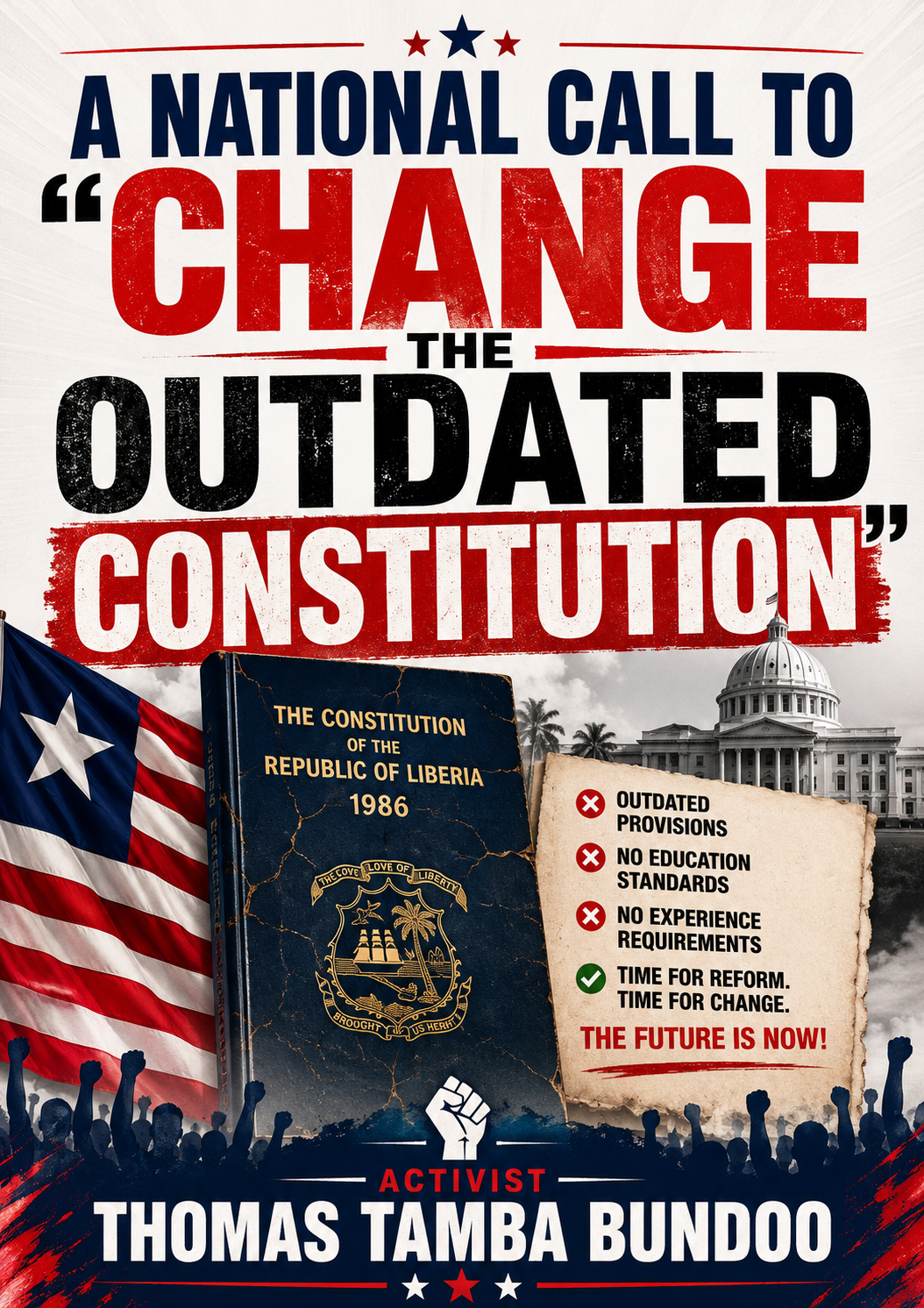
𝗪𝗘 𝗔𝗥𝗘 𝗕𝗘𝗜𝗡𝗚 𝗚𝗢𝗩𝗘𝗥𝗡𝗘𝗗 𝗕𝗬 𝗔 𝗗𝗢𝗖𝗨𝗠𝗘𝗡𝗧 𝗢𝗟𝗗𝗘𝗥 𝗧𝗛𝗔𝗡 𝗧𝗛𝗘 𝗠𝗔𝗝𝗢𝗥𝗜𝗧𝗬 𝗢𝗙 𝗧𝗛𝗘 𝗖𝗜𝗧𝗜𝗭𝗘𝗡𝗦
By Thomas Tamba Bundoo
Activist
This year, 2026, marks exactly 40 years since the adoption of the 1986 Constitution of the Republic of Liberia — the document that continues to govern every aspect of our national existence. That Constitution ushered Liberia into the Second Republic following the era of military rule under the People’s Redemption Council (PRC) led by Master Sergeant Samuel Kanyon Doe.
Since 1986, there has been no major constitutional overhaul despite the dramatic transformation of Liberia and the world over the last four decades. What many people fail to recognize is that the Constitution was crafted during a period heavily influenced by military authority and political convenience. Samuel Doe appointed both the Constitution Drafting Commission and the Constitutional Advisory Assembly at a time when existing constitutional requirements regarding age, education, and democratic legitimacy could have disqualified him from contesting for the presidency.
Doe became Liberia’s military leader in 1980 at the age of 28, and by the 1985 elections he was only about 34 years old. Yet the political atmosphere of the time ensured that power prevailed over principle.
Today, the irony is undeniable: the majority of Liberians are being governed by a Constitution that is older than they are.
Liberia has one of the youngest populations in the world. Current demographic estimates place the country’s median age at approximately 19 years. This means half of the population is below 19 years old. Additionally:
• Nearly 40% of Liberians are between ages 0–14
• About 57% fall between ages 15–64
• Only around 3% are 65 years and above
These figures clearly show that the overwhelming majority of Liberians were not even born when this Constitution was written.
Beyond the age factor, the Constitution no longer adequately reflects modern realities. The world has evolved politically, technologically, economically, and educationally, yet many provisions in our Constitution remain outdated or completely silent on critical national issues.
How can a 21st-century Constitution remain silent on education standards for national leadership?
How can the President of a modern republic not be constitutionally required to possess at least a basic formal education?
How can lawmakers who draft laws, ratify international treaties, approve national budgets, and make decisions affecting millions of people face no meaningful constitutional requirement regarding education, competence, or experience?
How can public officials still maintain influence over increasing their own salaries while ordinary citizens struggle daily for survival?
These are not attacks on individuals; they are legitimate national questions about governance, accountability, and the future of Liberia.
Constitutions are living documents. They must evolve with the people they govern. A Constitution written under the political realities of 1986 cannot permanently remain untouched while Liberia in 2026 faces entirely different challenges and expectations.
Constitutional reform is no longer optional; it is a national necessity.
We must rise as a people, engage these issues seriously, and demand a Constitution that reflects the aspirations, realities, and future of modern Liberia.
If we refuse to reform what is clearly outdated, history will judge us not for what we inherited, but for what we failed to change.

6
The Issue
𝗪𝗘 𝗔𝗥𝗘 𝗕𝗘𝗜𝗡𝗚 𝗚𝗢𝗩𝗘𝗥𝗡𝗘𝗗 𝗕𝗬 𝗔 𝗗𝗢𝗖𝗨𝗠𝗘𝗡𝗧 𝗢𝗟𝗗𝗘𝗥 𝗧𝗛𝗔𝗡 𝗧𝗛𝗘 𝗠𝗔𝗝𝗢𝗥𝗜𝗧𝗬 𝗢𝗙 𝗧𝗛𝗘 𝗖𝗜𝗧𝗜𝗭𝗘𝗡𝗦
By Thomas Tamba Bundoo
Activist
This year, 2026, marks exactly 40 years since the adoption of the 1986 Constitution of the Republic of Liberia — the document that continues to govern every aspect of our national existence. That Constitution ushered Liberia into the Second Republic following the era of military rule under the People’s Redemption Council (PRC) led by Master Sergeant Samuel Kanyon Doe.
Since 1986, there has been no major constitutional overhaul despite the dramatic transformation of Liberia and the world over the last four decades. What many people fail to recognize is that the Constitution was crafted during a period heavily influenced by military authority and political convenience. Samuel Doe appointed both the Constitution Drafting Commission and the Constitutional Advisory Assembly at a time when existing constitutional requirements regarding age, education, and democratic legitimacy could have disqualified him from contesting for the presidency.
Doe became Liberia’s military leader in 1980 at the age of 28, and by the 1985 elections he was only about 34 years old. Yet the political atmosphere of the time ensured that power prevailed over principle.
Today, the irony is undeniable: the majority of Liberians are being governed by a Constitution that is older than they are.
Liberia has one of the youngest populations in the world. Current demographic estimates place the country’s median age at approximately 19 years. This means half of the population is below 19 years old. Additionally:
• Nearly 40% of Liberians are between ages 0–14
• About 57% fall between ages 15–64
• Only around 3% are 65 years and above
These figures clearly show that the overwhelming majority of Liberians were not even born when this Constitution was written.
Beyond the age factor, the Constitution no longer adequately reflects modern realities. The world has evolved politically, technologically, economically, and educationally, yet many provisions in our Constitution remain outdated or completely silent on critical national issues.
How can a 21st-century Constitution remain silent on education standards for national leadership?
How can the President of a modern republic not be constitutionally required to possess at least a basic formal education?
How can lawmakers who draft laws, ratify international treaties, approve national budgets, and make decisions affecting millions of people face no meaningful constitutional requirement regarding education, competence, or experience?
How can public officials still maintain influence over increasing their own salaries while ordinary citizens struggle daily for survival?
These are not attacks on individuals; they are legitimate national questions about governance, accountability, and the future of Liberia.
Constitutions are living documents. They must evolve with the people they govern. A Constitution written under the political realities of 1986 cannot permanently remain untouched while Liberia in 2026 faces entirely different challenges and expectations.
Constitutional reform is no longer optional; it is a national necessity.
We must rise as a people, engage these issues seriously, and demand a Constitution that reflects the aspirations, realities, and future of modern Liberia.
If we refuse to reform what is clearly outdated, history will judge us not for what we inherited, but for what we failed to change.
6
Petition Updates
Share this petition
Petition created on 18 May 2026