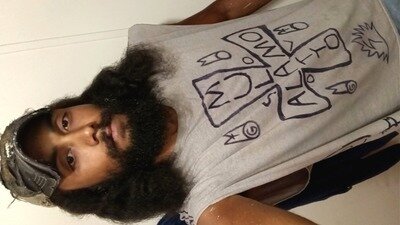

Urge Dallas to recognize 'Mulatto' in demographic data
The Issue
Being a 7th-Generation Texan and an 8th-Generation Mulatto, I have experienced firsthand what it means to carry a deeply rooted mixed heritage while belonging to an identity that is often left unrecognized in modern demographic classifications.
I am Mulatto of the Marabou subtype, with ancestry results showing approximately 58% African, 40% European, 1% Indigenous Americas (Canada and the United States), and 1% Lower Central Asia, along with smaller ancestral echoes connected to the Middle East. My heritage is multifaceted, but at the center of the identity I choose to represent is my Black-and-White ancestry and my connection to the historical Mulatto identity.
I created the Mulatto Compass, a book designed to document, guide, and unite people connected to this historically complex and underrepresented identity. Historically, people of Black-and-White ancestry have been described through terms such as Griffe, Sacatra, Core, Quadroon, Octoroon, Marabou, and Tierceron. These classifications represented different forms or degrees of mixed Black-and-White ancestry, but they can also be understood as part of a broader historical identity: Mulatto.
These terms should not be viewed as a hierarchy of human worth, status, or superiority. They are historical subtypes within a broader identity, not rankings of people.
Why Recognition Matters
For generations, people of mixed Black-and-White ancestry have frequently been placed into broader racial categories that may not fully express how they understand their own heritage.
The term “Mulatto” was historically used in American census and governmental classifications, but it eventually disappeared from modern federal racial classifications. Today, someone who identifies with this historical category generally has to place themselves into other classifications that may not capture the identity they wish to express.
For me, this is not simply about checking a different box.
It is about being seen.
My ancestry crosses multiple geographic and ancestral histories, but I should still have the ability to acknowledge the particular Black-and-White heritage that connects me to the Mulatto identity.
Why Dallas?
Dallas is a city shaped by generations of people with diverse backgrounds and histories. Its communities reflect the complexity of American heritage, and demographic systems should strive to recognize that complexity where legally and administratively possible.
I am asking the Dallas City Council to explore ways that Dallas can recognize “Mulatto” as an optional self-identification or demographic category, consistent with applicable law and federal reporting requirements.
Such recognition would not require anyone to identify as Mulatto. It would not erase existing racial categories. It would simply provide an additional option for people who genuinely identify with this historical identity.
Recognition does not have to mean division. Recognition can mean visibility.
My Personal Connection
As a 7th-Generation Texan and 8th-Generation Mulatto of the Marabou subtype, this issue is deeply personal.
My connection to Texas extends back generations. My identity carries African and European ancestry, alongside Indigenous American, Lower Central Asian, and smaller Middle Eastern ancestral connections. Yet there remains no straightforward modern demographic category that allows me to express the particular Black-and-White identity that I personally identify with.
That absence can make people feel as though an important part of their history has disappeared from the public record.
I believe future generations deserve better.
They deserve to be able to learn about their ancestry without feeling that they have to erase one side of themselves to be recognized.
A Call for Recognition
I urge the Dallas City Council and relevant city agencies to consider recognizing “Mulatto” as an optional self-identification category in appropriate local demographic data, while respecting existing federal standards and the right of every individual to determine how they identify.
This petition is not about saying Mulatto people are better than Black people, White people, or anyone else.
It is not about creating a racial hierarchy.
It is not about forcing anyone to use the term.
It is about acknowledging that people of Black-and-White ancestry have their own historical experiences, family histories, cultural connections, and identities—and some of us still choose to call that identity Mulatto.
From Griffe to Sacatra, Core to Quadroon, Octoroon to Marabou and Tierceron, our histories have taken many forms.
Different subtypes. One broader historical identity.
Dallas has an opportunity to recognize that history and demonstrate that demographic inclusion can make room for people whose heritage does not fit neatly into today's conventional categories.
Our histories matter.
Our families matter.
Our voices matter.
Our identities matter.
I am an 8th-Generation Mulatto. I am of the Marabou subtype. I am a 7th-Generation Texan. And I am asking Dallas to recognize that people like me exist.
If you believe people should have the opportunity to see their heritage represented and acknowledged, sign this petition and join me in calling for greater recognition of the Mulatto identity in Dallas.
Recognition is not division. Recognition is visibility.

1
The Issue
Being a 7th-Generation Texan and an 8th-Generation Mulatto, I have experienced firsthand what it means to carry a deeply rooted mixed heritage while belonging to an identity that is often left unrecognized in modern demographic classifications.
I am Mulatto of the Marabou subtype, with ancestry results showing approximately 58% African, 40% European, 1% Indigenous Americas (Canada and the United States), and 1% Lower Central Asia, along with smaller ancestral echoes connected to the Middle East. My heritage is multifaceted, but at the center of the identity I choose to represent is my Black-and-White ancestry and my connection to the historical Mulatto identity.
I created the Mulatto Compass, a book designed to document, guide, and unite people connected to this historically complex and underrepresented identity. Historically, people of Black-and-White ancestry have been described through terms such as Griffe, Sacatra, Core, Quadroon, Octoroon, Marabou, and Tierceron. These classifications represented different forms or degrees of mixed Black-and-White ancestry, but they can also be understood as part of a broader historical identity: Mulatto.
These terms should not be viewed as a hierarchy of human worth, status, or superiority. They are historical subtypes within a broader identity, not rankings of people.
Why Recognition Matters
For generations, people of mixed Black-and-White ancestry have frequently been placed into broader racial categories that may not fully express how they understand their own heritage.
The term “Mulatto” was historically used in American census and governmental classifications, but it eventually disappeared from modern federal racial classifications. Today, someone who identifies with this historical category generally has to place themselves into other classifications that may not capture the identity they wish to express.
For me, this is not simply about checking a different box.
It is about being seen.
My ancestry crosses multiple geographic and ancestral histories, but I should still have the ability to acknowledge the particular Black-and-White heritage that connects me to the Mulatto identity.
Why Dallas?
Dallas is a city shaped by generations of people with diverse backgrounds and histories. Its communities reflect the complexity of American heritage, and demographic systems should strive to recognize that complexity where legally and administratively possible.
I am asking the Dallas City Council to explore ways that Dallas can recognize “Mulatto” as an optional self-identification or demographic category, consistent with applicable law and federal reporting requirements.
Such recognition would not require anyone to identify as Mulatto. It would not erase existing racial categories. It would simply provide an additional option for people who genuinely identify with this historical identity.
Recognition does not have to mean division. Recognition can mean visibility.
My Personal Connection
As a 7th-Generation Texan and 8th-Generation Mulatto of the Marabou subtype, this issue is deeply personal.
My connection to Texas extends back generations. My identity carries African and European ancestry, alongside Indigenous American, Lower Central Asian, and smaller Middle Eastern ancestral connections. Yet there remains no straightforward modern demographic category that allows me to express the particular Black-and-White identity that I personally identify with.
That absence can make people feel as though an important part of their history has disappeared from the public record.
I believe future generations deserve better.
They deserve to be able to learn about their ancestry without feeling that they have to erase one side of themselves to be recognized.
A Call for Recognition
I urge the Dallas City Council and relevant city agencies to consider recognizing “Mulatto” as an optional self-identification category in appropriate local demographic data, while respecting existing federal standards and the right of every individual to determine how they identify.
This petition is not about saying Mulatto people are better than Black people, White people, or anyone else.
It is not about creating a racial hierarchy.
It is not about forcing anyone to use the term.
It is about acknowledging that people of Black-and-White ancestry have their own historical experiences, family histories, cultural connections, and identities—and some of us still choose to call that identity Mulatto.
From Griffe to Sacatra, Core to Quadroon, Octoroon to Marabou and Tierceron, our histories have taken many forms.
Different subtypes. One broader historical identity.
Dallas has an opportunity to recognize that history and demonstrate that demographic inclusion can make room for people whose heritage does not fit neatly into today's conventional categories.
Our histories matter.
Our families matter.
Our voices matter.
Our identities matter.
I am an 8th-Generation Mulatto. I am of the Marabou subtype. I am a 7th-Generation Texan. And I am asking Dallas to recognize that people like me exist.
If you believe people should have the opportunity to see their heritage represented and acknowledged, sign this petition and join me in calling for greater recognition of the Mulatto identity in Dallas.
Recognition is not division. Recognition is visibility.
The Decision Makers

Petition Updates
Share this petition
Petition created on October 28, 2025