
On 1 January 1914, Lord Lugard amalgamated Nigeria, but it was not of his own volition. Lugard was carrying out instructions given to him by a British legislation. Amalgamation was the proclamation of a British legislation. It was not a treaty. No Nigerian signed it.
In Britain, legislation is made in two ways.
· Legislation is made in Parliament. As a general rule, any legislation that was made in Parliament cannot be challenged in a court of law.
· Legislation is also made in the Monarch’s palace. They are called Orders in Council. Legislation made in Buckingham Palace, or any other palace, may be reviewed by a British court. Such a review is called Judicial Review.
The legislation that created the amalgamation of Nigeria was made at Windsor Castle on 22 November 1913. Only the King, and 3 others - Earl Spencer, Lord Stamfordham and Lord Emmott – were present for the legislation. The King named the legislation, The Protectorate of Nigeria Order in Council 1913. He created the 1913 Order under the Foreign Jurisdiction Act, 1890. It is that 1913 Order that we now seek to overturn in the British courts via the Judicial Review.
The questions for the review are twofold. Was the 1913 Order so unreasonable that no reasonable person, acting reasonably, could have made it? Was the decision in the 1913 Order to amalgamate Nigeria harmful to the Yoruba people?
We argue that the 1913 Order was unreasonable and harmful for the following headline reasons.
1. The decision intentionally deprived the Yoruba of their resources
2. The decision subordinated the Yoruba to others
3. The Yoruba were not consulted before the decision was made
4. The decision subverted the expressed wish of the British Parliament.
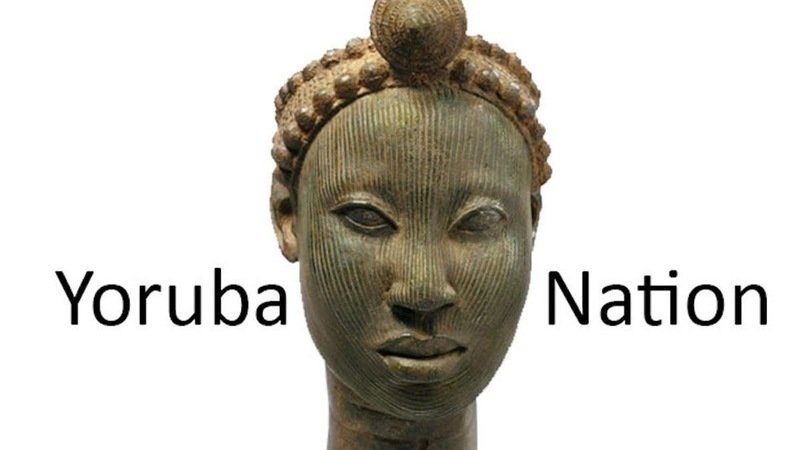
Also, the decision was ill-informed. It could not have been made otherwise. The Yoruba were a distinctive, unban-based people with an ancient civilization and a large empire that straddled over half of the coast of West Africa. The Yoruba have occupied the same territory continuously, unchallenged and uninterrupted since time immemorial. The Yoruba spoke a distinctive language and had a distinctive culture, custom and tradition. The British recognised Yorubaland as a country in its own right. In 1888, Queen Victoria, as Head of Great Britain, signed a treaty of friendship with the Alaafin of Oyo, as Head of Yorubaland.
Further, the likely outcome of the decision was both foreseeable and predictable. Peoples of diverse cultures, religions and traditions who barely knew of each other’s existence were forced together into one enormous country. Diverse peoples at different levels and stages of economic, educational, and social development were forced together into one unified centralised authority. Peoples of different indigenous ancient empires, and therefore potential antagonists, were forced together under one administration.
Under the British constitution, a legislation lives for ever unless amended or repealed. The Protectorate Of Nigeria Order 1913 is alive still. The Nigeria Independence Act 1960, the last British legislation on Nigeria, made no reference at all to the 1913 Order. The lack of reference to the Order would have been deliberate. The 1913 Order was Nigeria’s founding constitution or incorporating jurisdiction. There is no other legal instrument creating the geographical entity that we now know as Nigeria. Without the 1913 Order, there is no Nigeria. It is self-evidently an ‘entrenched constitution’ similar to England’s Magna Carta. If the 1913 Order were to be annulled, or tinkered with in any way, there would be no legal entity called Nigeria.
Please share widely. There may be Yoruba descendants out there with legal or political expertise, or with financial resources to make this a reality. A Judicial Review is expensive of intellect, time and money.
Perhaps you could also find time to subscribe to and view some of my YouTube videos.