
'In nature nothing exists alone.' - Rachel Carson, ‘Silent Spring’, Penguin Classics
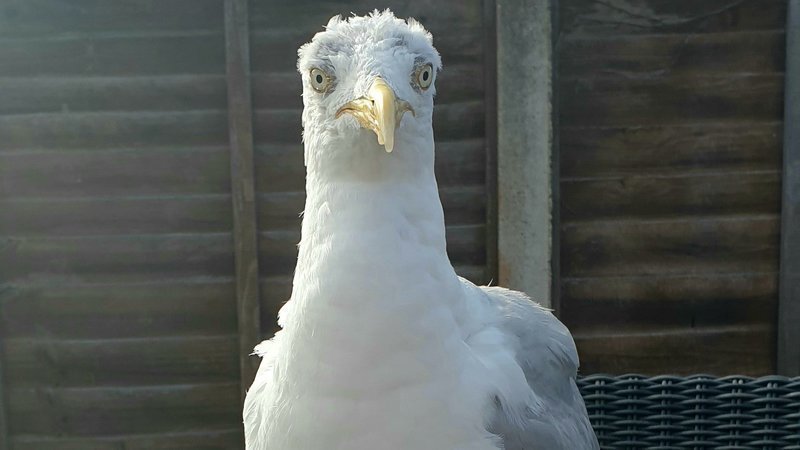
Photo of Mrs Jordache the Herring Gull kindly donated by ©Emma Nukka Jones
Say hello to Mrs Jordache, the surprised looking gull known to Emma who took this wonderful picture last year. This Herring Gull is a regular and welcome visitor to her and her partner’s garden. Mrs Jordache was having her seasonal moult at the time of the mug shot, hence the Boris ‘I just got up and don’t have a clue what I’m saying’ look. Moulting really is no Christmas party for birds. They lose a lot of feathers temporarily until their beautiful new ones fully grow back and they can feel warmer again. The great news is that Emma reported that Mrs Jordache raised a very healthy chick this year. Emma in keeping a neighbourly eye on the wily bird got to see the developing chick grow up and fledge; so Mrs Jordache has proved to be an excellent parent.
Please will you sign and share this petition for our feathered friends to reduce the use of cruel bird deterrents on buildings? Thank you.
#BanBirdNetting #NoToBirdSpikes #Biodiversity #birds #UrbanNature #SaveOurSeabirds #ClimateActionNow #Oceans #Climate
I started this petition after seeing a dead Herring Gull seemingly killed by bird deterrent spikes on a rooftop. I soon also learnt that rooftop deterrent netting was an even bigger killer. Bird species from gulls to pigeons, birds of prey, crows, swifts and swallows, are all vulnerable to being injured or killed by the netting and spikes installed on rooftops. Herring Gulls aren’t the only rooftop seabirds affected by the bird deterrents. For example Kittiwakes are affected and like Herring Gulls are red listed as of conservation concern. The Lesser Black-backed Gull is on the amber list. All seven UK gull species are birds of conservation concern. The causes of their decline is still uncertain. Most likely it is due to changes in their maritime environment such as pollution and overfishing as well as the increasing development of coastal land.
Populations of other rooftop birds such as Swallows, are fluctuating for a variety of reasons including climate change. Swifts have declined by over half in recent years. Many urban bird species are commonly viewed as a nuisance merely for resting or nesting on our homes and offices. Because of a lack of funded research and low wildlife crime reporting and prosecution cruel rooftop deterrent measures impact on many bird species substantially. It’s worth remembering that these ‘entrepreneurial’ species greatly add to urban biodiversity and indeed our own welfare. They have managed against the odds to adapt to the human caused destruction or damage to their original rocky and coastal habitats to successfully move into cities. For now they are the ‘survivors’; but for how long?
A few weeks ago I was pleased to share the brilliant news that, thanks to the incredible support for this petition, in Wales at least, the Deputy Minister of Climate Change, Lee Waters AS/MS, gave a helpful response to the petition. He will be…
‘writing to advise all Local Planning Authorities (across Wales) to avoid permitting such spikes and nets and also to encourage all Local Authorities to take steps to remove spikes and nets as opportunities arise.’
In other less good news… This week DEFRA finally responded to my letter of 26/10/21 asking the government department to use joined up thinking to reduce the use of bird deterrent measures and increase wildlife crime prosecutions. The letter response totally ignores the fact that deterrent measures such as netting and bird spikes can be lethal or injurious and fails to address the fact that many of the birds affected are now red or amber listed and that the cruel measures exacerbate the biodiversity crisis AND ignores the fact that seabirds and other species are being affected by climate change. The full text is included below to read at your leisure.
Please kindly consider signing and sharing this petition for our feathered friends. Thanks.
#BanBirdNetting #NoToBirdSpikes #Biodiversity #birds #UrbanNature #SaveOurSeabirds #ClimateActionNow #Oceans #Climate
So what now for the petition? I have managed to promote the petition whilst experiencing symptoms from a traumatic brain injury I incurred at work in late 2019. It’s all been tough going putting it frankly. I plan to do one more update to try and encourage environmental activism by readers who can give their time. Over Christmas I will be contemplating whether I set up a duplicate official UK Government and Parliament petition dependent on if I can find sufficient energy to do so. In the meantime, if you or someone close to you wants to set up such a petition you would be most welcome! I promise I would be one of the first to sign to help save our vulnerable gull species and swifts etc..
One final reflection.. I realise right now there are so many major and perhaps more important issues than bird deterrents, yet I believe it is important to keep reminding ourselves that the smaller things can be as important since they often add up to the bigger picture of the world we want to live in. No issue can be considered too small to not ‘be bothered about’. Of course there will be priorities and we may often have differences on what those should be. All of us can agree though, I am sure, that we would like a better society and a healthy planet to live on for our children and our children’s children and for me that is enough to wish to do something. Sometimes it is the small incremental changes that add up to communities or society changing for the better or to planet and life-saving victories led by responsible governments. The show must go on….
Back to our feathered friends… a Scottish pest controller shared with me that he had to retrieve 20 dead gulls and more than 100 pigeons and even swifts that were all caught in rooftop netting in the last year. Just an example of the cruelty these ‘nuisance’ measures cause and why small actions like petitions can help influence people to be more kind.
Please act now with 2 simple actions and stop the cruelty. Thank you.
Please consider writing to George Eustice and DEFRA in the hope they ‘will be bothered’ at some time and will act to reduce the cruelty to our birdlife across the whole of the UK? Thank you.
Help now by taking the two actions listed below.
Action 1: Sign and share the petition using the link above and consider supporting the petition financially if you wish.
Action 2: Copy, paste and then email the letter text below to your local politician or preferably send one to George Eustice as Secretary of State for Environment, Food and Rural Affairs at DEFRA.
Email the short letter using the text below to George Eustice, MP, Secretary of State for Environment, Food and Rural Affairs or DEFRA. Please do use the Defra helpline email.
defra.helpline@defra.gov.uk OR for constituents of George Eustice, MP in Cornwall use george.eustice.mp@parliament.uk
You can also email your local MP, MS, MSP or councillor to get them on board. Contact details of all local representatives can be found at writetothem.com
Remember to change who you address your email to, add your signature and include your address and contact details.
Wales: The minister responsible for this issue is Lee Waters MS, Deputy Minister of Climate Change email: lee.waters@gov.wales
Scotland: Michael Matheson, MSP for Falkirk West, Cabinet Secretary for Net Zero, Energy and Transport. (Use above website for representatives).
Suggested text for the letter..
______________________________________
Dear Rt Hon George Eustice MP,
Reduce the use of cruel bird deterrents on buildings
I write to you to ask you to speak up for rooftop birds many of which are red or amber listed species such as gull species, birds of prey, swifts and swallows. In the face of the climate and biodiversity crises and with the COP26 meeting in Glasgow currently in progress, please make a commitment to ensure a reduction in the use cruel bird deterrent measures such as cruel mesh netting and metal bird spikes on buildings. A petition on Change.org has gained 42,000 signatures and continues to climb. I am pleased to report the Deputy Minister for Climate Change in Wales, Lee Waters AS/MS, has already responded and will be;-
‘writing to advise Local Authorities to take steps to remove spikes and nets and also to encourage Local Authorities to take steps to remove spikes and nets as opportunities arise.’
Many declining or even red listed birds are injured or killed as a result of the cruel deterrent measures on rooftops in the UK. A recent report, ‘Climate Change and the UK’s Birds’ published by the British Trust for Ornithology suggests populations of a third of common and more widespread breeding bird species are influenced by rainfall and temperature changes. Many sea and coastal bird species rely on sand eels as food for their chicks and their decline has reduced seabird breeding success with fourteen of the twenty seabirds being at high or medium risk from the negative impacts of climate change. Urban rooftop bird species affected include red listed Kittiwake (and possibly other gull – species though more research is urgently needed). Despite current methods to ensure ‘humane’ control of birds causing ‘nuisance’, wildlife rescue centres, pest controllers and roofers are reporting slow, lingering deaths or injuries to both declining and common bird species. It would be fantastic if as an easy measure to enhance biodiversity in our towns and cities you will actively consider banning netting on roofs and encourage local authority planning departments to avoid the use of unnecessary plastic or metal spikes in future and furthermore aim to remove the legacy of the deterrent measures already in place.
Faced with the climate and biodiversity crises, it is surely timely to better understand and reassess our relationship with urban nature species; including rooftop and even our common birds, reconsidering how they are treated in our towns and cities. The definition of bird nuisance could certainly be better nuanced within planning law so inappropriate use of bird deterrents is designed out and more ethical pest control encouraged.
Since the use of bird deterrents crosses many areas of administration it would be helpful to focus on stamping out cruelty and species loss by action across agencies rather than simply focusing on reducing bird nuisance.
Please stand up for urban wildlife. In particular commit to a new vision for our diverse rooftop bird species and ensure urban wildlife crimes are followed up and prosecuted.
The recent report from the IPCC and IPBES made clear ‘- every local nature-based biodiversity solution in our cities and towns matter as they accumulate together on a global scale’. Changing public and industry behaviours on how we treat our urban wildlife can help mitigate the interrelated crises of biodiversity and climate change. It will also importantly help accelerate collective action by the community.
I trust you will help stop the use of cruel bird deterrent measures and will fully support this collective campaign.
Yours sincerely
(Your Signature)
____________________________________
People have the power… let’s use it well.
In a future update I’ll be writing in the hope of encouraging more of us to get active in the face of the climate and biodiversity crisis. In getting active, people have agency and you might even find it makes you feel better about you and your family's or friend's future. In 2015, I was lucky enough to be able to take time off work to travel to Paris to join the Red Lines climate protest. Like many others from around the world who gathered there, my hope was that public pressure on the streets would encourage a successful outcome to the COP21 meeting. Thankfully, the Paris Agreement; an international treaty on climate change, was adopted by 196 countries on 12 December 2015. It was an important beginning. By being active collectively we give ourselves and the world hope and can help push the buttons for positive change necessary to save us, nature and our planet.
Let’s not simply accept just who we are, or what we’ve become. Let’s redefine who we could be, reconsider the how; of how we get there, and the limits of and possibilities of what that world and indeed we together might be. Question, doubt, be furious, be mad, be rebellious about all injustices. Whether they be poor job or educational opportunities, lying Governments, corporations, climate change, dirty water or dead animals. The world is all of our business.
Let’s keep the squawking gulls, cooing pigeons and chirping sparrows thriving and always remember the wondrous possibilities of humanity and the planet we share as our home. Let’s also open ourselves to transparency, trust and community and international connection.
Please sign and share the petition or even start your own. Thank you! PD
Letter response from DEFRA
-----------------------------------------------
Dear Mr Driscall,
Thank you for your letter of 26 October to the Secretary of State about bird deterrents. I have been asked to reply and apologise for the delay in doing so. Defra is currently dealing with high volumes of correspondence.
All wild birds are protected under the Wildlife and Countryside Act 1981 and it is an offence to kill, injure or take any wild bird; take, damage or destroy the nest of any wild bird (while that nest is in use or being built); and take or destroy an egg of any wild bird.
Deterrent measures are designed to prevent the need for lethal control and not intended to kill or injure birds, and as such these methods are not regulated by licencing. When installed correctly, bird deterrents can be an effective wildlife management technique to prevent problems occurring or reoccurring.
The Government takes wildlife crime seriously and significant sanctions are available to judges to hand down to those convicted of wildlife crimes. Most wildlife crimes carry up to an unlimited fine and/or a six-month custodial sentence. We have no current plans to amend these penalties.
It is important to remember that the enforcement of all offences, including wildlife offences, is an operational matter for the police. The police monitor and gather intelligence on online activity relating to crimes against birds and other wildlife to inform its investigations.
Finally, we want to thank you for providing suggestions for biodiversity enhancing measures. These have been passed to officials for their information. With regards to your petition, please be aware that the Government is only obliged to respond to petitions people have started on the UK Government and Parliament petitions website. The Committee will not consider petitions hosted on external websites.
Yours sincerely,
signature
Ministerial Contact Unit