
'In nature nothing exists alone.' - Rachel Carson, ‘Silent Spring’, Published by Penguin Classics
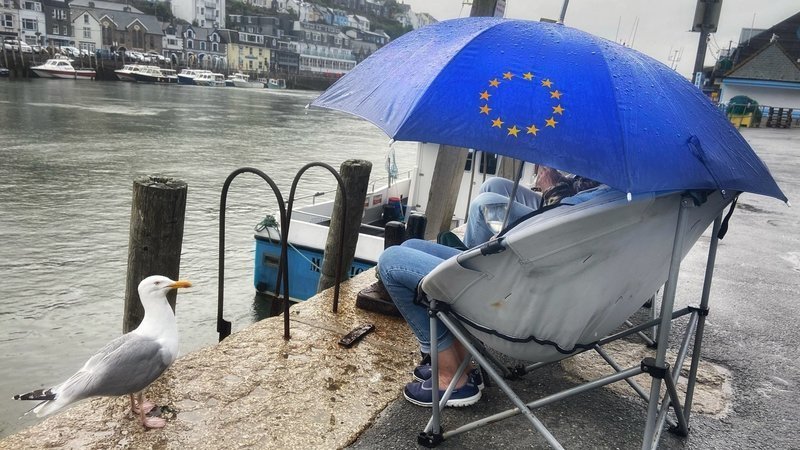
This week's photo of a trusting gull was kindly donated by ©Debbie Geraghty who spotted it on the quayside in Looe in Cornwall.
I started this petition after seeing a dead Herring Gull seemingly killed by bird deterrent spikes on a rooftop. Herring Gulls are not the only rooftop birds affected by the bird deterrents. For example Kittiwakes are affected also and like Herring Gulls are red listed as of conservation concern. The Lesser Black-backed Gull is also on the amber list. Swallows and swifts may now be declining. Rooftop birds ranging from gulls to pigeons, birds of prey, crows, swifts and swallows, are all vulnerable to being injured or killed by the rooftop sited bird deterrent netting or spikes.
Please will you consider signing and sharing the petition to reduce the use of cruel bird deterrents on buildings? Thank you.
#BanBirdNetting #NoToBirdSpikes #Birds #Nature #UrbanNature #GullsAreGreat #PigeonsDeserveBetter #ReduceBirdDeterrents #Biodiversity #WildlifeCrime
A helpful Scottish pest controller shared with me that he has had to retrieve 20 dead gulls and more than 100 pigeons and even swifts caught in such rooftop netting in the last year. You can imagine how harrowing it must have been to see them affected in this way.
'How hardening to the heart it must be to do this thing: to change an innocent soaring being into a bundle of struggling rags and pain.' 'The Black Prince' - Iris Murdoch
If you have already signed this petition you will have noticed I have been trying to bring a broad perspective within updates like this. I’ve covered everything from the incredible intelligence of crows and why common birds matter too, to over fishing, biodiversity and climate change’s influence on rooftop bird species such as gulls. It has been a chequered journey of discovery for me and in some ways it represents the complicated picture we currently have in front of us in looking at the many big and small issues facing us and our future today.
In 1962 Rachel Carson wrote the influential book ‘Silent Spring’ from which the quote above is taken. Though the book was focussed particularly on the devastating effects of pesticides on nature, the general themes of the book seem poignant now as we live through Covid and face joint crises of climate change and biodiversity loss. During the lockdowns many people reawakened their interest in or have taken solace in the amazing nature that surrounds us, be it in their backyards, parks or the wider countryside. People have collectively found new ways of making connections and caring for each other and nature during lockdown and many have tried to understand and educate themselves about what has brought us to where we are now and consider ways of moving forward.
The climate crisis is of course ever present. We are hopefully becoming more united in realising that we have to both act individually and need to demand our Governments and businesses enact the necessary urgent changes in both a timely manner and with due care and attention. Simultaneously, here in the UK, with Brexit having been passed, we have been on a journey of mixed emotion and reaction. We seem to be still trying to work out just who we might be, how to tackle our inequalities, how we fit into the wider world and what we stand for as a state. Recently, the fuel distribution crisis and some food and CO2 shortages have been a further wake-up call, indicating how inequality, worker wages, distribution and trade connections matter. Despite what certain sections of the media and some politicians might suggest migration has barely affected wages and even then only minimally in certain sectors. Farms and other sectors such as hospitality and care will suffer with insufficient labour. We will undoubtedly end up importing more food from further afield which will not help our emissions and our poor, youth, elderly and people with disability may be caused disproportionate suffering or lack of opportunity.
Given all of the ills above, you may understandably think cruelty to our rooftop birds is just a minor matter. Sometimes though the devil is in the detail and small things! Weirdly i think how we choose to treat our rooftop birds like pigeons and gulls can give us some useful and helpful pointers to how we can change both ourselves and wider society during this challenging period ahead to ensure our survival. Specifically I think the cruelty points at themes of trust and connection. More will be revealed below. If you are minded, please find time to have a read or save this rather lengthy update to read later. I’m hoping it will be worth it!
First though an invitation to take action to make the rooftop world of birds less cruel…
Please will you sign and share the petition using the link below? Thank you.
Many of you lovely people have emailed letters to the Department of Environment, Food and Rural Affairs (DEFRA) and George Eustice MP Secretary of State for Environment, Food and Rural Affairs calling for a stop to the cruelty to birds caused by rooftop bird deterrents. We've already been told by the Welsh Government that they will take the petition into account in future planning for urban nature.
If you haven’t already please add your voice by taking one of the 2 actions below?
Please email a letter to your political representative using the text and contact details below, share or even financially support the petition? It will be a huge help!
Action 1: Sign and share the petition using the link below.
Action 2: Copy, paste and then email the letter text below to your local politician or prioritize sending one to George Eustice at DEFRA.
#NoToBirdSpikes #BanBirdNetting #ReduceBirdDeterrents #KillerBirdNetting #TwitterNatureCommunity #Biodiversity #GullsAreGreat #ClimateActionNow #PigeonsDeserveBetter #Nature
Email the short letter text below to George Eustice, MP, Secretary of State for Environment, Food and Rural Affairs. Use either of these two emails: defra.hotline@defra.uk or george.eustice.mp@parliament.uk
Alternatively, email your own personally worded letter.
If you prefer you can email your local councillor, MP, MS or MSP to get them on board.
Important: Remember to change who you address it to, keep it short and include your address and contact details. Contact details of all local representatives can be found at writetothem.com
Wales: Minister responsible for this issue is now Lee Waters MS, Deputy Minister of Climate Change Correspondence. email: lee.waters@gov.wales
Scotland: Michael Matheson, MSP for Falkirk West, Cabinet Secretary for Net Zero, Energy and Transport. (Use above website for representatives emails).
Together we can stop the deaths and injuries to birds that so called ‘humane’ rooftop bird deterrent mesh netting and metal spikes cause.
Here is the suggested text for the letter..
____________________________________________________________
Dear Rt Hon George Eustice MP,
Reduce the use of cruel bird deterrents on buildings
I write to you to ask you to speak up for rooftop birds and urban wildlife. In the face of the climate and biodiversity crises ahead of this autumn’s proposed COP26 meeting in Glasgow, please make a commitment to ensure a reduction in the use cruel bird deterrent measures such as cruel mesh netting and metal bird spikes on buildings.
I am alarmed many declining or even red listed birds are injured or killed as a result of the cruel deterrent measures on rooftops in the UK. Despite current methods to ensure ‘humane’ control of birds causing ‘nuisance’, wildlife rescue centres, pest controllers and roofers are reporting slow, lingering deaths or injuries to declining and common bird species.
Birds affected importantly include red or amber listed gull species, birds of prey, and declining species such as swallows and swifts.
Faced with the climate and biodiversity crises, it would be timely to better understand and reassess our relationship with urban nature species including rooftop and even common birds reconsidering how they are treated in our towns. The definition of bird nuisance could be better nuanced so inappropriate use of bird deterrents is designed out.
Since the use of bird deterrents crosses many areas of administration it would be helpful to focus on stamping out cruelty and species loss by action across agencies rather than simply focusing on reducing bird nuisance.
Please stand up for urban wildlife. In particular commit to a new vision for our diverse rooftop bird species and ensure urban wildlife crimes are followed up and prosecuted.
The recent report from the IPCC and IPBES made clear ‘- every local nature-based biodiversity solution in our cities and towns matter as they accumulate together on a global scale’. Changing public and industry behaviours on how we treat our urban wildlife can help mitigate the interrelated crises of biodiversity and climate change. It will also importantly help accelerate collective action by the community.
I trust you will help stop the cruel bird deterrent measures and will fully support this collective campaign.
Yours sincerely
(Your Signature)
____________________________________________________________
Trust and Connection for a Better Future
I recently heard an interview on the radio about the way the pandemic has been managed by the Government in the face of scientific advice. The interviewer asked why a ‘fatalistic’ approach was taken early resulting in a ‘group mentality’ believing in herd immunity leading to many more deaths than was necessary. My memory of the reply by an expert was that it went along the lines that a judgement needed to be made. Yet the actual interviewer homed in on the issue of trust. It occurred to me when differing opinions exist that being willing to trust the scientists and specialists in the first place is perhaps more essential than judgements often based on party politics or mere opinion before deciding how to proceed.
'To be trusted is a greater compliment than being loved.' - George MacDonald
Our relationship with nature around us has been one where on the one hand we take solace in it, yet on the other hand we quickly learnt to fear it. The mountain lion outside those caves we first lived in was understandably feared as was the darkness, the unknown and the vastness of untamed nature. Fear brings out very basic instinctive reaction from our brains. We hanker after security seek shelter, learnt to build walls then homes and eventually defined and developed cities. But by doing all this we have separated ourselves from nature. Many of us now rarely come in close contact with creatures let alone dangerous species. Nature has become ‘othered’, something to be exploited, burnt, cut down, killed or ordered. We are in attack mode and this has to change.
'Men rise from one ambition to another: first, they seek to secure themselves against attack, and then they attack others.' - Niccolò Machiavelli
'The axe forgets; the tree remembers.' - Shona proverb
We need to relearn what nature gives back to us and with the benefit of science we can better understand how biodiversity and climate equilibrium can be maintained for the benefit of all things. Essentially we have to trust that birds such as gulls are not about to kill or hurt us badly like in Hitchcock’s movie ‘The Birds’ nor are pigeons likely to spread the diseases we fear if they have sufficient habitat to live in. We have been the species doing the damage to habitats and causing shifts of wildlife populations into our towns. In a previous update I spoke about how birds such as crows, gulls and pigeons could be described as the entrepreneurs of the natural world along with cats and dogs as they have found ways to live side by side with us. Surely then we should trust them and learn to live with them as companions not invaders. Thinking more broadly this too applies to the tendency by politicians to blame migrants for low wages or taking our jobs. They too have had to adapt. A definition of migration after all is moving away from a place that is no longer suitable to one that has more sufficiency. That is why the swallows we welcome each spring fly off each year in the autumn so why not welcome migrants who simply want a better safer life?
' - when two aliens find each other in a strange place, it feels a little more like home.' - Jomny Sun, 'Everyone's a Aliebn When Ur a Aliebn Too'
We’ve also learnt to fear organic dirt, even soil. We developed hundreds of chemicals to ward off infection and pests to make our world super clean. The kickback is already beginning to happen with antibiotic resistance coming to the fore and fears of new bugs carried by vector species who have lost their natural habitat areas because of industry or agriculture.
We not only need to relearn our relationship with nature by developing trust for it and a better understanding of ecology’s life sustaining systems but we also need to understand our interconnectedness with it.
'It really boils down to this: that all life is interrelated. We are all caught in an inescapable network of mutuality, tied into a single garment of destiny. Whatever affects one destiny, affects all indirectly.' - Martin Luther King Jr.
We need to treat our wild companions and natural habitats with the respect they deserve and that should include urban nature and rooftop birds too. When it comes to denigrating certain species such as gulls or pigeons as ‘flying rats’ are we not really turning our disconnection with nature and God given sense of ownership of our adopted urban spaces into a malign hate filled force against them. They ended up in cities because we have destroyed their usual habitats and affected their food supplies. Blaming them will not make us look any bigger or better. It simply diminishes us. That is why bird deterrents are rarely necessary and often cruel.
'Don't blow off another's candle for it won't make yours shine brighter.' -Jaachynma N.E. Agu, 'The Prince and the Pauper'
The real battle is to redefine who we could be, not who we are and to start in our own backyards and our own communities by reconnecting with community and each other and embracing our diversity. Let’s welcome too even the fearsome and both common and rare wildlife and fight for the planet yet still make those essential connections outwards to the ‘other’ or unknown with wonder, hope, fascination and care rather than fear.
'The world needs madness, a madness for justice, a madness for harmony, a madness for equality, a madness for humanitarian glory. If everyone had the madness for doing good, there wouldn't be any misery in the world. So, be mad, be furious, be rebellious towards every bit of misery, inequality and injustice in the world. Remember, every injustice anywhere in the world is your business, every misery anywhere in the world is your business, every segregation anywhere in the world is your business. Human condition anywhere in the world is your business.' - Abhijit Naskar, 'When Humans Unite: Making A World Without Borders'
Now a potent excerpt from ‘Silent Spring’ by Rachel Carson.
‘Then a strange blight crept over the area and everything began to change. Some evil spell had settled on the community: mysterious maladies swept the flocks of chickens, the cattle, and sheep sickened and died. Everywhere was a shadow of death. The farmers spoke of much illness among their families. In the town the doctors had become more and more puzzled by new kinds of sickness appearing among their patients. There had been sudden and unexplained deaths, not only among adults but even among children who would be stricken suddenly while at play and die within a few hours.
There was a strange stillness. The birds, for example--where had they gone? Many people spoke of them, puzzled and disturbed. The feeding stations in the backyards were deserted. The few birds seen anywhere were moribund; they trembled violently and could not fly. It was a spring without voices. On the mornings that had once throbbed with the dawn chorus of robins, catbirds, doves, jays, wrens, and scores of other bird voices there was no sound; only silence lay over the fields and woods and marsh.
On the farms the hens brooded, but no chicks hatched. The farmers complained that they were unable to raise any pigs--the litters were small and the young survived only a few days. The apple trees were coming into bloom but no bees droned among the blossoms, so there was no pollination and there would be no fruit.
The roadsides, once so attractive, were now lined with browned and withered vegetation as though swept by fire. These, too, were silent, deserted by all living things. Even the streams were not lifeless. Anglers no longer visited them, for all the fish had died.
In the gutters under the eaves and between the shingles of the roofs, a white granular powder still showed a few patches; some weeks before it had fallen like snow upon the roofs and the lawns, the fields and streams.
No witchcraft, no enemy action had silenced the rebirth of life in this stricken world. The people had done it to themselves.’
Because of humanity’s collective lack of respect for biodiversity, our disconnection with food and climate and our inherent fear of nature and even neighbours, our planet and our very existence on this earth is now in serious danger. We must relearn trust and connection to face our future together.
'Obedience may have its uses, but it is no substitute for willing, uncoerced co-operation.' - Eleanor Roosevelt, 'You Learn by Living: Eleven Keys for a More Fulfilling Life'
It is telling that the book notes on 'Silent Spring' speak of both othering, misogyny and power dynamics.
'It was clear to the industry that Rachel Carson was a hysterical woman whose alarming view of the future could be ignored or, if necessary, suppressed. She was a “bird and bunny lover,” a woman who kept cats and was therefore clearly suspect.' - Rachel Carson, 'Silent Spring'
'When the mind is without borders, the world will be without borders.' - Abhijit Naskar, 'When Humans Unite: Making A World Without Borders'
'Where, after all, do universal human rights begin? In small places, close to home - so close and so small that they cannot be seen on any maps of the world. Yet they are the world of the individual person; the neighbourhood he lives in; the school or college he attends; the factory, farm, or office where he works. Such are the places where every man, woman, and child seeks equal justice, equal opportunity, equal dignity without discrimination. Unless these rights have meaning there, they have little meaning anywhere. Without concerted citizen action to uphold them close to home, we shall look in vain for progress in the larger world.' - Eleanor Roosevelt
Now bringing all this blurb back to nature and our relationship with it … from Rachel Carson’s, ‘Lost Woods: The Discovered Writing of Rachel Carson’
‘I believe this affinity of the human spirit for the earth and its beauties is deeply and logically rooted. As human beings, we are part of the whole stream of life. We have been human beings for perhaps a million years. But life itself — passes on something of itself to other life — that mysterious entity that moves and is aware of itself and its surroundings, and so is distinguished from rocks or senseless clay — [from which] life arose many hundreds of millions of years ago. Since then it has developed, struggled, adapted itself to its surroundings, evolved an infinite number of forms. But its living protoplasm is built of the same elements as air, water, and rock. To these the mysterious spark of life was added. Our origins are of the earth. And so there is in us a deeply seated response to the natural universe, which is part of our humanity.'
Let’s help stop the silent spring Rachel Carson spoke of and promote better connections and trust between people and the diverse nature we are surrounded by. Together we can leave a functioning planet behind for our children. Let’s include the squawking gulls, cooing pigeons and other common birds of our rooftops and open ourselves to that trust and connection.
Please kindly consider supporting the petition financially if you can to reach more views online. Thank you too for reading this far!