
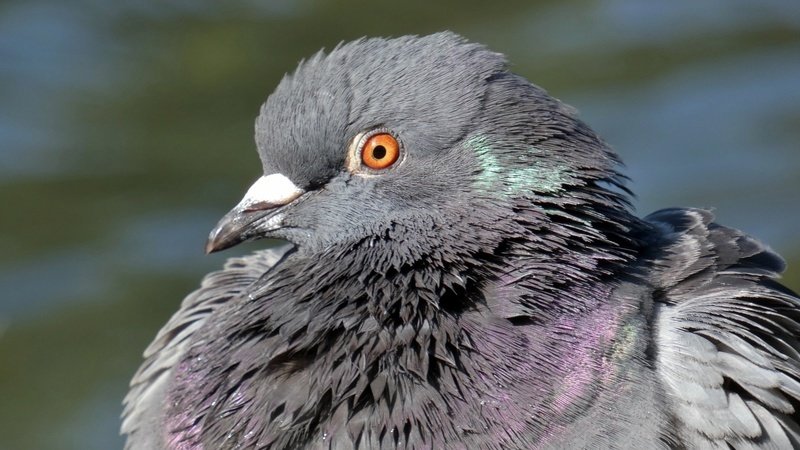
Just why have we become irrationally cruel towards the bigger bird species in our towns and cities by using cruel bird deterrents and denigrating pigeons, gulls and others. Perhaps it reflect more on who we are rather than the actual level of ‘nuisance’. In our hearts most of us know there is a better way…
Please help stop this cruelty - it may help save a seagull, pigeon, swallow or swift.
Petition Actions: Please sign the petition wherever you live using the petition link below. Share the link on social media or consider supporting it. Email it to a friend.
Important Email Action: Please sign and send the email letter text below to your local politician or better still prioritize sending one to George Eustice.
#NoToBirdSpikes #BanBirdNetting #ReduceBirdDeterrents #LetTheBirdsFly #Biodiversity #GullsAreGreat #ClimateAction #PigeonsDeserveBetter #Nature
Make a big difference to stop the cruelty..
Email the letter text below to George Eustice, Secretary of State for Environment, Food and Rural Affairs in the UK Government, at george.eustice.mp@parliament.uk
If emailing your local MP, MS or MSP to get them on board remember to change both who you address it to, and include your own address.
Contact details of most local representatives above can be found here.
Wales: Minister responsible for this environmental issue is Lee Waters MS, Deputy Minister of Climate Change at Correspondence.lee.waters@gov.wales
Scotland: Michael Matheson, MSP for Falkirk West, Cabinet Secretary for Net Zero, Energy and Transport. Michael Matheson MSP (please use contact form)
Suggested text for the letter...
----------------------------------------------------------------------------------
Dear Rt Hon George Eustice MP,
I am writing to ask you to speak up for rooftop birds and urban wildlife. In the face of the climate and biodiversity crises ahead of this autumn’s meetings in Glasgow, I would like to ask you to make a commitment to review and reduce the use cruel bird deterrent measures on buildings.
As someone who speaks for me in Government I am alarmed that many birds are injured or killed as a result of the cruel deterrent measures on rooftops in the UK. Measures range from metal bird spike strips to particularly cruel bird mesh netting. Despite current controls to ensure ‘humane’ control of birds causing ‘nuisance’; there is evidence birds are killed or die lingering and painful deaths.
Birds affected by these measures include red or amber listed gull species and turtle doves, birds of prey, and declining species such as swallows and swifts.
Faced with the climate and biodiversity crises, it would be timely to better understand and reassess our relationship with urban nature species including rooftop and common birds reconsidering how they are treated in our towns. The definition of bird nuisance could be more nuanced so inappropriate use of bird deterrents and bird deaths and injuries are designed out. The general public can be encouraged to value and respect urban nature more and consider how we welcome and at times denigrate wildlife in our towns and cities. Since the use of bird deterrents crosses many areas of administration it would good to focus on stopping cruelty and species loss across all agencies involved rather than simply focusing on reducing bird nuisance or the effectiveness of the deterrent.
Can I ask you to please stand up for urban wildlife and in particular commit to a new vision for our diverse rooftop bird species by considering the following:
- Review and more finely nuance the use of bird deterrent measures.
- Review licensing and monitoring of pest control operators to make available ethical licences so cruelty is minimised.
- Increased funding and better procedures to ensure appropriate urban and rural wildlife crime reporting/prosecution in the UK.
- National and local education campaigns and funding streams to welcome wildlife to our rooftops and buildings and conserve and create habitat for them.
- Redefine what constitutes bird nuisance in the age of climate change and biodiversity loss.
- Call for data to be collected from animal hospitals/vets/roofers/builders/pest controllers on the frequency and nature of injuries caused by bird deterrents with follow up research and recommendations to reduce bird deaths and injuries.
- Define and ban the inappropriate use of bird netting and ensure deterrent measures chosen do not cause harm.
- Consider meeting with or having a conversation with the ChangeOrg petition organiser, Patrick Driscall to discuss potential positive solutions forward.
The recent report from the IPCC and IPBES made clear ‘- every local based nature-based biodiversity solution in our cities and towns matter as they accumulate together on a global scale’. Changing public and industry behaviours on how we treat our urban wildlife can help mitigate the interrelated crises of biodiversity and climate change. It will also importantly help accelerate collective action by the community.
I trust you will put a stop the cruel bird deterrent measuresand fully support this collective campaign.
Yours sincerely
(Your Signature)
–––––––––––––––––––––––––––––––––––––––––––––––––––––––––––––––––
About the Petition
Big thanks go to ©Maït Foulkes who kindly donated this week’s magnificent pigeon image.
I started the petition after seeing a dead Herring Gull seemingly killed by bird deterrent spikes on a rooftop. Herring Gulls which are red listed are not the only rooftop birds affected by the cruel bird deterrents. For example Kittiwakes are red listed. The Lesser Black-backed Gull is also on the amber list and swallows and swifts maybe declining. Rooftop birds like gulls, pigeons, birds of prey, crows, swifts and swallows are all vulnerable to being injured or killed by the netting & spikes.
To help maintain life-giving biodiversity, cruelty must be designed out from the deterrent measures. In the face of the climate and biodiversity crises let’s together tip the balance the right way in favour of nature, climate and against animal cruelty.
When big bird comes to town.. How the level of bird threat got turned up to the max
High noon in the town square or high time to change how we think about nature on our doorstep?
Now seems a good time for town and city dwellers to reconsider how we value and react to wildlife in our backyards, on our rooftops and in our parks and our town squares. The public feeling demonstrated by supporters of this petition against the inappropriate use of cruel bird deterrents like netting and metal bird spikes is clear.
One of the supporters expressed what is at stake very neatly. He felt the introduction of bird netting and spikes as rooftop bird deterrents has negatively impacted biodiversity, resulting in untold suffering as birds endure a slow and painful death or are maimed by inappropriately chosen or placed deterrent measures. The deterrents make our urban areas uglier, devastate urban nature and undermine the potential of our relationship between people and nature.
Hopefully together we can turn the tide against cruelty to birds including the big birds like pigeons and gulls. I’m hoping the petition can help influence not only the use of bird deterrents but also encourage respect for urban wildlife across the UK.
During this still very active petition campaign, I’ve been struck how we somehow as intelligent humans have learnt somehow to treat some urban bird species cruelly, or at the very least with disdain. Clearly bird size matters. Maybe big birds scare us; or so it seems! We complain most about the big ones. There are too many of them, they are too noisy or they make too much mess. This is in contrast to us treasuring the cuter looking, smaller species despite all of them all often occupying the same spaces. We denigrate, or what I call ‘verminize’; these larger, successful species and choose to deter them or worse still hurt them.
I personally like to think of the bigger rooftop birds such as gulls, crows, pigeons, kestrels, magpies and peregrine falcons as the urban entrepreneurs of the bird world. With disturbance to their usual nesting sites of high trees or rocky coastal cliffs they have innovated, flexing their choice of nest site to the urban environment or popular seaside resorts where there is often the added bonus of discarded food or overflowing litter bins. By being incredibly adaptable they have intelligently found ways to be successful in our constructed landscape.
In creating our amazing cities and homes we have adopted a mental geography where an imaginary wall separates our orderly and supposedly ‘clean’ civilization from the wildness of nature and the ‘dirt’ of the natural landscape. We complain when trees occupy too much space, if too many leaves drop and about the weeds growing through the paving or the bird mess on the statues. Nowadays, we are less likely to clean our doorsteps or take responsibility for any nearby length of pavement. We expect our streets and statues to be kept clean for next to nothing but instead litter our communally used pavements or leave plastic bottles on the beach. We compete with nature to lay claim and occupy a shared space yet often refuse to regularly clear up our own mess.
These ‘big birds’ it seems to many of us, cross our city paths on a far too regular basis. Whilst, rats neatly hide themselves in nooks, away down drains or underground, pigeons, gulls and others show themselves; to our shock, in full view and even dare to scavenge our bins. Foxes plunder our bins too but are stealthier and most often seen at night. The gull, the crow, the magpie and the pigeon walk tall and proud as if busting open the bar in a Western. They get labelled as disease spreaders despite being poor vectors of disease and our actual contact with them being rare. Attacks by gulls often get exaggerated whilst the actual physical hurt caused is minimal. These birds simply want to bring up their young in a safe space with enough food just as we do.
Just like the crows and gulls in Hitchcocks’ film ‘The Birds’ with added erroneous threats of disease, of them being ‘invasive’ and even more threateningly; intelligent (in the case of crows, pigeons and gulls), then the level of threat in our minds gets turned up to max. Irrationally in the city it’s become a red alert. Birds suddenly change from being our feathered friends to the stuff of nightmares. Somehow we quickly learnt to irrationally fear nature. As a potential occupier and invader in a desire for urban cleanliness, security and safety; nature disturbs us against our very own reasoning.
Refreshingly because of lockdown and Covid many people have begun to reflect more on their direct relationship with city nature. Nature adds real benefit to our lives. Scientists have shown how many urban species form complex relationships with other species in our towns and cities and interact in surprising and adaptive ways. Perhaps we need to develop a better relationship too?
Let’s redefine who is the invader and rethink our perception of the nuisance caused by birds. Will improved maintenance do the job? Can we put up with occasional nuisance or mess. Do we really need to use these deterrents? Why not welcome them to our rooftops with nest boxes or maintained platforms and roof spaces? If we still do need deterrents invest in better designed more humane methods. Birds being spiked and rooftop netting are really not a modern or humane way forward. Why not learn to live side by side with urban nature in the face of the joint biodiversity and climate crises. Time to make way for the big birds too.
Today our cities and homes can become a place FOR nature rather than WITHOUT nature. Which way will you choose?
Together we can leave a functioning planet behind for our children. Let’s include the squawking gulls, cooing pigeons and other common birds of our rooftops too. Not just the brightest, most colourful, shiny, small or endangered ones.
Be a Rooftop Bird Activist…
Ramp up the pressure by emailing your political representatives.
Join the Facebook group: Rooftop Bird Club
If you have photographic evidence of injury or death to birds caused by bird deterrents please consider sharing photos with the petition link on social media with your reaction and the relevant hashtags. If you are on Twitter do DM me at @joboxer12 or via Messenger.
Any helpful ideas, research or contacts please DM at @joboxer12 or at the Rooftop Bird Club.
Let’s go for big bird gold! Keep this petition dancing!