Tons of trash removed from Everest as Cleanup Campaign Started

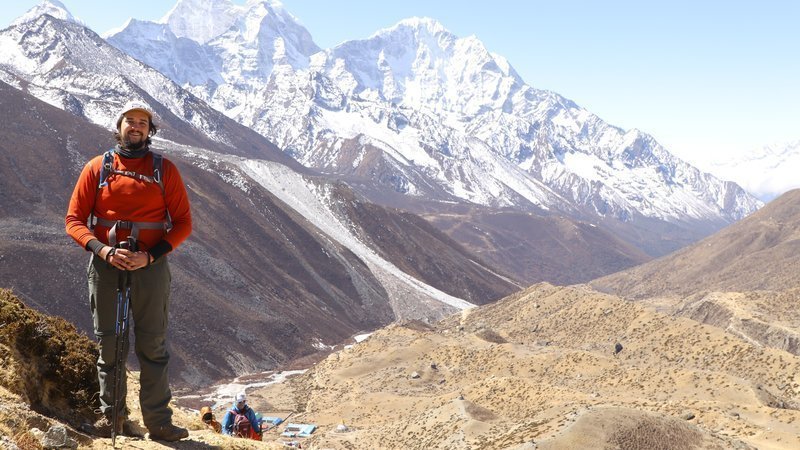
Decades of climbing on the world's greatest mountain have turned it into a really tall garbage dump, strewn with rubbish, human waste as well as bodies.
But a committed -- and impressively fit -- group of volunteers are handling the issue by carrying out one of the world's toughest clean-ups, and it is seeing immediate results.
Three metric tons (6,613 pounds) of garbage have been accumulated from the mountain in only the first two weeks of the plot, according to AFP. That is about the weight of two SUVs, or a big male hippo.
The job has been carried out with a 14-member team, that has been set the task of regaining 10 metric tons within 45 days, the bureau reported.
Waste recovered on the Everest Cleaning Campaign comprises empty cans, bottles, plastic and lost climbing equipment. An army helicopter has helped in removing the garbage, and the group is set to ascend to higher camps to collect more.
Four bodies also have been found on the 8,848-meter (29,028 ft ) mountain, officials said.
"Our team has reached the Everest Base Camp for the cleaning effort. All the essential things including food, shelter and water have been arranged there," Dandu Raj Ghimire, director general of Nepal's Tourism Department, told reporters on Sunday, according to The Himalayan Times.
The Nepalese authorities and local communities have been wrestling with the issue of waste on the mountain, as climbers from throughout the world travel to the nation annually to try to ascend its summit.
Since 2011, regular attempts are made to recover several tons of trash in the mountain, and waste management systems are introduced.
In line with the Everest Summiteers Association, the tremendous increase in traffic in recent years has had a severe impact on the mountain's sensitive environment.
The government also introduced a deposit for climbers in 2014, which can be returned if they return to the mountain base with eight kilograms of garbage.
In February, China banned non-climbers from its side of the mountain in an attempt to decrease waste.
However, those in charge of the cleanup have another problem to deal with: climate change, which is melting snow on the mountain faster and exposing a growing number of dead bodies.
"Because of the impact of climate change and global warming, snow and glaciers are quickly melting and dead bodies are being exposed and detected by climbers," Ang Tshering Sherpa, former president of Nepal Mountaineering Association, told CNN in March.
Over 200 mountaineers have expired on the summit since 1922, when the first climbers' deaths on Everest were listed. The vast majority of bodies are thought to have remained buried under glaciers or snow.
CNN has contacted the Everest Summiteers Association for Additional comment.
Contact Marvel Treks for more information
Source: CNN