Aerial view of the proposed gas station location and the 500 feet radius

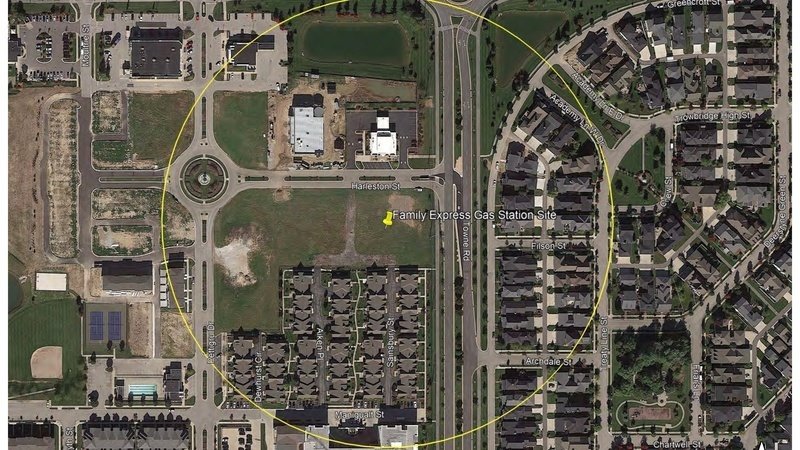
At the request of some of the neighbors, I am attaching an aerial view of the proposed gas station location along with a 500 feet radius that would be most likely be affected by the benzene emissions and other air pollutants.
Here are also some of the concerns related to health risk:
A number of compounds injurious to human health are released during vehicle fueling and from underground storage tank vents. Health effects range from nausea to cancer. Measures to reliably resolve these adverse health effects are not employed at new gas stations.
Benzene is the gasoline constituent most harmful to human health. Adverse health effects of benzene include cancer, anemia, increased susceptibility to infections, and low birth weight. A 2018 study of U.S. gas stations found that benzene emissions from underground gasoline storage tank vents were sufficiently high to constitute a health concern at a distance of 50- and 160-meters (162- and 518-feet).
According to the World Health Organization Guidelines for Indoor Air Quality there is no safe level for benzene. The following studies document the extent of benzene release from gas stations:
A study published by the Canadian petroleum industry found average benzene concentrations of 146 and 461 parts per billion at the gas station property boundary in summer and winter, respectively.
A study of outdoor and indoor benzene concentrations at numerous residences within 196 to 328 feet of gas stations, found median outdoor benzene concentrations of 3.1 and 1.9 ppb, respectively. Median indoor concentrations at these locations were higher, reaching 4.1 and 5.2 ppb, respectively.
Another study found median ambient benzene levels of 1.9 ppb in houses both less than 165 feet and greater than 328 feet from a service station.
Yet, another study documented that benzene and other gasoline vapor releases from service stations can be discerned as far as 246 feet from service.