Tell Indiana State Reps to #KeepChickenOnTheMenu and Vote "NO" on HB 1267
The Issue
During the 2016 session, the Indiana legislature will consider a bill designed to prohibit our farm from selling poultry to restaurants.
HOW YOU CAN HELP
1. Contact your state representatives and ask them to OPPOSE HB 1267. Phone calls have a greater impact than emails.
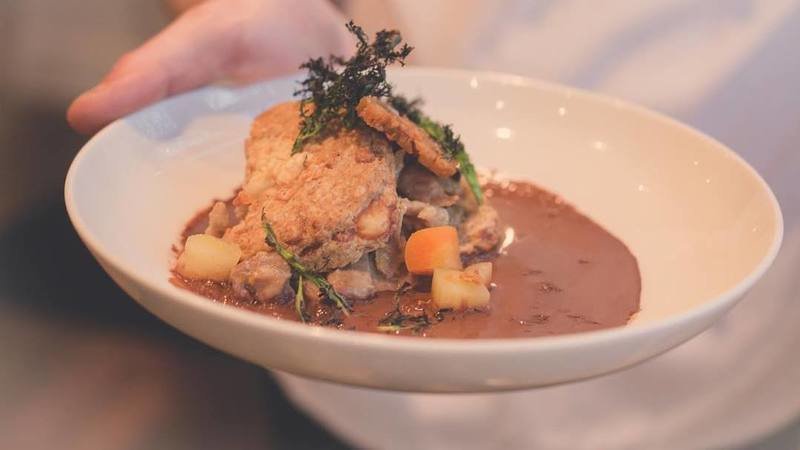
2. Visit your favorite farm-to-table restaurant and enjoy the amazing things that happen when local chefs work with local farmers. We recommend the Hawkins Farm chicken! See our website for details.
3. Take a photo of your locally produced meal and post it to social media with the hashtag #keepchickenonthemenu.
4. Use email, Facebook, and/or Twitter to SEND THE PICTURE TO YOUR STATE REPRESENTATIVES. Tell them, “This is what scale-appropriate regulation looks like—and it’s delicious. No on HB 1267!"
How does this bill affect your farm?
Under the new law poultry processors who are "exempt from antemortem inspection and postmortem inspection...may not sell the poultry to a food establishment or an institution.” Our farm currently slaughters and sells poultry to restaurants under such an exemption, often referred to as the 20,000-bird exemption.
What is the 20,000-bird exemption?
The federal Poultry Products Inspection Act (also known as the Wholesome Poultry Products Act) regulates poultry slaughter in the United States and requires poultry destined for commerce to undergo government inspection at the time of slaughter. The law also creates a number of categories of inspection. Producers are able to secure exemption from certain forms of inspection when they meet the requirements of a category.
Our farm operates under a provision of this law often referred to as the 20,000-bird exemption, which we received from the Indiana State Board of Animal Health after a lengthy application process. While we are subject to facility inspection at least twice a year, sanitary requirements, and record-keeping requirements, we are exempt from having an on-site inspector to perform antemortem and postmortem inspections during slaughter.
Under this provision, we may only slaughter and process poultry that is raised on our farm--1,000 to 20,000 in a calendar year--and we may only sell them to individual consumers, restaurants, institutions, and retail stores within state lines. Our poultry products must be clearly labeled with our name, address, and the statement Exempt P.L. 90-492.
Is your farm “uninspected?”
Proponents of HB 1267 avoid using the proper term “exempted” when they speak about our farm. Instead, they substitute the word “uninspected,” a word that is readily misunderstood as “unregulated.” An honest report would be that farms operating under the 20,000-bird exemption are regulated at a level appropriate to their scale (see an overview of the requirements of the 20,000-bird exemption above).
What is antemortem inspection?
As described by the National Research Council Committee on Public Health Risk Assessment of Poultry Inspection Programs, antemortem inspection “refers to the examination of live poultry to detect signs of disease. The USDA inspector observes the flocks between the time they arrive at the slaughtering plant and the time birds are hung on the slaughtering line. Because antemortem inspection is discretionary, it is conducted not bird by bird but on samples selected from flocks or groups of birds in their crates.”
What is postmortem inspection?
Often referred to as “bird-by-bird” inspection, this refers to the postmortem appraisal of carcasses on the slaughter line. The examination is organoleptic, which means inspectors use their senses of sight, touch, and smell to assess each bird (some people call it the “poke-and-sniff” test). Inspectors look for lesions, tumors, bruising, imperfections, and other signs damage or disease. Regulations allow inspectors to review up to 35 chickens per minute, which can give them only seconds to do all this work on fast-moving lines. Even if they are given more time, however, inspectors using traditional “bird-by-bird” procedures are not able to detect the presence of salmonella and other pathogenic microorganisms. After all, you can’t see microbes with the naked eye.
Why did you apply for the 20,000-bird exemption?
The 20,000-bird exemption is an example of scale-appropriate regulation for small farms. It doesn’t force us to either truck our birds to a distant processing plant or open one ourselves. In other words, it allows us to butcher our own birds and remain a small-scale family farm. We want to butcher our own birds for the following reasons:
OVERSIGHT & TRANSPARENCY By butchering our birds on the farm, we can process them according to our high standards. It also increases the level of consumer inspection, as our customers are always welcome to watch the butchering process and ask us questions. We’ve even had chefs come help on a butcher morning.
ANIMAL WELFARE Before we started butchering on the farm, we were driving 120 miles round trip to the nearest state-inspected poultry processing plant, twice a week--once to drop off birds and again to pick up them up after they had been butchered. We had to crate up our chickens in the heat of the afternoon, transport them in a stuffy livestock trailer, and leave them on a loading dock overnight, which was very stressful on the birds.
FARMER WELFARE Again, we were driving 120 miles, round trip, twice a week during the already hectic growing season. This made for long days, late nights, and plenty of stress on the farmers.
SHORTER SUPPLY CHAIN Transporting live birds over long distances one way, and refrigerated birds the other way, lengthens the supply chain and creates opportunities for problems, including microbial contamination. Simply put, shorter supply chains are safer.
BIOSECURITY Keeping birds on the farm during their entire lives—from brooder to pasture to slaughter to freezer—serves to effectively contain pathogens such as avian influenza to the one small geographic area of a single farm. Forcing a poultry producers to transport birds to an inspected processing facility shared by many farms, as SB71 would do, invites the transmission of pathogens from farm to farm and flock to flock.
EXPENSE It is more cost-effective for us to butcher our own birds.
FLEXIBILITY At state- and federally-inspected facilities, butcher dates must be scheduled well in advance to assure the processing time is available. By butchering our birds on the farm, we are able to determine when they are ready for slaughter.
What is scale-appropriate regulation?
Scale-appropriate regulation takes into account the size of a farm when determining the proper level of government oversight. A large processing plant slaughters an estimated 200,000 or more birds PER DAY. These plants are part of a national (and international) industrial food system which is responsible for tripling the number of major foodborne outbreaks in the United States over the past 20 years. In our opinion, it makes sense to have a heightened level of government inspection at this scale.
The federal exemption under which we operate limits us to 20,000 birds PER YEAR (currently, we raise and process around 4,000) and prohibits us from selling our poultry products beyond state lines. Under the exemption, government inspection of a producer’s facility and records is augmented by customer inspection of the final product. This system of inspection depends upon a level of transparency that is only achievable at a limited scale—and it works. The 20,000-bird exemption has been available to small-scale producers for over 45 years and, according to the Farm-to-Consumer Legal Defense Fund, few—if any—foodborne illness outbreaks have been traced to poultry slaughtered and sold under the exemption.
I want to eat your chicken at restaurants! How can I help?
Contact your state representatives and tell them to #keepchickenonthemenu by voting NO on HB1267!

Petition Closed
The Issue
During the 2016 session, the Indiana legislature will consider a bill designed to prohibit our farm from selling poultry to restaurants.
HOW YOU CAN HELP
1. Contact your state representatives and ask them to OPPOSE HB 1267. Phone calls have a greater impact than emails.
2. Visit your favorite farm-to-table restaurant and enjoy the amazing things that happen when local chefs work with local farmers. We recommend the Hawkins Farm chicken! See our website for details.
3. Take a photo of your locally produced meal and post it to social media with the hashtag #keepchickenonthemenu.
4. Use email, Facebook, and/or Twitter to SEND THE PICTURE TO YOUR STATE REPRESENTATIVES. Tell them, “This is what scale-appropriate regulation looks like—and it’s delicious. No on HB 1267!"
How does this bill affect your farm?
Under the new law poultry processors who are "exempt from antemortem inspection and postmortem inspection...may not sell the poultry to a food establishment or an institution.” Our farm currently slaughters and sells poultry to restaurants under such an exemption, often referred to as the 20,000-bird exemption.
What is the 20,000-bird exemption?
The federal Poultry Products Inspection Act (also known as the Wholesome Poultry Products Act) regulates poultry slaughter in the United States and requires poultry destined for commerce to undergo government inspection at the time of slaughter. The law also creates a number of categories of inspection. Producers are able to secure exemption from certain forms of inspection when they meet the requirements of a category.
Our farm operates under a provision of this law often referred to as the 20,000-bird exemption, which we received from the Indiana State Board of Animal Health after a lengthy application process. While we are subject to facility inspection at least twice a year, sanitary requirements, and record-keeping requirements, we are exempt from having an on-site inspector to perform antemortem and postmortem inspections during slaughter.
Under this provision, we may only slaughter and process poultry that is raised on our farm--1,000 to 20,000 in a calendar year--and we may only sell them to individual consumers, restaurants, institutions, and retail stores within state lines. Our poultry products must be clearly labeled with our name, address, and the statement Exempt P.L. 90-492.
Is your farm “uninspected?”
Proponents of HB 1267 avoid using the proper term “exempted” when they speak about our farm. Instead, they substitute the word “uninspected,” a word that is readily misunderstood as “unregulated.” An honest report would be that farms operating under the 20,000-bird exemption are regulated at a level appropriate to their scale (see an overview of the requirements of the 20,000-bird exemption above).
What is antemortem inspection?
As described by the National Research Council Committee on Public Health Risk Assessment of Poultry Inspection Programs, antemortem inspection “refers to the examination of live poultry to detect signs of disease. The USDA inspector observes the flocks between the time they arrive at the slaughtering plant and the time birds are hung on the slaughtering line. Because antemortem inspection is discretionary, it is conducted not bird by bird but on samples selected from flocks or groups of birds in their crates.”
What is postmortem inspection?
Often referred to as “bird-by-bird” inspection, this refers to the postmortem appraisal of carcasses on the slaughter line. The examination is organoleptic, which means inspectors use their senses of sight, touch, and smell to assess each bird (some people call it the “poke-and-sniff” test). Inspectors look for lesions, tumors, bruising, imperfections, and other signs damage or disease. Regulations allow inspectors to review up to 35 chickens per minute, which can give them only seconds to do all this work on fast-moving lines. Even if they are given more time, however, inspectors using traditional “bird-by-bird” procedures are not able to detect the presence of salmonella and other pathogenic microorganisms. After all, you can’t see microbes with the naked eye.
Why did you apply for the 20,000-bird exemption?
The 20,000-bird exemption is an example of scale-appropriate regulation for small farms. It doesn’t force us to either truck our birds to a distant processing plant or open one ourselves. In other words, it allows us to butcher our own birds and remain a small-scale family farm. We want to butcher our own birds for the following reasons:
OVERSIGHT & TRANSPARENCY By butchering our birds on the farm, we can process them according to our high standards. It also increases the level of consumer inspection, as our customers are always welcome to watch the butchering process and ask us questions. We’ve even had chefs come help on a butcher morning.
ANIMAL WELFARE Before we started butchering on the farm, we were driving 120 miles round trip to the nearest state-inspected poultry processing plant, twice a week--once to drop off birds and again to pick up them up after they had been butchered. We had to crate up our chickens in the heat of the afternoon, transport them in a stuffy livestock trailer, and leave them on a loading dock overnight, which was very stressful on the birds.
FARMER WELFARE Again, we were driving 120 miles, round trip, twice a week during the already hectic growing season. This made for long days, late nights, and plenty of stress on the farmers.
SHORTER SUPPLY CHAIN Transporting live birds over long distances one way, and refrigerated birds the other way, lengthens the supply chain and creates opportunities for problems, including microbial contamination. Simply put, shorter supply chains are safer.
BIOSECURITY Keeping birds on the farm during their entire lives—from brooder to pasture to slaughter to freezer—serves to effectively contain pathogens such as avian influenza to the one small geographic area of a single farm. Forcing a poultry producers to transport birds to an inspected processing facility shared by many farms, as SB71 would do, invites the transmission of pathogens from farm to farm and flock to flock.
EXPENSE It is more cost-effective for us to butcher our own birds.
FLEXIBILITY At state- and federally-inspected facilities, butcher dates must be scheduled well in advance to assure the processing time is available. By butchering our birds on the farm, we are able to determine when they are ready for slaughter.
What is scale-appropriate regulation?
Scale-appropriate regulation takes into account the size of a farm when determining the proper level of government oversight. A large processing plant slaughters an estimated 200,000 or more birds PER DAY. These plants are part of a national (and international) industrial food system which is responsible for tripling the number of major foodborne outbreaks in the United States over the past 20 years. In our opinion, it makes sense to have a heightened level of government inspection at this scale.
The federal exemption under which we operate limits us to 20,000 birds PER YEAR (currently, we raise and process around 4,000) and prohibits us from selling our poultry products beyond state lines. Under the exemption, government inspection of a producer’s facility and records is augmented by customer inspection of the final product. This system of inspection depends upon a level of transparency that is only achievable at a limited scale—and it works. The 20,000-bird exemption has been available to small-scale producers for over 45 years and, according to the Farm-to-Consumer Legal Defense Fund, few—if any—foodborne illness outbreaks have been traced to poultry slaughtered and sold under the exemption.
I want to eat your chicken at restaurants! How can I help?
Contact your state representatives and tell them to #keepchickenonthemenu by voting NO on HB1267!
The Decision Makers
Petition Updates
Share this petition
Petition created on January 4, 2016