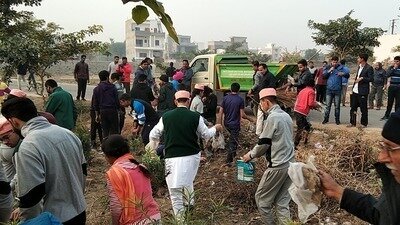

SWACHHTAGRAH for making Bharat Swachh
The Issue
PUBLIC PETITION
TITLE: SWACHHTAGRAH for SWACHH BHARAT
SUBTITLE: Swachh Bharat is the Destination and Swachhtagrah is the Journey: Stop Littering, Start Respecting
CORE MOTTO: "When we clean Self, We clean Surrounding. The first step toward achieving a true Swachh Bharat is first cleaning self and treating every public space as our own home."
TARGET DECISION-MAKERS
• The Prime Minister’s Office (PMO), Government of India
• Ministry of Culture, Government of India
• Ministry of Environment, Forest and Climate Change (MoEFCC),
Government of India
• Ministry of Personnel, Public Grievances and Pensions,
Government of India
THE VISION
The Swachh Bharat Abhiyan gave India a vital infrastructure and a nationwide awakening for cleanliness. However, physical infrastructure and periodic cleanup drives alone cannot sustain a clean nation. Swachhtagrah is the only way through which a true and lasting Swachh Bharat is possible.
While Swachh Bharat sets the goal, Swachhtagrah provides the soul and substance to achieve that goal. It shifts cleanliness from an external activity into an internal civic duty (Kartavya Dharma).
Rooted in this very philosophy, we at Shiksha Kranti initiated the Swachhtagrah movement in 2009 with the vision of making Bharat Swachh and elevating Swachhta into a Core National Value. For over seventeen years, our hands-on mission clean-up drives, tree plantation campaigns, and youth-led Samwad (community dialogues) have continually proven that true societal transformation begins when we clean the self to clean our surroundings. The litter and garbage in our public places are merely external symptoms of internal pollution—the greed, apathy, corruption, and
carelessness within us. We cannot cultivate clean streets with dirty mindsets, nor can we build a transparent nation without inner purity.
When we clean Self, We clean Surrounding. The first step toward making Swachh Bharat a living reality is to first clean the self and treat every public space as our own home. We do not throw trash on our living room floor, spit in our corridors, or neglect our private spaces. Our streets, parks, rivers, monuments, and public transport are merely the extension of our home. When we Stop Littering and Start Respecting, we elevate Swachhta
from a physical routine into a Core National Value of India—one that demands our public spaces should be free from Kachara, our environment be free from pollution, and our governance should be free from corruption. Therefore, we, the citizens of India, urge the Government of India to formally declare Swachhta as a Core National Value of India and raise it to the stature of our National Symbols, including the National Flag of
India, the National Anthem of India, and the National Emblem of India.
THE THREE PILLARS OF NATIONAL SWACHHTAGRAH
1. Corruption-Free Governance (प्रशासनिक स्वच्छता)
2. Pollution-Free Environment ( पर्यावरणीय स्वच्छता)
3. Corruption & Pollution-Free Public Life (नागरिक स्वच्छता)
1. Swachhta in Governance (प्रशासनिक स्वच्छता): Corruption-Free & Accountable Public Systems
• The Goal: Governance free from corruption, nepotism, red tape, and systemic opacity.
• What We Pledge to Practice:
o Refusing to participate in, facilitate, or tolerate corrupt practices in daily life.
o Upholding honesty and transparency in all civic, professional, and financial dealings.
• What We Demand from Decision-Makers:
o Complete transparency in public administration, service delivery, and public tenders.
o Strengthening institutional integrity mechanisms so every public servant functions with citizen-centric dedication and moral responsibility.
o Zero tolerance for financial, administrative, or ethical corruption across all tiers of governance.
2. Swachhta in Environment & Public Spaces ( पर्यावरणीय स्वच्छता): Clean Nature & Civic Sense
• The Goal: An environment free from pollution, toxic waste, and public littering (Kachara).
• What We Pledge to Practice:
o Stop Littering, Start Respecting: Treating all public spaces as protected civic assets and our collective home by committing never to litter, spit, or dump waste in the open.
o Actively practicing source-level waste segregation and responsible consumption in our households and communities.
• What We Demand from Decision-Makers:
o Strict enforcement of environmental laws and mandatory source-level waste segregation facilities across all urban and rural local bodies.
o Integration of sustainable waste management and ecological conservation into school and university curricula—where Swachhta in its wider terms is taught and practiced as a Core National Value of India.
o Institutional protection of our rivers, forests, air quality, and soil as a matter of civic responsibility and national pride.
3. Swachhta in Public Life & Ethics : Civic Sense & Moral Integrity
• The Goal: Public life free from moral degradation, sensationalism, disrespect, and civic apathy.
• What We Pledge to Practice:
o Cleaning the "inner garbage" by prioritizing civic duty (Kartavya Dharma), self-awareness, speech decorum, and mutual respect in daily interactions.
o Rejecting public apathy and standing up for civic decorum, truth, and community well-being.
• What We Demand from Decision-Makers:
o Encouragement of ethical standards in public media, literature, and digital content, steering away from the glamorization of violence or unethical behavior.
o National initiatives and community dialogues (Samwad) that cultivate moral character, self-awareness, and active citizenship among youth.
WHY NOW?
India’s growth as a global leader cannot rely on economic and technological power alone; it must be anchored in moral and systemic purity. A nation where rivers are pristine, streets are clean, administration is honest, and public discourse is dignified is the true vision of a Viksit Bharat (Developed India). By elevating Swachhta from a temporary campaign to an enduring National Value, we ensure that future generations inherit a society defined by integrity, ecological harmony, and high moral character.
OUR CALL TO ACTION
We call upon the Government of India to:
1. Formally recognize Swachhta as a spiritual value that can act as a connecting link between the Constitution and Culture of India and ensure Administrative Integrity, Environmental Sacredness, and Civic Ethics of every citizen.
2. Embed Swachhta as a spiritual, moral, and civic value into the National Education Policy (NEP) frameworks and civil service training programs.
3. Institute a National Charter of Civic Ethics and Environmental Responsibility for institutions, communities, and public bodies.
SIGN THE PETITION
If you believe that clean governance, a pure environment, and moral decorum are the true foundations of India’s progress—and that India should celebrate 100 years of independence with Swachhta (purity) rather than Bhrashtata (corruption)—please sign and share this petition today.
The Swachhtagrahi Pledge:
Swachh Bharat is the destination; Swachhtagrah is the journey. I pledge to treat every street, park, and public corner of India with the same care
and respect as my own home. I will stop littering, reject civic apathy, and uphold Swachhta as my civic duty.

20
The Issue
PUBLIC PETITION
TITLE: SWACHHTAGRAH for SWACHH BHARAT
SUBTITLE: Swachh Bharat is the Destination and Swachhtagrah is the Journey: Stop Littering, Start Respecting
CORE MOTTO: "When we clean Self, We clean Surrounding. The first step toward achieving a true Swachh Bharat is first cleaning self and treating every public space as our own home."
TARGET DECISION-MAKERS
• The Prime Minister’s Office (PMO), Government of India
• Ministry of Culture, Government of India
• Ministry of Environment, Forest and Climate Change (MoEFCC),
Government of India
• Ministry of Personnel, Public Grievances and Pensions,
Government of India
THE VISION
The Swachh Bharat Abhiyan gave India a vital infrastructure and a nationwide awakening for cleanliness. However, physical infrastructure and periodic cleanup drives alone cannot sustain a clean nation. Swachhtagrah is the only way through which a true and lasting Swachh Bharat is possible.
While Swachh Bharat sets the goal, Swachhtagrah provides the soul and substance to achieve that goal. It shifts cleanliness from an external activity into an internal civic duty (Kartavya Dharma).
Rooted in this very philosophy, we at Shiksha Kranti initiated the Swachhtagrah movement in 2009 with the vision of making Bharat Swachh and elevating Swachhta into a Core National Value. For over seventeen years, our hands-on mission clean-up drives, tree plantation campaigns, and youth-led Samwad (community dialogues) have continually proven that true societal transformation begins when we clean the self to clean our surroundings. The litter and garbage in our public places are merely external symptoms of internal pollution—the greed, apathy, corruption, and
carelessness within us. We cannot cultivate clean streets with dirty mindsets, nor can we build a transparent nation without inner purity.
When we clean Self, We clean Surrounding. The first step toward making Swachh Bharat a living reality is to first clean the self and treat every public space as our own home. We do not throw trash on our living room floor, spit in our corridors, or neglect our private spaces. Our streets, parks, rivers, monuments, and public transport are merely the extension of our home. When we Stop Littering and Start Respecting, we elevate Swachhta
from a physical routine into a Core National Value of India—one that demands our public spaces should be free from Kachara, our environment be free from pollution, and our governance should be free from corruption. Therefore, we, the citizens of India, urge the Government of India to formally declare Swachhta as a Core National Value of India and raise it to the stature of our National Symbols, including the National Flag of
India, the National Anthem of India, and the National Emblem of India.
THE THREE PILLARS OF NATIONAL SWACHHTAGRAH
1. Corruption-Free Governance (प्रशासनिक स्वच्छता)
2. Pollution-Free Environment ( पर्यावरणीय स्वच्छता)
3. Corruption & Pollution-Free Public Life (नागरिक स्वच्छता)
1. Swachhta in Governance (प्रशासनिक स्वच्छता): Corruption-Free & Accountable Public Systems
• The Goal: Governance free from corruption, nepotism, red tape, and systemic opacity.
• What We Pledge to Practice:
o Refusing to participate in, facilitate, or tolerate corrupt practices in daily life.
o Upholding honesty and transparency in all civic, professional, and financial dealings.
• What We Demand from Decision-Makers:
o Complete transparency in public administration, service delivery, and public tenders.
o Strengthening institutional integrity mechanisms so every public servant functions with citizen-centric dedication and moral responsibility.
o Zero tolerance for financial, administrative, or ethical corruption across all tiers of governance.
2. Swachhta in Environment & Public Spaces ( पर्यावरणीय स्वच्छता): Clean Nature & Civic Sense
• The Goal: An environment free from pollution, toxic waste, and public littering (Kachara).
• What We Pledge to Practice:
o Stop Littering, Start Respecting: Treating all public spaces as protected civic assets and our collective home by committing never to litter, spit, or dump waste in the open.
o Actively practicing source-level waste segregation and responsible consumption in our households and communities.
• What We Demand from Decision-Makers:
o Strict enforcement of environmental laws and mandatory source-level waste segregation facilities across all urban and rural local bodies.
o Integration of sustainable waste management and ecological conservation into school and university curricula—where Swachhta in its wider terms is taught and practiced as a Core National Value of India.
o Institutional protection of our rivers, forests, air quality, and soil as a matter of civic responsibility and national pride.
3. Swachhta in Public Life & Ethics : Civic Sense & Moral Integrity
• The Goal: Public life free from moral degradation, sensationalism, disrespect, and civic apathy.
• What We Pledge to Practice:
o Cleaning the "inner garbage" by prioritizing civic duty (Kartavya Dharma), self-awareness, speech decorum, and mutual respect in daily interactions.
o Rejecting public apathy and standing up for civic decorum, truth, and community well-being.
• What We Demand from Decision-Makers:
o Encouragement of ethical standards in public media, literature, and digital content, steering away from the glamorization of violence or unethical behavior.
o National initiatives and community dialogues (Samwad) that cultivate moral character, self-awareness, and active citizenship among youth.
WHY NOW?
India’s growth as a global leader cannot rely on economic and technological power alone; it must be anchored in moral and systemic purity. A nation where rivers are pristine, streets are clean, administration is honest, and public discourse is dignified is the true vision of a Viksit Bharat (Developed India). By elevating Swachhta from a temporary campaign to an enduring National Value, we ensure that future generations inherit a society defined by integrity, ecological harmony, and high moral character.
OUR CALL TO ACTION
We call upon the Government of India to:
1. Formally recognize Swachhta as a spiritual value that can act as a connecting link between the Constitution and Culture of India and ensure Administrative Integrity, Environmental Sacredness, and Civic Ethics of every citizen.
2. Embed Swachhta as a spiritual, moral, and civic value into the National Education Policy (NEP) frameworks and civil service training programs.
3. Institute a National Charter of Civic Ethics and Environmental Responsibility for institutions, communities, and public bodies.
SIGN THE PETITION
If you believe that clean governance, a pure environment, and moral decorum are the true foundations of India’s progress—and that India should celebrate 100 years of independence with Swachhta (purity) rather than Bhrashtata (corruption)—please sign and share this petition today.
The Swachhtagrahi Pledge:
Swachh Bharat is the destination; Swachhtagrah is the journey. I pledge to treat every street, park, and public corner of India with the same care
and respect as my own home. I will stop littering, reject civic apathy, and uphold Swachhta as my civic duty.
Petition Updates
Share this petition
Petition created on 21 September 2026