
Stop Turtle Racing: Protect Wild Turtles From Stress, Injury, and Exploitation
The Issue
Turtles deserve better than to be captured from their natural habitats and used as entertainment.
Across the United States, turtle races have become a longstanding tradition at county fairs, festivals, community celebrations, and other public events. Although these events may seem harmless or entertaining, the reality is that they can expose turtles to significant risks to their health, welfare, and survival.
We are asking communities to reconsider this tradition and put animal welfare and wildlife conservation first.
The problem with turtle racing
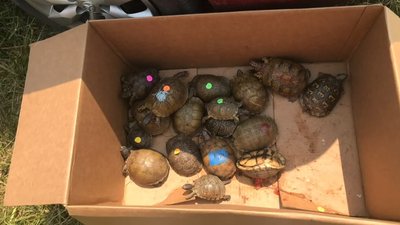
Many turtle races involve wild-caught turtles that are removed from their natural habitats, transported, confined, handled by unfamiliar people, and placed in stressful environments for the entertainment of spectators.
Turtles are not domesticated animals. They are wild reptiles with specific environmental, nutritional, behavioral, and physiological needs. Their slow movements should not be mistaken for an inability to experience stress or suffering.
Some of the major concerns associated with turtle racing include:
1. Stress and improper handling
Being captured, transported, repeatedly handled, and surrounded by unfamiliar people can cause significant stress. Turtles may be dropped, mishandled, overcrowded, or subjected to repeated handling by participants who lack experience with reptiles.
2. Extreme temperatures and risk of injury
Turtles are ectothermic, meaning they rely on their environment to regulate their body temperature. Racing on hot pavement, asphalt, or other exposed surfaces can put them at risk of overheating, dehydration, and potentially fatal heat stress. Accidental drops, rough handling, and inappropriate racing surfaces can also result in physical injuries.
3. Disease transmission
Gathering turtles from different locations and housing them together creates opportunities for infectious diseases and parasites to spread between individuals. Releasing these animals afterward can introduce pathogens into previously unaffected wild populations.
4. Displacement from their natural habitats
Many turtles have strong site fidelity and rely on familiar home ranges to find food, shelter, mates, and suitable nesting sites. Returning a turtle to an unfamiliar location or releasing it far from where it was collected can compromise its ability to survive.
5. Inappropriate practices and neglect
Observations at turtle racing events have documented overcrowding, inadequate shade, visibly ill or injured turtles being raced, application of paint and glue to identify participants, and turtles being abandoned after events.
Why this matters for conservation
Turtles are among the most threatened vertebrate groups in the world. Many species already face significant population pressures from habitat destruction, road mortality, pollution, illegal collection, and other human activities.
Many turtle species also have exceptionally slow life histories. They can take years to reach sexual maturity, and adult survival is especially important for maintaining stable populations. Removing even relatively small numbers of adults from the wild can have long-term consequences.
We should be teaching the next generation to appreciate and protect wildlife, not teaching them that wild animals exist for our entertainment.
What we are asking for
We are calling on community leaders, event organizers, and wildlife authorities to:
- End the use of wild-caught turtles in racing events. Wild turtles should not be removed from their natural habitats for entertainment.
- Establish stronger animal welfare regulations. Events involving turtles should be subject to appropriate wildlife and animal welfare oversight.
- Prohibit harmful handling and identification practices. Turtles should never be painted, glued, dropped, shaken, or otherwise subjected to unnecessary physical stress.
- Prevent disease transmission and inappropriate release. Wildlife should not be transported between populations or released into unfamiliar habitats following events.
- Replace traditional turtle races with humane educational alternatives. Communities can preserve the fun and educational value of these events through artificial turtle races, interactive educational activities, conservation exhibits, and other activities that do not involve live animals.
- We can celebrate turtles without putting them at risk.
This petition is not about blaming communities or attacking longstanding traditions. It is about recognizing that our understanding of animal welfare and wildlife conservation has evolved.
Traditions can change. Community celebrations can continue. Children can still learn to love turtles and develop an appreciation for wildlife without live animals being subjected to unnecessary stress and potential harm.
We have an opportunity to turn these events into something positive: an opportunity to educate, inspire conservation, and teach future generations to respect wildlife.
Please sign this petition and ask event organizers and wildlife authorities to end harmful turtle racing practices and protect these animals.
Turtles belong in their natural habitats, not on a racetrack.
Rachel Ellerd is a Change Ambassador who receives compensation in connection with this petition.

102
The Issue
Turtles deserve better than to be captured from their natural habitats and used as entertainment.
Across the United States, turtle races have become a longstanding tradition at county fairs, festivals, community celebrations, and other public events. Although these events may seem harmless or entertaining, the reality is that they can expose turtles to significant risks to their health, welfare, and survival.
We are asking communities to reconsider this tradition and put animal welfare and wildlife conservation first.
The problem with turtle racing
Many turtle races involve wild-caught turtles that are removed from their natural habitats, transported, confined, handled by unfamiliar people, and placed in stressful environments for the entertainment of spectators.
Turtles are not domesticated animals. They are wild reptiles with specific environmental, nutritional, behavioral, and physiological needs. Their slow movements should not be mistaken for an inability to experience stress or suffering.
Some of the major concerns associated with turtle racing include:
1. Stress and improper handling
Being captured, transported, repeatedly handled, and surrounded by unfamiliar people can cause significant stress. Turtles may be dropped, mishandled, overcrowded, or subjected to repeated handling by participants who lack experience with reptiles.
2. Extreme temperatures and risk of injury
Turtles are ectothermic, meaning they rely on their environment to regulate their body temperature. Racing on hot pavement, asphalt, or other exposed surfaces can put them at risk of overheating, dehydration, and potentially fatal heat stress. Accidental drops, rough handling, and inappropriate racing surfaces can also result in physical injuries.
3. Disease transmission
Gathering turtles from different locations and housing them together creates opportunities for infectious diseases and parasites to spread between individuals. Releasing these animals afterward can introduce pathogens into previously unaffected wild populations.
4. Displacement from their natural habitats
Many turtles have strong site fidelity and rely on familiar home ranges to find food, shelter, mates, and suitable nesting sites. Returning a turtle to an unfamiliar location or releasing it far from where it was collected can compromise its ability to survive.
5. Inappropriate practices and neglect
Observations at turtle racing events have documented overcrowding, inadequate shade, visibly ill or injured turtles being raced, application of paint and glue to identify participants, and turtles being abandoned after events.
Why this matters for conservation
Turtles are among the most threatened vertebrate groups in the world. Many species already face significant population pressures from habitat destruction, road mortality, pollution, illegal collection, and other human activities.
Many turtle species also have exceptionally slow life histories. They can take years to reach sexual maturity, and adult survival is especially important for maintaining stable populations. Removing even relatively small numbers of adults from the wild can have long-term consequences.
We should be teaching the next generation to appreciate and protect wildlife, not teaching them that wild animals exist for our entertainment.
What we are asking for
We are calling on community leaders, event organizers, and wildlife authorities to:
- End the use of wild-caught turtles in racing events. Wild turtles should not be removed from their natural habitats for entertainment.
- Establish stronger animal welfare regulations. Events involving turtles should be subject to appropriate wildlife and animal welfare oversight.
- Prohibit harmful handling and identification practices. Turtles should never be painted, glued, dropped, shaken, or otherwise subjected to unnecessary physical stress.
- Prevent disease transmission and inappropriate release. Wildlife should not be transported between populations or released into unfamiliar habitats following events.
- Replace traditional turtle races with humane educational alternatives. Communities can preserve the fun and educational value of these events through artificial turtle races, interactive educational activities, conservation exhibits, and other activities that do not involve live animals.
- We can celebrate turtles without putting them at risk.
This petition is not about blaming communities or attacking longstanding traditions. It is about recognizing that our understanding of animal welfare and wildlife conservation has evolved.
Traditions can change. Community celebrations can continue. Children can still learn to love turtles and develop an appreciation for wildlife without live animals being subjected to unnecessary stress and potential harm.
We have an opportunity to turn these events into something positive: an opportunity to educate, inspire conservation, and teach future generations to respect wildlife.
Please sign this petition and ask event organizers and wildlife authorities to end harmful turtle racing practices and protect these animals.
Turtles belong in their natural habitats, not on a racetrack.
Rachel Ellerd is a Change Ambassador who receives compensation in connection with this petition.
The Decision Makers
Supporter Voices
Petition Updates
Share this petition
Petition created on November 5, 2026