
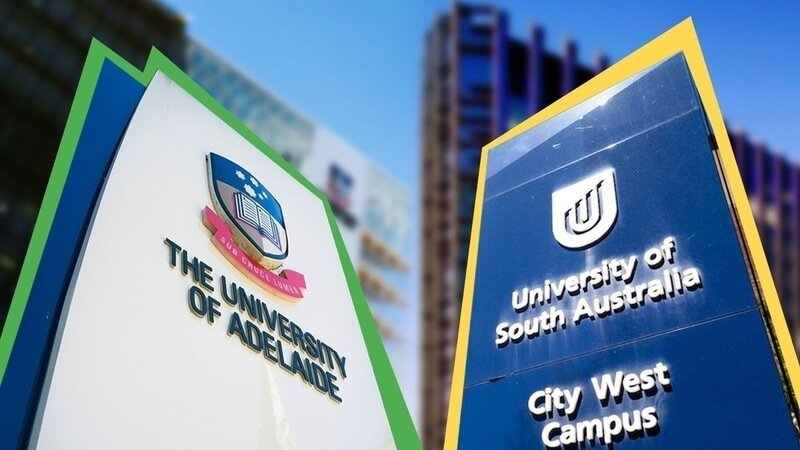
Amalgamations of higher education institutions are problematic, often risky, and reliably consistent when it comes to poor returns.
Common consequences include crippling attrition, loss of quality and skilled labour, and diminished quality of service in terms of courses and workplace satisfaction. The literature on the subject is not sparkling on the merits of such moves.
In Australia, the tertiary sector is confronting, at the vigorous promptings of the South Australian government, a grand university amalgamation project. The merger in question: the University of South Australia (UniSA) and the University of Adelaide.
Merger talks between South Australia’s universities have a tendency of rising, like Icarus, towards the sun, only to fall back to earth with a thud. Two conspicuous efforts were made without success — in 2012 and 2018.
But premier Peter Malinauskas, when in opposition, resuscitated what seemed to be a most shy, retiring patient. In doing so, he tried to give some gloss of professionalism to the venture by proposing a university merger commission, intended to provide an independent assessment of the merits of such a venture.
“Should the independent commission determine that a university merger is in the interests of the South Australian economy and the welfare of the people of the state, then a merger will be the first term priority for a Labor government”.
On winning the state elections last year, Malinauskas immediately threw money at the merger project, allocating $1 million and three full-time staff in the state budget to advise the government on the project’s feasibility. But the promise of a university merger commission was quietly abandoned.
On December 7, 2022, the state government announced that a “statement of cooperation” with the University of Adelaide and UniSA had been signed. The respective university bodies agreed that should a deal on the merger be reached, Adelaide University would be its name, with operations to commence in the first month of 2026.
The first thing to note about such rankings is their selective, even discriminatory nature. These tend to vary dramatically depending on sampling, assumptions and specific areas of expertise. Often, the specific student experience is ignored. Their contentious nature has even led to outright repudiation by some institutions. The law schools of both Yale and Harvard announced last year that they would no longer be participating in the rankings of the US News and World Report.
Just to make the argument by the premier even shakier, the University of Adelaide found itself at 88 in the 2023 Times Higher Education world university rankings, which was something of a rebuttal to the lament about not having a South Australian university in the top 100 of the world’s tertiary institutions.
Other issues about the merger have also been skirted over. The vice-chancellors of the two universities initially claimed that “net job losses” would not arise from the merger. This rather rosy position was abandoned a few months later, replaced by a shaky guarantee that no forced redundancies or retrenchments would be made until 18 months into the life of the newly formed institution.
Some of South Australia’s politicians have also expressed concern. One is South Australian Greens MP Robert Simms, who has observed that the historical legacy from such amalgamation drives is a poor one.
“The experience of mergers from interstate and overseas demonstrates that they inevitably result in job losses and a reduction in the quality of the student experience.”
As for the optimistic vice-chancellors, earnings up to $100 million are predicted to fill university coffers by 2034, though how that figure is arrived at remains unclear. University of Adelaide vice-chancellor Peter Hoj is even confident that $50 million in annual research funds on research will duly follow.
On July 1, over the course of a weekend, the governing councils of both universities voted to approve the amalgamation. Their meek compliance had the full, open-wallet endorsement of premier Malinauskas, who announced the next day that $115 million would be paid to the institutions in exchange for taking over surplus land, with $30 million granted for the purpose of attracting international students.
Something to make things even more appealing for university management is the establishment of a $300 million perpetual investment fund. The universities, in being told that they will have to work within these stipulated margins, promise to match the amounts.
The overall cost of the venture, which will include such matters as IT configurations, course syllabi restructuring, and staff redundancies, is the stuff of speculation and secrecy; $450 million is one calculation doing the rounds.
Neither is there any genuine assessment of the benefits of such a behemoth. A petition against the amalgamation, which has so far garnered 1,589 signatures, outlines their common defects, from the “loss of institutional identity” inherent to the specific institutions to decreased competition and a loss of local control.
The National Tertiary Education Union has expressed worries at the amalgamation, noting that of a survey of 1,100 university staff, only 25% supported it, while 95% noted that they had not been adequately consulted by the state government.
Its SA division secretary, Andrew Miller, fears that the amalgamation “could be catastrophic”, feeling that an open and independent inquiry, be it through an independent commission or parliament, is a necessary precondition to any merger.
The concerns have been expanded upon in the NTEU’s July submission to the Joint Committee on the Establishment of Adelaide University, urging parliamentarians to only make a decision based on “robust evidence and reliable modelling” to meet “the public interest test”.
Any such merger will require the approval of the upper house of South Australia’s parliament. The Greens have stated they will oppose the merger. The Liberals are demanding more details.
But the ultimate question to ask here is elementary: is the whole venture even necessary?
https://www.themandarin.com.au/227173-south-australian-university-merger-another-amalgamation-disaster/
By Binoy Kampmark
Dr. Binoy Kampmark was a Commonwealth Scholar at Selwyn College, Cambridge. He lectures at RMIT University, Melbourne.
Email: bkampmark@gmail.com