
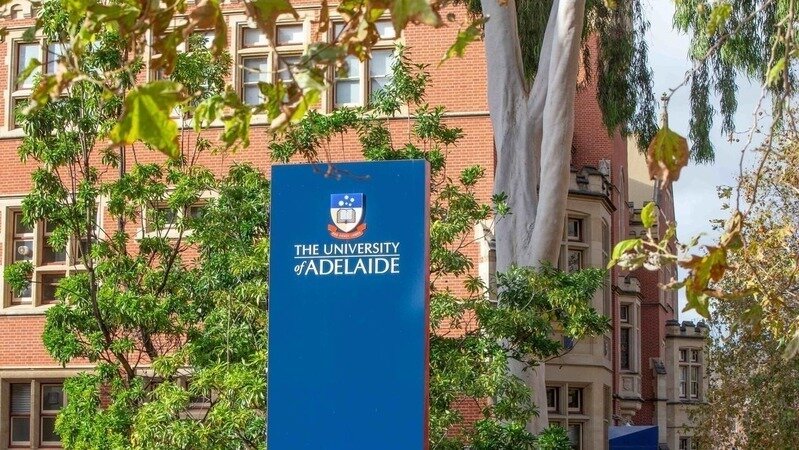
The South Australian parliamentary inquiry into the planned university merger in the state meets for its last hearings next week and should be using its time to find answers to some big questions.
The biggest is: Why have the University of Adelaide and the University of South Australia – which want to join into one large institution – not offered up a more comprehensive business plan that also analyses alternatives to the merger outcome they prefer?
In particular, why have they not compared the impact of their preferred merger with the alternative of investing the money it will cost – possibly more than $700m – in other ways? Indeed, what would happen if that money were invested in improving the teaching and research at the two universities as they stand, instead of embarking on a complex and uncertain merger process?
The committee should also delve into what strategies the two universities will put in place to deal with the various unknowns that will develop over the course of the 10-year plan for the merger. How much flexibility is there, and what resources are available, to deal with unforeseen events?
These questions, and others, are raised by University of NSW economics professor Richard Holden and University of Adelaide architecture adjunct professor Geoff Hanmer (who has had long experience in advising universities on strategic issues) in a late submission to the inquiry.
The pair question why these issues – which are fundamental to the decision to go ahead with such a large merger creating a university with nearly $2bn of annual revenue – are not addressed in the business plan. “This business case presents the rosiest possible picture,” says Holden.
Maybe the questions have been answered. But if they have, they are not revealed in the public business case. And if the answers exist then the parliamentary committee has the responsibility to dig them out.
If this was a proposed merger between two privately owned businesses, such information would belong to the shareholders. But the two universities are public institutions, and the public of South Australia needs to know the answers because they are the losers if the merger fails.
There are good reasons to believe the merger plan is highly risky. In their submission, Holden and Hanmer point to numerous other flaws in the business case.
“The complexity and challenges involved in merging two large organisations … with different cultures, different IT systems, different student profiles, and different academic staff profiles are almost completely glossed over,” they say.
“The costs of integration outlined in the business case appear to us to be a dramatic underestimate of the eventual cost, based on historic examples of restructuring efforts and IT project costs at Australian universities.
“Furthermore, the idea that the organisation could achieve a dramatic uplift in student numbers and research quality whilst undergoing a root-and-branch transition stretches credulity beyond breaking point.”
They point out that merger projects of this kind are always challenged by circumstances and setbacks. “The lack of consideration afforded to them in the business case is deeply troubling,” Holden and Hanmer say.
They point to other troubling issues. The cash being offered by the SA government to fund the merger is mainly from a transfer of the UniSA Magill campus to the government for $114m.
“This deal is likely to result in the state government making a profit which could otherwise be realised by UniSA,” they say.
Even though the merger is being driven by SA Premier Peter Malinauskas, who is giving it full political backing, the government’s lack of investment is forcing the two universities to dip into their reserves.
“From a risk-management perspective, even in the bullish “high case” presented in the business plan, the balance sheet of the merged entity will be severely impaired, limiting the ability of the entity to weather future external shocks, or to pursue opportunities,” Holden and Hanmer say.
They also bring up the difficulty for the merged university in teaching students from a wide range of academic backgrounds.
The University of Adelaide has courses with high ATAR cut-offs; UniSA generally does not. “The merger would involve integrating students from a university with an ATAR cut-off of approximately 50 with another university whose ATAR cut-off is approximately 80. Putting students with ATARs of 50-60 in classes with students with ATARs of 95-99 simply doesn’t work,” the pair say.
“Any organisation needs to have a degree of horizontal equity between researchers, but when there are large quality and reputational differentials, the risk is that the high-quality researchers will simply leave. If anything, the business case should consider a likely reduction in research quality rather than an increase,” the pair say.
They also bust the myth that the two universities need to avoid disclosing commercial-in-confidence information, and this is what has prevented them from offering a more detailed business plan. The pair point out that a huge amount of financial data about public universities is already published by the government and the regulator.
“We seriously doubt that UoA or UniSA are protecting anything but the reputation of the people who prepared the business case and those who authorised its publication,” they say.
Merger proponents make much of the merger two decades ago of Victoria University of Manchester and the University of Manchester Institute of Science and Technology. It is the only example that can be pointed to of a university merger that had reasonable success, although Holden and Hanmer note the universities were much smaller than in SA, and the financial investment was huge. It cost £1.3bn by 2015, they say, which is a figure drawn from a 2015 book titled Mergers and Alliances in Higher Education: International Practice and Emerging Opportunities.
But, in my view, the Manchester merger got something right. The vice-chancellor appointed to lead the new institution was an outsider, Australian Alan Gilbert.
The University of Adelaide and UniSA should commit now to appoint outsiders as vice-chancellor and chancellor if the merger goes ahead. It would signal that neither university is “taking over” the other and it make it clear that none of the current leaders is motivated by personal ambition in their support for the merger.
It’s now up to the committee to come to a view and a lot rides on it. The merger can go ahead only if the SA upper house, where the Malinauskas Labor government does not hold a majority, passes the legislation to set up the merged university. The Liberals and the cross-bench could combine to defeat it. It’s an important decision they need to get right.
Tuesday, August 29, 2023, The Australian. By Tim Dodd.
https://www.theaustralian.com.au/higher-education/big-questions-go-unanswered-in-sas-2bn-university-merger/news-story/57e83e7c4128ae330433739ba98db52c