Why merging two South Australian universities is not in the public interest

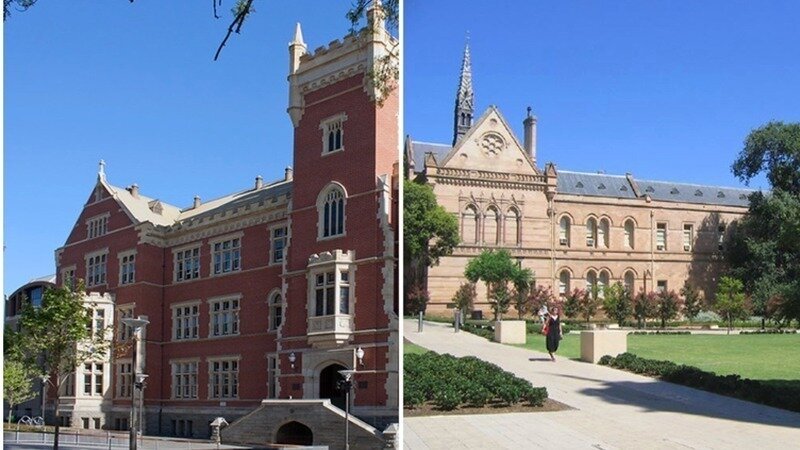
Why merging two South Australian universitises is not in the public interest by Public Universities Australia (PUA) - 12 June 2023
Universities are publicly funded institutions and should serve the public good. Universities provide students with education that goes beyond training for particular jobs, enhancing individuals’ critical capabilities and their contributions to civil society. Academics at universities are a reservoir of knowledge and expertise that underpins teaching of students as well as research.
Merging two South Australian universities is likely to produce an extremely large institution in which academic standards are further eroded and students are less satisfied. Disadvantaged student groups are not likely to fare better in such an institution.
It is already clear that mass education that is underfunded has eroded academic standards. University senior managements and government have evaded this point by focussing on metrics such as attrition rates (students dropping out) or success rates (ratio of courses passed to courses failed). These do not reflect academic standards – and indeed these measures create pressure to lower academic standards in a context of increasing workloads and cost cutting.
Student satisfaction is reduced in very large universities compared with others (assessed by Quality Indicators for Learning and Teaching, see website of Australian Government Department for Education Home (qilt.edu.au) and website for The Good Universities Guide Find University and TAFE Courses | Good Universities Guide). This is highly likely to reflect reductions in the extent and depth of interaction with expert teachers (see Dhawan 2022), with class sizes having increased dramatically and much greater reliance on casual staff. Digital technologies are increasingly used in education, but they are an adjunct to teaching, not a substitute for it.
Students are not well served by higher education of minimum standards. The community is not well served either, and employers continue to report concerns about the suitability of graduates under the expanded higher education system (see Small et al. 2021). 2 Increasing participation in higher education by students who would not traditionally have gone to university is important. But beyond access to university (being admitted), many of these students would need more support, not less than students once had. It is a mistake to think this can be done at low cost. The current approach has not meant that disadvantaged students have achieved the same career opportunities (in terms of job security, salary, work relevant to qualification) as others after completing university (Pitman et al. 2017). Research such as that of the National Centre for Equity and Diversity in Higher Education at Curtin University has investigated the experiences of various disadvantaged groups at universities and findings do not suggest their experience will improve in an extremely large university.
Mergers to reduce costs have a high risk of prioritising efficiency (in management terms) over effectiveness of teaching. This is clearly seen in the merger of three TAFEs (Technical and Further Education institutes) in South Australia. Reports commissioned by the South Australian government (available online) after a number of courses failed external accreditation in 2017-2018 clearly show the impacts on staff and students of a focus on cost cutting while losing sight of the quality of education and the need to meet community needs.
A merger (or some other co-operative or federated arrangement) between South Australian universities could be designed to strengthen academic standards, student learning, teaching, and the nexus between research and teaching. However, this would need to be a clear rationale that guided decision-making and allocation of resources. Currently students and teaching are seen as an exploitable source of revenue through which to subsidise inadequately funded research. There is no indication that this structural antagonism between research and teaching will change with the proposed merger; instead it continues policies that have steadily eroded Australia’s sovereign capabilities that critically rely on the quality of both, teaching and research.
References
Dhawan S. Higher education quality and student satisfaction: meta-analysis, subgroup analysis and meta-regression. Metamorphosis 2022; 21: 48-66. Pitman T, Roberts L, Bennett D, Richardson S. An Australian study of graduate outcomes for disadvantaged students. Journal of Further and Higher Education 2017; 43: 45-57.
Small L, McPhail R, Shaw A. Graduate employability: the higher education landscape in Australia. Higher Education Research and Development 2022; 41: 919-933.