STOP THE PRODUCTION OF THE HAUNTING ADELINE MOVIE!
The Issue
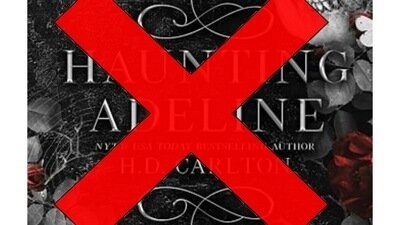
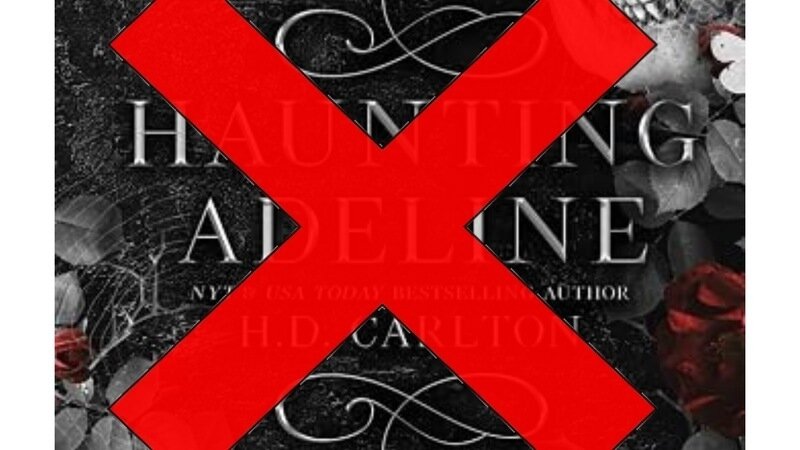
The book Haunting Adeline by H.D. Carlton is getting a movie adaptation. This book perpetuates and mirrors rape culture, which refers to a social environment in which sexual violence is normalized, played down or laughed at. It gives the idea that women/girls are “less than” men. The book also weaponizes women's pain and calls it romance.Let's be clear about what Haunting Adeline does. It takes the things women are taught to fear most — a stranger in their home, being drugged, being restrained, being unable to say no — and frames them as desirable. The male lead doesn't just cross boundaries. He demolishes them. And the narrative rewards him for it. The protagonist's fear, her tears, her attempts to resist — these aren't treated as signs of harm. They're treated as part of the fantasy. A gun being inserted inside her is treated as something attractive. The author claims that this movie will not be censored either, meaning that we will have to see multiple rape scenes in the span of a movie that will probably be two hours long.
In writing, there's at least some distance. You can close the book. You can read critically. A movie removes that distance. You're watching a woman be terrorized in her own home, and the director wants you to find it romantic. The lighting is warm. The music is intimate. The actor is handsome. Every cinematic choice tells the audience: this is passion, this is love, this is what it looks like when someone wants you badly enough.The impact on women and survivors is not hypothetical. Women who have been stalked, drugged, or assaulted don't get to opt out of this cultural conversation. A movie adaptation would be advertised everywhere. It would trend on social media. It would be recommended by algorithms. Survivors would have to see it, hear about it, watch people romanticize the exact things that happened to them. And for young women who haven't been assaulted yet — who are still forming their understanding of what love looks like — this movie would teach them that boundaries are obstacles, that "no" is a negotiation, and that a man who scares you probably just loves you that much. That is not a love story. That is a grooming narrative.
This is not about censorship, it's about accountability. I'm not saying dark fiction shouldn't exist. I'm not saying adults shouldn't read what they want. But when a book this poorly written and this ethically irresponsible gets a movie deal, we have to ask: why this story? Why now? There are dark romance novels that handle trauma with care, that give their characters agency, that treat consent as non-negotiable, that let survivors see themselves without being exploited. Haunting Adeline is not one of them. Studios have a choice.They can fund content that exploits women's trauma for profit, or they can fund content that respects it. This petition is asking them to make the right one. If you're tired of seeing women's trauma packaged as entertainment. If you believe that romance should never be a disguise for rape. If you think some stories don't deserve a bigger audience — they deserve to stay on the page. My goal is 1,000 signatures to show whatever production company that has taken up the idea of making this sick book a movie, that we're paying attention and we expect better.

30,384
The Issue
The book Haunting Adeline by H.D. Carlton is getting a movie adaptation. This book perpetuates and mirrors rape culture, which refers to a social environment in which sexual violence is normalized, played down or laughed at. It gives the idea that women/girls are “less than” men. The book also weaponizes women's pain and calls it romance.Let's be clear about what Haunting Adeline does. It takes the things women are taught to fear most — a stranger in their home, being drugged, being restrained, being unable to say no — and frames them as desirable. The male lead doesn't just cross boundaries. He demolishes them. And the narrative rewards him for it. The protagonist's fear, her tears, her attempts to resist — these aren't treated as signs of harm. They're treated as part of the fantasy. A gun being inserted inside her is treated as something attractive. The author claims that this movie will not be censored either, meaning that we will have to see multiple rape scenes in the span of a movie that will probably be two hours long.
In writing, there's at least some distance. You can close the book. You can read critically. A movie removes that distance. You're watching a woman be terrorized in her own home, and the director wants you to find it romantic. The lighting is warm. The music is intimate. The actor is handsome. Every cinematic choice tells the audience: this is passion, this is love, this is what it looks like when someone wants you badly enough.The impact on women and survivors is not hypothetical. Women who have been stalked, drugged, or assaulted don't get to opt out of this cultural conversation. A movie adaptation would be advertised everywhere. It would trend on social media. It would be recommended by algorithms. Survivors would have to see it, hear about it, watch people romanticize the exact things that happened to them. And for young women who haven't been assaulted yet — who are still forming their understanding of what love looks like — this movie would teach them that boundaries are obstacles, that "no" is a negotiation, and that a man who scares you probably just loves you that much. That is not a love story. That is a grooming narrative.
This is not about censorship, it's about accountability. I'm not saying dark fiction shouldn't exist. I'm not saying adults shouldn't read what they want. But when a book this poorly written and this ethically irresponsible gets a movie deal, we have to ask: why this story? Why now? There are dark romance novels that handle trauma with care, that give their characters agency, that treat consent as non-negotiable, that let survivors see themselves without being exploited. Haunting Adeline is not one of them. Studios have a choice.They can fund content that exploits women's trauma for profit, or they can fund content that respects it. This petition is asking them to make the right one. If you're tired of seeing women's trauma packaged as entertainment. If you believe that romance should never be a disguise for rape. If you think some stories don't deserve a bigger audience — they deserve to stay on the page. My goal is 1,000 signatures to show whatever production company that has taken up the idea of making this sick book a movie, that we're paying attention and we expect better.
Supporter Voices
Petition Updates
Share this petition
Petition created on July 17, 2026