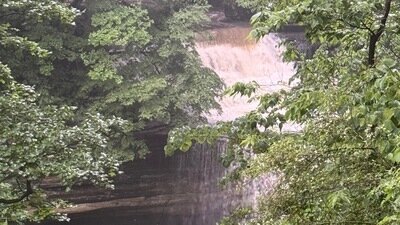

Stop the Industrial Expansion near Clifty Falls
The Issue
Imagine driving down a peaceful road in Jefferson County…
Surrounded by the historic rolling hills, the deep-rooted heritage of Madison, and the quiet expanse of the Big Oaks National Wildlife Refuge.
Now, picture that view potentially transformed by a sprawling, 7.1 million square foot industrial footprint… nine massive, concrete hyperscale buildings proposed across approximately 549 acres of the Jefferson Proving Grounds.
This project has been classified as a “warehouse.” A hyperscale data center is not a traditional “warehouse.” Warehouses store physical goods and generally have lower utility demands. Data centers are high-density, energy-intensive facilities with significant cooling infrastructure, noise considerations, and hazardous materials storage (including lithium-ion backup batteries and diesel fuel tanks).
This isn’t just “development.” Many residents view this as an unprecedented industrial-scale transformation being advanced with limited community oversight, limited public notice, and limited local input.
Our county leaders are attempting to justify this by pointing to a promised $60 million in annual tax revenue. However, it is reasonable to ask where that figure comes from.
Indiana law explicitly waives state sales and use taxes on electricity and certain computing equipment for data centers for up to 50 years. Recent state disclosures suggest Indiana taxpayers may be foregoing hundreds of millions annually through similar tax exemption structures.
The promised corporate windfall is uncertain, and the potential local costs may be very real.
The Costs That Raise Concern:
Our Water and Our Creeks:
Data centers can require large volumes of water for cooling server infrastructure. In some systems, water is cycled and released back into the environment at elevated temperatures. If such discharge occurs in local watersheds, there are concerns it could negatively impact aquatic ecosystems and creek health. This is an issue that environmental studies should fully evaluate.
The Potential Impact to Big Oaks & Clifty Falls:
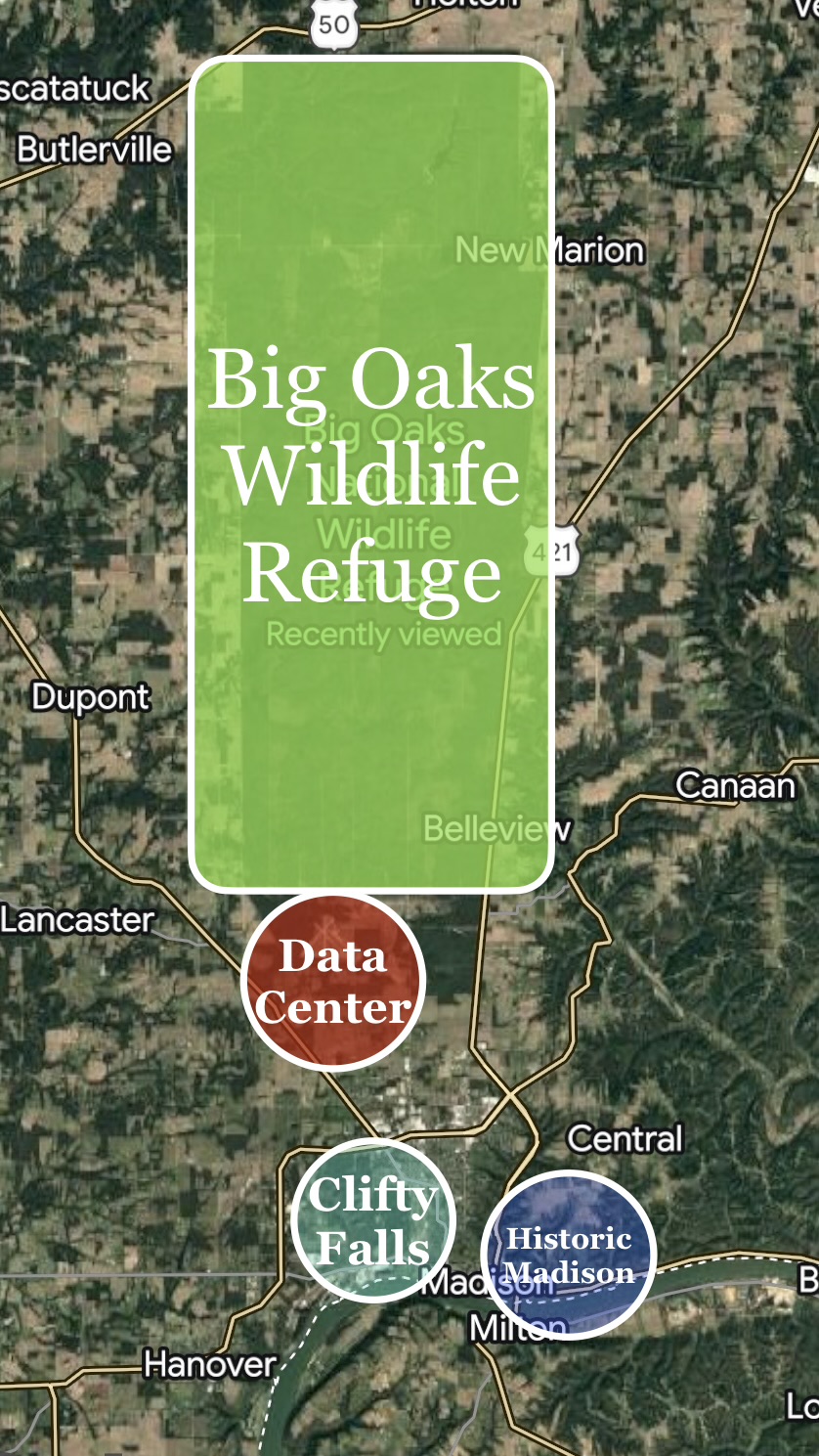
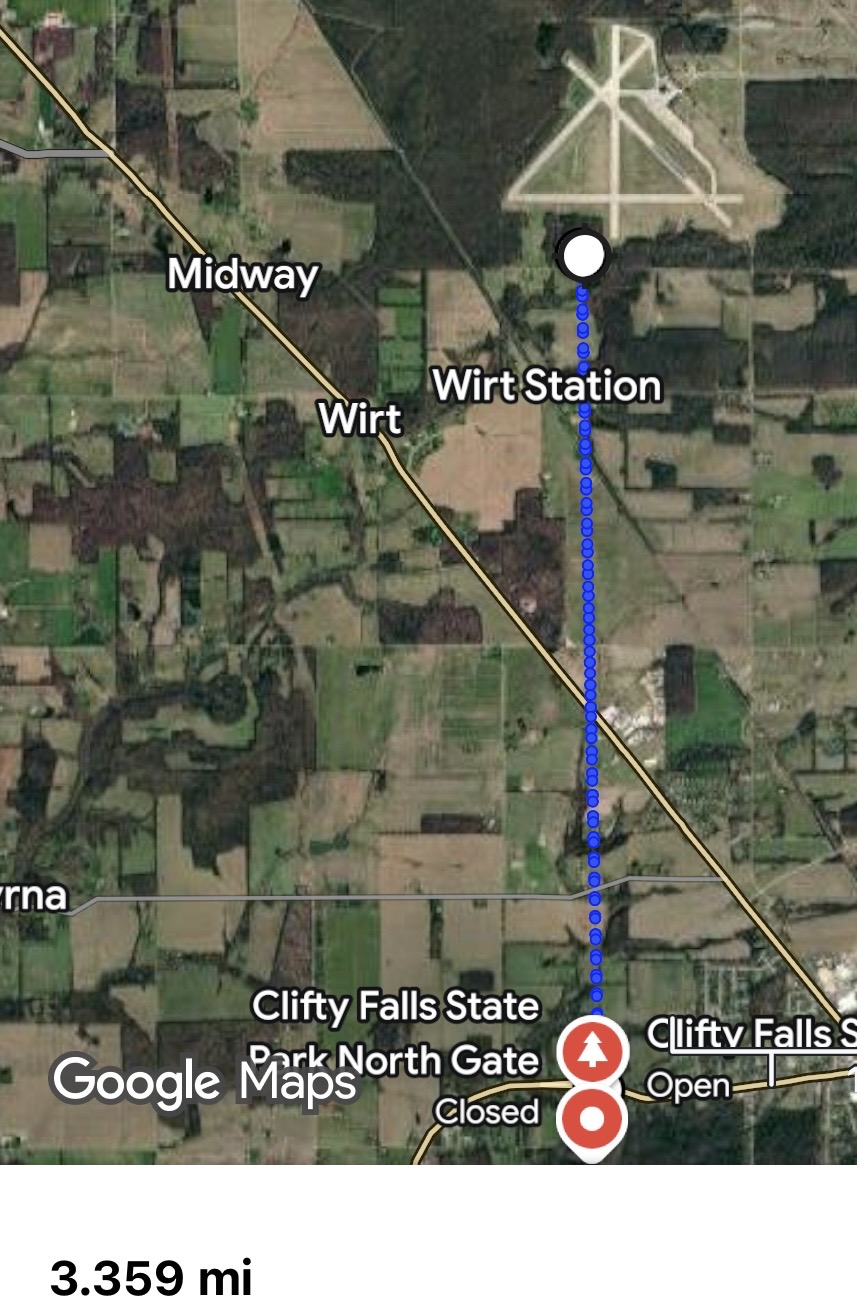
This project directly borders Big Oaks National Wildlife Refuge and sits approximately 3.3 miles from Clifty Falls State Park.
This region is a vital sanctuary for migratory birds and federally protected species. Round-the-clock industrial activity, potential emissions from diesel backup generators, noise, light pollution, and localized heat effects may all pose risks of disruption to a fragile ecosystem that, if significantly impacted, would be difficult to restore.
The Infrastructure Strain:
While large tech facilities may bring projected tax revenue, residents may also face infrastructure impacts. A hyperscale facility can draw as much power as a small town, raising concerns about strain on the regional grid, potential effects on utility costs, and increased demand on local water resources—all while producing a relatively small number of permanent jobs.
This project was approved through a process that raises concerns among some residents.
Because Jefferson County’s current zoning laws do not appear to include a formal definition for a “data center,” local officials classified this proposed 7.1-million-square-foot facility as “industrial warehousing.” This classification reportedly allowed an Improvement Location Permit to be granted on February 25, 2026, without broad public notice or community input, which many residents view as a concern.
Madison is a historic treasure. Our geography is unique, our wildlife is irreplaceable, and our community identity is not for sale. Innovation is important, but many believe some locations are not suitable for data center-scale industrial development—particularly those near sensitive ecological areas such as national wildlife refuges.
This facility, in the view of many residents, may be better suited to an established heavy-industrial corridor rather than an area bordering protected natural land.
Sign this petition to request that the Jefferson County Commissioners and Plan Commission pause and re-evaluate this project, review the permitting process, and ensure that environmental, water, noise, and light studies are fully completed, publicly available, and independently reviewed before moving forward.
If a project of this scale is being placed near one of the most ecologically sensitive areas in southern Indiana, many believe that comprehensive environmental review and mitigation planning should be completed—and if necessary, alternative siting options should be considered.

1,435
The Issue
Imagine driving down a peaceful road in Jefferson County…
Surrounded by the historic rolling hills, the deep-rooted heritage of Madison, and the quiet expanse of the Big Oaks National Wildlife Refuge.
Now, picture that view potentially transformed by a sprawling, 7.1 million square foot industrial footprint… nine massive, concrete hyperscale buildings proposed across approximately 549 acres of the Jefferson Proving Grounds.
This project has been classified as a “warehouse.” A hyperscale data center is not a traditional “warehouse.” Warehouses store physical goods and generally have lower utility demands. Data centers are high-density, energy-intensive facilities with significant cooling infrastructure, noise considerations, and hazardous materials storage (including lithium-ion backup batteries and diesel fuel tanks).
This isn’t just “development.” Many residents view this as an unprecedented industrial-scale transformation being advanced with limited community oversight, limited public notice, and limited local input.
Our county leaders are attempting to justify this by pointing to a promised $60 million in annual tax revenue. However, it is reasonable to ask where that figure comes from.
Indiana law explicitly waives state sales and use taxes on electricity and certain computing equipment for data centers for up to 50 years. Recent state disclosures suggest Indiana taxpayers may be foregoing hundreds of millions annually through similar tax exemption structures.
The promised corporate windfall is uncertain, and the potential local costs may be very real.
The Costs That Raise Concern:
Our Water and Our Creeks:
Data centers can require large volumes of water for cooling server infrastructure. In some systems, water is cycled and released back into the environment at elevated temperatures. If such discharge occurs in local watersheds, there are concerns it could negatively impact aquatic ecosystems and creek health. This is an issue that environmental studies should fully evaluate.
The Potential Impact to Big Oaks & Clifty Falls:
This project directly borders Big Oaks National Wildlife Refuge and sits approximately 3.3 miles from Clifty Falls State Park.
This region is a vital sanctuary for migratory birds and federally protected species. Round-the-clock industrial activity, potential emissions from diesel backup generators, noise, light pollution, and localized heat effects may all pose risks of disruption to a fragile ecosystem that, if significantly impacted, would be difficult to restore.
The Infrastructure Strain:
While large tech facilities may bring projected tax revenue, residents may also face infrastructure impacts. A hyperscale facility can draw as much power as a small town, raising concerns about strain on the regional grid, potential effects on utility costs, and increased demand on local water resources—all while producing a relatively small number of permanent jobs.
This project was approved through a process that raises concerns among some residents.
Because Jefferson County’s current zoning laws do not appear to include a formal definition for a “data center,” local officials classified this proposed 7.1-million-square-foot facility as “industrial warehousing.” This classification reportedly allowed an Improvement Location Permit to be granted on February 25, 2026, without broad public notice or community input, which many residents view as a concern.
Madison is a historic treasure. Our geography is unique, our wildlife is irreplaceable, and our community identity is not for sale. Innovation is important, but many believe some locations are not suitable for data center-scale industrial development—particularly those near sensitive ecological areas such as national wildlife refuges.
This facility, in the view of many residents, may be better suited to an established heavy-industrial corridor rather than an area bordering protected natural land.
Sign this petition to request that the Jefferson County Commissioners and Plan Commission pause and re-evaluate this project, review the permitting process, and ensure that environmental, water, noise, and light studies are fully completed, publicly available, and independently reviewed before moving forward.
If a project of this scale is being placed near one of the most ecologically sensitive areas in southern Indiana, many believe that comprehensive environmental review and mitigation planning should be completed—and if necessary, alternative siting options should be considered.
The Decision Makers


Supporter Voices
Petition Updates
Share this petition
Petition created on June 3, 2026