*FLORIDA BLACK BEAR UPDATE* FWC Meeting Tomorrow - Press Release Included.

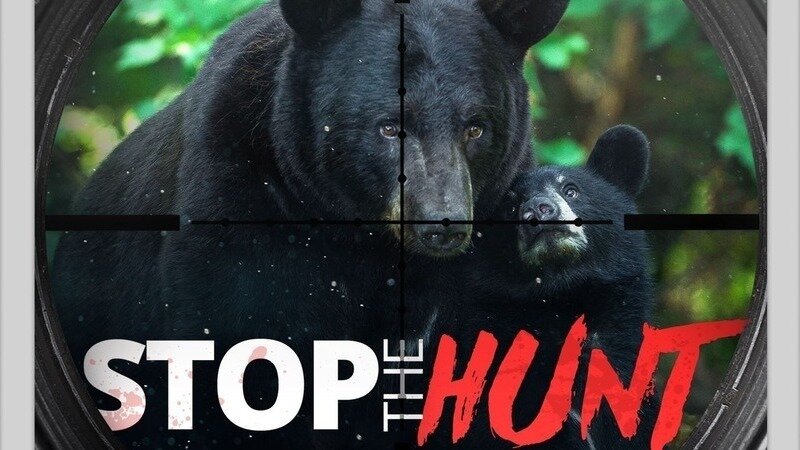
*** PRESS RELEASE ***
FOR IMMEDIATE DISTRIBUTION
May 20, 2025
Media Contact: Adam Sugalski
Email: adams@oneprotest.org
Websites: oneprotest.org + beardefenders.org
Florida’s Black Bears Face an Unjustified Trophy Hunt
Tomorrow, the Florida Fish and Wildlife Conservation Commission (FWC) will meet in Ocala to consider a proposal that could have devastating consequences for one of Florida’s most iconic and misunderstood native species, the Florida black bear.
We urge all Floridians who care about science, wildlife, and ethical stewardship to show up and speak out against the return of the controversial and unnecessary bear trophy hunt.
Let us take a moment to reflect on how we truly arrived at this point. The push to reinstate a hunt on Florida’s black bears is not grounded in science, necessity, or public safety. It is not because bears are overpopulating. There is no scientific evidence to support such a claim. Nor is it because they pose a widespread threat to human life.
The heartbreaking incident that occurred in Jerome, Florida, where 89-year-old Robert Markel tragically lost his life, marked the first recorded fatality caused by a Florida black bear in the state’s history. This rare and deeply tragic incident must be understood for what it is: an anomaly. It should not be weaponized to justify a recreational or trophy hunt on Florida black bears.
So why are black bears on the agenda?
Because Commissioner Gary Lester wants to kill them.
At the FWC’s December 2024 meeting, Bear Biologist Mike Orlando presented a comprehensive update on the FWC’s Bear Management Plan. At no time did he state bears were overpopulated. He did not cite food scarcity, nor did he identify an urgent public safety concern. He explicitly stated that no management action was needed at this time. FWC’s ongoing bear population study, critical to understanding our state’s bear population dynamics and sustainability, will not be completed until 2029-2030.
Despite this, immediately following the report, Commissioner Lester said, “I’ll be very succinct. I would like to see a proposal from staff for a bear hunt.” The Commission then directed staff to draft a proposal based not on science but on one commissioner’s personal desire for a bear trophy hunt.
When pressed during FWC’s virtual public workshops, FWC staff admitted the hunt proposal is not about population control. Instead, they described it as an “opportunity” for bear hunters, a small minority of Floridians, to kill bears. Let's clarify that Florida black bears have not reached their biological, environmental, or social carrying capacities.
Let us be unequivocal: this is a trophy hunt. While proponents may claim otherwise, arguing that consuming bear meat disqualifies the hunt as a trophy hunt, the facts do not support the notion that this is a subsistence-based activity. This is not a matter of food security or feeding families. The individuals seeking to participate in this hunt are not doing so out of necessity; they are motivated by the desire to kill a large, charismatic native species. Labeling it anything else obscures the true nature of the proposal and misleads the public about its purpose and impact.
Killing is not conservation.
Scientific evidence and practical, proven solutions to human-bear conflicts are being ignored. The real driver of these conflicts is not an overpopulation of bears, but an overabundance of unsecured trash and other attractants. In places like Seminole and Volusia Counties, the implementation of bear-resistant trash cans led to a 95% reduction in bear-related incidents.
It is important to note that hunting does not reduce bear-human conflicts, as it does not address the root cause of most conflicts, which is trash and other bear attractants. The bears killed during a hunt are bears deep in the woods, not those frequenting neighborhoods for an easily accessible calorie-rich meal that trash provides.
During one of the FWC’s virtual meetings, FWC staff was asked about the $683,500 Governor DeSantis approved last year for bear-resistant trash cans in Franklin County. They admitted that the trash cans still haven’t been distributed. Why?
Let’s not forget: Florida’s black bears were nearly wiped out in the 20th century, their numbers dropping as low as 300 statewide. After decades of protection, today’s estimated population is only about 4,050 statewide. This fragile recovery took more than half a century and still depends on responsible wildlife management and public awareness.
Florida black bears have low reproductive rates and self-regulate their populations through delayed implantation. When resources are scarce, female bears naturally reduce their reproduction rates.
Bear sightings have increased, but that doesn’t indicate overpopulation. It is important to understand what these sightings truly reflect. More bears are being seen, not because their numbers are surging, but because our world has changed. With the rise of doorbell cameras, trail cams, and social media, we now witness wildlife in ways we never could before. Bears have always been here, quietly moving through Florida's landscapes, often unnoticed. The difference now is that technology brings their presence into our homes and feeds. At the same time, rapid development is pushing farther into wild spaces, fragmenting bear habitat and forcing wildlife to navigate neighborhoods, roads, and urban edges to survive. These sightings are not signs of bears “invading” our communities. They are signs that we are expanding into theirs.
It is our behavior, not the bears’, that must change.
Florida is at a crossroads, between protection and exploitation, between science and politics, between reverence for the wild and the out-of-control destruction of it. We must ask ourselves: What kind of legacy do we wish to leave behind? A future defined by short-sighted decisions that serve the minority special interests, or one rooted in respect for the ecosystems and native species that define this state’s natural heritage?
The Florida black bear is not a threat to be eradicated. Florida black bears are a keystone and umbrella species, a symbol of resilience, and a living reminder of what remains of Florida’s once-vast wilderness. It took decades of science, advocacy, and conservation to bring these bears back from the brink of extinction. Placing them in the crosshairs of a politically driven trophy hunt, absent scientific and ethical justification, is a betrayal of that progress.
Protecting Florida’s wildlife is not a fringe issue. It is a moral imperative. It is a call to safeguard the last wild places not just for bears, but for all who depend on healthy, intact ecosystems. The decisions we make today will echo far beyond this moment.
Let us protect the Florida black bears, whose presence speaks volumes about the health and soul of our wild Florida.
Now is the time to stand up and speak out before it’s too late.
FWC Meeting Details
Date: May 21–22, 2025
Time: 8:30 AM - Arrive early (7:30 am) to register to speak.
Location:
College of Central Florida
The Ewers Century Center, Klein Conference Center
Building 40, 3001 S.W. College Rd., Ocala, FL 34474
*** Please wear your Black Bear Defender shirts or a black shirt to show support for Florida's black bears.
Please sign & share our petition: https://www.change.org/p/stop-the-florida-black-bear-trophy-hunt