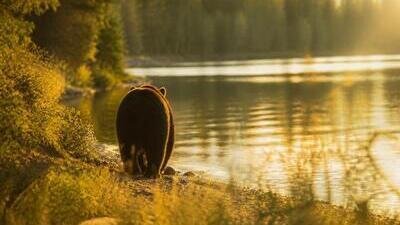
Stop the cull! Ensure bears are protected from unnecessary harm
The Issue
Family members are mourning the loss of Regina residents Jay and Deb MacDonald, who tragically lost their lives in a bear attack at McTavish Lake while on a fishing trip. Their nephew, Donjames LeBlanc, recounted how he had recently visited with Deb at his home before the couple embarked on their trip. The MacDonalds had flown to their cabin at McTavish Lake, a place they cherished and which they occasionally leased out.
In the aftermath of this tragedy, a black bear was shot by Saskatchewan Conservation Officers and sent to pathologists for examination. Animals were killed, and dissected later, as they didn't know which animals were involved.
A tragic death of a man visiting from India in May also resulted in a perfectly healthy bear being killed and dissected as a "maneater". This is beyond ridiculous. This is cruel and unscientific.
Bears are killed, their teeth measured, and DNA taken, along with physical exams. All this could be done non lethally, using anaesthesia. Contact the pathologist here.
The decision to kill bears was made without definitive evidence linking them to the incident. The only evidence is that the bear is seen feeding on a deceased person. Bears are opportunists, and may simply be scavenging a person who died. This is not proof the bear killed the person. And even if the bear did, the bear may have killed defensively and then scavenged. Predatory bites can only be determined by asking the person who was bitten if the bear was scared or calm before the bite, impossible if the person is found deceased.
Here is a quote from the pathologist. "Thank you for your email. It is not my decision to euthanize these bears but Conservation Officers that respond to these attacks consider various factors before killing the bear. In three of the last 4 attacks the bear was shot while attacking or feeding on the victim, which seems prudent. The latest attack and fatalities involving two individuals, appeared to be predatory in nature, not common in bears and not a behaviour you want established in a bear after a successful attack. Removing the predatory bear was the logical response and it was important to determine it was the correct bear that was removed. Once the bear is dead it is commendable that the Conservation Officers get the bear carcass to our lab as quickly as possible so we can learn if there were extenuating circumstances such as disease, starvation, etc that may have been contributing factors in the attack. The people dealing with these tragic attacks, including myself, visit nature and enjoy bears, but part of their job entails ensuring public safety, which in some cases involves killing bears. The recent bear attacks in Glacier National Park were defensive attacks where bears were surprised, a totally different situation. It is important to consider the details before jumping to conclusions on the appropriateness of the response by Saskatchewan wildlife professionals. Trent Bollinger"
This has raised concerns and sparked a debate about the necessity of this action. Why wasn't behaviour modification used instead of automatic killing? It's crucial to understand that this was a remote fly-in campground, more of a natural habitat for bears and wildlife than a human settlement. It belongs to the bears.
We believe that even if the bear was responsible, killing it was not a measure that would contribute to human safety. Bears, like all wildlife, play a significant role in their ecosystems, and their protection should be prioritized alongside responsible wildlife management and human safety.
We urge the authorities to adopt more humane and scientifically backed approaches to managing wildlife interactions. For natural habitats like McTavish Lake, establishing preventative measures such as providing awareness and education to visitors about bear behavior, increasing surveillance and safety protocols, and creating coexistence strategies is essential.
Please sign this petition to call for an end to unnecessary harm against bears and the adoption of more humane wildlife management practices in areas like McTavish Lake. Killing a bear suspect, then cutting them up to see if they were the culprit, is both a cruel and archiac method of forensics. Comparing DNA, measuring size of teeth, and determination of overall health can all be done non lethally, in the field, using modern, humane methods of veterinary care under general anesthesia. Even brain infections can sometimes be detected using antemortem tests. People who visit nature love bears and would be devastated that bears are killed. A recent fatal bear incident in Glacier National Park in the USA was managed non lethally. It is time Saskatchewan stops killing bears after tragic fatal bites.

962
The Issue
Family members are mourning the loss of Regina residents Jay and Deb MacDonald, who tragically lost their lives in a bear attack at McTavish Lake while on a fishing trip. Their nephew, Donjames LeBlanc, recounted how he had recently visited with Deb at his home before the couple embarked on their trip. The MacDonalds had flown to their cabin at McTavish Lake, a place they cherished and which they occasionally leased out.
In the aftermath of this tragedy, a black bear was shot by Saskatchewan Conservation Officers and sent to pathologists for examination. Animals were killed, and dissected later, as they didn't know which animals were involved.
A tragic death of a man visiting from India in May also resulted in a perfectly healthy bear being killed and dissected as a "maneater". This is beyond ridiculous. This is cruel and unscientific.
Bears are killed, their teeth measured, and DNA taken, along with physical exams. All this could be done non lethally, using anaesthesia. Contact the pathologist here.
The decision to kill bears was made without definitive evidence linking them to the incident. The only evidence is that the bear is seen feeding on a deceased person. Bears are opportunists, and may simply be scavenging a person who died. This is not proof the bear killed the person. And even if the bear did, the bear may have killed defensively and then scavenged. Predatory bites can only be determined by asking the person who was bitten if the bear was scared or calm before the bite, impossible if the person is found deceased.
Here is a quote from the pathologist. "Thank you for your email. It is not my decision to euthanize these bears but Conservation Officers that respond to these attacks consider various factors before killing the bear. In three of the last 4 attacks the bear was shot while attacking or feeding on the victim, which seems prudent. The latest attack and fatalities involving two individuals, appeared to be predatory in nature, not common in bears and not a behaviour you want established in a bear after a successful attack. Removing the predatory bear was the logical response and it was important to determine it was the correct bear that was removed. Once the bear is dead it is commendable that the Conservation Officers get the bear carcass to our lab as quickly as possible so we can learn if there were extenuating circumstances such as disease, starvation, etc that may have been contributing factors in the attack. The people dealing with these tragic attacks, including myself, visit nature and enjoy bears, but part of their job entails ensuring public safety, which in some cases involves killing bears. The recent bear attacks in Glacier National Park were defensive attacks where bears were surprised, a totally different situation. It is important to consider the details before jumping to conclusions on the appropriateness of the response by Saskatchewan wildlife professionals. Trent Bollinger"
This has raised concerns and sparked a debate about the necessity of this action. Why wasn't behaviour modification used instead of automatic killing? It's crucial to understand that this was a remote fly-in campground, more of a natural habitat for bears and wildlife than a human settlement. It belongs to the bears.
We believe that even if the bear was responsible, killing it was not a measure that would contribute to human safety. Bears, like all wildlife, play a significant role in their ecosystems, and their protection should be prioritized alongside responsible wildlife management and human safety.
We urge the authorities to adopt more humane and scientifically backed approaches to managing wildlife interactions. For natural habitats like McTavish Lake, establishing preventative measures such as providing awareness and education to visitors about bear behavior, increasing surveillance and safety protocols, and creating coexistence strategies is essential.
Please sign this petition to call for an end to unnecessary harm against bears and the adoption of more humane wildlife management practices in areas like McTavish Lake. Killing a bear suspect, then cutting them up to see if they were the culprit, is both a cruel and archiac method of forensics. Comparing DNA, measuring size of teeth, and determination of overall health can all be done non lethally, in the field, using modern, humane methods of veterinary care under general anesthesia. Even brain infections can sometimes be detected using antemortem tests. People who visit nature love bears and would be devastated that bears are killed. A recent fatal bear incident in Glacier National Park in the USA was managed non lethally. It is time Saskatchewan stops killing bears after tragic fatal bites.
The Decision Makers

Supporter Voices
Petition Updates
Share this petition
Petition created on July 18, 2026